Showing posts with label William Golding. Show all posts

Wednesday, October 21, 2026

Top 10 novels about God


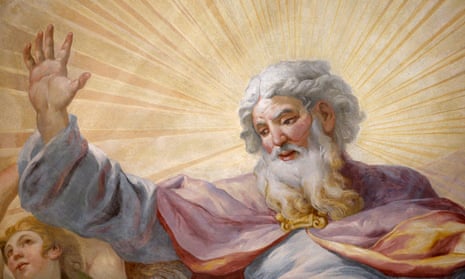
God, as depicted on the dome fresco by Johann Michael Rottmayr at Karlskirche (St. Charles’s Church) in Vienna.

Commanding presence … God, as depicted on the dome fresco by Johann Michael Rottmayr at Karlskirche (St. Charles’s Church) in Vienna. Photograph: Fred de Noyelle


Top 10 novels about God

He doesn’t appear very often in fiction, but in these books – by authors ranging from Fyodor Dostoevsky to John Updike – his impact is almighty


Neil Griffiths

Wednesday 6 December 2017


God seldom features in fiction. Having been dispensed with by Enlightenment philosophes around the time the first novels were emerging, he must have seemed irrelevant. The novel was new and God was old. Even clergy, who were facing an existential crisis of great literary potential, seemed infra dig to most novelists. There were new professions to explore: revolutionary, businessman, detective.

Friday, November 15, 2024

Stephen King / Lord of the flies


The book that made me want to be a writer 

Lord of the Flies: it was about kids, and I was a kid. The plot was simple and the descent into savagery was believable. I read it at the age of 12 – it was only later that I grasped the symbolism of the severed pig’s head and the sexual subtext. I felt that if I could do something like that, I’d be happy. And guess what? I was right.


Stephen King
The Guardian, 11  October 2024

Tuesday, September 5, 2023

'Lord of the Flies' by William Golding / Vocabulary


'Lord of the Flies'

by William Golding Vocabulary

In Lord of the Flies, William Golding tells the story of a group of schoolboys marooned on a desert island. The story serves as an allegory for the fundamental nature of humankind. Golding uses simple, straightforward vocabulary when describing the actions of the boys, but includes more complex, lyrical vocabulary when conveying the allegorical side of the story.

Sunday, November 20, 2022

Book Review 074 / The Lord of the Flies by William Golding


The Lord of the Flies 

by William Golding 

'If you like your books to have gripping and believable characters with a plot second to none, then Lord of the Flies is for you'


Aiman A.
Tue 24 January 2012


"Which is better – to have rules and agree, or to hunt and kill?"

Lord of the Flies isn't your average book, I have to say. Being a reader who loves to dig into books of adventure and mystery genres, upon picking up this book I thought it would be a normal adventure book; the blurb certainly seemed to suggest this. A predictable setting for a story: a deserted island suddenly inhabited by a group of reckless school boys. It's the perfect recipe for an adventure book like any other. Except...it's not like any other.

Tuesday, July 3, 2018

Man Booker Prize 1980 / Rites of Passage by William Golding


MAN BROOKER PRIZE 1980
Booker club: Rites of Passage

William Golding appears in uncharacteristically breezy form with his Booker winner. For a while

Sam Jordison
Wed 15 Apr 2009

Before reading Rites of Passage, I was curious to know how it had triumphed over both Anthony Burgess's Earthly Powers and JL Carr's glorious A Month in the Country in the 1980 Booker. Now, I can only assume that it beat them up. This book is a brute. It's also a canny fighter, employing the most devious feints before landing its punches. Indeed, if it weren't written by William Golding, it would be easy to mistake the first 50 or so pages of Rites of Passage for a straightforward social comedy.
The early narrative takes the form of a journal that the young dandy Edmund Talbot keeps on the way to Australia – ostensibly to amuse and inform his godfather back in England. He fills his description of life on an old warship at the end of the Napoleonic era with witty observations on the (generally quite bad) manners of Talbot's fellow passengers, salacious gossip and details of his own sexual encounters. It's light, frothy and – apparently – pleasantly superficial.

True to Talbot's character and the nature of his undertaking, the journal reads like it has been written in haste. So it's no surprise to learn that Golding wrote the first draft of the book in just one month (while on hiatus from Darkness Visible) though the feat is no less astonishing for that. It takes a special kind of genius to be able to recreate such convincing early 19th-century prose so fast and with such elegance. A talent that takes on almost eerie qualities if one believes Golding's claim that he simply transcribed conversations he was hearing in his head to create the novel's fluid dialogue.
Yet this easy reading should not be mistaken for levity. Golding insisted in interviews that this book was "funny" and proved that he wasn't the "dreary old monster" he was often made out to be. But he was being disingenuous. For all its humour, Rites of Passage turns into a most disturbing book.

The main horrors relate to one Reverend Colley, who gradually begins to dominate Talbot's narrative. Initially, Talbot invites his reader to laugh at Colley – and it's hard not to. He is – as Talbot paints him – an absurd, obsequious man, ridiculous in his parson's clothing, his hacked-about haircut, his daft wig and his fawning over "gentlemen".
It's amusing when this religious butterfly is blown off the quarter-deck by the captain for unwittingly breaking the ship's standing orders. It's even funnier when Talbot sees him dead drunk, naked, "his mind only lightly linked to his understanding", crying out "joy, joy, joy" and attempting to bless his fellow passengers.
Then Colley dies of shame – starving himself after he remembers another, as yet mysterious, act he performed in his cups. The horrible feeling arises that we readers have also been implicit in his bullying and degradation.
Golding turns this screw tighter when he introduces Colley's own journal into the narrative. Talbot's coxcomb gone wrong is transformed into a sympathetic, sweet-natured man who is terrified at smearing the dignity of his office by wearing the wrong outfit and whose wild haircut is explained by the fact that his sister tried to cut it one last time before he boarded ship and they parted, but was crying so much that she could hardly see what she was doing.
Every laugh we've had at Colley's expense turns to ashes in our mouths, every indignity he suffered seems barbarous.
This narrative turnaround is a bravura display of writing skill, and the sense of dizziness is only augmented as he shows Colley suffered many other cruelties that Talbot failed to observe – or ignored. The brilliance of the whole is dulled slightly by a certain clumsiness surrounding the revelation of the details of the mysterious act that so mortified Colley – but by this late stage Golding has done enough to overwhelm us completely. So the final sentence lands like a steel-toed kick in the stomach to an already prone victim:
"With lack of sleep and too much understanding I grow a little crazy, I think, like all men at sea who live too close to each other and too close thereby to all that is monstrous under the sun and moon."

Monday, February 16, 2015

The 100 best novels / No 74 / Lord of the Flies by William Golding (1954)


The 100 best novels 

No. 74

Lord of the Flies 

by William Golding (1954)


Dismissed at first as “rubbish & dull”, Golding’s brilliantly observed dystopian desert island tale has since become a classic


L
ike all the recent novels in this list (69-73), Lord of the Flies owes much of its dark power and impetus to the second world war, in which Golding served as a young naval officer. His experiences at Walcheren in 1944 nurtured an appetite for quasi-medieval extremes, mixing fiction and philosophy, which is not always a recipe for success in novels. However, Lord of the Fliesremains both universal and yet profoundly English, with nods to Defoe, Stevenson and Jack London (2, 24 and 35 in this series).
By the 1950s, now teaching at a boys’ grammar school, Golding was struggling to make his way as a novelist, having had a volume of poems published in 1934. His wife, Ann, who played a crucial role in his creative life, suggested RM Ballantyne’s Coral Island as a source of inspiration. The upshot: a post-apocalyptic, dystopian survivor-fantasy about a bunch of pre-teen and teenage boys on a remote tropical island. But this is a far cry from the world of Robinson Crusoe or Long John Silver.
Lord of the Flies (whose title derives from one transcription of “Beelzebub”) is the work of an English teacher with a taste for big themes, and engages the reader at three levels. First, it’s a brilliantly observed study of adolescents untethered from rules and conventions. The main players – Ralph, Jack and Piggy – represent archetypes of English schoolboy, but Golding gets under their skin and makes them real. He knows how they tick, and draws on his own experience to explore the terrifying breakdown of their community.
Second and third, Lord of the Flies presents a view of humanity unimaginable before the horrors of Nazi Europe, and then plunges into speculations about mankind in the state of nature. Bleak and specific, but universal, fusing rage and grief, Lord of the Flies is both a novel of the 1950s, and for all time. A strange kind of Eden becomes a desolate portrait of life in a post-nuclear world. Perhaps it’s no surprise that it should become a cult classic of the 60s, to be read as avidly as Catcher in the Rye, To Kill a Mocking Bird and On the Road.


A Note on the Text 

Before completing this novel, William Golding had been “Scruff”, the shy, oddball English teacher at Bishop Wordsworth’s school in Salisbury. Lord of the Flies, written during 1952-53, suffered successive rejections before its triumphant publication in 1954. At first titled Strangers from Within, the novel not only endured almost universal disdain, it was also the desperate last throw of an awkward schoolmaster who had struggled for years to find an audience.
His daughter, Judy, born at the end of the war, was too young to remember her father writing Lord of the Flies but she told me in an interview some years ago: “I do remember the parcels [of manuscript] going off and coming back. We lived on a very tight budget, so the postage must have been a significant expense.”
The legend of this iconic postwar novel has become hoary with many tellings. When it first arrived at Faber & Faber (its eventual publisher), it was a dog-eared manuscript that had obviously done the rounds. Its first in-house reader, a certain Miss Perkins, famously dismissed it as an “absurd and uninteresting fantasy about the explosion of an atom bomb on the Colonies. A group of children who land in jungle country near New Guinea. Rubbish & dull. Pointless.” However, a newly recruited young Faber editor, Charles Monteith, disagreed. He saw that the first chapter (about the aftermath of the bomb) could be dropped, fought for the book, and then, having persuaded Golding to cut and rewrite, steered it through to publication. Monteith, whom I came to know well, and admire, was doing what Maxwell Perkins did for Thomas Wolfe or Gordon Lish for Raymond Carver. It’s a skill that is rarely found in publishing today.
Eventually, the novel would sell more than 10m copies, but fame and success did not come overnight. The first printing of about 3,000 copies sold slowly. Gradually, the book’s qualities won serious attention. A turning-point occurred when EM Forster chose Lord of the Flies as his “outstanding novel of the year.” Other reviews described it as “not only a first-rate adventure but a parable of our times”. Judy Golding told me it was only “five years later, after the film came out [directed by Peter Brook], that I noticed parents of my friends suddenly becoming interested in Daddy”.
Thereafter, the novel became cult reading. When I worked at Faber in the 1980s, we used to reprint it, 100,000 copies at a time, year after year. I believe this still goes on. That’s one definition of classic, a book which even when we read it for the first time gives us the sense of re-reading something we have read before. In the words of Italo Calvino, “A classic is a book which has never exhausted all it has to say to its readers.”
Lord of the Flies has had a wide influence on many English and American writers, including Alex Garland, whose The Beach pays homage to Golding’s original. Nigel Williams also adapted Lord of the Flies for the stage in a strikingly powerful version that has helped sustain the novel’s afterlife.

Three more From William Golding

The Inheritors (1955); The Spire (1964); Rites of Passage (1980)


THE 100 BEST NOVELS WRITTEN IN ENGLISH
007 Emma by Jane Austen (1816)
014 Fair by William Thackeray (1848)  
031 Dracula by Bram Stoker  (1897)
035 The Call of the Wild by Jack London (1903)
036 The Golden Bowl by Henry James (1904)
039 The History of Mr Polly by HG Wells (1910)
040 Zuleika Dobson by Max Beerbohm (1915)
041 The Good Soldier by Ford Madox Ford (1915)
042 The Thirty-Nine Steps by John Buchan (1915)
043 The Rainbow by DH Lawrence (1915)
044 Of Human Bondage by W Somerset Waugham (1915)
045 The Age of Innocence by Edith Warthon (1920)
046 Ulysses by James Joyce (1922)
047 Babbitt by Sinclair Lewis (1922)
048 A Pasage to India by EM Forster (1922)
049 Gentlemen Prefer Blondes by Anita Loss ( 1925)
050 Mrs Dalloway by Virginia Woolf (1925)