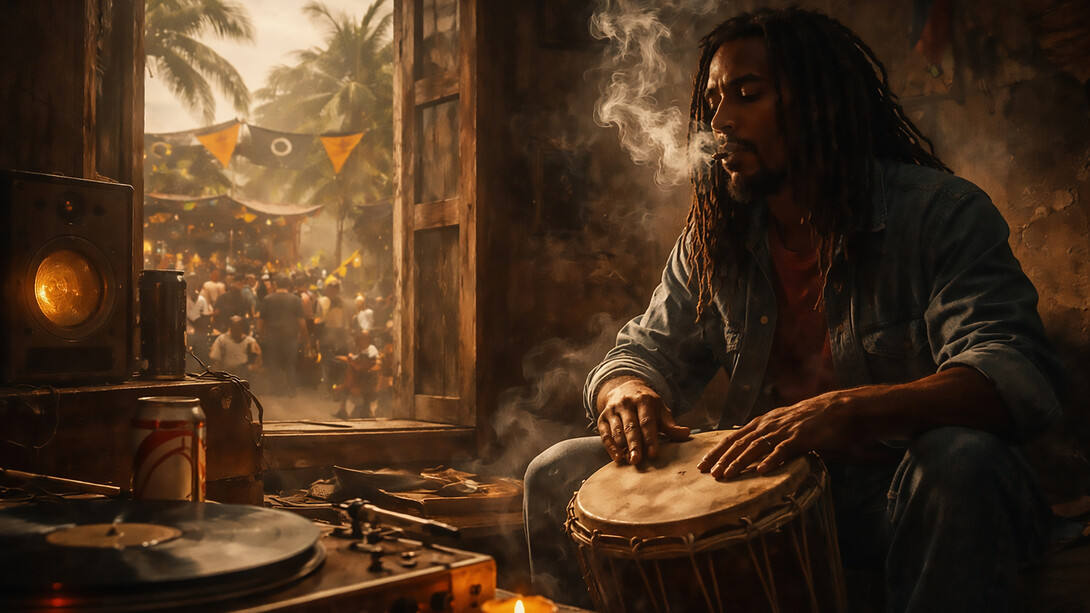
 A solitary drummer in a Jamaican interior, where rhythm carries memory, resistance, and the unfinished struggle against Babylon
A solitary drummer in a Jamaican interior, where rhythm carries memory, resistance, and the unfinished struggle against Babylon
Beyond Bob Marley: the sound of resistance
How reggae became a global language of decolonization, memory, and revolt
Hakim Ikhlef
29 Junr 2026
The world of reggae: beyond Bob Marley Bob Marley’s world—the one that matters—was never about comfort. It was a world of resistance, return, and the radical imagination—where chant is constitution, the drum is memory, and dance is the first act of freed movement. Going beyond Bob Marley points to restoring the genuine and authentic meaning of reggae in its original context. It enables us to place it back in its historical dimension of sonic and poetic insurgency, exploring the global context of decolonization and Third Worldism in revolutionary times—even if the 60s and 70s attempts failed irremediably.
Hakim Ikhlef
29 Junr 2026
The world of reggae: beyond Bob Marley Bob Marley’s world—the one that matters—was never about comfort. It was a world of resistance, return, and the radical imagination—where chant is constitution, the drum is memory, and dance is the first act of freed movement. Going beyond Bob Marley points to restoring the genuine and authentic meaning of reggae in its original context. It enables us to place it back in its historical dimension of sonic and poetic insurgency, exploring the global context of decolonization and Third Worldism in revolutionary times—even if the 60s and 70s attempts failed irremediably.