 |
| Mario Vargas Llosa |
Top 10 books about boarding school
From Evelyn Waugh to Molesworth, novels set in these places of privilege are microcosmic studies of oppression and rebellion

|
| Mario Vargas Llosa |
From Evelyn Waugh to Molesworth, novels set in these places of privilege are microcosmic studies of oppression and rebellion

This stylish biography of the author traces his journey from left to right, and from ‘posh Lima’ to Cricklewo
At what precise moment had Peru fucked itself up?” Those words on the opening page of Conversation in the Cathedral announced the arrival of a writer who understood that national history could become the organising principle of fiction. At precisely the moment when Latin America was discovering the intoxicating possibilities of magical realism – a form whose exuberance had an elective affinity with revolutionary politics, collapsing the distinction between the marvellous and the possible – Mario Vargas Llosa plumped for old-fashioned realism instead.
 |
| Mario Vargas Llosa |
His breakthrough book was deemed too inflammatory to be taught in my school, and was burned by authorities, but this Peruvian firebrand would reveal himself to be a man of contradictions
Alberto Manguel
Monday 14 April 2025
One of those novels was La Ciudad y los Perros (The City and the Dogs, oddly translated into English as The Time of the Hero) by a young, unknown Peruvian writer, Mario Vargas Llosa, who, in 1962, had won the recently created Premio Biblioteca Breve in Spain. Our literature teacher, while encouraging us to explore the transgressive fields of surrealism and fantastic fiction, thought that this novel was too extreme for adolescent imaginations: too much youthful violence; too much murky sex; too much questioning of authority. There had been nothing like it in Spanish-language fiction before. A fierce indictment of Peru’s military system, incandescent with rage against the hypocrisy of the established order as mirrored in Lima’s most prestigious military academy (which the author had attended), it was also the chronicle of an adolescent rite of passage into the ranks of the commanding patriarchy. The book so incensed the Peruvian authorities that, in the tradition of the city’s founding fathers, an auto-da-fé was ordered and dozens of copies were burned in the academy’s courtyard. At the very start of what was labelled by canny publishers as the “boom” of Latin-American literature, Vargas Llosa’s book was recognised as a modern subversive classic.
Until then, the so-called “novel of protest” in the literatures of Latin America had Zola as its model. Under the large shadow of the author of La Terre and Germinal, writers such as Ciro Alegría and José María Arguedas had written about the lives of those whom our European culture had taught us to deny. Vargas Llosa didn’t follow Zola but rather chose Flaubert as his guide, writing a decade later a splendid essay, The Perpetual Orgy, in which he argued that Madame Bovary kickstarted the modern novel by establishing an “objective” narrator who, because they refused to preach, gave the illusion of telling a story that was true.
At the start of the ‘boom’ of Latin-American literature, Vargas Llosa’s book was recognised as a modern subversive classic
We waited with greedy expectation for Vargas Llosa’s next novels, The Green House (1966) and Conversation in the Cathedral (1969), and later Captain Pantoja and the Special Service (1973) and the erotically humorous Aunt Julia and the Scriptwriter (1977), all the time trying to discover who this man was who, in public life, swayed his political alliances from left to right, all the time remaining committed, in his fiction, to basic precepts of human empathy.
The young Vargas Llosa, like so many South-American intellectuals, had supported Castro’s revolution, but after the imprisonment of the poet Heberto Padilla he declared himself an opposer to the Cuban regime. Almost two decades later, Vargas Llosa became the head of the centre-right party Movimiento Libertad, and entered into a coalition with two other centre-right politicians. In 1990, as candidate to the presidency, Vargas Llosa lost to Alberto Fujimori, who was later sentenced to 25 years in prison for human rights abuses, and later still, unlawfully pardoned. From then on, Vargas Llosa restricted his political activism to his frequent newspaper columns and, much more subtly and effectively, to his fiction, for which he was awarded, in 2010, the Nobel prize.
 |
| Mario Vargas Llosa |
A LIFE IN
The Peruvian Nobel laureate on winning literature’s biggest prize, his feud with Gabriel García Márquez and coming to accept that he is ‘not a politician’
By the time Mario Vargas Llosa got to Roger Casement's grave, he was already besotted. "He was a hero, very imperfect, very human and for me this made the character sympathetic. More than sympathetic," says the Nobel laureate at his publisher's offices in London. "But certain people find it hard to accept heroes who aren't perfect." At Glasnevin Cemetery in Dublin, Vargas Llosa found the grave for the Irish patriot hanged by the British in 1916. "It was very sad because around him there are always flowers on the tombs of the leaders of the Irish rebellion, but on Casement's tomb there is not one flower.
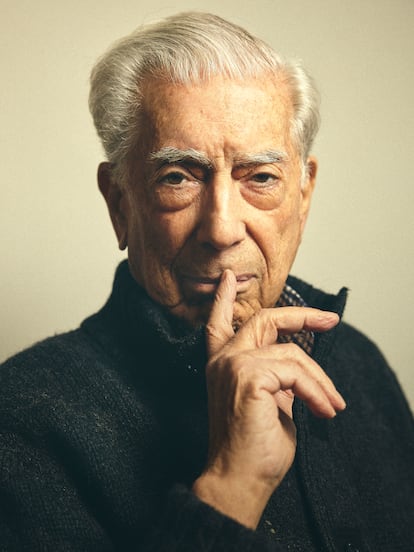

The Peruvian-Spanish writer Mario Vargas Llosa, winner of the 2010 Nobel Prize, welcomed me into his Madrid home ahead of his induction into the prestigious Académie Française. The apartment is a place of enormous spaces, full of light and books. Seven years ago, the acclaimed author abandoned this famous refuge on Flora Street, in the heart of the Spanish capital, to move to an even more famous home in Madrid: a luxury residence in the exclusive area known as Puerta de Hierro, property of the businesswoman and socialite Isabel Preysler, with whom Vargas Llosa was romantically involved until their recent separation. “We had an experience, and it’s over. Now I’m back at home, surrounded by my books,” Vargas Llosa said partway through our interview, laughing as if he were Odysseus returning to Ithaca. “I have no regrets, absolutely none.”

 |
| Claire Keegan |
 |
| Mario Vargas Llosa |
In this powerful polemic first published in Spanish ten years ago, Mario Vargas Llosa explores what he considers to be the demise of culture. The Peruvian author, who was born in 1936 and won the Nobel Prize for Literature in 2010, begins by discussing the “metamorphosis of what was still understood as culture when my generation was in school or at university, and the motley definitions that have replaced it”. After briefly surveying earlier attempts to understand culture, including works by TS Eliot, George Steiner, Guy Debord and Frédéric Martel, he concludes that in his lifetime it has undergone a “traumatic change”. So much so, that culture has been “discreetly emptied of its content”.
 |
| William Faulkner |
For some time now I have been planning to give a course on William Faulkner's influence on the on the so-called Boom in Latin American writing that began in the 1960s. The course would begin with Nobel laureate Mario Vargas Llosa, who said that this American writer was the first novelist he read with pencil and paper at hand, trying to "rationally" reconstruct the architecture of his novels, see the workings of the complex play of chronology and point of view.

Legends of the fall: the 50 biggest books of autumn 2021
From new novels by Sally Rooney and Colson Whitehead to Michel Barnier’s take on Brexit, Bernardine Evaristo’s manifesto and diaries from David Sedaris – all the releases to look out for
Snow Country by Sebastian Faulks
Set in Vienna between the first and second world wars, this companion novel to 2005’s Human Traces uncovers individual stories of love and yearning at a time of historical upheaval.
The Dark Remains by William McIlvanney and Ian Rankin
With his books about DC Laidlaw, the scourge of 70s gangland Glasgow, McIlvanney was a huge influence on Scottish crime fiction. When he died in 2015, he left a handwritten manuscript setting out Laidlaw’s first case – and Scotland’s leading contemporary crime novelist has finished it.

Beautiful World, Where Are You by Sally Rooney
A successful young writer is repulsed by the literary world and the workings of fame in Rooney’s much-anticipated third novel. Alice and Eileen are best friends approaching 30, negotiating love, sex, status and purpose as the realities of the adult world bite.


Harlem Shuffle by Colson Whitehead
After tackling the horrors of slavery and racist reform schools in The Underground Railroad and The Nickel Boys, the Pulitzer winner has fun with a heist novel set in a lovingly recreated 60s Harlem, against the backdrop of the civil rights movement.
Palmares by Gayl Jones
The first novel in more than two decades by the US author first published by Toni Morrison is a myth-tinged saga set in 17th-century Brazil, where a young girl hears rumours of “Palmares” – a haven for fugitive slaves.

The Man Who Died Twice by Richard Osman
The Pointless presenter’s crime debut broke publishing records, and this sequel sees his group of elderly friends look into a murder-heist connected to Elizabeth’s secret service career. Osman tempers the whimsy with hard-won warmth and real darkness.
The Making of Incarnation by Tom McCarthy
A scientist’s secret archive, the birth of big data, military research and SF movies … a typically ambitious millefueille of modernity, symbolism and myth from the Booker-shortlisted author of C and Satin Island.

Bewilderment by Richard Powers
Following his eco-epic The Overstory, Powers focuses on the story of a father and his troubled son, in mourning for his dead mother and our dying world. It’s a heartfelt cry for climate awareness, with fantastical digressions to other planets and a rueful celebration of our own.

The Magician by Colm Tóibín
His 2004 novel The Master explored the mind of Henry James; now Tóibín turns to Thomas Mann, tracing the German Nobel laureate’s life and work against the rise of nazism and turbulence of two world wars.
The Book of Form and Emptiness by Ruth Ozeki
Booker-shortlisted for A Tale for the Time Being in 2013, Ozeki brings a similar metafictional playfulness to this story of a 13-year-old who has lost his father but gains the ability to hear what objects are saying.

Matrix by Lauren Groff
A departure for the author of contemporary marriage story Fates and Furies: this is a tale of 12th-century nuns, inspired by the poet Marie de France, who as an awkward teenager unwillingly becomes prioress in a rundown English abbey. It’s a gorgeously written celebration of female desire and creativity, with a formidable heroine.
Cloud Cuckoo Land by Anthony Doerr
The follow-up to All the Light We Cannot See ingeniously connects the 15th-century fall of Constantinople, 21st-century environmental breakdown and a future spaceship, where humanity’s history and knowledge is accessed virtually. This is a dazzling epic of love, war and the joy of books – one for David Mitchell fans.

Chronicles from the Land of the Happiest People on Earth by Wole Soyinka
The Nobel laureate’s first novel in nearly 50 years is a blackly comic indictment of political corruption and exploitation set in a version of Nigeria.

The Morning Star by Karl Ove Knausgård, translated by Martin Aitken
Knausgård follows his epic autobiographical series My Struggle with a hefty new novel: a story of ordinary life and unknown forces, told through a group of Norwegians who are brought together by the appearance of a new and foreboding star.

Crossroads by Jonathan Franzen
The first volume in a planned trilogy about American life focuses on a midwestern family in the early 1970s, as the parents’ unhappy marriage and the kids’ adolescent transformations are set against the troubled national zeitgeist.
Burntcoat by Sarah Hall
A stunning novel from the author best known for her short stories, which considers what it means to be a female artist. At the end of her life, a sculptor of monumental works remembers how at the moment of national lockdown she opened herself to a new relationship.

Life Without Children by Roddy Doyle
A son is barred from his mother’s funeral, a nurse loses a beloved patient … Written over the past year, these are 10 short stories about the isolation and connections of life during pandemic from the Irish author.
State of Terror by Hillary Rodham Clinton and Louise Penny
Following husband Bill’s collaboration with James Patterson, Hillary promises to bring similar insider knowledge to her thriller debut. Written with a Canadian crime novelist friend, it explores her “worst nightmare” as secretary of state – a series of terrorist attacks undermining the global order.
Riccardino by Andrea Camilleri, translated by Stephen Sartarelli
The 28th instalment in the much-loved Sicilian detective series, first drafted in 2005 and delivered to Camilleri’s publishers to be held under lock and key until the author’s death, is the final outing for Inspector Montalbano.

Silverview by John le Carré
Le Carré left a complete manuscript when he died in 2020, now published as his 26th novel. The story of a man running a bookshop by the English seaside, a mysterious visitor, and an espionage leak, it dramatises the clash between public duty and private life at a time of moral crisis for Britain.
Oh William! by Elizabeth Strout
The Pulitzer winner returns to the heroine of My Name Is Lucy Barton, as the widowed Lucy gets back in touch with her first husband, William. She muses on their long, complicated partnership in this wise and witty portrait of childrearing, ageing and the eternal surprise of other people.


Harsh Times by Mario Vargas Llosa, translated by Adrian Nathan West
The Nobel laureate weaves fiction and real events, as he explores the conspiracies and propaganda that drove the 1954 CIA-backed military coup in Guatemala.
The Fell by Sarah Moss
In Ghost Wall and Summerwater, Moss excelled at mapping personal desires and responsibilities against the national mood. In this lockdown novel, it’s November 2020, and though Kate is in the middle of a two-week quarantine, she can’t stand the confinement, slipping out for a moorland walk that goes horribly wrong.
The Books of Jacob by Olga Tokarczuk, translated by Jennifer Croft
The long awaited appearance in English of the Nobel laureate’s masterwork. Set against the transformations of thought in enlightenment Europe, it is the epic story of the charismatic Jacob Frank, who arrives in a Polish village as a young Jew, and goes on to reinvent himself across countries and religions.

The Every by Dave Eggers
Following his 2013 tech satire The Circle, Eggers imagines a terrifying future: the world under one digital monopoly, controlling e-commerce, social media and search – and the woman hoping to bring the company down from within. Justine Jordan
Greek Myths: A New Retelling by Charlotte Higgins
A gritty and exhilarating new retelling of the ancient stories in which the female characters take centre stage.

Misfits: A Personal Manifesto by Michaela Coel
The award-winning screenwriter and actor writes about the value of misfits, the power of theatre and storytelling and the importance of saying no.
On Freedom: Four Songs of Care and Constraint by Maggie Nelson
With insight and intellectual rigour, Nelson wrestles the concept of “freedom” away from its contemporary political misuses and explores what it means in the context of art, sex, drugs and climate.

Chief of Staff: Notes from Downing Street by Gavin Barwell
The former aide to Theresa May promises to reveal “what really went on in the corridors of power”, from Brexit to Trump and the ways that government operates “in a time of crisis”.
The End of Bias: How We Change Our Minds by Jessica Nordell
A groundbreaking analysis of bias and how to fix it, by a journalist who one day sent pitches from a male name and found that they started to land.

Harlots, Whores & Hackabouts: A History of Sex for Sale by Kate Lister
A brand new account of the oldest profession, by the creator of research project Whores of Yore.
Rationality: What It Is, Why It Seems Scarce, Why It Matters by Steven Pinker
The cognitive scientist rejects the popular view that the human brain is a “basket of delusions” and spells out the urgent need and potential for more rational behaviour and debate.

Secret Brexit Diary: A Glorious Illusion by Michel Barnier
The diary Barnier kept during the 1,600 days of Brexit negotiations promises to lift the lid on that fraught period. A clue may be in its subtitle.

Manifesto by Bernardine Evaristo
Described as a “no-holds-barred” story about being true to yourself, this memoir charts Evaristo’s journey from broke young poet to Booker prize-winning novelist.

A Carnival of Snackery: Diaries 2003–2020: Volume Two by David Sedaris
The second book in a collection of diaries whose first, Theft by Finding, was described by this paper as “beautiful in its piquancy and minimalism”.

Renegades: Born in the USA: Dreams by Barack Obama and Bruce Springsteen
Obama and Springsteen discuss life, love and music, with full-colour photos and archive material.
Keisha the Sket by Jade LB
The noughties online sensation about a young south London girl is back for the first time in official print, with additional essays from Candice Carty-Williams, Caleb Femi, Aniefiok Ekpoudom and Enny.

1,000 Years of Joys and Sorrows: A Memoir by Ai Weiwei
Chinese history told through the lives of artist Ai Weiwei and his poet father, Ai Qing.
The Power of Women: A Doctor’s Journey of Hope and Healing by Dr Denis Mukwege
story of courage and integrity, both of its doctor author and the female survivors of sexual violence whose strength he celebrates. A powerful call to arms.
Black Paper: Writing in a Dark Time by Teju Cole
In a collection of essays the celebrated author of Open City explores the ways we retain our humanity and different ways of thinking about the colour black.

Orwell’s Roses by Rebecca Solnit
An intellectually eclectic collection of essays “in dialogue” with Orwell takes in Stalin’s lemons, Colombia’s rose industry and the pleasing thought: “If war has an opposite, gardens might sometimes be it.”
The Dawn of Everything: A New History of Humanity by David Graeber and David Wengrow
Written over a decade, a work that promises to overturn our view of human history and make us rethink the way we live.
The Book of Hope: A Survival Guide for an Endangered Planet by Jane Goodall and Douglas Abrams
A lifetime of experience and wisdom combines with much-needed optimism in this guide to the climate crisis and what we can do about it.
These Precious Days by Ann Patchett
A heartfelt and witty collection of essays on everything from marriage and knitting to the inevitability of death, by the Women’s prize-winning novelist.
Patient 1 by Charlotte Raven and Dr Edward Wild
A powerful account of living with Huntington’s disease.

Both/And: A Life in Many Worlds by Huma Abedin
Hillary Clinton’s aide and adviser writes a personal and revealing account of her relationship with Clinton, her marriage to Anthony Weiner and her own action-packed life and history.

Diaries and Notebooks by Patricia Highsmith
Distilled from the 8,000 pages discovered in her linen closet, this is the definitive edition of the diaries of “one of our greatest modernist writers” (Gore Vidal). Katy Guest
All the Names Given by Raymond Antrobus
A eagerly awaited collection from the Folio prize-winner explores language, deafness, conflicting identities and the weight of history.

Winter Recipes from the Collective by Louise Glück
Glück’s first collection since winning the Nobel prize last year is an intimate and haunting work full of “recipes for winter, when life is hard. In spring / anyone can make a fine meal”.
Call Us What We Carry by Amanda Gorman
A new collection full of hope and healing from the young American poet who electrified the world when she read “The Hill We Climb” at President Biden’s inauguration. JJ


