Showing posts with label Dale Berning Sawa. Show all posts

Friday, May 28, 2021

Tacita Dean and Jenny Saville lead strong female presence at Edinburgh art festival


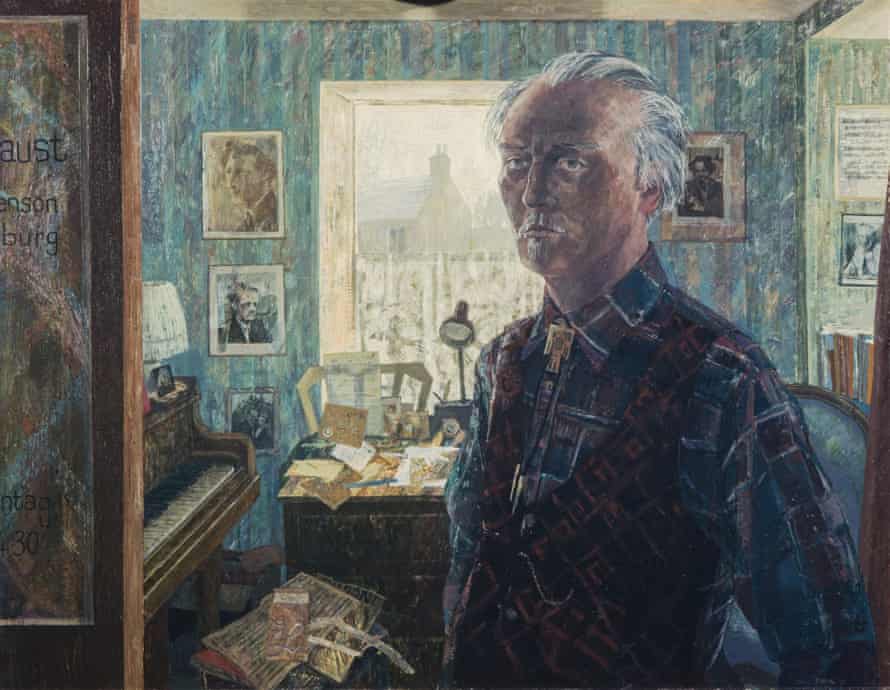
Focus on portraiture … Ronald Stevenson (1983) by Victoria Crowe.

Focus on portraiture … Ronald Stevenson (1983) by Victoria Crowe. Photograph: RS Anderson/Victoria Crowe


Tacita Dean and Jenny Saville lead strong female presence at Edinburgh art festival


Phyllida Barlow, Lucy Skaer and Victoria Crowe also feature in the lineup alongside old masters including Canaletto and Rembrandt


Dale Berning Sawa
Mon 26 Mar 2018 00.01 BST


The Edinburgh art festival has announced its 2018 programme. The annual event, which this year takes place between 26 July and 26 August alongside the international festival and the fringe, will mark its 15th anniversary with 36 exhibitions at venues across the city.

Wednesday, August 1, 2018

Jean-Paul Goude's best photograph / An androgynous Grace Jones


‘I wanted to focus on her masculinity – to use what other people thought an embarrassment, and turn it to her advantage.’ Grace Jones, blue-black in black on brown, New York, 1981. © Jean-Paul Goude


Jean-Paul Goude's best photograph: an androgynous Grace Jones


‘People thought she looked outrageous, alien even. I wanted them to be intimidated. It was a slap in the face to the entertainment of the day’

Dale Berning Sawa
Wednesday 1 August 2018


T
he first time I saw Grace was at a show at Les Mouches, a gay bar in New York, in 1974 or 1975. I already knew of Grace as a model, but I didn’t know she had a voice. I was agreeably surprised. Her aesthetic, however, wasn’t a surprise. It was typical of the 70s. I thought, “She’d be great if someone like Helmut Newton or Guy Bourdin did the staging of her shows.” I didn’t even think of myself.

Later on, we got together. And for a while I was her accomplice, doing disco shows that I thought were tacky. But I’m a gentleman, so I didn’t say much, until the day she started copying me.
I was preparing a boxing movie that Andy Warhol was going to produce and I kept telling Grace that I wanted a musical number with all the boxers boxing in rhythm – that terrible, dangerous dance they do. And she came back [in her next performance] with two boys, very gay and not at all boxers, wearing big boxing gloves. They didn’t have the moves at all; they danced like chorus boys. It looked stupid and tacky. And I told her so. I said “If you’re going to copy me, why don’t you do it properly? Why don’t I get involved?” And she said “Sure!” I got so involved, I eventually did everything in the show.
This shoot was the beginning of the One Man Show [a live performance directed by Goude]. Our relationship might have been a romantic affair between a disco star and a little French artist, but I felt like Josef von Sternberg directing Marlene Dietrich. We took ourselves very seriously. And of course, this image was very important in both our careers: I maintain it’s the best role Grace ever played, and one of the best things I ever did. 
I wanted to focus on Grace’s masculinity – to use what other people thought an embarrassment, and turn it around to her advantage. I wanted to create – with her, of course – a new character. It went beyond just a haircut, it was an attitude. It was new and strong and ambiguous. You didn’t know if it was a man trying to be a girl or a girl trying to be a man. It was a revolution. I remember the A&R guys at Island saying, “Are you fucking crazy? This is never going to work.” And of course it did.


The look went with the music. Around this time, Chris Blackwell signed Grace to Island Records, and her music took a new-wave turn. He blew up one of these photographs really big, 10ft tall or something, and put it in the studio, so that Sly and Robbie, two musicians from Jamaica who were not big fans of hers at the time, but were playing on her new record, would understand what the whole thing was about.
Initially I wanted black on black in black – the background, the outfit, and Grace – with just that touch of white in the cigarette. I then changed the background colour to beige. I gave Grace’s lips a shade of dark brown or prune and dusted her cheekbones and torso with blue pigment to bring out the volume. The cigarette was all about colour and composition. I subsequently used it in other images, too, on her eye and below her nose. Of course, it also suggests something rebellious.
People thought she looked outrageous, alien even. But it wasn’t just for show. I wanted this character to have great dignity. I wanted it to be a slap in the face to all the entertainment of the day, the Diana Rosses and other stars, all made up like stolen cars, with windswept hair. This was pure rigour, a girl being perfectly serious.
I wanted the audience to be intimidated by this person, who wasn’t doing things like anyone else – the show, the look, the way of speaking, the music ... it was all entirely new. And that’s what the One Man Show was about: it was Grace saying goodbye to disco and cheap decadence, and hello to a radiant future, with me! It had a lot to do with a love story, really. In the end, enthusiasm is what makes you create. 
Most people since – young singers and big stars alike – have helped themselves to the Grace/Jean-Paul pool of ideas. They take stuff willy-nilly – the hairstyle, the look, the gestures, the mise-en-scene, the choreography. And it’s true that this character we created is much more spectacular than wearing big hats or designer outfits. It was completely original, a look that influenced fashion – that influenced the world.

Jean-Paul Goude’s CV


Born: Saint-Mandé, France, 1940.

Studied: “École Nationale Supérieure des Arts Décoratifs, for almost two years.”

Influences: “Winsor McCay, George Lois, Richard Avedon and many, many others.”

High point: “The Bicentennial Parade of the French Revolution, 1989 [which Goude directed].”

Low point: “Throat cancer, from 2012 to 2013.”

Top tip: “Be yourself, do your best.”


2016

2017


Thursday, July 26, 2018

Kate Stanworth's best photograph: Murga dancers make a busload of sandwiches


‘I liked how they were mirroring each other’s body language, unconsciously’ ... Moni and Juanjo’s Kitchen on Carnival Night, 2013. Photograph: Kate Stanworth


My best shot
Photography

Kate Stanworth's best photograph: Murga dancers make a busload of sandwiches

Murga troupes travel around Argentina in knackered old school buses, performing on makeshift stages in closed-down streets. These two are making ham and cheese sandwiches for the road’

Dale Berning Sawa
Thu 26 Jul 2018

Murga is Argentinian street theatre that combines dance with percussion. The first time I heard the hypnotic drumbeat of a performance was in a park in Buenos Aires. I walked towards it and watched the dancers as they moved from the first simple steps to the intense high kicks the performances culminate in. I was hooked. I wanted to know everything about it.

Wednesday, February 21, 2018

My best photograph / Mars rover Curiosity's shot of the hill she'll never climb


‘People call Mars the red planet but – scientifically – it’s actually yellowish brown’ … Aeolis Mons, aka Mount Sharp, photographed on September 2015. Photograph: Curiosity Mars rover/Nasa

My best photograph: Mars rover Curiosity's shot of the hill she'll never climb


‘The mountain in the distance is her goal but we don’t think she’ll get to the top. It’s going to take her another five years just to get to the bright rock formation below’

Ken Herkenhoff

Planetary scientist, US Geological Survey

Dale Berning Sawa
Wed 21 Feb 2018


Mount Sharp was the first thing Curiosity ever took a photo of. The biggest Mars rover ever, Curiosity landed on August 2012, having spent 253 days hurtling through space. This shot of Aeolis Mons, to give the peak its official name, was taken three years later and the image has been enhanced to bring out colour variations. That’s why the sky looks blue. It would be highly unusual to ever actually see anything blue on Mars – there’s so much iron oxide around, suspended in the atmosphere like dust, that it colours everything. People call Mars the red planet, but technically – when measured scientifically – it’s yellowish brown.
Mount Sharp, located in the middle of Gale Crater, has been the object of the mission all along. Since it’s made of sedimentary rock, it should give us a record of the planet’s major climate changes. The goal is to decipher that record and learn more about Mars’s ancient past. Right now, Curiosity is heading up the mountainside, exploring Vera Rubin Ridge, which you can see stretching along the bottom of the image. The dark material above that is basaltic sand, a common volcanic substance on both Mars and Earth. Most of our ocean floors are covered in it.
The good stuff is just a bit further up, in an area rich in clays and sulphates. Clays are formed in more neutral waters, which is to say in Earth-like conditions, and that’s why they’re of such great interest: they are perhaps conducive to original life. Martian rocks are between three to four billion years old, meaning they date back to when the solar system was young. We have ancient rocks on Earth but they’re much rarer, because plate tectonics have destroyed so many of them. That’s one advantage of exploring Mars – no plate tectonics.

Curiosity is the size of a Mini Cooper, with a mast as big as a tall person and a 7-foot robotic arm. She’s pretty robust: she can navigate knee-high obstacles and, at her top speed, cover about 30 metres an hour, depending on the terrain. The craft has 17 cameras, able to take single and stereo images, which provide us with 3D information about the landscape. She shoots in colour for scientific purposes and in black-and-white for navigation.
Nearly 100 people from all over the world are involved in operating Curiosity. Every day we decide on her next goal: it might be to drive to a rock we’ve seen in previous pictures, take some shots, then turn left and take some more. A typical drive is 50 metres, occasionally 100 if it’s very flat, but if the terrain is rocky, the daily journey might be as little as 10. Moving Curiosity and activating her robotic arm are complex operations requiring careful planning. Depending on where Mars is relative to Earth, our commands are sent out from either California, Madrid or Canberra. About 10 to 15 minutes later, Curiosity gets to work, then sends back all her data overnight while she sleeps.
When something goes wrong, things can get emotional, because we can’t just go and fix her. One of her wheels is damaged, which means we don’t let Curiosity pick her own path any more. And she’s been carrying around the same sample of sand dune for months now, because the drill feed mechanism isn’t working. The engineers are hoping to find a fix soon.


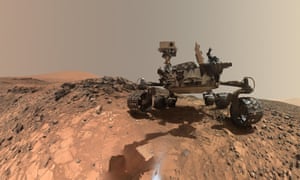
This is me on Mars … self-portrait showing Curiosity on the lower slopes of Mount Sharp. Photograph: Curiosity Mars rover/Nasa

We can’t say for certain how long Curiosity will last. The first rovers on Mars, Spirit and Opportunity, were designed to last 90 days. Opportunity is still going 14 years on, though Spirit got stuck in some sand after six years. It was pretty sad, like losing a child. We knew she was unlikely to survive the winter. Unlike those rovers, Curiosity has a nuclear-power source – a radioisotope thermal electric generator. The temperature on Mars fluctuates enormously, from 15C on a warm day to -70C overnight, which means we need heaters just to get the motors and instruments to function. At some point, we know, the generator will peter out.
There’s no expectation that Curiosity will get to the top of Mount Sharp. The brighter rock formations higher up are probably as far as she will go. Who knows what we will find there. Covering that distance will take years, though. It has taken over five just to drive 18km – it could easily take another five to get to those bright rocks. Things are slow, we’re taking our time. But, you know, we’re doing geology on Mars. It’s never going to be easy.

Curiosity CV


Made in: Nasa’s Jet Propulsion Laboratory, Pasadena, California.
Launch date: 26 November 2011.
Touchdown: 5 August 2012.
High point: “The high-precision soft landing of the rover – on its wheels.”
Low point: “When significant damage, caused by pointy rocks, was discovered in the zig-zag treads on Curiosity’s left middle wheel. The 2020 rover will have more robust wheels.”
Top tip: “Watch out for pointy rocks!”


2018


Wednesday, February 7, 2018

My best shot / Peter Dench's best photograph / Drunks kiss and throw up at the Epsom Derby


Right amount, wrong amount … the car park on derby day at Epsom Downs racecourse, June 2001.
Photograph: Peter Dench

Peter Dench's best photograph – drunks kiss and throw up at the Epsom Derby

‘It was a decade when the English were drinking longer, faster, more cheaply and more dangerously than ever before’

Interview by 
Wed 7 FEB 2018
T
he Epsom Derby is one of the biggest events of the English summer. I’d heard it was quite lairy, quite boozy. So, since I was documenting the drinking habits of the English, I thought I’d head there for the day.

People hire open-top buses and come in from all over Surrey and beyond. They start celebrating early, sometimes at nine in the morning. I went to where all these buses park. There was a lot of activity there.
I shoot wide and I shoot close. A zoom lens is lazy. I like to hear my subjects, respond to them if they want to talk. I saw this scene happening from a long way away and thought: “My God, that looks great!” I ran as fast as I could, until I was within 2ft, skidded to a halt and framed up.
I only got the one shot, because when the flash fired, the man noticed. He peeled away from the lady and wagged a finger at me in the way that people often do, saying that picture had better never be published. To date, I think it’s been exhibited in over 80 countries. Why did I go against his wishes? Well, I was an accredited member of the press. And I think if he was being indiscreet, then at least be discreet about it – get on the bus or go round the back.

I was quite intrigued by the chap in the background, too. He was being sick. I went to look at the pile of pink at his feet and noticed strawberry pips. I was shooting a reportage on alcohol and this seemed to sum up what alcohol can do. Drink the right amount and you might get lucky with a lady. Drink the wrong amount and you’re the guy in the background bringing up his breakfast. It also says that alcohol is ultimately classless: whether you’re drinking White Lightning on a park bench or champagne at the races, overdo it and the result is the same.
I took the shot in 2001 and continued with the booze theme until around 2008, when I saw a shift away from the likes of alcopops and binge drinking. So those images are a visual record of that decade, a time when the English were drinking longer, faster, more cheaply and more dangerously than ever before in history.
I never subscribed to the National Trust view of England as a green and pleasant land. I come from Weymouth, a working-class seaside resort. What I saw growing up was shagging and fighting and drinking. The population tripled in the summer, with Brummies and Bristolians coming down during factory shutdown. There were four holiday camps, too, and a navy base that deposited horny sailors into the town. It was a great place to grow up – but it was fuelled by alcohol and violence.
I was back at Epsom recently. It’s still not what the TV ads portray it as. It’s not the slow-motion waving, classical music grand day out, with the posh frock, the gentle bet and the nice ride home. There’s testosterone, anger and passion. It’s enjoyable – but brutal.

Peter Dench’s CV

Born: Weymouth, 1972.
Trained: Photographic studies at the University of Derby.
Influences: Danny Wallace (not the former footballer), Jon Ronson, Louis Theroux.
High point: “Getting to travel extensively.”
Low point: “Invoicing. Chasing invoices.”

Top tip: “Trust your instincts.”

Wednesday, January 31, 2018

Chris Floyd's best photograph / The Verve meet Dorothy, the Tin Man and Scarecrow


‘It was the first time I’d really been around northerners’ … Richard Ashcroft, Tin Man, Scarecrow and Dorothy, Las Vegas, 1994, by Chris Floyd. Photograph: Chris Floyd

Chris Floyd's best photograph: the Verve meet Dorothy, the Tin Man and Scarecrow

‘I was following the band round Vegas for a week and we ended up in this tacky casino with a Land of Oz in its foyer. Richard’s not afraid to ham things up’

Dale Berning Sawa
Wednesday 31 January 2018


I
t was July 1994 and I had flown into Las Vegas with a journalist to trail the Verve for a week while they played the Lollapalooza festival. I was naive and gung-ho, excited to be in America and going on a road trip.

We checked in to our hotel, met up with the band and went for dinner. I was in my mid-20s and starting to just about earn a living from photography, but none of the cheques had come through yet. So I barely had enough money for food. We walked around the Strip and ended up in the casino of the MGM Grand hotel, a tacky, gilded palace with a massive reproduction of the Land of Oz in the foyer.
Richard Ashcroft, the Verve frontman, is looking quite camp in this image. The thing about him, I realised later, is that he has two sides: the public Richard is serious, intense, extremely self-confident; and the private Richard is very funny and a brilliant mimic. When he tells a story, he’ll do all the voices. I always thought he’d make a good actor. He’s not afraid to ham things up.


I’m from the south, the home counties, and it was the first time I’d really been around northerners. I was fascinated by the band’s sense of style: cords, loads of brown, but still modern. Old-man clothes with a twist. And great haircuts. They introduced me to lots of good music too: Funkadelic, Parliament, 1970s American soul, the Stooges.
The next day, the Verve were playing the Sam Boyd Silver Bowl, not on the main stage but the second one, in the car park outside the stadium. Las Vegas in July is incredibly hot and they were on at 3pm. The crowd was sparse, only about 100 people, and when they came on, there was silence, save for that buzzing sound when bands first plug in their instruments. This kid standing near me – dreadlocks, no shirt, tattoos, long skater shorts – said: “Man, I can’t believe those guys are wearing cords.”
They looked so alien. But then they started playing – one of their early songs,Gravity Grave. It starts with just a bassline, a lolloping groove that perfectly suited the landscape and the weather. I was blown away. Whenever I hear that song now, it makes me think of the heat that day.


Pinterest
Watch the video for Gravity Grave by the Verve


Since that summer, I’ve gone on the road with a wide variety of people. I spent five days following John Kerry in 2004 when he was running [for US president] against George W Bush. When you go inside the secret service bubble, you have to stay inside, from conference room to hotel to wherever, day in, day out. You have to learn when to back off, how to be a welcome presence, how to read the room. The greatest compliment you can get is if someone in a position of power says to other people in the room: “He’s OK.”


In those sort of situations, I’m looking for the relationship dynamics: how the people interact, how their body language might convey all this in a single image. And I’m also looking for anything funny or interesting that can can lift an image out of the ordinary. That’s what happened that day with the Verve. I managed to keep the mundane away.

Chris Floyd’s CV

Born: Welwyn Garden City, 1968.
Training: “I learned from photographers I assisted but apart from that I’m self-taught.”
High point: “My 2003 portrait of Paul McCartney being published by the New Yorker, alongside David Bailey’s 1965 portrait of him.”
Low point: “The feeling that comes after every shoot – that you’ve fallen short and produced mediocre work.”
Top tip: “Wisdom is just a very large collection of mistakes.”