Crime fiction is a magnifying glass that reveals the fingerprints of history. From Holmes and Poirot to Montalbano and the rise of Scandi-noir, Mark Lawson investigates the long tradition of European super-sleuths and their role in turbulent times
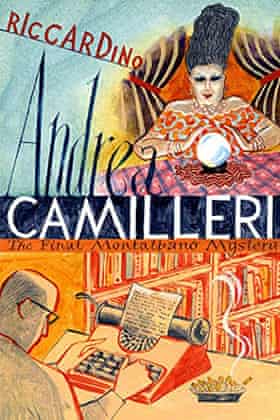
Montalbano returns in Andrea Camilleri's posthumous novel
This article is more than 1 year old
Riccardino, author’s final book of the popular crime series, hits shelves a year after his death
Agence France-Presse in Rome Thu 16 Jul 2020 19.25 BST
The last whodunnit featuring the famed Sicilian police inspector Salvo Montalbano has hit the shelves in Italy, nearly a year to the day after the death of the author Andrea Camilleri.
Riccardino was first penned in 2005 and then tweaked in 2016, after which Camilleri gave it to his publisher on the promise that it would not be released until after his death. He died on 18 July 2019 at the age of 93.
Translated by Stephen Sartarelli — The publication of the Inspector Montalbano stories in English spans nearly two decades so it’s no wonder we have formed such an attachment to the irascible but brilliant detective. Now, however, the curtain is about to fall and we must say goodbye.
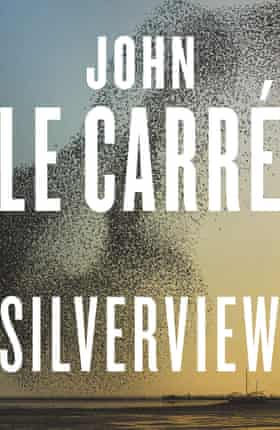
Le Carré’s final complete novel was published in October, in the week of what would have been his 90th birthday. Having made his fortune, Julian Lawndsley has left the City to run a bookshop in East Anglia, where a meeting with an eccentric Polish émigré and former spy draws him into a web of intrigue. The cast of characters, including several husband-and-wife spy pairings, are compromised by secrets, loyalties and allegiances both professional and familial, and no one, least of all the Service itself, is innocent. Valedictory, with a final turn of events that ends surprisingly but pleasingly in a cock-up, this is a satisfying coda to the career of the finest thriller writer of the 20th century.
Andrea Camilleri, translated by Stephen Sartarelli(Mantle)
Written in 2005, Camilleri’s final Inspector Montalbano novel was kept in a safe for publication after the author’s death, which occurred in 2019. Like its much loved predecessors, Riccardino is set in the fictional Sicilian town of Vigata, but this time the increasingly tired and tetchy detective is joined by the author himself, who makes ever more far-fetched suggestions as to how the investigation into the death of the titular character should proceed. The absurdity mounts as the Catholic church persists in sticking its Jesuitical oar in and the revelations about the dead man’s private life grow ever more colourful. This novel is a fittingly exuberant last outing.
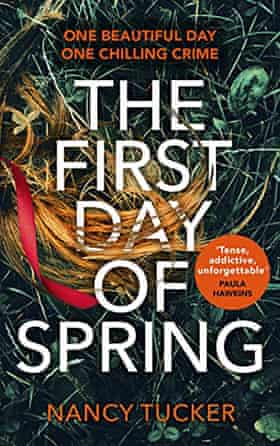
“I killed a little boy today …” From the first line of this assured debut, we know that eight-year-old Chrissie is a murderer. Neglected by her parents to the point of starvation, she is desperate for both physical and emotional nourishment, and her every action – bullying her classmates, making trouble at school, and finally strangling two-year-old Steven – is a heartbreaking attempt to make somebody notice her existence. The narrative is split between the child Chrissie and the adult she becomes, released from a secure unit and renamed Julia, now with a child of her own. Tucker explores the difficult subjects of cruelty, guilt and redemption with compassion and extraordinary finesse, in a way that will resonate long after the final page.
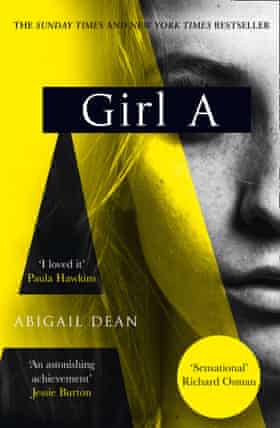
Another superb first novel that is all the more powerful for being unsensational, Girl A is the story of Lex, the eldest daughter of a religious fanatic who, enabled by his wife, abused his children so appallingly that the family home became known as the “house of horrors”. Many years later, Lex, now a lawyer in New York, is compelled to relive the past; she returns to England to oversee the house’s conversion to a community centre and is forced into contact with her siblings, all of whom have reacted to their childhood experiences in markedly different ways. One of the best depictions I have read of the difficulties of “moving on” and the impossibility of explanations to outsiders, this book is haunting and powerful, with a hard-won hope.
Vigilante-for-hire Virgil Wounded Horse acts on behalf of those on the Rosebud Native American Reservation in South Dakota who have been failed by both the toothless tribal police and a foot-dragging US criminal justice system. After his teenage nephew almost dies from a heroin overdose, Virgil is determined to take on the men responsible for bringing the drug into the community. However, with limited authority and some powerful adversaries, his life is becoming both complicated and very dangerous. In his debut novel, Weiden, a member of the Sicangu Lakota Nation, gives a fascinating insight into an often overlooked world, and draws the reader into a satisfying mystery.
ndrea Camilleri is the most successful author in Italy, yet little more than a decade ago he was a virtually unknown septuagenarian who had written a handful of historical novels, including the intriguing Il birraio di Preston (The Brewer from Preston, 1995), set in his native Sicily. In 1994, however, he had invented Detective Inspector Salvo Montalbano in the novel La forma dell'acqua (The Shape of Water), and now both he and his hero are household names. It was never Camilleri's intention to write more than a couple of Montalbano books, and only when the second and most original story, Il cane di terracotta (The Terracotta Dog, 1996), was greeted with enthusiasm by critics and readers alike did Camilleri decide to put his middle-aged policeman through all sorts of increasingly complicated criminal hoops. The crimes are nothing if not topical: illegal immigrants, drug-peddling, prostitution, fraud and money-laundering. A recent villain is a doctor in thrall to the Mafia, who provides them with human hearts, livers and kidneys. In the small fictional Sicilian town of Vigàta, where Montalbano is based, the vilest things are seen to happen.
Italian writer Andrea Camilleri in his house in Rome. Photograph: Fabrizio Villa
'Italians go for the strongman': Montalbano author on fascism and the future
Andrea Camilleri, the novelist behind the much-loved Inspector Montalbano, has become a vocal critic of the Italian government Lorenzo Tondo in Rome Friday 5 April 2019
I
nspector Montalbano’s fate is already sealed, his end written 13 years ago by Sicilian novelist Andrea Camilleri, who created the character in the early 1990s. Since then he has become the most beloved Italian policeman in the world and the subject of a popular television series in the UK.
In 2006 the inspector’s “grand finale” was put in a drawer in the Palermo offices of Camilleri’s publisher for safekeeping. The content is, of course, top secret, but the date of publication of the grumpy detective’s last act is approaching.
Far from retreating from public life himself, his creator, now 93 and blind, has become one of the most outspoken critics among Italian intellectuals of the country’s rightwing populist coalition government, especially its anti-immigrant far-right interior minister, Matteo Salvini.
“Salvini reminds me of a member of the fascist regime”, says Camilleri in a rare interview at his home in Rome.
“He has the same fascist arrogance, the same smug representation of power,” he adds, his characteristic deep voice hovering somewhere between Tom Waits and the Tolkien wizard, Gandalf. “Like when he decided to close Italian ports to ships carrying migrants in the Mediterranean. I don’t believe in God, but if there’s a Judgment Day, those like him will certainly end up in hell for their hypocrisy”.
The TV series based on Camilleri’s books, Inspector Montalbano, has delivered a pro-migrant message to Italian viewers. Photograph: BBC/RAI
In a scene from an episode of Inspector Montalbano that aired in Italy in February, the detective delivered a pro-migrant message, angering supporters of Salvini. Montalbano jumps into the sea to recover the body of a migrant who drowned attempting to reach the shore. In another scene, he shouts to his colleagues: “Enough with the tale of Isis terrorists travelling on migrant boats.” The episode reached an audience of 11 million viewers and caused a heated controversy. While many supported the inspector, others attacked him. “Enough with the pro-migrant propaganda,” someone wrote on Twitter. The programme’s detractors should not have been surprised. Migrants have always been a central theme in Camilleri’s novels.
Last month, a merchant ship was hijacked by the same refugees and migrants that it had rescued off the coast of Libya. The captain was forced to steer towards Europe after the migrants and refugees realised they were being taken back to Tripoli, where they would have ended up in the hell of a detention centre.
“Salvini called it an act of piracy, but to me those migrants were only acting in self-defence,” says Camilleri, whose novels led to a boom in the number of British tourists heading for the parts of southern Sicily where the Montalbano books and TV dramas are set.
In recent years many Italian writers have expressed their disapproval of the government’s policies. The anti-mafia writer Roberto Saviano faces up to three years in prison after being summoned to stand trial on charges of libelling Salvini. Saviano, who has focused on connections between Salvini’s League party and Calabrian ‘Ndrangheta mafia groups, called Salvini the “minister of the criminal underworld”.
As far as organised crime is concerned, Camilleri says that in his novels mafia bosses are never protagonists and are almost always placed in secondary roles.
“Not because I fear them”, says Camilleri. “But I believe that writing about mafiosi often makes heroes out of them. I’m thinking of The Godfather, where Marlon Brando’s superb performance distracts us from the realisation that he also commissioned murders. And this is a gift that I have no intention offering to the mafia.”
If the mafia has a marginal role in Camillleri’s novels, fascism looms large. Camilleri, who was born in Porto Empedocle in Sicily in 1925, has often written about the impact of fascism on his life.
He cites as an example his participation in 1942 in an international conference of the fascist and Nazi youth chaired by the head of the Hitler Youth, Baldur von Schirach. Camillerisays that after having heard Von Schirach speak that day, he imagined a world “without his beloved Jewish writers whom Von Schirach labelled vile and degenerate. I began hoping that the Nazis would never win the war”. Camilleri subsequently fell into a deep existential crisis, and deteriorated physically. “I was totally consumed, and even worse I was living in a country dominated by fascists and could not tell anyone”.
Andrea Camilleri: ‘Italians like to put their fate in the hands of someone who will make decisions for them’ Photograph: Ulf Andersen/Getty Images
Camilleri has often stated that the support for Salvini reminds him of the Mussolini era. He believes that there is an almost anthropological link between the fascism of the past and the rightwing populism of today, especially in big cities.
“In 1945, immediately following the Allied liberation, I read an article by the New York Times journalist Herbert Matthews,” Camilleri says. “It was titled ‘You haven’t killed him’”.
Matthews claimed that despite having hung Mussolini from his feet in Milan’s Piazzale Loreto, Italians had not freed themselves from fascism, which would continue to live on within them.
“That day I thought Matthews was an idiot,” says Camilleri, lighting his second cigarette. “Then a month and a half later six members of the Movimento Sociale Italiano [Italian Social Movement], a party founded by ex-members of the fascist regime, were elected to parliament. Then I thought Matthews was right and I was the idiot. You see, the truth is that Italians naturally go for the strongman. They like to put their fate in the hands of someone who will make decisions for them.”
Italian dictator Benito Mussolini (foreground centre) joins in a rehearsal march for a military parade in honour of Hitler’s visit to Rome, January 1938. Photograph: AP
As Inspector Montalbano – whose name, Camilleri reveals, pays homage to the Spanish writer Manuel Vázquez Montalbán – nears his end locked in a drawer in Palermo, Camilleri still has the same desire to discuss the unfolding of history as when he was a young man. He has not lost faith in humans, but he does believe that history is moving toward a grim future.
“The great Sicilian writer Leonardo Sciascia once told a story,” he says. “At the dawn of fascism, a man asked a blind peasant what the future held. The peasant quipped, ‘even if I’m blind, it all looks black’. Today I’m as blind as that peasant. And my answer would be the same.”
A book for the beach: The Snack Thief by Andrea Camilleri
Wily but decent, this detective is more concerned with the human characters around him than simple crime-solving
Never has Inspector Montalbano's character - a unique blend of humor, cynicism, compassion, earthiness, and love of good food - been more compelling than in Andrea Camilleri's third Montalbano novel, The Snack Thief.
When an elderly man is stabbed to death in an elevator and a crewman on an Italian fishing trawler is machine-gunned by a Tunisian patrol boat off Sicily's coast, only Inspector Montalbano suspects a link between the two incidents. His investigation leads to the beautiful Karima, an impoverished house cleaner and sometime prostitute, whose young son steals other school children's mid-morning snacks. But Karima disappears, and the young snack thief's life - as well as Montalbano's - is endangered when the inspector exposes a viper's nest of government corruption and international intrigue.
The Snack Thief is followed by the fourth Inspector Montalbano novel, The Voice of the Violin.
Both farcical and endearing, Montalbano is a cross between Columbo and Chandler's Philip Marlowe, with the added culinary idiosyncrasies of an Italian Maigret
Guardian
The novels of Camilleri breathe out the sense of place, the sense of humour and the sense of despair that fills the air of Sicily. Remarkable
Andrea Camilleri, Author, Cyril Pearl, Author, trans.
In his third Inspector Salvo Montalbano mystery to be made available in the U.S., Camilleri (The Shape of Water) displays all the storytelling skills that have made him an international bestseller. When gunfire from a Tunisian patrol boat kills a worker on an Italian fishing trawler, the worldly Sicilian police inspector knows that this is just the type of situation his overly ambitious second-in-command, Mimi Augello, will want to exploit. Meanwhile, Montalbano has to look into the stabbing death of a retiree in the elevator of the victim's apartment building. While the trawler incident appears to resolve itself, the elevator slaying gets more complex by the minute. Soon Montalbano is searching for the retiree's beautiful housekeeper (and sometimes prostitute) and her son. It's only when he finds the boy (the snack thief of the title) that Montalbano learns the true nature of the case, its relation to the trawler shooting and the danger it poses. Although warned to keep his distance, Montalbano, who can't deny his investigative instincts any more than he can refuse a hardy portion of sardines a beccafico, proceeds headlong into the thick of government corruption with a risky plan to set things right. Montalbano, despite his curmudgeonly exterior, has a depth to him that charms. Readers are sure to savor this engrossing, Mafia-free Sicilian mystery.