Showing posts with label Short Stories. Show all posts

Sunday, September 27, 2026

Shirley Jackson / The Man in the Woods


The Man in the Woods

Wearily, moving his feet because he had nothing else to do, Christopher went on down the road, hating the trees that moved slowly against his progress, hating the dust beneath his feet, hating the sky, hating this road, all roads, everywhere. He had been walking since morning, and all day the day before that, and the day before that, and days before that, back into the numberless line of walking days that dissolved, seemingly years ago, into the place he had left, once, before he started walking. This morning he had been walking past fields, and now he was walking past trees that mounted heavily to the road, and leaned across, bending their great old bodies toward him; Christopher had come into the forest at a crossroads, turning onto the forest road as though he had a choice, looking back once to see the other road, the one he had not chosen, going peacefully on through fields, in and out of towns, perhaps even coming to an end somewhere beyond Christopher’s sight.

Friday, September 25, 2026

Sea Oak by George Saunders

George Saunders


SEA OAK

by George Saunders

JOYSTICKS
AT SIX MR. FRENDT comes on the P.A. and shouts, "Welcome to Joysticks!" Then he announces Shirts Off. We take off our flightjackets and fold them up. We take off our shirts and fold them up. Our scarves we leave on. Thomas Kirster's our beautiful boy. He's got long muscles and bright-blue eyes. The minute his shirt comes off two fat ladies hustle up the aisle and stick some money in his pants and ask will he be their Pilot. He says sure. He brings their salads. He brings their soups. My phone rings and the caller tells me to come see her in the Spitfire mock-up. Does she want me to be her Pilot? I'm hoping. Inside the Spitfire is Margie, who says she's been diagnosed with Chronic Shyness Syndrome, then hands me an Instamatic and offers me ten bucks for a close-up of Thomas's tush.

Monday, June 22, 2026

The Daughters of the Moon by Italo Calvino


Italo Calvino


The Daughters of the Moon

by Italo Calvino

Deprived, as it was, of a covering of air to act as a protective shield, the moon found itself exposed right from the start to a continual bombardment of meteorites and to the corrosive action of the sun’s rays. According to Thomas Gold, of Cornell University, the rocks on the moon’s surface were reduced to powder through constant attrition from meteorite particles. According to Gerard Kuiper, of the University of Chicago, the escape of gases from the moon’s magma may have given the satellite a light, porous consistency, like that of a pumice stone.

Wednesday, May 20, 2026

Into the Light by Rachel Cusk


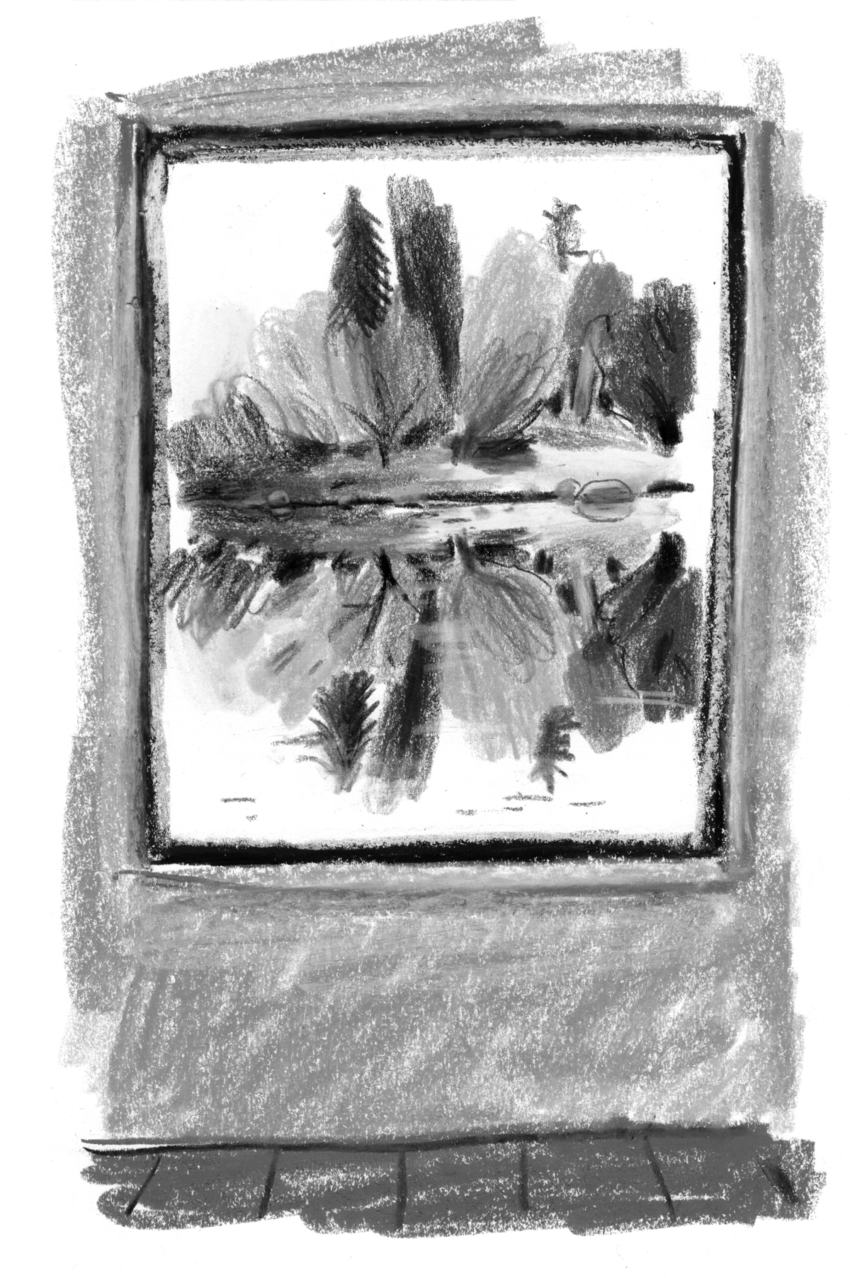
Black-and-white sketch of evergreen trees reflected in a river, as seen through a window
Illustration by Damien Cuypers
FICTION

Into the Light

by Rachel cusk


THE ARTIST B was married three times, two of them to the same man, though on the latter occasion his right leg was missing. In the years of their separation an accident had occurred that required the leg to be amputated. For social events he used a prosthetic limb that was awkward and uncomfortable to wear. It was at one of these that their second meeting, after fifteen years of absence, had taken place.

Sunday, May 17, 2026

Process by Katherine Dunn


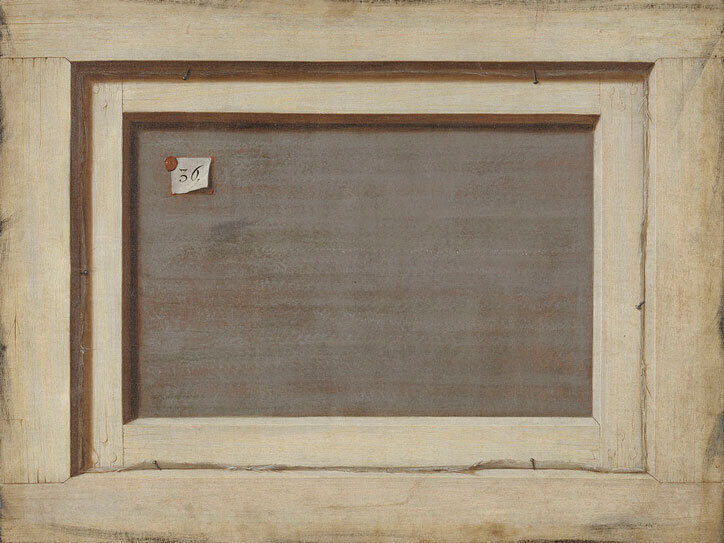
Cornelis Norbertus Gijsbrechts, The Reverse of a Framed Painting, 1670. Public Domain

FICTION

Process

by Katherine Dunn


THE MUSTY SILENCE of his childhood bred in Joseph Jaikins a susceptibility to the propaganda of solitude. He had been orphaned horribly and early and reared by a decent elderly aunt. His restlessness was quiet, and his school years resigned him to frustration. At the age of eighteen, he was courteous but shy, and dutiful without ambition.

Saturday, May 16, 2026

Man Overboard by Jean McGarry


A stack of old issues of The Yale Review. Courtesy Pentagram

FICTION

Man Overboard

Jean McGarry


THERE CAME A DAY WHEN, DAMN IT, he just couldn’t take any more. He’d offered the pearl-skinned girl a home, a little gal of her own, and upkeep. She’d quit her job, got as fat as she could, and outsmarted him in every way. Entering his own clean and decorated house, he felt skinned and gnawed, burnt by judgment, hobbled in his wants, urges, and habits by the scorn, digs, cracks, jabs, and smack-downs.

Save the Pedestals by Ivan Vladislavić


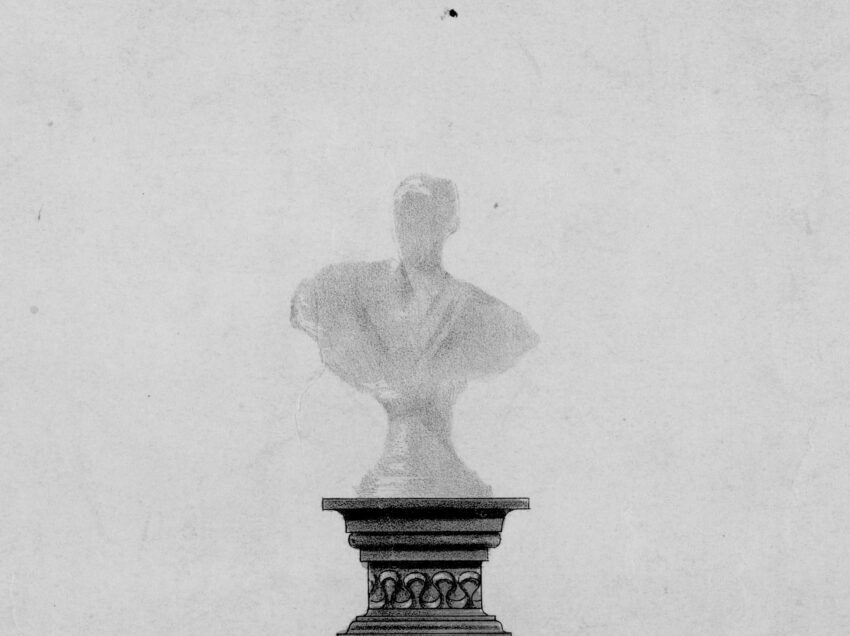
Plinth with a shadow of a bust on top
Adapted from Léon Laroche, Three plinths with drapes, ca. 1885–95. Courtesy Rijksmuseum.
FICTION

Save the Pedestals

Ivan Vladislavić


SHE DREAMS: THE EMPTY PEDESTAL is made of glass and resting in it like bones in a reliquary are the names of the statue’s children.

Comrade A had the habit of rapping on the toes of his boots with his cane as he walked. They were safety boots of a kind you can’t buy any more, with heat-resistant soles and steel toecaps from which the rubber tip of the cane rebounded. This drumbeat irritated Ma Z, but she had known Comrade A long enough to hold her tongue. He was touchy about the boots, which he’d been wearing since his days as a shop steward in the Metalworkers’ Union. He didn’t care that they were down at the heel and looked odd with a suit, and he would give anyone who dared to comment a lecture on the hazards of the shop floor. These boots had saved his feet more than once when a metal bar slipped off the rollers in the factory. You could still see the dents. He was touchy about the walking stick too, although he had come by that more recently.

Wednesday, May 13, 2026

One Mississippi, Two Mississippi, Three Mississippi by Jonas Hassen Khemir


A scattering of digital blocks depicting the numbers two, nine, nine, and five in an art installation by Tatsuo Miyajima
Tatsuo Miyajima, installation view of Art in You, 2022. Courtesy the artist and Lisson Gallery, London

One Mississippi, Two Mississippi, Three Mississippi

By Jonas Hassen Khemiri


THERE HE STANDS NOW, and it’s either him or his brother. It’s him. It has to be him. You can tell by the clothes, the posture, the glances he casts at the station clock. His brother would never try to disguise his height by shifting his weight onto one leg and pushing the other slightly out in front. His brother would never feel this anxious just because someone was a little late. That’s something only he would do, he who is not his brother, he who stands there on the platform and has just calculated that fifteen minutes is nine hundred seconds and nine hundred seconds is nothing.

The Rabbit’s Foot by Sigrid Nunez


Illustration by Damien Cuypers


The Rabbit’s Foot

by Sigrid Nunez


HE WAS A DUKE, or an earl—he was some sort of nobility—and not the first of his kind to visit the hotel. Royalty, rock stars, movie stars, rich and famous people from all over the world came to stay there. Some had become familiar faces, returning each time they happened to be in New York. Couples who’d spent their wedding nights at the hotel booked the same room for their anniversaries, and there was a family that got together every Christmas and requested that a tree and decorations for hanging be waiting in their suite when they arrived. As for the English lord, he’d been there once already, a year ago, then as now by himself. It was not uncommon for a guest to sign the register using a false name. Last time, he’d been the Count of Monty Python. This time, he was Lord Sauron.

Tuesday, May 12, 2026

What Are We Doing, What Have We Done by Nathan Englander


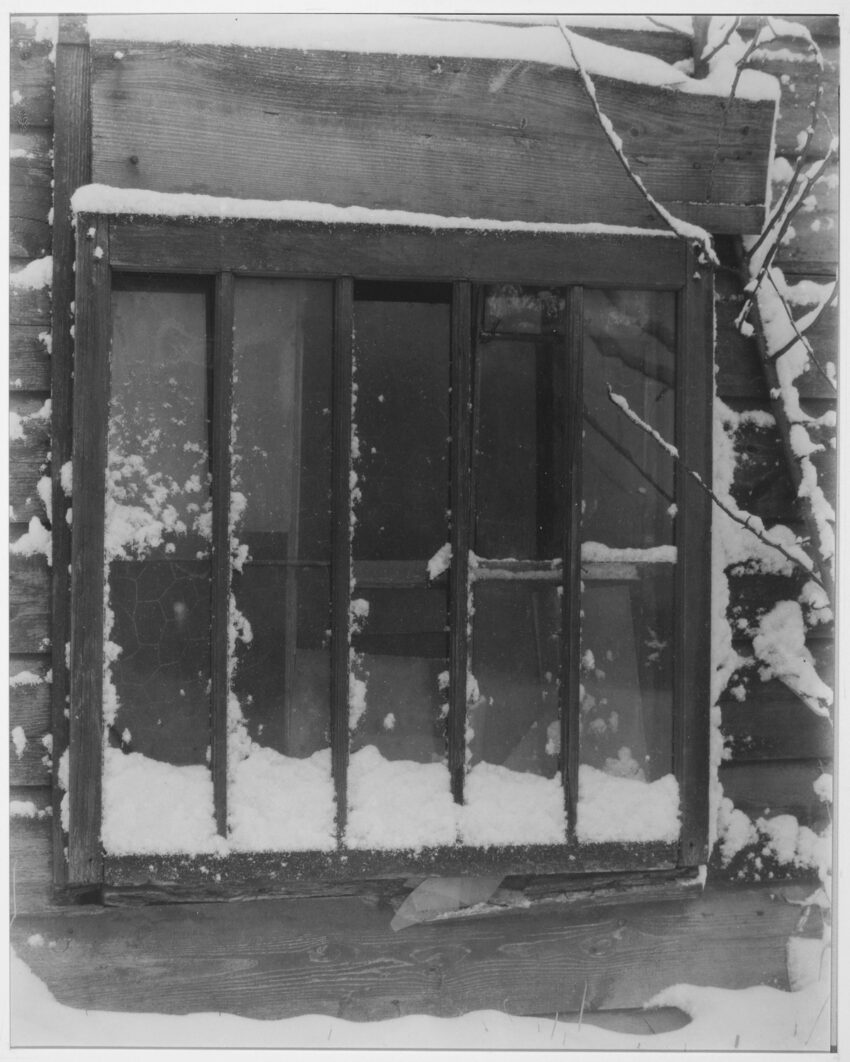
Photographer Alfred Stieglitz’s “Window: Wood, Glass, Snow,” a 1923 photo depicting a grilled window covered in snow
Alfred Stieglitz, Window: Wood, Glass, Snow, 1923. Alfred Stieglitz Collection, Chicago Art Institute, CC0 Public Domain

What Are We Doing, What Have We Done

by Nathan Englander


THERE WAS A LIST of things Alex swore he’d tend to before the baby arrived. The poplar shingles, the nursery door, the staircase to the cellar that was missing a step. Desperate as he was to get it all done, Alex was stuck in a funk from which he couldn’t pry himself free. He knew his wife had every right to be frustrated with him and wished he could tell her so. But communicating with Shannon was yet another thing Alex lately couldn’t do.

Terms and Conditions by Daniel Lefferts


Illustration by John Brooks

Terms and Conditions

by Daniel Lefferts


LAST SUMMER MY FRIEND Andrew and I spent a few days in Fort Lauderdale. We did not enjoy our time there very much. I’d been reluctant to go for a number of reasons. Out of our six-person friend group Andrew and I were the least close, Florida in August sounded miserable, and I was low on PTO and low on cash. But Andrew insisted. He was bored and everyone else was busy. He even offered to cover my plane ticket.

Gaseosa by María José Bilbao


Odilon Redon, Beatrice, 1897. Courtesy the Cleveland Museum of Art, Gift of The Print Club of Cleveland

Gaseosa

By María José Bilbao

Translate by
 Abby Melick


NOW THE WHOLE WORLD knows her as the woman who gave up her body. According to official statistics, she’s the third person to become a gas in all of South America.

Sunday, May 10, 2026

An Angel Passed Above Us by László Krasznahorkai


An Angel Passed Above Us

by László Krasznahorkai  
Translate by
 John Batki

“. . . stets das Böse will, und stets das Gute schafft.”

“. . . forever strives for Evil, and forever does Good.”

—Goethe, Faust

Lanternfly by Emma Copley Eisenberg


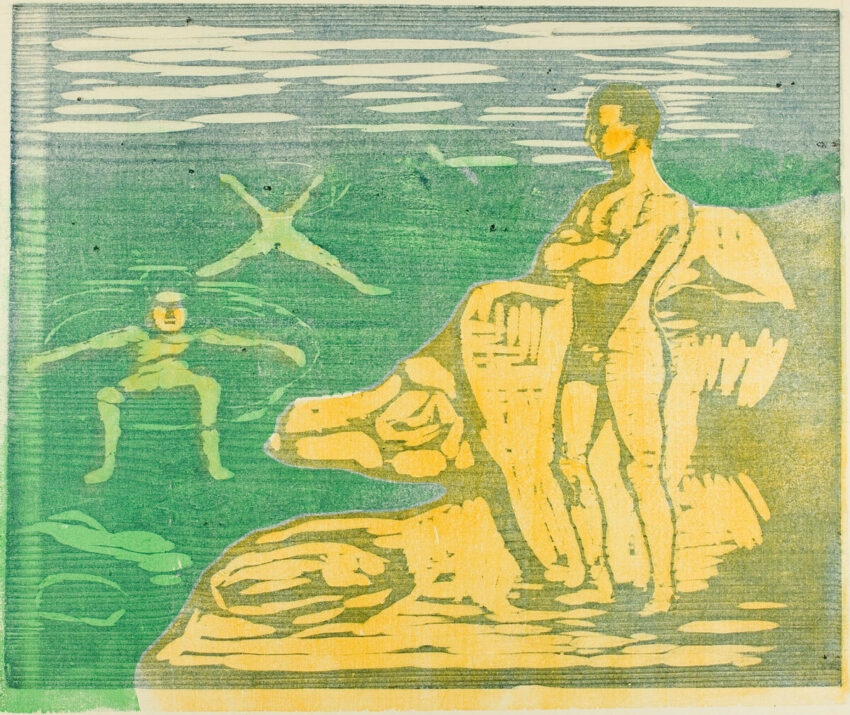
Edvard Munch, Boys Bathing, 1899. Courtesy the Art Institute of Chicago, Clarence Buckingham Collection


Lanternfly

by Emma Copley Eisenberg

A WEEK INTO MY SOJOURN with Rob, we’d established a routine: black coffee in his swan mug; the slow, puffing two-block walk to the beach; the selection of the day’s spot and the digging of the hole for the umbrella; the rise and fall of a book on each of our bellies; lunch from the cooler and then a nap when the sky turned hazy. By late afternoon, Rob would wobble to the beach snack bar, returning with a sheaf of fries for himself and a Chipwich for me. Though covered in a fine layer of ice crystals, the Chipwich was soon soft. I ate the edges first, the mini chocolate chips crunching between my back molars. 

Thursday, May 7, 2026

Antarctica by Jen Silverman


Rumpled white sheet
Photo by Cherry Laithang


Antarctica

by Jen Silverman


“ONE SUMMER, MANY decades ago”—the poet said—“I had an affair with two scientists, a father and son, at an Antarctic science station. Across six months of polar darkness, I fell first for the father, then for the son.”

Monday, April 20, 2026

Hell so feared by Juan Carlos Onetti


Juan Carlos Onetti


Hell so feared 

By Juan Carlos Onetti


The first letter, the first photograph, was delivered to him at the newspaper between midnight and closing. He was banging on the typewriter, a little hungry, a little sick from coffee and tobacco, dedicated with familiar pleasure to the march of the sentence and the compliant appearance of words. He was writing, “It is worth noting that the commissioners noticed nothing suspicious or even out of the ordinary in Play Boy’s crowning triumph, when he took full advantage of the wintry track and shot ahead like an arrow at the decisive moment,” when he saw the red hand stained with ink from Politics between his face and the typewriter, holding out the envelope.

Saturday, April 18, 2026

Remember by Juan Rulfo


REMEMBER
by Juan Rulfo

Remember Urbano Gómez, Don Urbano’s son, Dimas’s grandson, the one who directed pastorelas, the Christmas plays, and who died reciting the “cursed angel complaint” during the time of influence. It’s been years since then, maybe fifteen. But you must remember him. Remember we used to call him “El Abuelo,” Grandfather, because his other son, Fidencio Gómez, had two very playful daughters: one dark and very short, who’d been given the mean nickname of “La Arremangada,” Stuck Up, and the other one who was towering and who had light blue eyes and who people even said wasn’t his and about whom you can’t say much more than she suffered from hiccups. Remember the commotion that broke out when we were in Mass and at the exact moment of the Elevation she had a hiccup attack, which sounded as if she were laughing and crying at the same time, until they took her outside and they gave her a bit of sugar water and then she calmed down. She ended up marrying Lucio Chico, the owner of the mescal bar that used to belong to Librado, up the river, where the Teóduloses’ linseed mill is.

Luvina by Juan Rulfo


Luvina

by Juan Rulfo 


Of all the high ranges in the south, the one in Luvina is the highest and rockiest. It’s full of that gray stone from which they make lime, but in Luvina they don’t make lime from it nor do they put it to any good use. They call it crude stone there, and the incline that rises toward Luvina is called Crude Stone Hill. The wind and sun have taken care of breaking it down, so the earth around there is white and shining, as if it were bedewed with morning dew; though all this is just words, because in Luvina the days are as cold as the nights and the dew grows thick in the sky before it manages to reach the earth.

Tuesday, April 14, 2026

Macario by Juan Rulfo


MACARIO
by Juan Rulfo


I’m sitting by the sewer waiting for the frogs to come out. Last night, while we were having dinner, they started kicking up a huge ruckus and didn’t stop singing until dawn. That’s what my godmother says, too: the frogs’ shouting scared her sleep away. And she’d like to sleep now. That’s why she told me to sit here, near the sewer, waiting with a board in my hand so that I can smash to smithereens any frog that hops out . . . Frogs are green all over, except for their bellies. Toads are black. My godmother’s eyes are black, too. Frogs are good to eat. You shouldn’t eat toads; but I’ve eaten them, too, though you’re not supposed to, and they taste the same as frogs. Felipa is the one who says it’s bad to eat toads. Felipa has green eyes, like a cat’s. She’s the one who feeds me in the kitchen when it’s time for me to eat. She doesn’t like me to hurt frogs. But, for the most part, it’s my godmother who orders me around . . . I love Felipa more than my godmother. But it’s my godmother who takes money out of her purse so Felipa can buy all the stuff we eat. The only thing Felipa does is stay in the kitchen and fix food for the three of us. Since I’ve known her, she hasn’t done anything else. It’s up to me to wash the dishes. Bringing in wood for the stove is my job, too. Then it’s my godmother who hands out the food. After she eats, she makes two little piles, one for Felipa, the other for me. But sometimes Felipa doesn’t feel like eating, so then the two piles are for me. That’s why I love Felipa, because I’m always hungry and never full, not even after I eat her food. Even if people say you should be full after eating, I know I never get full, even if I eat everything they give me. And Felipa knows this, too . . . On the street, people say I’m crazy because I’m always hungry. My godmother has heard people saying this. I haven’t heard it. My godmother won’t let me go out alone on the street. When she takes me out for a walk, it’s to go to church to hear Mass. She puts me right next to her and ties my hands together with the fringe of her shawl. I don’t know why she ties my hands; she says it’s because I might do something crazy. One day people came up with the idea that I was choking someone; I was wringing some lady’s neck just for the heck of it. I don’t remember. But, with all this, it’s my godmother who says I do these things, and she never tells a lie. When she calls me to eat, it’s to give me my part of the food, and not like other people who invite me to eat with them, and then when I get near them, they throw rocks at me until I run away with no food or anything. No, my godmother treats me well. That’s why I’m happy in her house. Besides, Felipa lives here. Felipa is very good to me. That’s why I love her . . . Felipa’s milk is sweet like hibiscus flowers. I’ve drunk goat’s milk and milk from a sow that had recently given birth; but no, it isn’t as good as Felipa’s milk . . . It’s been a long time since she let me suck those mounds she has where we just have ribs, and where better milk than what my godmother gives us for lunch on Sundays comes out of her, if you know how to get it out of her . . . Every night Felipa would come to the room I sleep in, and would snuggle up to me, lying on top of me or a little to the side. Then she would take them out so I could suck that sweet and warm milk that would come out in streams on my tongue . . . I’ve eaten hibiscus flowers many times in order to take care of the hunger. And Felipa’s milk had the same flavor. I just liked it better because, while she was passing those mouthfuls on to me, Felipa would tickle me all over. Then what happened is that she would always fall asleep next to me, until daybreak. And that helped me a lot; because then I didn’t care about the cold or about any fear of being condemned to Hell if I died alone there on one of those nights . . . Sometimes I’m not so afraid of Hell. But sometimes I am. Then I like to give myself a good scare with the idea that I’ll go to Hell one of these days, for being such a hard head and for banging it against the first thing that comes my way. But Felipa comes and scares away my fears. She tickles me with her hands like she knows how to and she blocks that fear I have of dying. And for a little while I forget about it . . . Felipa says, when she feels like being with me, that she will tell the Lord all about my sins. That she’ll go to Heaven very soon and talk to Him, asking Him to forgive me for all the great wickedness that fills my body from top to bottom. She’ll ask him to pardon me, so I don’t have to worry anymore. That’s why she goes to confession every day. Not because she’s bad, but because I’m filled with demons inside me, and she has to drive those little devils out of my body by going to confession for me. Every day. Every afternoon of every day. She’ll do me that favor for life. That’s what Felipa says. That’s why I love her so much . . . But the thing about having such a hard head is the big thing. I bang it against the pillars in the corridor for hours on end and nothing happens to it, it can stand all that banging without even breaking. And I bang it against the floor; first slowly, then harder and it sounds like a drum. Just like the drum that goes with the chirimía, when the chirimía is brought to the Lord’s church service. And then I’m in church, tied to my godmother, hearing the boom boom of the drum outside . . . And my godmother says that if there are bedbugs and cockroaches and scorpions in my room it’s because I’m going to burn in Hell if I go on banging my head against the floor. But what I love is to listen to the drum. That’s what she should know. To listen to it, like when I’m in church, waiting to go out to see how you can hear the drum from so far away, to the very far end of the church and over the priest’s condemnations . . . “The road to good things is filled with light. The road to bad things is dark.” That’s what the priest says . . . I get up and leave my room while it’s still dark. I sweep the street and get back to my room before daylight catches me. Things happen on the street. Like people can split open your head from throwing stones. It rains big, sharp stones from everywhere. And then you have to mend your shirt and wait several days for the cuts on your face and knees to heal. And then again put up with having your hands tied, or they’ll right away pull off the scabs and a stream of blood will come out again. Even though blood tastes good, it doesn’t taste like Felipa’s milk . . . That’s why I always stay in the house, so they don’t throw stones at me. As soon as I’m fed, I lock myself in my room and bar the door so sins don’t find me when they see it’s dark. And I don’t even light the torch to see where the cockroaches are climbing on me. Now I stay still. I lie down on my sacks, and as soon as I feel a cockroach crawling up my neck with its scratchy feet, I smash it to smithereens with my hand. But I don’t light the torch. I’m not going to let my sins catch me off guard with the torch lit up looking for all the cockroaches that get under my blanket . . . Cockroaches pop like firecrackers when you mash them. I don’t know if crickets pop. I never kill crickets. Felipa says crickets make a sound all the time, without even stopping to breathe, so the screams of souls suffering in Purgatory can’t be heard. The day crickets disappear, the world will be filled with the screams of holy souls and all of us will start running scared out of our wits. Besides, I like to keep an ear out to listen to the noise of the crickets. There are many in my room. Perhaps there are more crickets than cockroaches in the folds of the sacks where I sleep. There are scorpions, too. They fall from the ceiling every so often and you have to wait, holding your breath while they make their way across you until they reach the ground. Because if your arm moves or your bones start shaking, you feel the burn of the sting right away. That hurts. Once Felipa got stung in her behind by one of them. She started moaning and screaming quiet screams to the Virgen Santisima so her behind wouldn’t be ruined. I rubbed spit on her. I spent the whole night rubbing spit on her and praying with her, and for a while, when I saw my remedy wasn’t making her any better, I used my eyes as much as I could to help her cry . . . Anyway, I’m more comfortable in my room than outside, where people who like to beat on people can notice me. Nobody does anything to me here. My godmother doesn’t yell at me if she sees me eating her hibiscus flowers, or her myrtles, or her pomegranates. She knows how much I want to eat all the time. She knows my hunger never ends. She knows that no food is enough to fill my gut, even though I go about snitching things here and there all the time. She knows I gobble up the chickpea slop I feed the fat hogs with and the dry corn I feed the skinny pigs with. So she already knows how hungry I am from dawn to dusk. And as long as I find things to eat in this house, I’ll stay here. Because I think the day I stop eating I’m going to die, and then I will surely go straight to Hell. And no one will get me out of there, not even Felipa, even though she’s so good to me, nor the escapulario my godmother gave me that I wear hung around my neck . . . Now I’m next to the sewer waiting for the frogs to come out. And not one has come out in all this time I’ve been talking. If they take any longer to come out, I’ll probably fall asleep, and then there’ll be no way to kill them, and my godmother won’t be able to sleep if she hears them singing, and she’ll get really angry. And she’ll ask one in the row of saints she has in her room to send devils after me, so they can drag me straight to eternal damnation, without even stopping in Purgatory, and I won’t be able to see either my papa or my mama, which is where they are . . . I better go on talking . . . What I want the most is to try a few mouthfuls of Felipa’s milk again, good and sweet milk like the honey that comes from under the hibiscus flowers . . .

THE END


Tuesday, March 24, 2026

Hans Christian Andersen / The Elf of the Rose


Illustration by Veronica Dye Johnson


THE ELF OF THE ROSE

A fairytale by Hans Christian Andersen


In the midst of a garden grew a rose-tree, in full blossom, and in the prettiest of all the roses lived an elf. He was such a little wee thing, that no human eye could see him. Behind each leaf of the rose he had a sleeping chamber. He was as well formed and as beautiful as a little child could be, and had wings that reached from his shoulders to his feet. Oh, what sweet fragrance there was in his chambers! and how clean and beautiful were the walls! for they were the blushing leaves of the rose.