Showing posts with label Tracey Madeley Jones. Show all posts

Wednesday, April 1, 2026

Dickens’s critique of reason without imagination


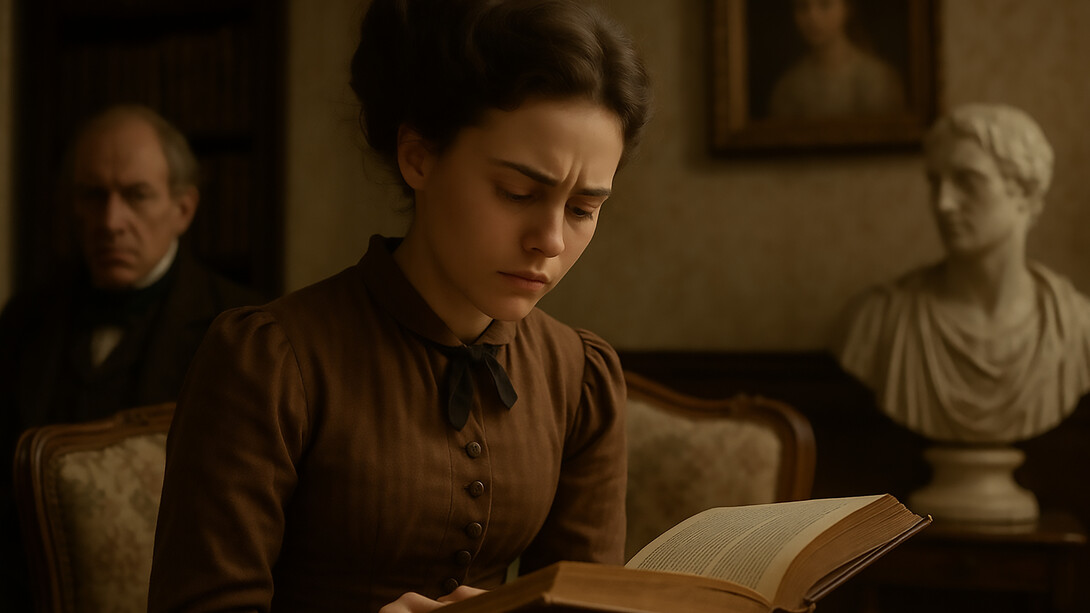
A young woman studies in a Victorian room, caught between the weight of facts and the quiet stirrings of imagination


Dickens’s critique of reason without imagination

Hard Times exposes the emotional, moral, and social costs of a world built on rigid rationality

10 FEBRUARY 2026, 


The Age of Enlightenment emphasised reason over emotion, with the unexplained relegated to the realms of superstition and ignorance. Gothic writers of the late eighteenth century and Romantic poets of the early nineteenth century sought to reintroduce a sense of wonder and awe of the natural world. In Hard Times, Dickens looks at how facts stifle and corrupt individual expression of emotion and empathy. He also exposes the delusion and hypocrisy the characters labour under regarding their own lives.

Lewis’s satire on faith and weakness


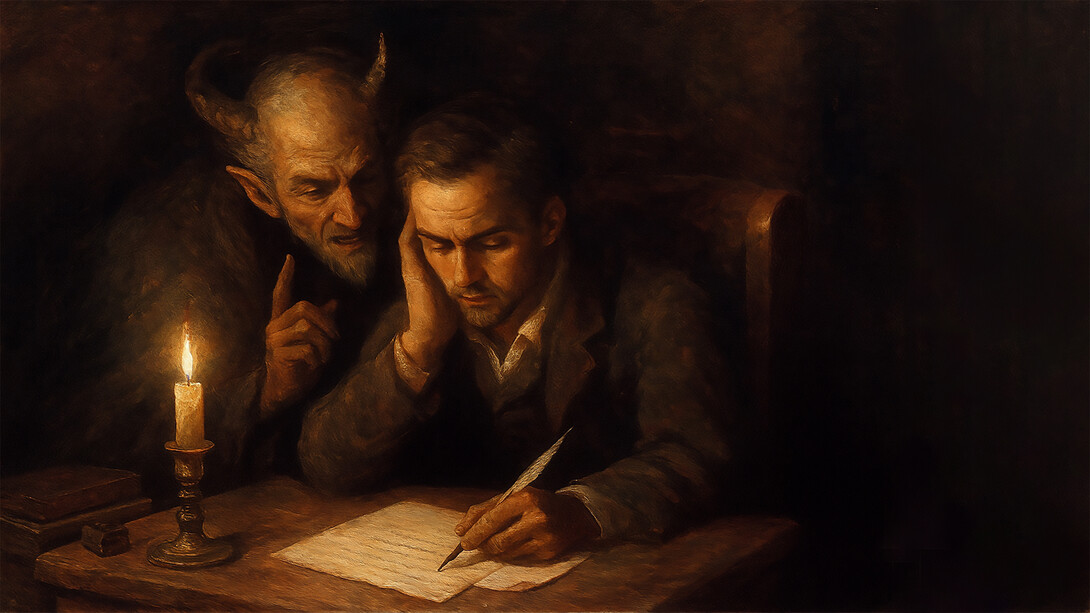
A man writes by candlelight as a shadowed figure whispers over his shoulder — a haunting reflection of temptation and moral struggle from The Screwtape Letters


Lewis’s satire on faith and weakness

A devil’s-eye view of how the soul drifts from grace

20 DECEMBER 2025, 


This book takes the form of a series of letters between two demons, Uncle Screwtape and his nephew Wormwood. The idea is to take a satirical look at the trials and tribulations of a new Christian from the devil’s point of view. How he manipulates our emotions and our circumstances to produce a negative outcome.

Percival Everett’s James and the voice of freedom


Jim and Huck drift along the Mississippi at twilight, a journey of survival, freedom, and uneasy companionship


Percival Everett’s James and the voice of freedom

Based on a retelling of Mark Twain’s Adventures of Huckleberry Finn

20 NOVEMBER 2025, 

Many of our modern novels draw from, or are influenced by, what has been written in the past. Percival Everett’s Pulitzer Prize-winning novel, James, retells Mark Twain’s Adventures of Huckleberry Finn from Jim’s point of view. This makes it less of a young boy’s adventure and more of a comment on the evils of slavery. Therefore, early in the book, Everett establishes Jim as a family man with a wife and daughter. Unlike Huck, he is rooted in the country and has responsibilities for other people. 

Tuesday, March 31, 2026

Wuthering Heights / The tragedy of Heathcliff


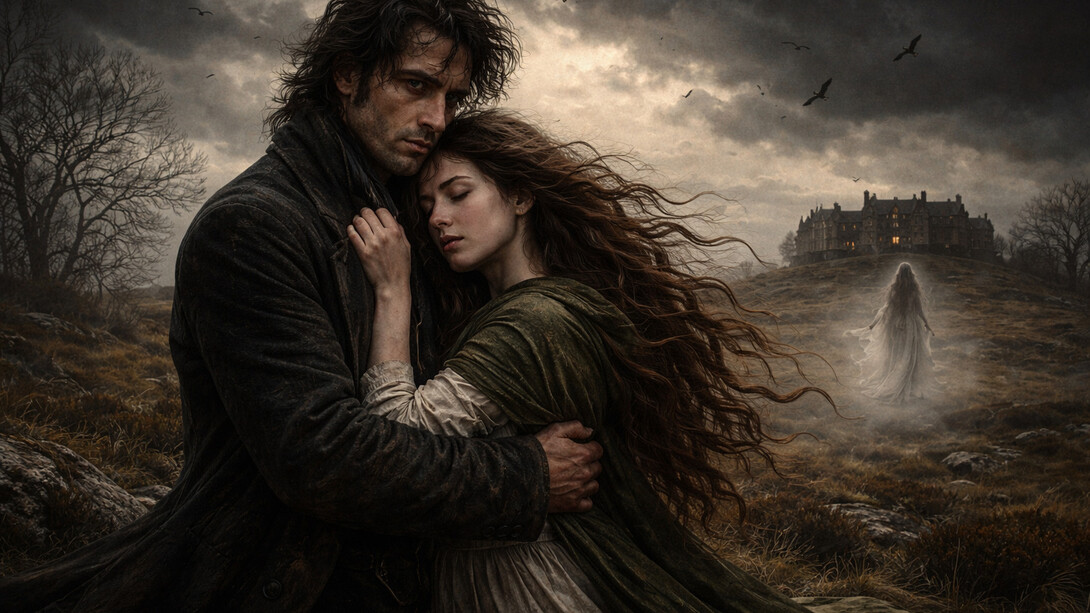
A windswept moor becomes the stage for Heathcliff and Catherine’s tragic bond, where love, obsession, and loss blur the line between the living and the dead in Emily Brontë’s Wuthering Heights

Wuthering Heights: the tragedy of Heathcliff

Obsession, social injustice, and the search for redemption in Emily Brontë’s dark masterpiece

20 MARCH 2026, 

Many readers view Wuthering Heights as their least favorite Brontë novel, arguing that none of the characters are likeable. This begs the question, do we have to like the characters to enjoy a book? Can we still find sympathy and empathy in a dark tale of obsession, revenge, and injustice?

Monster to muse / The evolution of the vampire


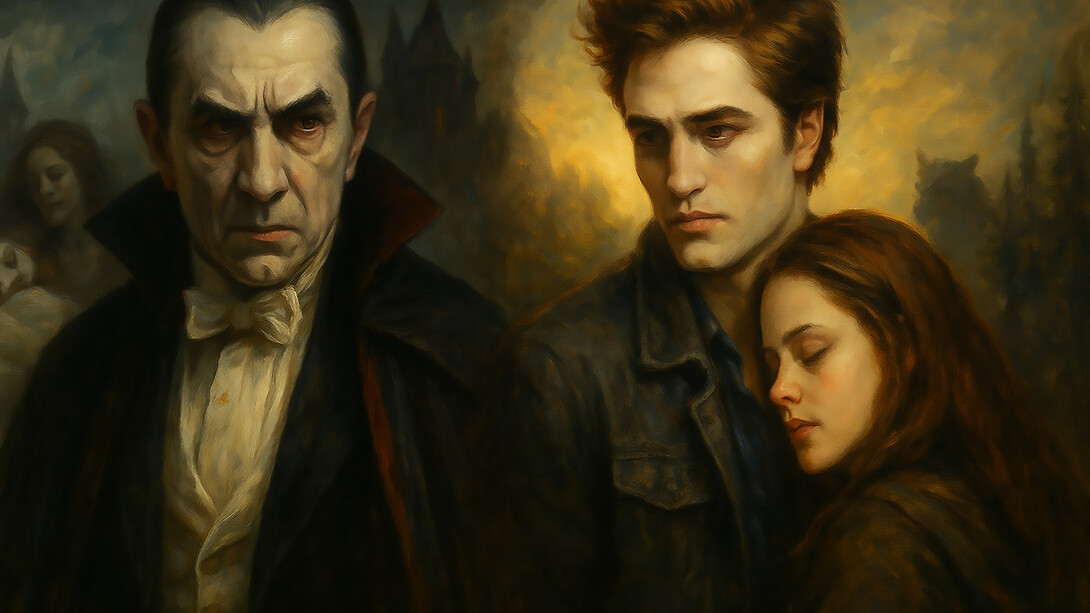
An artistic portrayal of the evolution of the vampire myth—Dracula’s dark, Gothic menace contrasts with the humanized, romantic figures of modern vampire lore, symbolizing the shift from fear to fascination

Monster to muse: the evolution of the vampire

How Bram Stoker’s Dracula and Stephenie Meyer’s Twilight transformed fear into fascination across centuries of storytelling

20 JANUARY 2026, 

Structurally, Bram Stoker’s Dracula follows some of the conventions of previous Gothic novels using diaries, letters, and personal accounts. Despite the title, the reader sees very little of the eponymous character, but he is an ever-present driving force in the novel. The story begins with Jonathan Harker’s journal regarding his trip to Count Dracula’s home, where he is to finalise some property transactions. Before he even arrives, the reception he receives at the mention of the Count’s name causes fear and suspicion; people make the sign of the cross, and crosses are lining the side of the roads. Fear and superstition in the eighteenth century were often associated with simple, uneducated people; therefore, it is appropriate that both Jonathan and the reader begin as sceptics.

Thursday, October 23, 2025

Eliza Parsons’ 'The mysterious warning' revisited


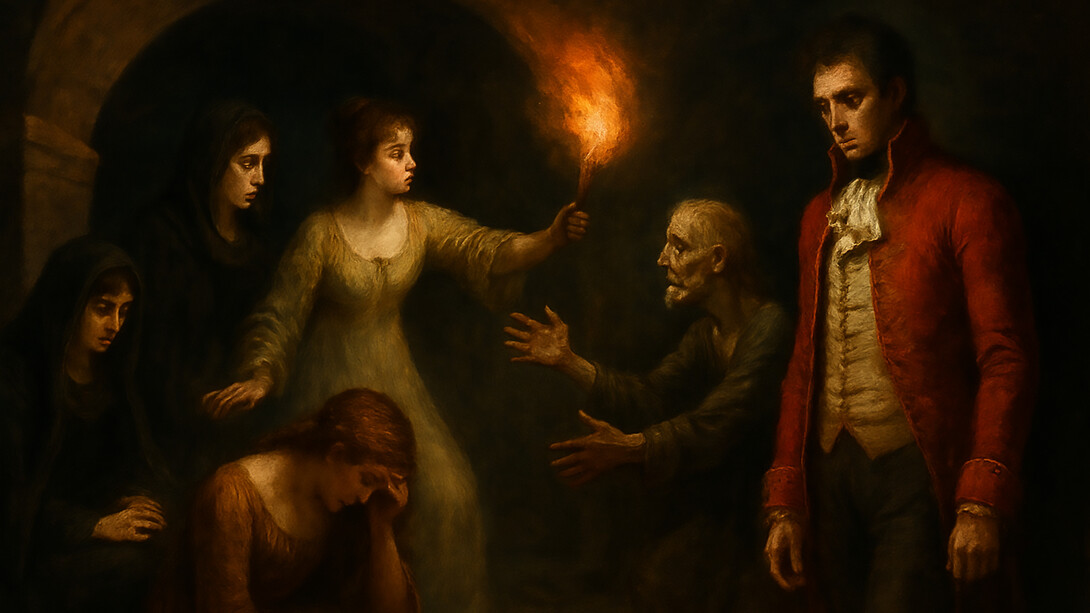
A haunting moment unfolds in a dimly lit dungeon, where grief, fear, and desperation converge—capturing the gothic intensity and emotional turmoil of The Mysterious Warning by Eliza Parsons


Eliza Parsons’ 'The mysterious warning' revisited

Gothic conventions, patriarchal cruelty, and eighteenth-century politics in a forgotten classic

20 AUGUST 2025, 

The Mysterious Warning was written in 1795 and is now believed to have been written by Eliza Parsons, author of The Castle of Wolfenbach, which is also set in Germany. In common with Horrid Mysteries and The Necromancer, there are multiple perspectives told in the form of memoirs or letters. We begin with Ferdinand’s situation, moving to the Baron’s cruelty to Eugenia and the Count before returning to Fatima/Charlotte and the revelation of incest.

Francis Lathom’s gothic warning


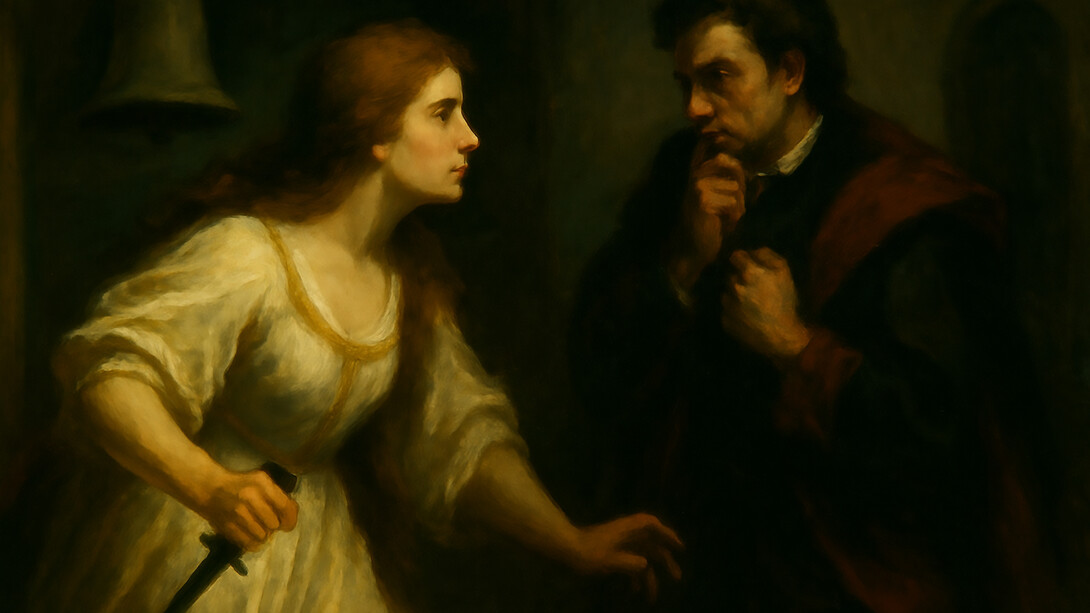
A haunting 18th-century-style painting of a grieving woman beside a midnight bell, symbolizing the tragic consequences of suspicion and false judgment

Francis Lathom’s gothic warning

The dangers of suspicion and false judgment in The Midnight Bell

20 SEPTEMBER 2025, 

Francis Lathom was born in 1774 in Rotterdam but moved to Norwich in 1777, where his father was born, before settling in Scotland in 1802 at Inverrurie and then Fyvie. The Midnight Bell was his second novel and was first published in 1798, followed by a pirated copy published in Dublin. It was published in Philadelphia in 1799 and in France in 1813. Apart from the reference to this novel in Northanger Abbey, Lathom is best known as a playwright.

Are Northanger ‘horrid novels’ actually horrid?


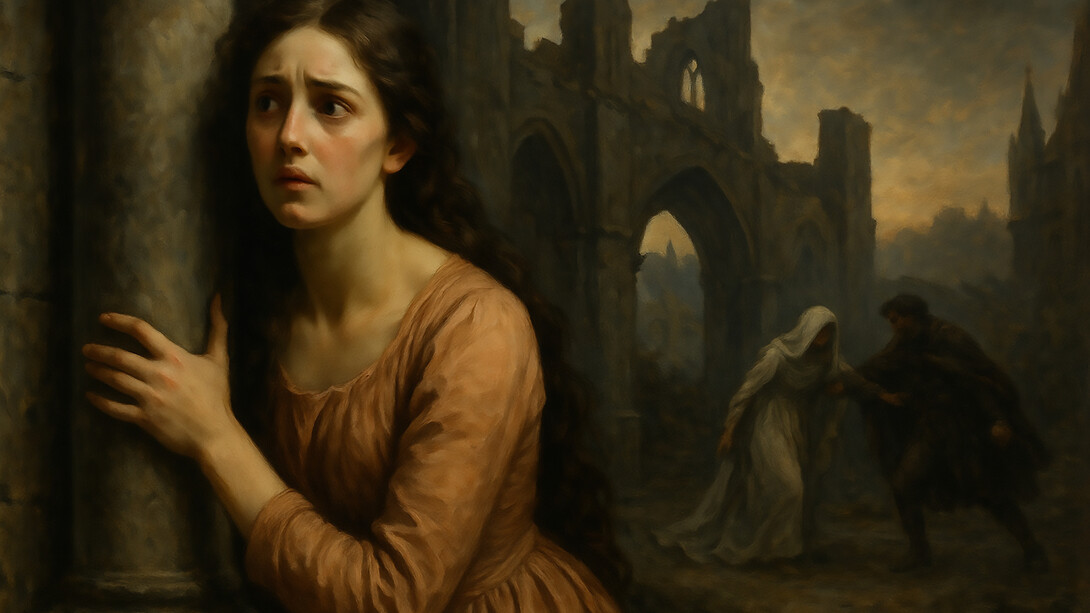
A terrified young woman clings to a pillar amid the ruins of a Gothic castle, while a shadowy figure drags another woman into the darkness, evoking themes of fear, captivity, and female vulnerability

Are Northanger ‘horrid novels’ actually horrid?

How fear and disgust are portrayed in gothic novels

20 OCTOBER 2025, 

Karalyn Skinner, in her analysis of the use of the word "horrid" in Northanger Abbey, suggests there is a dual meaning. The Oxford Dictionary defines it as causing “horror or aversion,” being formed through the sensory, emotional language used within the gothic genre. It also relates to the circumstances of the heroine, who is kidnapped, imprisoned, and abused, usually by male protectors. Karalyn makes the distinction between Catherine Moreland’s view of horrid gothic and Isabella, who uses the more colloquial term to signify something offensive, disagreeable, and objectionable.

Wednesday, August 6, 2025

The Castle of Wolfenbach by Eliza Parsons


The titular Castle of Wolfenbach as depicted in the gothic novel by Eliza Parsons

The Castle of Wolfenbach by Eliza Parsons

Power, incest and the female heroine in the gothic novel

20 FEBRUARY 2023, 

Eliza Phelp was born in 1748 to a prosperous Plymouth wine merchant. As his only daughter, she received an adequate education and married Mr Parsons, a turpentine distiller and moved to Stonehouse. During the American Revolutionary War, he lost two of his ships which were seized by the colonists. The family moved to London where their house and goods were destroyed by fire. Mr Parsons subsequently suffered a stroke and died 3 years later, leaving a wife and eight children. Like fellow author Charlotte Smith, she began to write as a way of supporting her family. Eliza Parsons published the Castle of Wolfenbach in 1793. 

Ann Radcliffe a Sicilian romance / The first lady of gothic


Ann Radcliffe was an English novelist and a pioneer of Gothic fiction


Ann Radcliffe a Sicilian romance

The first lady of gothic fiction

20 MARCH 2023, 

Ann Radcliffe wrote A Sicilian Romance in 1790 the second of her early gothic novels. The main protagonist is Julia although her brother Ferdinand also features prominently in the book, an aspect that will be discarded in later female-centred gothic novels. Julia wishes to marry Count de Vereza but her father insists on her marrying the odious Duke de Luovo. When she tries to elope with the Count, Mazzini kills him and Julia consents to joining a convent rather than marrying. These were the only two options for a woman whose desire conflicted with those in power. Hoeveler suggests a convent is an attractive option being an all-female space, apart from men, who are seen as inherently violent. This may be true of her earlier works, but not of later books such as The Italian, where the convent can be administered by a malevolent abbess. 

Tuesday, August 5, 2025

Horace Walpole / The Castle of Otranto / The original gothic novel


An artistic representation of the Castle of Otranto


Horace Walpole: The Castle of Otranto

The original gothic novel

20 JANUARY 2023, 

Horace Walpole was the son of Robert Walpole and sought to escape the politics which he said had destroyed his father. He published the Castle of Otranto, A Gothic Story in 1764 claiming it was a translation of a text found in the library of a catholic family and printed in Naples in 1529. It was initially published anonymously but after a successful reception, Walpole added a second preface where he acknowledged authorship. The idea of presenting the author as an editor was a common device as it gave the impression of authenticity. It also protected the author from a critical reception of the work. Originality was seen as part of individualism, which Kilgour argues creates anxiety about influence and in turn a rivalry between past and present. Identifying yourself with other authors was seen as a way of counteracting competition and individualism. By including the word gothic, he was creating a new type of romance, a genre for others to follow. The term gothic, in the decades after the glorious revolution, was a category within the debates about the economy, politics and social change. It was regarded as a distant non-specific period of ignorance and superstition from which a civilised nation had arisen and a constitutional purity and political virtue from which the nation was alienation. 

Marie Antoinette, a youthful education / Was she just naïve and ill-prepared?


Marie Antoinette prophesized "they are going to force us to go to Paris, the King and me, preceded by the heads of our bodyguards on pikes."
Marie Antoinette prophesized "they are going to force us to go to Paris, the King and me, preceded by the heads of our bodyguards on pikes." 

Marie Antoinette, a youthful education

Was she just naïve and ill-prepared?

20 DECEMBER 2022, 

For if you suffer your people to be ill-educated, and their manners to be corrupted from their infancy, and then punish them for those crimes to which their first education disposed them, what else is to be concluded from this, but that you first make thieves and then punish them.

(Utopia, Tomas More)

Mirror, mirror on the wall…/ The feminism charge led by Wollstonecraft


The mirror can realign our identity and objectives
The mirror can realign our identity and objectives 


Mirror, mirror on the wall…

The feminism charge led by Wollstonecraft

20 SEPTEMBER 2022, 

Wollstonecraft wrote ‘The Vindication of the Rights of Woman’ in 1792, two years after Burke’s ‘Reflections on the Revolution in France’ and three years after the Revolution itself in 1789. It was also before the Reign of Terror in 1793 and her views were no doubt shaped by the optimism which drove the revolution.

Monday, August 4, 2025

Jonathan Swift: Gulliver’s Travels


A painting portraying Gulliver being tied up by the island people of Lilliput


Jonathan Swift: Gulliver’s Travels

Not suitable for children

20 NOVEMBER 2022, 

, bullying, misogynistic and that is before you start discussing toilet humour which the 18th century seemed to be obsessed with. Yet we continue to treat Gulliver’s Travels as a children’s story. The land of the little people and of giants, deftly ignoring the other two lands which Gulliver goes to before he returns home. It is also a book full of historical and literary references which would have been obvious to the 18th-century reader but not familiar to modern readers.

Mary Shelley’s Frankenstein / A search for community and identity


A woman enjoying her reading of a copy of Mary Shelly's novel Frankenstein


Mary Shelley’s Frankenstein

A search for community and identity

20 OCTOBER 2022, 

Mary Wollstonecraft Godwin Shelley was the product of two great radicals of the 18th century. Wollstonecraft the author of The Rights of Woman and Godwin, author of Caleb Williams and An Enquiry into Political Justice. One a champion of women’s rights and education, the other a supporter of a stateless society. Yet Godwin was remote during her childhood and her mother died in childbirth, leaving May to feel abandoned by those she loved. It is this feeling of abandonment, lack of identity, and belonging that dominates the creature’s story.