Showing posts with label The books of my life. Show all posts

Monday, August 24, 2026

Rebecca Perry / ‘Lorca hit me like a bolt of lightning’

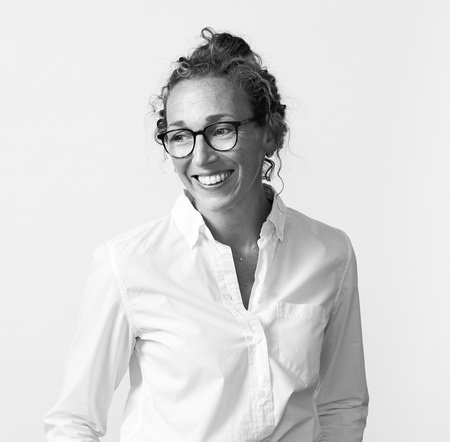
Rebecca Perry
Photo by Ross Jones

The 

Books

 0f my 

life


Rebecca Perry: ‘Lorca hit me like a bolt of lightning’

The poet and novelist on the power of fairytales, being inspired by Frank O’Hara and the joys of Doris Lessing


Rebecca Perry

Friday 14 August 2026

Friday, July 10, 2026

Jenni Fagan / “Maya Angelou taught me that I owed myself hope’


Jenni Fagan


The 

Books

 0f my 

life

Jenni Fagan: ‘Maya Angelou taught me that I owed myself hope’

The Scottish author on loving The Hobbit, fairytales, Frankenstein and the shock of A Clockwork Orange


Jenni Fagan

10 July 2026

My earliest reading memory
Fairytales. I was obsessed. I took fairytales very seriously as moral lessons. I soon knew that I’d always help any old lady cross the road, it really is always best to do so.

My favourite book growing up
The Hobbit was my favourite book while growing up. It expanded my understanding of what could be achieved in fiction. I found JRR Tolkien’s world transformative. I felt as if I knew the hobbits, and I so wanted to see the elves. I could hear the crack of fireworks as they turned into dragons that flew overhead.

The writer who changed my mind
Maya Angelou taught me that I owed myself hope. No matter how painful or difficult it was. Her work has such dignity and light. I read all of her work for years and took as many lessons from it as I could. It made me want to step up and continue to try to find a way to create a life that mattered to me.

The book that made me want to be a writer
I was reading the dictionary when I was really quite little; if I found a word I didn’t know I would always go and look it up. Strange thing for a kid to do but I fell in love with language itself.

The book I came back to
I originally found Frankenstein by Mary Shelley too claustrophobic. In recent years I have connected with Shelley in a profound way and I am now writing a modern adaptation of Frankenstein that will be published next year. She was so ahead of her time, she began sci-fi, brought to life such a powerful archetype in the Creature, and while you can see inspirations of, say, Coleridge’s The Rime of the Ancient Mariner – he used to visit and read it at her father’s house – it was an absolutely personal calling for her to write this story. I am fascinated by her engagement with gnosis, the life force, death and how all the tragedies of her young life were carefully woven together by a formidable intellect. Shelley was only a teenager when she first wrote the book; interestingly, she revisited it and made revisions over decades. Like a master painter, perhaps, who adds a touch of shade and light later on, only to heighten a work’s immortal glow.

The book I reread
The Metamorphosis by Franz Kafka is one of my favourite stories of all time. Gregor Samsa wakes up one morning as an Ungeziefer, some kind of monstrous creature. I think it perfectly encapsulates the relationship between the individual and social structures.

The book I could never read again
Anything by Enid Blyton. Her work has not aged well.

The book I discovered later in life
When I was travelling in Egypt I read The Yacoubian Building by Alaa Al Aswany and Midaq Alley by Naguib Mahfouz. Both books are intertwined with my memories of staying in downtown Cairo.

The book that changed me as a teenager
I read A Clockwork Orange by Anthony Burgess when I was 15 and living in a children’s home. Its protagonist, Alex, was the same age as me. I found the book shocking. The use of “nadsat” (teenage slang) as the language spoken by his “droogs” also showed me that there are many ways to innovate in a novel.

The book I am currently reading
Gisèle Pelicot’s memoir A Hymn to Life. I think she is extraordinary and inspiring.

My comfort read
Poetry: a single stanza in Thirteen Ways of Looking at a Blackbird by Wallace Stevens, or The Man-Moth by Elizabeth Bishop, or Temptation by Nina Cassian. There are so many poems I return to endlessly, as with a favourite record that never fails to contain something familiar and new at the same time.

 The Delusions by Jenni Fagan is published by Hutchinson Heinemann (£18.99). 


THE GUARDIAN


Friday, June 12, 2026

Ruth Ozeki / ‘All my books are an attempt to recreate Charlotte’s Web’


OZEKI_about_Danielle_Tait-800.jpg

Ruth Ozeki is a novelist, filmmaker, and Zen Buddhist


The 

Books

 0f my 

life


Ruth Ozeki: ‘All my books are an attempt to recreate Charlotte’s Web’

The US author, film-maker and Zen Buddhist priest on smart young girls, the difference between irony and cynicism, and working her way through 13 volumes of Chekhov


Ruth Ozeki
Friday 12 June 2026

My earliest reading memory
I was reading – or pretending to read – before my brain could encode memories, so probably around three or four? I “read” Goodnight Moon by Margaret Wise Brown and Clement Hurd, but that was mostly pictures.

My favourite book growing up
Charlotte’s Web by EB White. For years, I remembered it as a story about a little girl named Fern who saved her pet pig, Wilbur, but it’s not. It’s a story about a writer named Charlotte, who happens to be a spider, who spins words into her web that save Wilbur from slaughter. It’s about the power of language to save lives. Looking back at the books I’ve written, I can see now that all of them are an attempt to recreate Charlotte’s Web. It’s the perfect book.

The book that changed me as a teenager
Teenagers change constantly, hour by hour, book by book. I read voraciously as a teenager because we didn’t have smartphones, and every book I read left its mark. The Catcher in the Rye certainly was one of them. I must have read it when I was 12 or 13 and learned two skills critical for my adolescent survival: a disaffected attitude and how to spot a phoney.

The writer who changed my mind
Every writer I read changes my mind. Isn’t that the point of reading? But OK. One Hundred Years of Solitude by Gabriel García Márquez. I read it in 1975 in Nepal, when I was 20, during a month-long trek in the Himalayas from Pokhara to the Tibetan border. That was 50 years ago, and there were very few trekkers back then. We had no GPS. I was trekking with my friend, following winding trails across the mountains, through forests of bright pink rhododendron. Sometimes we’d pass sherpa heading down to town. Their donkeys wore bells on their harnesses, and we could hear them echoing long after they’d passed. I didn’t know the term “magic realism” yet. I just knew that magic was real.

The book that made me want to be a writer
Most of the books I read as a child were about smart little girls (or spiders) who were writers: Harriet in Harriet the Spy by Louise Fitzhugh; Jo in Louisa May Alcott’s Little Women; Emily of New Moon; Anne Frank; Meg in A Wrinkle in Time by Madeleine L’Engle – she wanted to be a scientist, but still. And then there were books about obstinate, contrary, misbehaving little girls, like Eloise, Madeline, and Pippi Longstocking, who were obviously destined to be writers even if they didn’t know it yet. I’d also argue that any story told in the first person by a misfit female narrator, like Jane Eyre, is about being a writer, since their subtext is always “Dear reader, I survived to tell the tale.”

The book or author I came back to
I don’t really have a simple answer to this question, so I’d rather talk about Kurt Vonnegut, whose novels I read and loved when I was younger, but who I haven’t revisited. Why? I learned something important about humour from Vonnegut. About the difference between irony and cynicism. About earnest irreverence. That it’s OK to be funny about serious things. I hope I would still find this quality in his books, but what if I didn’t? I’d rather just keep his tone alive in my mind.

The authors I reread
Poems and poets: Emily Dickinson, Adrienne Rich, Elizabeth Bishop. I tend to give their books away and then buy new ones. I bought Geography III after reading Bishop’s poem One Art in the New Yorker in 1976. That poem is all about loss. Every time I survive another loss, I reread it, and every time I reread it, I am reminded of how to survive.

The book I could never read again
Zen and the Art of Motorcycle Maintenance by Robert M Pirsig. I love Zen. I love motorcycles. I loved this book when I was a teenager, and I’m still inspired by Pirsig’s ideas about quality and craft. But when I tried to read the book again as an adult, I found the narrator’s pomposity irritating. Naturally I didn’t notice it earlier, when it was eclipsed by my own teenage pomposity.

The book I discovered later in life
A 13-volume set of Tales of Chekhov, translated by Constance Garnett, first published in 1929 and reissued in 2006. I was never much interested in short stories until I started teaching the form in a fiction-writing class and realised I had a lot to learn. There are 201 stories in the 13-volume set. I’m still reading and learning.

The book I am currently reading
Sublimation by Isabel J Kim. It’s a debut set in contemporary alter-worlds of Seoul and New York. It’s a take on the classic immigrant story, wherein the characters, at the moment of border crossing, split into two selves. As a mixed race person, I can relate. I’m also reading The Typewriter Revolution: A Typist’s Companion for the 21st Century, which is excellent.

My comfort read
Lydia Davis’s Collected Stories. I am comforted by the brevity of her stories and the precision of her sentences.

 The Typing Lady by Ruth Ozeki is published by Canongate. 


THE GUARDIAN

Friday, May 29, 2026

Virginia Evans / ‘I loved books about things that can’t exist’


Virginia Evans, author portrait
Virginia Evans© Austin Joffe

The 

Books

 0f my 

life


Virginia Evans: ‘I loved books about things that can’t exist’

The Women’s prize-shortlisted novelist on taking inspiration from John Steinbeck, Joan Didion and Jhumpa Lahiri, and weeping through Little Women in her 30s


Virginia Evans
Friday 29 May 2026 10.00 BST

My earliest reading memory
I’m not sure what we were reading – The Velveteen Rabbit by Margery Williams or the poems in Where the Sidewalk Ends by Shel Silverstein – but I was undoubtedly with my sister, two years older, who set the example for me to be a reader. I picture us in the back of our family car or laying across our twin beds in the room we shared.

My favourite book growing up
I loved mysteries and fantasy worlds. I read so many of the Nancy Drew books, and The Boxcar Children by Gertrude Chandler Warner. And I loved the Narnia stories and The Wind in the Willows. I loved books about things that can’t exist. I suppose it’s all escapism – crimes solved by children, talking animals, time travel, people two inches tall. I always loved to slip into another, better world.

The book that changed me as a teenager
I read John Steinbeck’s The Grapes of Wrath at 15. It was my first real understanding of what fiction can do, how far a story can go, how words can be put to the intricacies of living. It stretched my empathy, seeing what the Joad family endured, learning through story what had happened in that place and time in American history.

The writer who changed my mind
Joan Didion. Every time I read her work, I am changed in some way. Her writing makes me think of the world, people, politics, the land, water, time, motherhood, marriage differently.

The book that made me want to be a writer
I was in college and majoring in English and creative writing. I read Interpreter of Maladies by Jhumpa Lahiri and I discovered what can be done with language and words to make something beautiful and compelling. I thought: I have to do this, I can do this, I will do this.

The author I came back to
I tried Jane Austen too young. I didn’t understand the language or the story. I felt lost. When I came back to Pride and Prejudice in my late 20s, I enjoyed it tremendously.

The books I reread
Daphne du Maurier’s Rebecca and Steinbeck’s East of Eden are the books I read again and again, and in fact I’m due for a pass of East of Eden right about now.


The book I could never read again
I devoured the Millennium series by Stieg Larsson, but was terrified throughout. I have considered going back, but I was so disturbed by it I don’t think I will.

The book I discovered later in life
I didn’t read Little Women by Louisa May Alcott until just before the 2019 film, and I wept through the scenes of Jo trying to make it as an author. It hit so close, and of course I had not made it. I was still spreading the pages across the floor in hope and despair. I had my own children by then, and identified so much with the girls’ mother – something that would not have happened if I’d read it when I was young.


The book I am currently reading
While I Was Gone by Sue Miller. This is a reread for me. I discovered Miller 15 years ago, just walking through a used book store and looking at spines. I love her stories, especially some of those older ones. I love the eerie undercurrent of the book and the construction of the whole thing – from the story arc down to the sentences.

My comfort read
Can I pick a few? The Uncommon Reader by Alan Bennett, Beautiful Ruins by Jess Walter, I Capture the Castle by Dodie Smith.

 The Correspondent by Virginia Evans is shortlisted for the Women’s prize


THE GUARDIAN