Showing posts with label Chris Wiegand. Show all posts

Friday, March 10, 2023

The Mousetrap / Agatha Christie’s West End hit to make Broadway debut after 70 years

It’s a scream … Mary Law in the West End production of The Mousetrap in 1957.


The Mousetrap: Agatha Christie’s West End hit to make Broadway debut after 70 years

Whodunnit running in the West End since 1952, interrupted only by Covid, will open in New York in 2023


Chris Wiegand
Friday 25 November 2022


The world’s longest-running play, The Mousetrap, is to finally make its Broadway debut. The announcement was made on Friday to mark the 70th anniversary of the London production of Agatha Christie’s whodunnit.

Saturday, February 13, 2021

How we made Closer / Owen and Patrick Marber


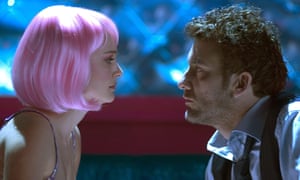
‘A visceral piece of writing’ … Natalie Portman as Alice and Clive Owen as Larry in the film of Closer. Photograph: Collection Christophel

How we made Closer – by Clive Owen and Patrick Marber

‘I wanted to write a Shakespearean scene with someone in disguise, so I went into a lesbian chatroom pretending to be a gay woman’

Interviews by Chris Wiegand
Tuesday 9 July 2019

Patrick Marber, playwright

I was in Atlanta in 1996 with a tour of my play Dealer’s Choice and I was dragged along to a lap-dancing club. It seemed a potent, haunting place for a scene about power and sex. That night I wrote a version of the lap-dance scene in Closer with characters called A and B. I wanted to figure out who the guy was, who the young woman was, and what happened to them before and after.

Friday, June 21, 2019

'An obsessive, mischievous genius' / Actors pay tribute to Franco Zeffirelli


Franco Zeffirelli


'An obsessive, mischievous genius': actors pay tribute to Franco Zeffirelli

Brooke Shields, Robert Powell, Jeremy Irons and Fanny Ardant share their memories of working with the virtuoso directorShares


¡Comments43Chris Wiegand

Tue 18 Jun 2019
Chris Wiegand


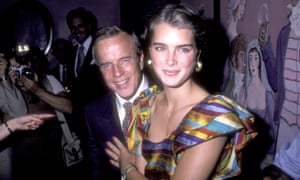
‘You’d have thought that God had just walked down the aisle.’ … Brooke Shields with Franco Zeffirelli in 1981. Photograph: Ron Galella/Ron Galella Collection via Getty Images


Brooke Shields on Endless Love: ‘It was: more, more, more’


He was very tough but in a loving way. Franco was always wanting and expecting more from me. You want your director to have enough faith in you that they urge you to be your best. Not all directors are like that. Then there was another side to him that was very playful – there were in-jokes and many meals together. He would eat risotto con piselli and flatten out the rice to carve a perfect profile. He wouldn’t eat risotto without doing it.

Sunday, February 3, 2019

John Malkovich to star in David Mamet play inspired by Harvey Weinstein

John Malkovich


John Malkovich to star in David Mamet play inspired by Harvey Weinstein

Bitter Wheat – ‘a black farce about a badly behaved movie mogul’ – to open at the Garrick theatre, London, on 7 June

Chris Wiegan
Tue 29 Jan 2019


John Malkovich is to star in a “farce” inspired by the Harvey Weinsteinscandal and written by David Mamet. The play, Bitter Wheat, will have its world premiere in London this summer.
Speaking on BBC Radio 4’s Today programme on Tuesday, Malkovich described the play as “a black farce about a very badly behaved movie mogul”. The actor said “a lot of people may not like” the play but that he felt it was “a terrific piece of writing”. Asked how comedy could be used to respond to the serious nature of the scandal – which includes allegations of rape, harassment and sexual assault, all of which Weinstein has denied – Malkovich said: “A lot of great plays elicit the question: do I laugh or do I cry? I think a lot of great comedy exists at the crossroads between pain and farce.”
In promotional material, Malkovich’s character, Barney Fein, is described as “a bloated monster – a studio head who, like his predecessor, the minotaur, devours the young he has lured into his cave”. Bitter Wheat is “written and directed by David Mamet in a good mood” and “rips the pashmina off the suppurating wound which is show business, and leaves us better human beings, and fitter to once more confront the horror of life”.
Malkovich, who worked with Weinstein on the film Rounders, said: “They say everyone in Hollywood knew [about Weinstein’s alleged behaviour] … That’s not true. It was never a topic of conversation any time the name Harvey Weinstein came around with me.”
Asked if Barney Fein is supposed to directly represent Weinstein, Malkovich said: “No, it’s not particularly Harvey Weinstein. It’s a great deal about that business and a great deal about about how people in that business in positions, say, as studio heads have behaved really for more or less a century now. If the idea maybe started as a reaction to all the news that came out in particular about Harvey Weinstein, I think David took the idea from there and went with it.”
Bitter Wheat is Mamet’s first new play since China Doll, which opened on Broadway in 2015 and starred Al Pacino. Malkovich will be joined on stage by Doon Mackichan, who will play Fein’s assistant, Sondra, and by Ioanna Kimbook in her debut theatre performance. The rest of the cast for the production, which Mamet will direct himself, has not yet been announced. The play will be at the Garrick theatre, London, from 7 June to 14 September.
Next month, Steven Berkoff will direct himself in Harvey, a one-man show he has written about Weinstein, at the Playground theatre, London.


Wednesday, August 9, 2017

Matthew Warchus on Sam Shepard: ‘He found extremity and folly funny’


Matthew Warchus: ‘He found extremity and folly funny’

BIOGRAPHY OF SAM SHEPARD


Interviews by Chris Wiegand
Wednesday 2 August 2017 14.06 BST

When I directed True West in 1994 at West Yorkshire Playhouse, I alternated the roles of the two brothers. Sam heard about it and sent a message to me enthusing about the idea. Then, when I was preparing to direct the film adaptation of Simpatico, I met him for the first time in a restaurant in New York. He was sitting there – leather jacket, windswept hair, rugged looks – and it was like meeting a cowboy. 
When I was a teenager I had watched True West on TV, sitting on the sofa at home in a village in the middle of nowhere in North Yorkshire. I don’t think I spoke for about 48 hours after seeing it. On one level, that world of the American west was a long way from my own bleak, arable landscape. But I felt this weird, strong connection to it. And Sam was fascinated with England and with Europe. So we were extraordinarily different to each other but had much in common. Like me, he loved Yasmina Reza’s plays. There is a lot of wildness in her writing, which looks at the catastrophic breakdown of civilised behaviour. He found extremity and folly to be funny in the same way that she does. He was always chortling – he had a great sense of humour. 
Sam spoke with a drawl. Talking to him, it was as if you were out camping somewhere together, sitting by the fire. He once sent me a note saying maybe we could meet up and “break some bread” – I’ve never heard anyone else use that expression. When he read from his own work, there’d be an incredibly precise, articulated voice mixed in with that drawl and he’d use that when he was reading women. His voice could be surprisingly high-pitched. He read women really beautifully, which I always found strange for someone as snaggle-toothed as he was.
Matthew Warchus

I once visited him at his home in Minnesota. It was on 9/11. My then girlfriend (now wife) and I were travelling to Bismarck, North Dakota, but were stranded at Chicago airport. We got the last rental car and started driving. Twelve hours or so into it, I thought, this is a very Sam Shepard thing to be doing on such an extraordinary day in American history. And I realised we weren’t far from where he lived. I called him and said I thought we were close to his home. He gave me directions and we pulled up at his suburban house. We went up the garden path, met him and Jessica [Lange, his partner] and the TV was on showing the twin towers. We sat there watching it and drinking English tea.
Unlike some writers who balance theatre and film careers, his formative experience with the theatre was off-off-off-Broadway. He was really a part of the underground and alternative movement. Almost all of his theatre-making was like that. That’s a total difference to the world of Hollywood.
When I was preparing Simpatico, we talked a lot about horses. That was one of his great loves – along with driving long distances. He’d really light up on those subjects. Sam was a drifter: he’d appear for a few days in New York, hover at the back of a performance, laugh and drink and move on.


Lynn Nottage on Sam Shepard: ‘He told me to own all of my words’


Lynn Nottage: ‘He told me to own all of my words’

BIOGRAPHY

Interviews by Chris Wiegand
Wednesday 2 August 2017 14.06 BST

At a time when people were writing plays set in living rooms and gardens, Sam Shepard’s were set in backyards and motels. He took us to a different kind of landscape that hadn’t been explored on the American stage. More than most, he figured out a way to speak to the restlessness of a generation in the 70s and 80s.

I had a one-off encounter with him in Utah. I’m a playwright, not much of a performer, and I had decided to perform some of my own writing. I picked a very remote setting where I figured no one would know me. It was at a bar at about 10pm. When I got there, I was the only person of colour. My piece was about all the times in my life that I’ve been called the N-word. People were pretty drunk. It was almost like doing a comedy night. I was extremely nervous but I muscled through. When I was done, I was sweating profusely. I went immediately to the bar and ordered a drink and someone said: “Can I give you a piece of advice?” I looked up and it was Sam Shepard and I was like, Oh shit! It’s Sam Shepard – of course you can give me a piece of advice!
I guess he was there because he was making a movie. He bought me a drink and we ended up hanging out until 3am. He said he could tell I was really nervous and he was like: “Fuck these people. This is your writing. Next time you do it, you have to live every single moment and own all of your words. And not be intimidated, not be scared.” I’ve always clung to that advice.


Kathy Burke on Sam Shepard: ‘It was beautiful of him to reassure me’

Kathy Burke: ‘It was beautiful of him to reassure me’


Interviews by Chris Wiegand
Wednesday 2 August 2017 14.06 BST

I got to speak with Sam on the phone a few times when I directed The God of Hell in London (famously he didn’t fly or have the internet). A couple of calls stand out in my mind – firstly, my ringing him to apologise for the bad reviews the play had received. 
ME: I’m so sorry I’ve let you down. They hate what I’ve done with it here.
SAM: Please don’t apologise, Kathy, they hated it over here too!
The following week, he called me:
SAM: I wanted you to know I’ve just had a call from a friend who saw the show last night. He thought you did a terrific job. He said it was like you KNOW me, so thank you, Kathy, I appreciate your hard work.
He didn’t have to do that. It was charming and beautiful of him to reassure me.

Friday, February 6, 2015

Gillian Anderson goes back to Blanche for prequel to A Streetcar Named Desire


Gillian Anderson goes back to Blanche for prequel to A Streetcar Named Desire


The Departure, a Young Vic short film starring and directed by Anderson, is available to watch exclusively on theguardian.com

Chris Wiegand
Thu 5 feb 2015

Pinterest
It is the most striking of entrances: from around a corner comes Blanche DuBois – carrying a valise, “daintily dressed” as if for a cocktail party and with “shocked disbelief” on her face as she arrives at her sister Stella’s New Orleans home in A Streetcar Named Desire. Why is she here and what has she left behind?

Gillian Anderson, who played Blanche in an award-winning performance at the Young Vic theatre in London, has returned to the role for a short film exploring those days before Blanche’s arrival in the play. The Departure has been made for the Young Vic series of shorts that complement the theatre’s main-house productions.
“When Blanche first arrives at Elysian Fields [the street where Stella lives], you have the impression that she’s a little shaky, perhaps from travel, and hyper,” says Anderson. “You don’t have a sense yet of the depth of loneliness or despair or financial insecurity or tragedy that she has been through recently – and, it turns out, since childhood. That unravels during the play as Stanley starts to ‘smoke her out’ … She arrives in a gold dress and gold shoes, seemingly put together. I was interested in the state she was in before she put on that armour and that facade and knocked on her sister’s door.”
The Departure is set in two locations that are unseen in Williams’s play but exist almost as characters in their own right: Belle Reve, once the family’s plantation home, and the seedy Flamingo hotel where Blanche attains notoriety. “When we first see her [in The Departure], she is coming back to Belle Reve from a funeral and you get the sense that it’s the last of the lot. She’s worn out and weighed down by the loss of her family,” says Anderson. “She moves on to the Flamingo hotel, where she is kicked out after a dalliance with an underaged boy and she might be arrested for it. People have turned on her.”
The film was shot on location at a “warehouse-slash-Georgian house” in Bermondsey, south London, days after Streetcar finished its acclaimed run at the Young Vic in September 2014. It was written, at Anderson’s suggestion, by the author Andrew O’Hagan who calls Anderson “the most intelligent actress of her generation”. “What’s great about Andrew’s writing,” says the star, “is it upholds [Blanche’s] attempt at maintaining her own dignity through denial.”
Anderson, who previously directed herself in an episode of The X Files, is also the director of The Departure. She says the film is “like a curious study of a character in a period of time” and that it was designed to retain a “theatrical feel” and capture the “magic realist” element of Williams’s writing – “moments in time that are suspended ... not otherworldly but suspended somehow, in between reality and non-reality”.


On the set of The Departure.
Pinterest
 On the set of The Departure. Photograph: David Sandison

For the actor-director it “felt effortless” to make the short at the end of Streetcar’s run and delve into Blanche’s backstory. She adds: “I feel like I have a clear idea of how she ends up after she is taken away by the doctors at the end of the play.” So might there one day be a sequel to go alongside the prequel? “We did talk about it,” she says, “it would be fun to do.”
Directed by Benedict Andrews and utilising a striking revolving stage and a soundtrack including PJ Harvey, A Streetcar Named Desire was one of last year’s most talked about theatre productions. It also gained a wider audience with a worldwide NT Live broadcast. For those who were unable to see the production on stage or screen, The Departure offers a taste of Anderson’s portrayal. (In a four-star review, Michael Billington wrote that she “captures both Blanche’s airy pretensions to grandeur and her desolate loneliness”.


The Young Vic considers its short films to be a “fourth stage” for the theatre. They have been watched by more than 300,000 people since 2012. Recent shorts have included Mayday, starring Juliet Stevenson and directed by Natalie Abrahami, which explores themes from the pair’s collaboration on Samuel Beckett’s Happy Days. Their production of Beckett’s play returns to the Young Vic on 13 February.