REREADING
Sauntering through the commas: the pleasures of a book revisited
Wendy Lesser on how rereading an old favourite can reveal volumes about our younger selves
Wendy Lesser
Saturday 22 December 2001
I
t began, as things often do for me, with Henry James. I had nothing new in the house to read (a recent spate of bad fiction having destroyed my appetite for buying new books), so I searched my shelves and idly chose The Portrait Of A Lady, a book that I hadn't picked up in 20 years. Rereading it turned out to be an astonishing experience.
I had first read this novel when I was an undergraduate, and had gone through it again as a graduate student of English literature. Both times I was too close in age to Isabel Archer to appreciate her properly, and both times I read largely for the plot. The fact that I already knew the plot the second time around did not deter me: at the age of 26, I still zoomed, suspense-driven, towards the final pages, as if only the ending counted. But in your 40s the journey begins to matter more than the arrival, and it is only in this frame of mind that you can do justice to James. (I say this now, but just watch me: I'll be contradicting myself from the old age home, deploring my puerile middle-aged delusions about him.)
At 46, no longer in competition with Isabel, I could find her as charming as her author evidently did. Moreover, having had a life, with its own self-defined shape and structure, I was more sympathetic to Isabel's wish to acquire one. As a young person, I only wanted her to marry the lord and get it over with. Now I understood that nothing ends with such choices - there are always additional choices to be made, if one's life is to remain interesting. I cared less, this time, about what decisions Isabel made than about how and why she made them. This, in turn, gave me far more patience with the length and complexity of James's sentences.
Once, perhaps, I had viewed them as pointlessly extended or merely ornate; now they were useful keys to the pace and method of Isabel's subtly complicated mind, so that whereas I used to be tempted to skip ahead, I now wanted to saunter through the commas, linger at the semi-colons, and take small contemplative breaks at the periods.
The book was much better than I had remembered it. More to the point, I was a much better reader of it. Both pleasure and understanding came more easily to me. The idea that a simple rereading could also be a new reading struck me with the force of a revelation. It meant that something old wasn't necessarily outdated, used up, or overly familiar. It offered an escape route, however temporary, from problems that were both personal and cultural - my own creeping middle age, the prevailing fin-de-siècle tone of fashionable irony, and above all the speeded-up, mechanised, money-obsessed existence that had somehow become our collective daily life.
Like others before me (including, I noted wryly, James himself), I felt menaced by too-sudden change, as if something I held dear was about to be taken away from me, or perhaps had already been taken away when I wasn't paying attention. I felt... But I needn't elaborate. You were there. You lived through it, too.
My own situation differed somewhat from the average, in that I had purposely constructed for myself a life that was marginal to, and therefore shielded from, the clamouring demands of the marketplace. Well, "purposely" may not be the right word; in fact, one function of this book will be to examine in some detail how little "purpose" one can have, at 15 or 20 or 25, in imagining or projecting a life.
But let us say that, for whatever reason, I found myself in the luxurious position of being able to reread. I had the necessary background - that is, I had read a lot of books when I was younger - and, even more to the point, I had the necessary time. Time is a gift, but it can be a suspect one, especially in a culture that values frenzy.
When I began this book, almost everyone I knew seemed to be busier than I was. I supported myself, contributed my share to the upkeep of the household, and engaged in all the usual wifely and motherly duties and pleasures. But still I had time left to read. This was partly because I incorporated reading into my work (I run a quarterly literary magazine), and partly because I worked very efficiently (the magazine is my own and I run it, so there's no busywork whatsoever: no meetings, no memos, no last-minute commands from the higher-ups).
I had constructed a life in which I could be energetic, but also lazy; I could rush, but I would never be rushed. It was a perfect situation for someone who loved to read, but it was also an oddball role, outside the mainstream - even the mainstream of people who read and write for a living. How often have you heard an editor or an academic or a journalist say, "Oh, I wish I had the time to reread Anna Karenina!" (or Middlemarch, or Huckleberry Finn, or whatever beloved book rises to the surface of one's memory)? Well, I thought, I have the time. I could reread on behalf of all of us - and record my experiences in a book, Nothing Remains The Same: Rereading And Remembering, which will be published in the US next year.
Of course, it never really turns out that way in practice. Nothing points out how personal reading is more than rereading. The first time you read a book, you might imagine that what you are getting out of it is precisely what the author put into it. And you would be right, at least in part. There is some element of every aesthetic experience, every human experience, that is generalisable and communicable and belongs to all of us. If this were not true, art would be pointless. The common ground of our response is terrifically important. But there is also the individual response, and that, too, is important.
I get annoyed at literary theorists who try to make us choose one over the other, as if either reading is an objective experience, providing everyone with access to the author's intentions, or it is a subjective experience, revealing to us only the thoughts in our own minds. Why? Why must it be one or the other, when every sensible piece of evidence indicates that it is both? Rereading is certainly both, as I was to discover.
You cannot reread a book from your youth without perceiving it as, among other things, a mirror. Wherever you look in that novel or poem or essay, you will find a little reflected face peering out at you - the face of your own youthful self, the original reader, the person you were when you first read the book. So the material that wells up out of this rereading feels very private, very specific to you. But as you engage in this rereading, you can sense that there are at least two readers, the older one and the younger one.
You know there are two of you because you can feel them both responding differently to the book. Differently, but not entirely differently: there is a core of experience shared by your two selves (perhaps there are even more than two, if you include all the people you were in the years between the two readings). And this awareness of the separate readers within you makes you appreciate the essential constancy of the literary work, even in the face of your own alter ations over time - so that you begin to realise how all the different readings by different people might nonetheless have a great deal in common.
This thing that I am calling "rereading" succeeds only under certain circumstances, and part of my effort has been to locate those cases where the circumstances prevail. The book must, in the first place, be a strong one - not just a memorable one (though that is crucial, of course), but also strong enough to hold up interestingly under the close scrutiny of a second look. It would be tedious to have a series of chapters recording how disappointing it was to reread this or that favourite work of science fiction or adventure or humour or romance (not that these categories would inevitably prove disappointing, but they do seem to be the categories in which youthful enthusiasm most often led me astray).
I also hoped that each chapter would say something different - about the process of rereading, or the nature of growing older, or the quality of a work of art, or my own personality, or (preferably) all of the above. As both reader and writer I felt anxious to avoid mere repetition, which is not at all the same as rereading. And then, of course, I had to remember the first reading well enough to get something new out of the rereading.
This, unfortunately, eliminated some otherwise ideal candidates. For instance, I recently reread The Charterhouse Of Parma, this time in Richard Howard's excellent new translation. I could remember exactly the circumstances surrounding my first reading: it was the late autumn of 1984; I was staying at the Villa Serbelloni in Bellagio, and Stendhal's book was there in the library (having been acquired due to its associations with the region, no doubt); I was working on my own first book, and I was pregnant with my first and only child. Rich material for recollection, you would think. The problem is, I couldn't recall the slightest thing about the book itself. It was as if, on my recent rereading, I were coming across the Stendhal novel for the very first time - a tribute to the translator, perhaps, and a great pleasure in any case, but no help at all to my rereading project.
Sometimes I selected a book on the basis of its obvious appropriateness to my topic, only to discover that my rereading failed to produce a useful chapter. The Interpretation Of Dreams, for example. What could better represent our collective readerly unconscious than this work that had permeated my generation's sensibility long before we ever read it? At 20, I devoured Freud's book with fascinated hunger, as if I both knew and yet didn't know everything it had to tell me (a perfect example, I remember thinking, of "the uncanny").
On my first reading, the book had caused me to dream intensely, and to write down my dreams; perhaps that would happen again. And how appropriate it would be, I felt, to reread it on the 100th anniversary of its 1900 publication date. But all to no avail. My primary, insuperable experience when I attempted to reread it was one of annoyance. Why had Freud mucked up his lovely approach to dream interpretation with that rabid insistence on the theory of wish-fulfilment? And why was he such a tyrant about it?
Bristling under the yoke of his oppressive manner, I tried another translation, but with no better results. It would be unpleasant, I finally decided, for readers to hear me yammering on against Freud's authoritarianism - after all, this is hardly news - and it would be even more unpleasant for me to do the reading and writing involved in constructing such a chapter. Since I rely on pleasure to fuel my criticism (though sometimes it's thwarted pleasure, in the case of negative criticism), I had no choice but to drop the book.
Some books, precisely because they seemed so appropriate, were never under consideration to begin with. David Copperfield and Remembrance Of Things Past are both quite explicitly novels about rereading - so much so that I felt it would be redundant to examine them in this light. Also, as I had written about Dickens in every previous book of mine, it seemed only reasonable to give him a rest.
The rules I cobbled together, in the end, were hardly onerous, but were strictly enforced. I had to have done my first reading when I was "young"; in other words, I needed to be coming at the work anew as an altered, older self. I had to remember the first reading well enough to draw the comparison - that is to remember it viscerally, not just remember that I had done it. And I had to get something new out of each individual rereading, some fresh idea or experience that had not appeared before, in order to make the chapters sequentially interesting.
If I could do all this, I felt, I would have a book about rereading. It would be necessarily personal, with criticism merging into autobiography, but I hoped it would not be merely personal: that what I had to say would find an echo, or at the very least a nod of assent, in the minds of other readers.
It has occurred to me that the danger of such a project is the danger of all escapism: we flee into the past because we can no longer tolerate the present. But you cannot actually live in the past, and I am certainly not ready to stop living. I never intended my rereading book to be seen as a purely conservative measure, keeping out the new in favour of the old; I didn't ever stop reading new books while I was working on this project. For both professional and personal reasons, I can't imagine choosing not to read any new books. (By "new" I mean new to me: not necessarily books that have just been published, but books that I have only now encountered for the first time, whether they are just out or hundreds of years old.)
And in fact my rereading project, far from making me shun new books, stimulated my desire for all kinds of reading. During the same time I was reading Don Quixote, for instance, I was also reading Henry James: A Life In Letters, Philip Horne's new book; Shirley Hazzard's memoir Greene On Capri, which led me immediately to her novel Transit Of Venus; Geoff Dyer's essays, collected in Anglo-American Attitudes; JM Coetzee's Age Of Iron, which I turned to after finishing his more recent Disgrace; Philip Roth's The Human Stain; and Alberto Moravia's Contempt.
Of these, only Age Of Iron turned out to have a direct bearing on my Don Quixote chapter, and that was purely by chance, but the stew into which they all went was, nonetheless, necessary to my writing. I suppose what I mean is that I needed to feel a life of letters going on around me - drawing from past works all the time, but also creating new ones every year, every minute - in order to feel that a book about reading was worth writing.
I did not set out to draw any general conclusions about rereading. General conclusions, I often feel, are the enemy of perception, at least in the literary field. To the extent that you can actually sense what is going on in a work of literature, you are sensing something more particular even than life itself (since life tends to have more repetition, more boredom, more plain old dead space than good literature usually does).
But I did, in the course of producing this book, come upon one idea or image or tendency - I don't know exactly what to call it - that repeated itself over and over again. That was the idea of vertigo. There is something inherently dizzying in the effort to look at a still work of literature from a moving position - that is, from two different points in time. And this vertiginousness seems to be linked, in turn, to our directional sense of time's passage, to the poignance of the fact that time only goes one way.
There is some parallel, I can't help feeling, between that kind of one-wayness and the one-wayness of the relationship between a reader and a book. The characters in a novel can speak to us, but we can't speak to them, just as our younger selves can be heard and understood by our older selves, but not vice versa. These are not, of course, identical situations, but they are close enough to make us temporarily lose our balance.
Or so I found when I looked at what Borges had to say about Cervantes, Hitchcock about the past, Wordsworth about childhood, McEwan about time... and so on down the list of artists I examine in my book. They all talked about vertigo, which is also, probably, the best word to describe what I felt when I looked again at the books I had first read a long time ago.
· Wendy Lesser is the founder editor of the Threepenny Review

 The Origins
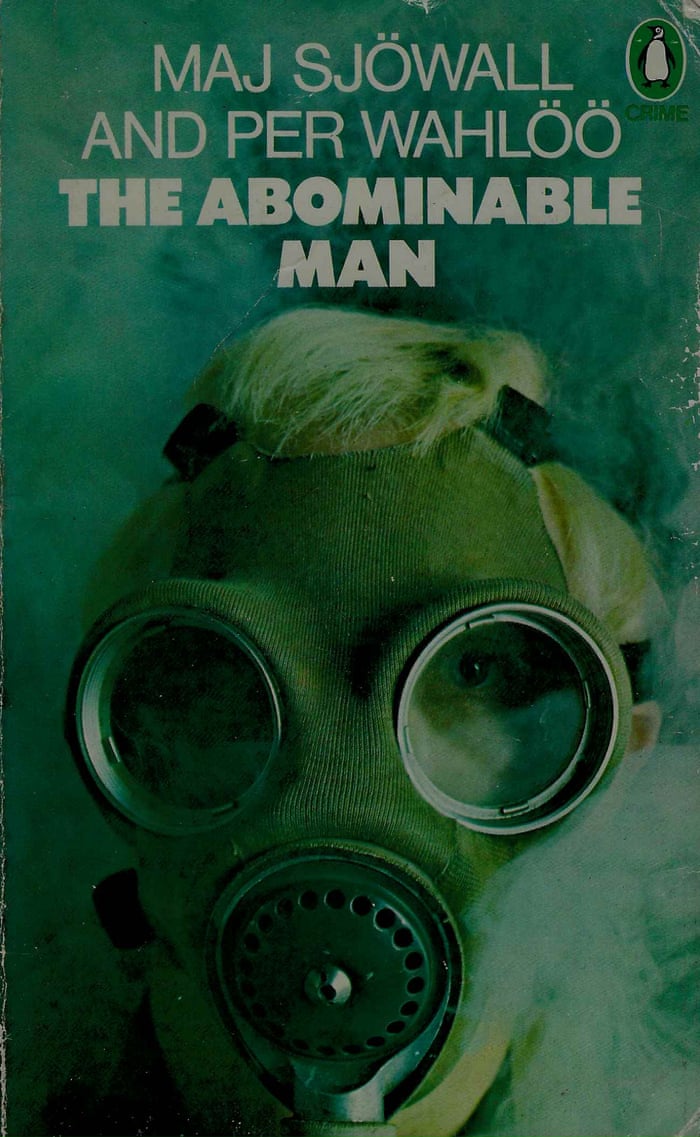
 It would be a melodramatic exaggeration to say that the Martin Beck series changed my life, but like all such exaggerations, this one would be built on a nugget of truth. Both my idea of Scandinavia and my sense of what a mystery could do were shaped by those books. If I later became a veritable addict of the form, gobbling up hundreds if not thousands of dollars a year in Kindle purchases of Swedish, Danish, and Norwegian mysteries, that habit could no doubt be attributed to many things besides the Martin Becks: the invention of digital books, for instance, which allowed for impulse buying and virtually infinite storage; the massive and surprising success of Stieg Larsson’s Millennium series, which encouraged American publishers to bring out any and every available Scandinavian thriller; the introduction of the long-cycle police procedural on American television, including such gems as Hill Street Blues, NYPD Blue, and ultimately The Wire, all of which cemented my fascination with the form; not to mention dozens if not hundreds of similar behavior-shaping factors that remain, for me, at an unconscious level. We never know for sure why we read what we read. I cannot, at the moment, even call to mind who first recommended the Martin Becks to me (though I know it was a person and not, say, a bookstore display or a newspaper review). Whoever it was, in any case, deserves my eternal gratitude.


%2B(1).jpg)


