
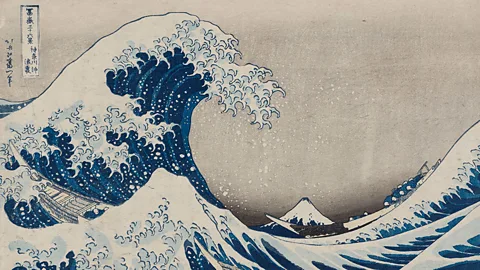
 Katsushika Hokusai / Museum of Fine Arts, Boston
Hokusai and the wave that swept the world
Jason Farago
9 April 2015
Without the Japanese printmaker Hokusai, Impressionism might never have happened. Jason Farago examines the moment when European art started turning Japanese.
In the beginning was the wave. The blue and white tsunami, ascending from the left of the composition like a massive claw, descends pitilessly on Mount Fuji – the most august mountain in Japan, turned in Katsushika Hokusai’s vision into a small and vulnerable hillock. Under the Wave off Kanagawa, one of Hokusai’s Thirty-Six Views of Mount Fuji, has been an icon of Japan since the print was first struck in 1830–31, yet it forms part of a complex global network of art, commerce, and politics. Its intense blue comes from Hokusai’s pioneering use of Prussian Blue ink – a foreign pigment, imported, probably via China, from England or Germany. The wave, from the beginning, stretched beyond Japan. Soon, it would crash over Europe.


