Life
Samuel Beckett was born in a suburb of Dublin. Like his fellow Irish writers George Bernard Shaw, Oscar Wilde, and William Butler Yeats, he came from a Protestant, Anglo-Irish background. At the age of 14 he went to the Portora Royal School, in what became Northern Ireland, a school that catered to the Anglo-Irish middle classes.
From 1923 to 1927, he studied Romance languages at Trinity College, Dublin, where he received his bachelor’s degree. After a brief spell of teaching in Belfast, he became a reader in English at the École Normale Supérieure in Paris in 1928. There he met the self-exiled Irish writer James Joyce, the author of the controversial and seminally modern novel Ulysses, and joined his circle. Contrary to often-repeated reports, however, he never served as Joyce’s secretary. He returned to Ireland in 1930 to take up a post as lecturer in French at Trinity College, but after only four terms he resigned, in December 1931, and embarked upon a period of restless travel in London, France, Germany, and Italy. In 1937 Beckett decided to settle in Paris. (This period of Beckett’s life is vividly depicted in letters he wrote between 1929 and 1940, a wide-ranging selection of which were first published in 2009.)
As a citizen of a country that was neutral in World War II, he was able to remain there even after the occupation of Paris by the Germans, but he joined an underground resistance group in 1941. When, in 1942, he received news that members of his group had been arrested by the Gestapo, he immediately went into hiding and eventually moved to the unoccupied zone of France. Until the liberation of the country, he supported himself as an agricultural labourer.
In 1945 he returned to Ireland but volunteered for the Irish Red Cross and went back to France as an interpreter in a military hospital in Saint-Lô, Normandy. In the winter of 1945, he finally returned to Paris and was awarded the Croix de Guerre for his resistance work.
Production Of The Major Works
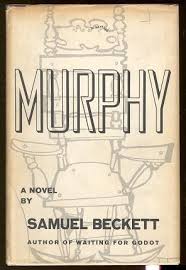
There followed a period of intense creativity, the most concentratedly fruitful period of Beckett’s life. His relatively few prewar publications included two essays on Joyce and the French novelist Marcel Proust. The volume More Pricks Than Kicks (1934) contained 10 stories describing episodes in the life of a Dublin intellectual, Belacqua Shuah, and the novel Murphy (1938) concerns an Irishman in London who escapes from a girl he is about to marry to a life of contemplation as a male nurse in a mental institution. His two slim volumes of poetry were Whoroscope (1930), a poem on the French philosopher René Descartes, and the collection Echo’s Bones (1935). A number of short stories and poems were scattered in various periodicals. He wrote the novel Dream of Fair to Middling Women in the mid-1930s, but it remained incomplete and was not published until 1992.
During his years in hiding in unoccupied France, Beckett also completed another novel, Watt, which was not published until 1953. After his return to Paris, between 1946 and 1949, Beckett produced a number of stories, the major prose narratives Molloy (1951), Malone meurt (1951; Malone Dies), and L’Innommable (1953; The Unnamable), and two plays, the unpublished three-act Eleutheria and Waiting for Godot.
It was not until 1951, however, that these works saw the light of day. After many refusals, Suzanne Deschevaux-Dumesnil (later Mme Beckett), Beckett’s lifelong companion, finally succeeded in finding a publisher for Molloy. When this book not only proved a modest commercial success but also was received with enthusiasm by the French critics, the same publisher brought out the two other novels and Waiting for Godot. It was with the amazing success of Waiting for Godot at the small Théâtre de Babylone in Paris, in January 1953, that Beckett’s rise to world fame began. Beckett continued writing, but more slowly than in the immediate postwar years. Plays for the stage and radio and a number of prose works occupied much of his attention. (This period of Beckett’s life is treated in a second volume of letters, published in 2011, covering the years 1941–56.)
Beckett continued to live in Paris, but most of his writing was done in a small house secluded in the Marne valley, a short drive from Paris. His total dedication to his art extended to his complete avoidance of all personal publicity, of appearances on radio or television, and of all journalistic interviews. When, in 1969, he received the Nobel Prize for Literature, he accepted the award but declined the trip to Stockholm to avoid the public speech at the ceremonies. A substantial selection of archival and epistolary material was published as Dear Mr. Beckett: Letters from the Publisher, the Samuel Beckett File (2016), offering readers insight into his process.
Continuity Of His Philosophical Explorations
Beckett’s writing reveals his own immense learning. It is full of subtle allusions to a multitude of literary sources as well as to a number of philosophical and theological writers. The dominating influences on Beckett’s thought were undoubtedly the Italian poet Dante, the French philosopher René Descartes, the 17th-century Dutch philosopher Arnold Geulincx—a pupil of Descartes who dealt with the question of how the physical and the spiritual sides of man interact—and, finally, his fellow Irishman and revered friend, James Joyce. But it is by no means essential for the understanding of Beckett’s work that one be aware of all the literary, philosophical, and theological allusions.
The widespread idea, fostered by the popular press, that Beckett’s work is concerned primarily with the sordid side of human existence, with tramps and with cripples who inhabit trash cans, is a fundamental misconception. He dealt with human beings in such extreme situations not because he was interested in the sordid and diseased aspects of life but because he concentrated on the essential aspects of human experience. The subject matter of so much of the world’s literature—the social relations between individuals, their manners and possessions, their struggles for rank and position, or the conquest of sexual objects—appeared to Beckett as mere external trappings of existence, the accidental and superficial aspects that mask the basic problems and the basic anguish of the human condition. The basic questions for Beckett seemed to be these: How can we come to terms with the fact that, without ever having asked for it, we have been thrown into the world, into being? And who are we; what is the true nature of our self? What does a human being mean when he says “I”?
What appears to the superficial view as a concentration on the sordid thus emerges as an attempt to grapple with the most essential aspects of the human condition. The two heroes of Waiting for Godot, for instance, are frequently referred to by critics as tramps, yet they were never described as such by Beckett. They are merely two human beings in the most basic human situation of being in the world and not knowing what they are there for. Since man is a rational being and cannot imagine that his being thrown into any situation should or could be entirely pointless, the two vaguely assume that their presence in the world, represented by an empty stage with a solitary tree, must be due to the fact that they are waiting for someone. But they have no positive evidence that this person, whom they call Godot, ever made such an appointment—or, indeed, that he actually exists. Their patient and passive waiting is contrasted by Beckett with the mindless and equally purposeless journeyings that fill the existence of a second pair of characters. In most dramatic literature the characters pursue well-defined objectives, seeking power, wealth, marriage with a desirable partner, or something of the sort. Yet, once they have attained these objectives, are they or the audience any nearer answering the basic questions that Beckett poses? Does the hero, having won his lady, really live with her happily ever after? That is apparently why Beckett chose to discard what he regarded as the inessential questions and began where other writing left off.
This stripping of reality to its naked bones is the reason that Beckett’s development as a writer was toward an ever greater concentration, sparseness, and brevity. His two earliest works of narrative fiction, More Pricks Than Kicks and Murphy, abound in descriptive detail. In Watt, the last of Beckett’s novels written in English, the milieu is still recognizably Irish, but most of the action takes place in a highly abstract, unreal world. Watt, the hero, takes service with a mysterious employer, Mr. Knott, works for a time for this master without ever meeting him face to face, and then is dismissed. The allegory of man’s life in the midst of mystery is plain.
Most of Beckett’s plays also take place on a similar level of abstraction. Fin de partie (one-act, 1957; Endgame) describes the dissolution of the relation between a master, Hamm, and his servant, Clov. They inhabit a circular structure with two high windows—perhaps the image of the inside of a human skull. The action might be seen as a symbol of the dissolution of a human personality in the hour of death, the breaking of the bond between the spiritual and the physical sides of man. In Krapp’s Last Tape (one-act, first performed 1958), an old man listens to the confessions he recorded in earlier and happier years. This becomes an image of the mystery of the self, for to the old Krapp the voice of the younger Krapp is that of a total stranger. In what sense, then, can the two Krapps be regarded as the same human being? In Happy Days (1961), a woman, literally sinking continually deeper into the ground, nonetheless continues to prattle about the trivialities of life. In other words, perhaps, as one gets nearer and nearer death, one still pretends that life will go on normally forever.
In his trilogy of narrative prose works—they are not, strictly speaking, novels as usually understood—Molloy, Malone Dies, and The Unnamable, as well as in the collection Stories and Texts for Nothing(1967), Beckett raised the problem of the identity of the human self from, as it were, the inside. This basic problem, simply stated, is that when I say “I am writing,” I am talking about myself, one part of me describing what another part of me is doing. I am both the observer and the object I observe. Which of the two is the real “I”? In his prose narratives, Beckett tried to pursue this elusive essence of the self, which, to him, manifested itself as a constant stream of thought and of observations about the self. One’s entire existence, one’s consciousness of oneself as being in the world, can be seen as a stream of thought. Cogito ergo sum is the starting point of Beckett’s favourite philosopher, Descartes: “I think; therefore, I am.” To catch the essence of being, therefore, Beckett tried to capture the essence of the stream of consciousness that is one’s being. And what he found was a constantly receding chorus of observers, or storytellers, who, immediately on being observed, became, in turn, objects of observation by a new observer. Molloy and Moran, for example, the pursued and the pursuer in the first part of the trilogy, are just such a pair of observer and observed. Malone, in the second part, spends his time while dying in making up stories about people who clearly are aspects of himself. The third part reaches down to bedrock. The voice is that of someone who is unnamable, and it is not clear whether it is a voice that comes from beyond the grave or from a limbo before birth. As we cannot conceive of our consciousness not being there—“I cannot be conscious that I have ceased to exist”—therefore consciousness is at either side open-ended to infinity. This is the subject also of the play Play (first performed 1963), which shows the dying moments of consciousness of three characters, who have been linked in a trivial amorous triangle in life, lingering on into eternity.
The Humour And Mastery
In spite of Beckett’s courageous tackling of the ultimate mystery and despair of human existence, he was essentially a comic writer. In a French farce, laughter will arise from seeing the frantic and usually unsuccessful pursuit of trivial sexual gratifications. In Beckett’s work, as well, a recognition of the triviality and ultimate pointlessness of most human strivings, by freeing the viewer from his concern with senseless and futile objectives, should also have a liberating effect. The laughter will arise from a view of pompous and self-important preoccupation with illusory ambitions and futile desires. Far from being gloomy and depressing, the ultimate effect of seeing or reading Beckett is one of cathartic release, an objective as old as theatre itself.
Technically, Beckett was a master craftsman, and his sense of form is impeccable. Molloy and Waiting for Godot, for example, are constructed symmetrically, in two parts that are mirror images of one another. In his work for the mass media, Beckett also showed himself able to grasp intuitively and brilliantly the essential character of their techniques. His radio plays, such as All That Fall (1957), are models in the combined use of sound, music, and speech. The short television play Eh Joe! (1967) exploits the television camera’s ability to move in on a face and the particular character of small-screen drama. Finally, his film script Film (1967) creates an unforgettable sequence of images of the observed self trying to escape the eye of its own observer.
Beckett’s later works tended toward extreme concentration and brevity. Come and Go (1967), a playlet, or “dramaticule,” as he called it, contains only 121 words that are spoken by the three characters. The prose fragment “Lessness” consists of but 60 sentences, each of which occurs twice. His series Acts Without Words are exactly what the title denotes, and one of his last plays, Rockaby,lasts for 15 minutes. Such brevity is merely an expression of Beckett’s determination to pare his writing to essentials, to waste no words on trivia.