Showing posts with label Roald Dahl. Show all posts

Thursday, July 17, 2025

Roald Dahl threatened publisher with ‘enormous crocodile’ if they changed his words


From left: Roald Dahl, Francis Bacon and Barry Joule during a weekend in 1982 at Dahl's home in Great Missenden, Buckinghamshire.
Photograph: Barry Joule

Roald Dahl threatened publisher with ‘enormous crocodile’ if they changed his words

This article is more than 2 years old

Conversation with Francis Bacon emerges amid the row over updating controversial language in the children’s author’s books


Dalya Alberge
Sat 25 Feb 2023 


One of Roald Dahl’s best-known characters was the Enormous Crocodile, “a horrid greedy grumptious brute” who “wants to eat something juicy and delicious”.

Monday, October 23, 2023

Roald Dahl / Beware of the Dog


Beware of the Dog
by Roald Dahl

Down below there was only a vast white undulating sea of cloud. Above there was the sun, and the sun was white like the clouds, because it is never yellow when one looks at it from high in the air.

Roald Dahl en Netflix


ROALD DALH IN NETFLIX

We’re excited to announce that the Roald Dahl Story Company (RDSC) and Netflix are joining forces to bring some of the world's most loved stories to current and future fans in creative new ways.

Roald Dahl's heartbreaking essay about his daughter Olivia dying of measles has reignited US vaccination debate


Roald Dahl

Roald Dahl's heartbreaking essay about his daughter Olivia dying of measles has reignited US vaccination debate

The author wrote passionately about the importance of vaccinations

Helen Nianias
Tuesday 3 February 2015


Roald Dahl's heartbreaking essay about losing his daughter Olivia to measles in 1962 has resurfaced following the outbreak of the disease in the US.

Friday, February 5, 2021

Top 10 most dislikable characters in fiction


Top 10 most dislikable characters in fiction

From Tom Wolfe’s ‘master of the universe’ to George Eliot’s vengeful pedant, these are some of the hardest characters in literature to love


Louise Candlish

Wed 30 December 2020


A

t reader events to promote my novels, I find that one question crops up more often than any other: ‘Why do you write such dislikable characters?’ Well, I usually reply, swallowing my defensiveness, don’t all novelists write characters who are dislikable to someone, given that likability is entirely subjective? If niceness is a spectrum, then we’re all on it, for better or worse.

Monday, March 30, 2020

The slice of genius brought to you by Francis Bacon, Lucian Freud – and Roald Dahl


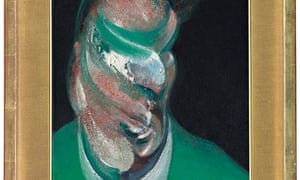
The little portrait that packs a mighty punch … Study for Head of Lucian Freud (1967) by Francis Bacon. Photograph: Christie's Images Ltd 2014


The slice of genius brought to you by Francis Bacon, Lucian Freud – and Roald Dahl

Study for Head of Lucian Freud, painted by Bacon and owned by Dahl, is expected to fetch millions at Christie's this week. It's worth every penny
Jonathan Jones
Tue 2 July 2014
The really big financial killing at Christie's auction of Postwar and Contemporary Art in London this week will not be made by Tracey Emin's My Bed. Instead it will involve a famous children's author and two remarkable painters, as Francis Bacon's Study for Head of Lucian Freud (1967) also goes under the hammer.
A portrait of the brilliant Freud by his peer – or superior? – Francis Bacon is bound to attract some sensational bids. After all, Bacon's Three Studies of Lucian Freud currently holds the world record as the most expensive painting ever sold at auction after it fetched $142m at Christie's in New York last year. Another Bacon triptych, of his lover George Dyer, sold at Sotheby's this week for £26.7m.

Francis Bacon
But those were triptychs, monumental works in three parts. Bacon's Study for Head of Lucian Freud, painted in 1967, is a much smaller picture. It is expected to sell for up to £12m. Don't be surprised, however, if it goes for a more sensational price.For this is a more exciting painting than Bacon's record-breaking Freud triptych.
Size isn't eveything. In art, a compact work of genius counts for more than sprawl. This little portrait packs a mighty punch.
Study for Head of Lucian Freud is displayed at Christie's in a darkened chapel of its own, isolated from the excitement of Emin's bed. It more than lives up to its quasi-religious setting. This is Bacon at his most radical – not just a distinctive British painter, but the heir of the great European modernists. Freud is unrecognisable under a wild smear of green. Pink and grey lumps of flesh collide with that green in a shocking chaos of a face. What has Bacon done to his friend? It looks more like rivalry, as he literally paints Freud out of the picture.
This painting is almost as hard to read as Picasso's Cubist portrait of Ambroise Vollard. It is a scintillating explosion of artistic energy, squeezed into a small framed rectangle and all the more powerful for that intensity of scale.
What's more, it has a touching story attached. It belonged to the children's author Roald Dahl, who kept it all his life. Dahl and Bacon? Most people probably associate the author of Charlie and the Chocolate Factory more with his regular illustrator Quentin Blake. Yet he was friends with Bacon and at one time owned seven of his works – this is the last to be sold.
It's tempting to imagine Bacon instead of Blake illustrating Dahl's books. Visions of smeared globs of flesh representing The Twits or The Witches come to mind. But actually, it is not surprising that Roald Dahl appreciated Bacon's darkness. There's plenty of savagery in his books – from the monstrous twits to the vile farmers who try to kill Fantastic Mr Fox. And in his stories for adults, Dahl had a pronounced taste for the gothic, not least in his black comic tale Royal Jelly.
The directors of Christie's may well be putting in an order for Royal Jelly from nearby Fortnum and Mason's after they auction this grisly jewel of a Francis Bacon painting.


Wednesday, March 20, 2019

Top 10 toxic families in fiction

Dostoevsky


Top 10 toxic families in fiction


From Edward St Aubyn’s damaged addict to Roald Dahl’s ingenious bookworm, Hannah Beckerman picks her favourite tales of families at war

Hannah Beckerman
Wed 20 Mar 2019 11.00 GMT


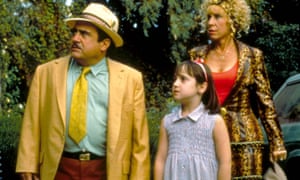
Magical morality tale … Matilda. Photograph: Moviestore/REX/Shutterstock
T
oxic families in fiction go back as far as the art of storytelling itself. Greek mythology is awash with dysfunctional families, from Kronos swallowing his children to ensure they never usurp him to Zeus and the Olympians overthrowing their parents, the Titans. The Old Testament gives us fratricide with Cain and Abel, sibling rivalry with Joseph and his brothers, and the devastating effects of parental favouritism with Jacob and Esau. Fairytales delight in wicked stepmothers, neglectful fathers and evil sisters. For 3,000 years or more, storytellers have known that there is no narrative so powerful as the warring family.

Sunday, February 25, 2018

School of hard knocks / The dark underside to boarding school books


REREADING

School of hard knocks: the dark underside to boarding school books


Violence, cruelty and sexual confusion are as much a part of boarding school literature as japes and cricket. Alex Renton surveys a troubled genre from Kipling to Rowling

Alex Renton
Saturday 8 April 2017 12.00 BST


“M
ichael was ordered to take down his trousers and kneel on the headmaster’s sofa with the top half of his body hanging over one end of the sofa. The great man then gave him one terrific crack. After that there was a pause. The cane was put down and the headmaster began filling his pipe from a tin of tobacco. He also started to lecture the kneeling boy about sin and wrongdoing. Soon, the cane was picked up again and a second tremendous crack was administered upon the trembling buttocks. Then the pipe-filling business and the lecture went on for maybe 30 seconds. Then came the third crack of the cane ... At the end of it all, a basin, a sponge and a small clean towel were produced by the headmaster, and the victim was told to wash away the blood before pulling up his trousers.”
The writer is Roald Dahl, on his school, Repton, in the early 1930s. Apart from one fact, it isn’t remarkable: it echoes accounts of boarding school stories in the 19th and 20th century that tell quite blithely of extraordinary violence and psychological cruelty. These appear to have been as traditional an element of the curriculum for the privileged child as were fagging, rugby, chapel and Latin. The notable detail Dahl provides is that the “great man” was a clergyman named Geoffrey Fisher, later to become the archbishop of Canterbury.
Savage discipline, along with sexual confusion and formalised bullying, are so common in the schooldays memoirs of the British elite in the 19th and 20th centuries that you have to conclude that parents wanted and paid for their children to experience these things. To most of the class that used them, the private schools were factories that would reliably produce men and women who would run Britain, its politics, business and culture. Boarding school was a proven good investment. So thousands of men and women who had suffered awfully, by their own admission, sent their children off for just the same.
At St George’s school, Ascot, the eight-year-old Winston Churchill was whipped hard for damaging the headmaster’s hat and for taking sugar from a pantry. “Flogging with the birch in accordance with the Eton fashion was a great feature of the curriculum,” he wrote in My Early Life. Churchill’s headmaster was another clergyman, the Rev Henry Sneyd-Kynnersley. Another St George’s old boy, the artist Roger Fry, wrote in his private diaries of these “solemn rituals”, which sometimes resulted in not just blood but excrement splashed around the caning block; Virginia Woolf, Fry’s first biographer, censored this information, along with details of both Fry’s and Sneyd-Kynnersley’s sexual arousal during the ceremony.
What all the published memoirs, from Churchill’s to Christopher Hitchens’s and a host of others, share most obviously is their tone: wry, tolerant and rather proud. It didn’t do to make a fuss or – more important – betray the caste. There are few men or women who went through the boarding school system who were prepared to wholly deny the benefits of the experience, at least before the later 20th century. George Orwell and his schoolmate Cyril Connolly had a go, using – and in Orwell’s case, fictionalising – the baroque horrors of their south coast prep school, St Cyprian’s.
 ‘Lifeless prunes and spiritual vampires’ … WH Auden was scathing about his teachers at Gresham’s.
Photograph by Jane Bown

Among the intellectual left in the 30s, a perception grew that Britain’s social divides, and the peculiar psychology of its ruling class, might just owe something to the uniquely bizarre education the elite underwent. In a 1934 volume of reminiscences, The Old School, edited by Graham Greene, writers including WH Auden, the diarist Harold Nicolson and the novelist Eileen Arnot Robertsoncompared the bulldozing of children into conformity at their schools to fascism. Auden dubs the teachers at Gresham’s in Norfolk “lifeless prunes and spiritual vampires”. Robertson’s essay about Sherborne School for Girls – “The Potting Shed of the English Rose” – sums up the ethos: “Run about, girls, like boys, and then you won’t have to think of them.” It is a portrait of a prison-factory designed to machine the girls into spiritual clones – reliable spouses for rulers.
There are few negative accounts of the traditional boarding schools by women. That may be in part because physical violence was less common, though the emotional abuse and neglect they encountered could be just as damaging. These institutions were founded later – there were only five “public” schools for girls by the end of the 19th century, all of them quite deliberately aping the boys’ ones. But in the late 1960s, 150,000 British children were boarding, about a third of them female. By then, the girls’ schools had their own literature: the addictive, unambivalent stories of japes, hockey and simple social quandaries turned out by Angela Braziland Enid Blyton. Like JK Rowling, Blyton did not board and Brazil only did in her late teens. The only anti-boarding school novel by a woman in the first half of the 20th century is Frost in May, Antonia White’s fictionalised account of her rigid Catholic convent school, Woldingham. There, sexuality was so feared that the girls were not permitted to see their own bodies: baths were taken in tents made of calico.
Novelists were telling of the dark and brutal times to be had at boarding school much earlier than the essay-writers. Dickens sent Nicholas Nickleby to Dotheboys Hall and Charlotte Brontë put the orphan Jane Eyre into Lowood Institute: at both of them hypocritical, grasping adults set out to break the children, physically and spiritually. In 1888, Rudyard Kipling published a heart-rending short story about little children dispatched – as he was, at five years old – from the colonies into the hands of uncaring adults back in Britain. Ten years later, he invented a school fiction subgenre with the rebellious schoolchild as hero, battling dictatorial and stupid adult teachers: Stalky and Co leads to Just William, to Molesworth and Down With Skool and finally to Harry Potter. The anti-authoritarian pranks of Stalky and his friends reappear again and again in subsequent English fiction – not least in the post-second world war tales of British officers in PoW camps, fooling dim German guards.
Having set The Longest Journey (1907) around his snobbish, militaristic school Tonbridge – called Sawston in the novel – EM Forster delivered the harshest of all one-liners about the products of the British public school. They go out into the world, he wrote in 1927, “with well-developed bodies, fairly developed minds and undeveloped hearts”. But by the 1920s, more of them were opening. To most Britons, possession of limited knowledge and not too much emotional intelligence must have seemed a sensible preparation for joining the club that ran the world. “They say that Eton taught us nothing,” crowed the first world war general Sir Herbert Plumer at a dinner of the school’s old boys’ society in 1916. “But I must say they taught it very well.”
The cricket field triumphs and the practical jokes, the floggings and the bullies of the traditional boarding school were by the 1890s the staples of a literary genre with an audience far beyond the class that used them, or even that aspired to them. The simple cast of brave, true sportsmen, of swots and of cowards, cads and bullies invented by Thomas Hughes in Tom Brown’s School Days marched on through hundreds of comics and novels for children; if you read accounts of British foreign policy before and after the second world war, it seems as though the playground precepts and stock characters of the schooldays novel have peopled the world. School and sport provided metaphors for proper Britishness. “Play up! and play the game!” – the refrain of Sir Henry Newbolt’s immensely popular poem “Vitaï Lampada” – was a guiding motto for everything from war to marriage.
It was clear that a stiff upper lip, loyalty to the team and a smile at adversity were the attributes most useful in life – and you obtained these at the right schools. By the 1920s, no crime, no brutality of those establishments was too much for their customers, or the wider public. Evelyn Waugh portrayed a shambolic prep school in his first novel, modelled on one at which he had taught. Decline and Fall features fiction’s first account of another traditional cast member of the boarding school drama, the predatory Captain Grimes. His actual crime is only hinted at in the novel; the BBC’s current rollicking TV adaptation is much more open about the “peg-legged pederast”. But the sophisticated reader would have had no problem understanding what Grimes did – and had been sacked from the army and many boarding schools for doing. Grimes is acclaimed as one of the century’s greatest comic creations. In his diaries, Waugh writes with loving admiration of Grimes’s original, the disgraced former army officer WRB “Dick” Young. A serial molester, certainly, but also, according to Waugh, a resourceful and witty man of “shining candour”, and they remained friends until Decline and Fall was published. Later, by way of revenge, Young wrote a school novel in which Waugh was the paedophile teacher.

And so to Hogwarts. With all its gothic filigree, this most exclusive college looks very like the 19th century Fettes College. The series has the archetypes – sinister teachers and over-friendly ones, sporty heroes and school bullies. While the books don’t have any flogging in them, they do have other key elements, including the arcane ritualistic training to join an elite.
Harry and his friends may well have been the best advert for private boarding schools since the Duke of Wellington boasted that Waterloo was won on the playing fields of Eton. It could be coincidence, but the 30-year decline in numbers came to an end in 2000, just as the third Harry Potter novel was published. Since then, though average full-boarding fees are now around £35,000 per annum, the pupil count has been stable at 70,000, a third of them the children of wealthy foreigners. Later this month, when the Easter holidays end, more than 4,000 children under 10 years old will say goodbye to their families, shipped off to where there is the promise of adventure, but not love. Some of them – as one mother, “forced” by her daughter to allow her to board, told me – will pack Harry Potter wands too. Your heart breaks for them still.
• Alex Renton’s Stiff Upper Lip: Secrets, Crimes and the Schooling of a Ruling Classis published by Weidenfeld & Nicolson.


THE GUARDIAN


2002

2010

2013


Tuesday, December 12, 2017

Love from Boy / Roald Dahl's Letters to his Mother / Digested read


Love from Boy: Roald Dahl's Letters to his Mother – digested read


‘Dear Mama, I’ve left the RAF now, and am best friends with Walt Disney, Roosevelt, Spencer Tracy and Hemingway’


John Crace
Sunday 12 June 2016 17.00 BST

D
ear Mama, I am writing this letter to thank you for sending me to St Peter’s. It is a lovely boarding school (1). Yesterday Binks minor got a bit of a cold and had to be taken off to the school sanatorium but he is OK now (2). Please will you buy me a monkey from Harrods? PS: All my warts have disappeared.

Repton is a great school. Possibly the most topping school that ever existed (3). I am doing tremendously well and am very popular with the other boys. My umbrella is working very well and I took some interesting photographs of a spider I squashed. The teachers are all very nice especially Crummers (4) and it was a bit of a shame that the Priory burned down. Still, at least no one got hurt (5), though Michael did have a mental breakdown (6). Several members of the school have got scarlet fever but have now recovered. Thank you for sending me a motorbike in the post. I promise to ride it very carefully.


Canada was very dull. It was full of trees and mountains and not at all like Norway (7). I am very pleased to have got a job with Shell as it means I can play golf every other weekend. I really feel my life is going somewhere. I am now being posted to Tanganyika in Africa, so I suspect I will have to spend a long time on a boat getting there (8). I am now in Tanganiyka and having a lot of fun. In the daytime, I sit in an office doing things with bits of paper and in the evening we get hideously drunk and throw darts at photographs of Mr Hitler (9). Boo to Mr Hitler! He really doesn’t sound at all nice. I got malaria last week but am much better now.
Now that war has broken out, I have decided to go to Kenya to train as a pilot. Flying is very fun and yesterday afternoon I had a shit in a jerry-can. I’m sorry I have not written for a while, but my plane crashed and I got a fearful bump on the head (10). Luckily, I was able to pull myself out of the wreckage and, after a couple of days in hospital, I was quite all right (11). I expect to be able to rejoin my squadron next week.
As you probably know, having seen me in England last month, I have now decided not to be a pilot any more and have been sent to Washington to work in the embassy. I am having a marvellous time in America and have just written my first short story. It has been tremendously well received (12). I am now best friends with Walt Disney, President Roosevelt, Spencer Tracy and Ernest Hemingway and everyone at the embassy thinks I am absolutely brilliant (13).
I am sorry that I didn’t keep any of the letters you sent me, and that I basically stopped writing to you in 1945 – as otherwise I might have been able to tell you about some of the most interesting bits of my life. You would probably like to have known more about my marriage to Patricia Neal, the tragedies that befell our family and how I became a bestselling writer. But it’s probably just as well that you died in 1965 and never had to read the many biographies of me that reveal I was basically a bit of a womanising bastard. Love from Roald.

Editor’s notes

  1. St Peter’s was a terrible school and Dahl hated every minute.
  2. Sadly, Binks minor died.
  3. Dahl was bullied mercilessly at Repton.
  4. Crummers may or may not have been the basis for the headmaster in one of his novels.
  5. They all died.
  6. Michael was expelled for homosexuality.
  7. Canada was exactly like Norway.
  8. One of the few parts of his letters that was true.
  9. Nazi leader who started the second world war.
  10. The plane didn’t crash – Dahl crashed it and was very badly injured.
  11. Dahl didn’t save himself. Another pilot pulled him out of the wreckage.
  12. Another part of the letters that is actually true.
  13. They didn’t. Everyone hated him for being a name-dropping know-all.
Digested read, digested: His first works of fiction.