The finalists … the Booker prize 2026 shortlist: L to r, Elizabeth Strout (The Things We Never Say), Marlon James (The Disappearers), M John Harrison (The End of Everything), Douglas Stuart (John of John), Luke Kennard (Black Bag), Rebecca Perry (May We Feed the King). Photograph: Yuki Sugiura/Booker prize foundation
I read 163 novels and these are the six best:
Mary Beard on judging the Booker prize
I found being a Booker judge hugely rewarding. All the works on our shortlist will change how you see the world
Mary Beard
Tuesday 22 September 2026
As a Booker judge, I think I have worked harder than I have ever done before. Reading 163 novels in six months, making careful assessments, being ready to argue for your judgment, going back to check you haven’t got it wrong … in some ways it took more energy than actually writing a book. But it was also hugely rewarding and fun. I shall never forget the discussions in our regular judging meetings, and the pleasure of discovering how we had sometimes reached almost exactly the same view of a book, and sometimes dramatically diverged. There were no big newsworthy squabbles, but a lot of discussion, a lot of listening and re-reading.
Marlon James offers a peek inside the world of Moon Witch, Spider King
The author's red-hot Dark Star Trilogy continues this spring.
By Seija Rankin
December 15, 2021 at 10:00 AM EST
When Marlon James set out to write the sequel book Moon Witch, Spider King (out Feb. 15), he quickly found he needed a visual aid. "You don't get very far into a fantasy novel before you realize you don't know what the hell you're writing about — so you better get to maps," he tells EW of creating the South Kingdom. "Once I drew an early version of this map, it started to influence the story."
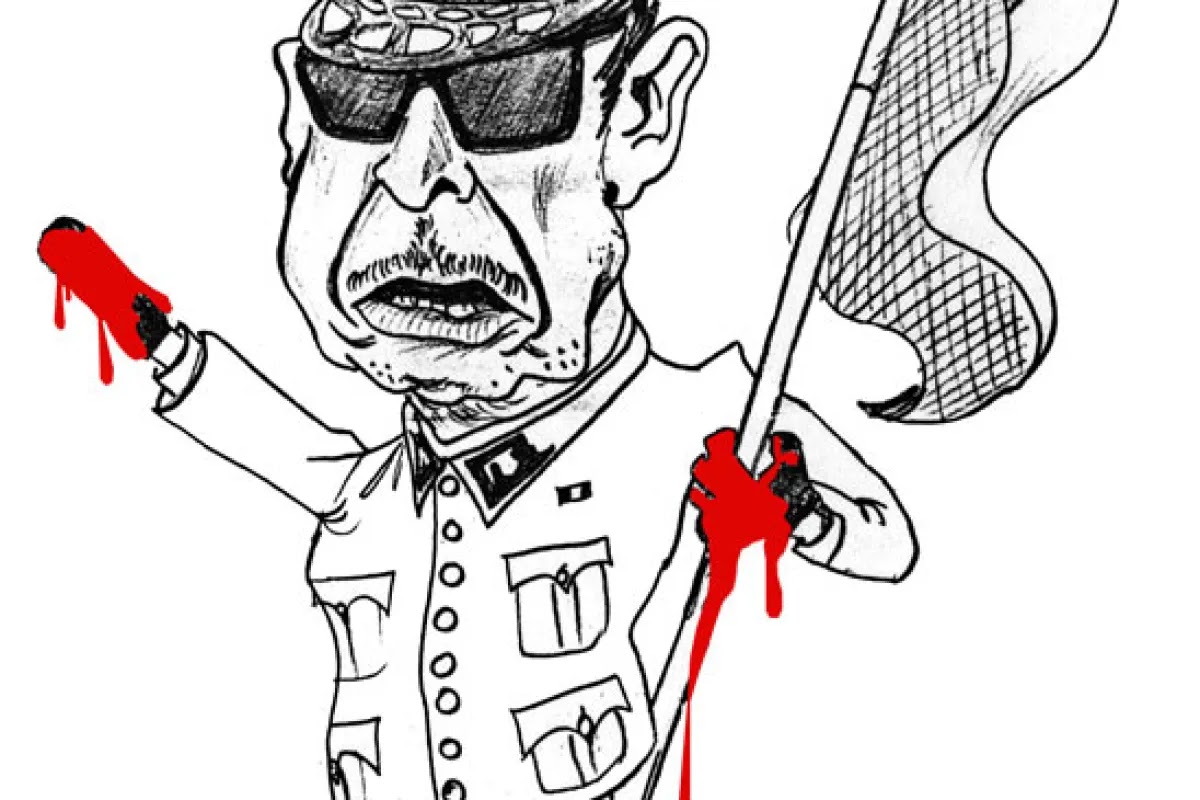
God must have a really messed up sense of humour to continue allowing the worst killers to die of old Age. Mobutu, Papa Doc, Milosevic and now Latin America's favourite CIA creation, and good friend of Margaret Thatcher, Augusto Pinochet. Whatever happened to the Good old days when Mussolini got his just desserts? It takes some skill to wash the blood of some 3000 people off one's hands, so perhaps he was already at peace before he finally croaked. So rest in peace Augusto, you corrupt, murdering, klepto son of a sniveling mongrel bitch. If I ever find your stinking ass in heaven when I get there, God's going to have to answer to me.
Stand aside, Beowulf. There’s a new epic hero slashing his way into our hearts, and we may never get all the blood off our hands.
(Riverhead)
Marlon James is a Jamaican-born writer who won the 2015 Man Booker Prize for “A Brief History of Seven Killings,” his blazing novel about the attempted assassination of Bob Marley. Now, James is clear-cutting space for a whole new kingdom. “Black Leopard, Red Wolf,” the first spectacular volume of a planned trilogy, rises up from the mists of time, glistening like viscera. James has spun an African fantasy as vibrant, complex and haunting as any Western mythology, and nobody who survives reading this book will ever forget it. That thunder you hear is the jealous rage of Olympian gods.
“We tell stories to live,” says Tracker, the indefatigable narrator, who tells a lot of stories but doesn’t let many people live. When the novel opens, Tracker is rotting in a dungeon where he recently stabbed, crushed and blinded his five cellmates. They had it coming — or most of them did — and in any case, it’s a perfect introduction to a lonely hero who will leave behind so many dead bodies over the next 600 pages that this book should be interred instead of shelved.
If you’re at all plugged in to the book world then you’ve been hearing about Marlon James’ newest novel, Black Leopard Red Wolf (out Tuesday), for months now. The author embodies the top of today’s literary hierarchy: He’s won the Man Booker prize (for 2015’s A Brief History of Seven Killings), and is also a frequent name on the New York Times bestseller list. But the fantasy tome — which is set to be the first of the aptly-named Dark Star Trilogy — is a notable departure from his previous work.
This ambitious novel requires an ambitious reader. Starting with the assassination attempt on Bob Marley in 1976, James chronicles decades of upheaval in Jamaica’s turbulent history through the eyes of myriad narrators: a Rolling Stone reporter, the ghost of a politician, and an assortment of gangsters, drug lords, and CIA agents. The sheer number of characters (there’s a handy list at the beginning), the Caribbean slang, and the gonzo view of violence and corruption are dizzying but nothing short of awe-inspiring.
Sole rebel? Jamaican novelist Marlon James, whose fictional retelling of the 1976 attempted murder of Bob Marley, A Brief History of Seven Killings, won this year’s Man Booker prize for fiction. Photograph: Felix Clay
Marlon James: 'Writers of colour pander to the white woman'
The 2015 Man Booker winner has blasted the publishing industry for pressuring authors to write ‘astringent prose set in suburbia’ for an ‘archetype of the white woman’
The 2015 Man Booker prize winner Marlon James has slammed the publishing world, saying authors of colour too often “pander to white women” to sell books, and that he could have been published more often if he had written “middle-style prose and private ennui”.
Jeanette Winterson and Marlon James 28 November 2015
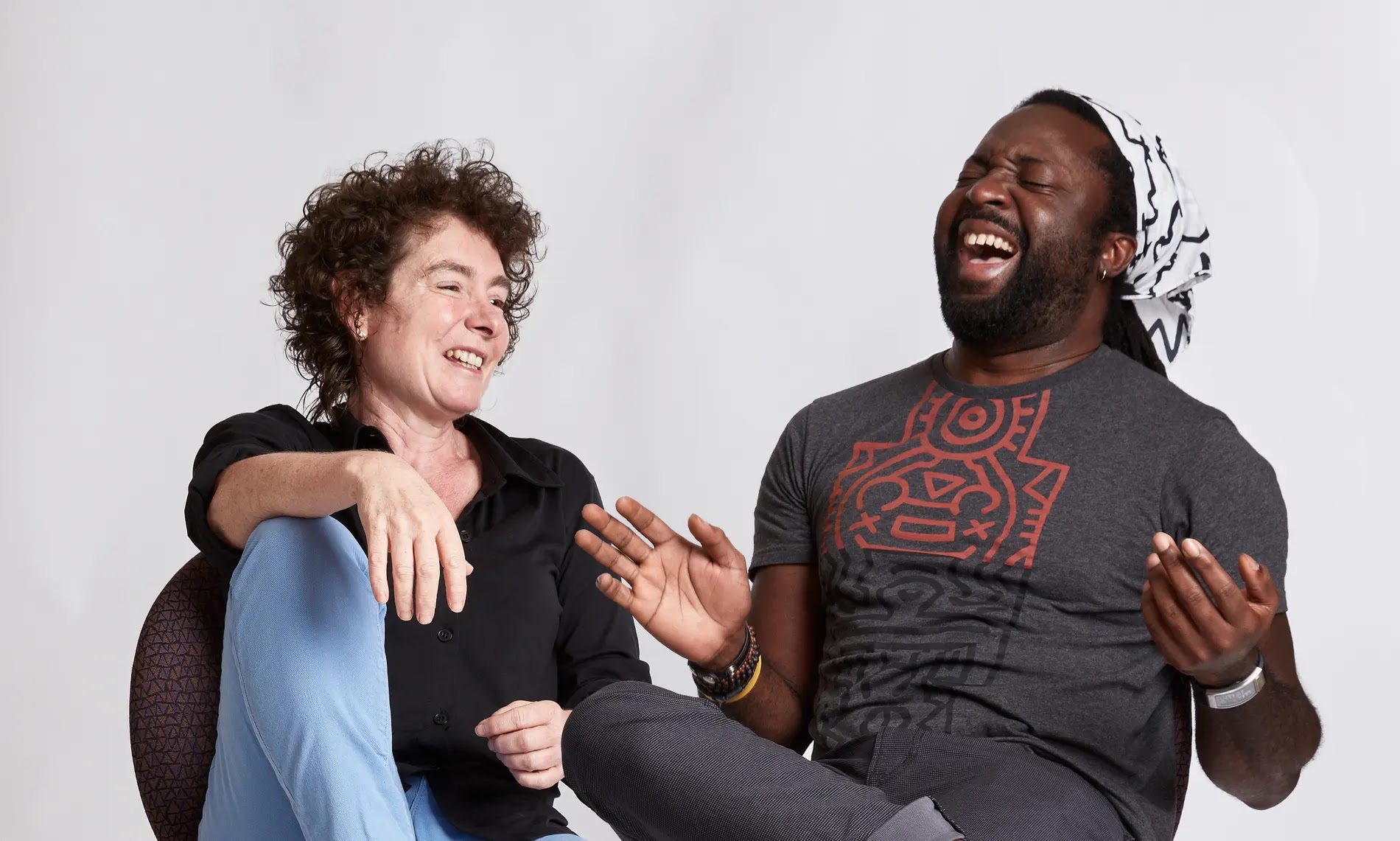
When Marlon James appears at the designated Miami hotel bar, Jeanette Winterson leaps up and runs to him. “I’m going to hug you,” she says. It’s the first time they’ve met, but the conversation flows at a steady speed for an hour and a half.
James’s impressive third novel sets the attempted assassination of Bob Marley against the cacophony and violence of Jamaica as the CIA moved in
Kei Miller
Wednesday 10 December 2014
T
he Jamaican novelist Marlon James has written three books to date – a kind of triple-jump feat, though that metaphor isn’t quite appropriate when one considers the extraordinary length of the leap he has taken between each book. His first novel,John Crow’s Devil, established him as an interesting local writer with an imagination markedly different from that of other Jamaican and Caribbean writers; he relished the darkness and gore rather than the sunshine and bouncy music. ButJohn Crow’s Devil, a small novel of hardly 200 pages, did not prepare anyone for what was to come next:The Book of Night Women.
It’s two days before the US release of Marlon James’s much-hyped fourth novel, Black Leopard, Red Wolf and the prizewinning Jamaican author has an air of baffled, exhausted ebullience about him. He’s no stranger to critical success: he won the 2015 Man Booker prize for his violent, multi-voiced epic, A Brief History of Seven Killings. But it feels like this new book will propel James into a new galaxy of literary stardom.
Marlon James’ A Brief History of Seven Killings—a panoramic, multivocal portrait of his hometown, Kingston, Jamaica, around the time of an assassination attempt on Bob Marley—was a literary reputation-maker, winner of the 2015 Booker Prize, and one of the great city novels of the past five decades. Black Leopard, Red Wolf—James’ first major work since then—will strike many as a radical departure: It is the first in an epic fantasy trilogy set on a fictional continent loosely based on Iron Age Africa. The novel is a delirious smoothie of cultural influences and tributes, from Kurosawa films to superhero comics to the seminal work of the 1930s Nigerian writer D.O. Fagunwa, whose Forest of a Thousand Daemons was the first novel published in the Yoruba language. (I’m pretty sure I even caught a whiff of Robert Browning at one point.)
Last year, just after Jamaican author Marlon James‘ new book “A Brief History of Seven Killings” came out, I remember having a conversation with Marina Salandy-Brown, the founder of the NGC Bocas Lit Fest, one of the Caribbean region's most lauded literary festivals. She was practically giddy over the brilliance of his writing and made this stunning prediction: “I think he has a real shot at winning The Man Booker Prize.”
On a visit to his birthplace, Kolkata, a Brooklyn-based dealer in rare books finds his life becoming entangled with an ancient legend about the goddess of snakes, Manasa Devi. While visiting a temple, deep within the mangrove forests of Bengal, he has a disturbing encounter with the most feared, and revered, of Indian snakes, a King Cobra. This is followed by a series of uncanny episodes that seem to dissolve the borders of the human and non-human.
Stolen from Chekov’s mistress who got it from James Marcus. Oscar Wilde said that talent borrows but genius steals. I don’t know about feeling like a genius but I do know a thing or two about feeling like a thief. So here are my answers:
1. One book that changed your life?
I think the best books change your life in ways that maybe you cannot recognise, but others recognise in you and think that it's just growth. With that as a yardstick, X-men becomes as important as The Color Purple. But if I had to pick only one book it would be James Joyce’s Dubliners. The irony is that I’m such a prude that I didn’t realize what was happening in “The Encounter” until I was 31 years old! The very first thing I ever wrote was a story-by-story response to Dubliners. The Sisters became Disintegration (yep also based on The Cure), A Painful Case became Wallpaper Faces and Two Gallants became Two Gentlemen United for Northside. All awful, trust me. But after that I realized that I was never going to whup this writing thingy. Mind you it would be another seven years before I wrote something else.
Hilary Mantel, Marlon James, Anne Enright Julian Barnes. Margaret Atwood and Howard Jacobson
What it is like to win the Booker prize, by Margaret Atwood, Hilary Mantel, Peter Carey and more
As the Man Booker prize turns 50 and readers vote for their favourite ever recipient, novelists reveal the highs (and lows) of winning ‘the Oscar’ of the literary world Saturday 30 June 2018
Hilary Mantel: ‘You could spend years floating around showing off’
Wolf Hall (2009) and Bring Up the Bodies (2012)
It’s a measure of the status of the prize that you wake up in a different world. Wolf Halland Bring Up the Bodieshad way outsold my previous books even before the shortlist. But after the wins, overseas deals multiplied rapidly and the effect bounced along to my backlist. So your previous career is recast, and all your work re-evaluated – both in a marketing sense, and a literary sense.
The prize has been nothing but good to me, but I can see that it might be destabilising. Big opportunities open up. It would be possible to spend years floating around the world showing off, and to become a professional winner instead of a professional writer. I imagine also that panic could strike. Luckily for me, I was held safe, because I was committed to a trilogy. So neither in 2009 or in 2012 did I have to ask myself, “What do I do now?”
Having been a judge as well as a contender, I know about the vast burden of reading, the chancy and nervous nature of the process, and how much depends on the dynamics of the final meeting. It may be skill that gets you to the shortlist stage, but we winners should remember that we have had a bit of luck, too. It’s important to get back to your desk, sit down in a spirit of humility, and – if you aim to flourish after the prize – learn all over again how to fail.
Julian Barnes: ‘I felt a general soppy warmth towards everyone’
I’ve always believed that literary prizes should be for the encouragement of the young, and the consolation of the old. In the middle stretch, you should just get on with it. So winning the Man Booker in my mid-60s was indeed a consolation – also a relief (I’d been shortlisted in each of the preceding three decades), but mainly a simple pleasure. I knew there was no danger of it changing the way I might write, and little (I hoped) of it going to my head. My old friend Ian McEwan warned me a few days afterwards: “By the way, you’ll find that from now on you’re no longer ‘the novelist Julian Barnes’ – you’ve been transformed into ‘the Booker prize-winning novelist Julian Barnes’.” This has indeed proved the case, but it’s hardly much of a burden.
The highlights of that evening in 2011? A kind friend assuring me as I sat down to dinner: “We’ll love you just as much if you don’t win.” (And me asking her jauntily two hours later, “So do you love me more now?”) My (female, British) publisher jumping into my lap a few milliseconds after the announcement. My (male, American) publisher instantly tapping into his iPhone instructions to up the print run for the forthcoming American edition. Then a general soppy warmth towards everyone in the Guildhall: the judges, my fellow shortlistees, waiters, interviewers – even the journalist overheard before the press conference boasting to a chum that “I’m going to ambush him with The Martin Amis Question”. Nothing could shake my absurd, if logical, good humour. I was overfamiliar with the downside of not winning the Booker, and could see no downside at all to finally winning it.
Margaret Atwood: ‘I had a contest with Beryl Bainbridge – who could be nominated most without winning’
The Blind Assassin (2000)
It was an evening with especially good flower arrangements in 2000, the year I won. I’d been nominated for The Handmaid’s Tale (too feminist), Cat’s Eye(too provincial) and Alias Grace (too colonial), and it seemed that I was in the Beryl Bainbridge category – always a bridesmaid but never a bride. In fact she and I had a contest going, who could be nominated the most without winning? When I actually did win, my first thought was “My new shoes are too tight”, because now I would have to walk in them to get photographed and so forth.
I probably shouldn’t have said that my earliest literary influence was Beatrix Potter – however true – but as I wasn’t expecting to win, I had no speech prepared. I was of course thrilled and grateful, but also I was simply relieved: I would not have to return to Canada to a reproachful but gleeful media chorus of “Atwood Fails to Win Booker”, as if it were a horse race. It’s much more like Best Pumpkin in Show: the pumpkin does nothing.
If there’s such a thing as a Man Booker experience I’ve drunk deep on it. Overlooked, infuriated, longlisted, shortlisted, victorious, overjoyed. I lost friends when I won. Not for winning but for reneging, as they saw it, on my earlier infuriation. Naive of them. If you are angry with a prize that doesn’t seem to value the sort of novels you write you are bound to change your tune when it does.
I got lucky with the judges – three women and two men of rare discernment and a sense of humour. Of course I thought myself deserving, but justice is no more than the dice rolling in your favour. Losing had been equally arbitrary.
Winning opened doors I thought were shut forever. Overnight, offers came in from foreign publishers, even publishers in Israel who until then had largely ignored my work on the grounds, they told my agent, that it was too Jewish.
How Jewish is too Jewish? There’s an argument that the fathers of the novel are Homer and the Old Testament, the Old Testament being responsible for the jokes. That being the case, all novels are Jewish in the disputatious, dialogic sense. If I didn’t expect The Finkler Question to win – and my mother was so convinced it wouldn’t I suspect she went to William Hill and bet against it – that was because I feared it was too overtly Jewish. Which goes to show you never know. Thus my only advice to aspirants to the prize: don’t try to write a Man Booker book. Leave it to the dice. And remember to be graceful in victory. We need all the help we can get.
Anne Enright: ‘I thought the camera was on Ian McEwan’
The Gathering (2007)
One of the most useful things said to me after the Man Booker came from my medical sister, who looked at me with a cool, diagnostic eye and said, “I usually advise people not to make any major decisions until six months after a life changing event.” I didn’t know my life had changed, I just knew that it was hard to get back to the desk. This was not part of the fantasy of the night, of course. I saw the cameraman lining up a shot on me and thought he was aiming at Ian McEwan, who was sitting over my left shoulder. When the announcement came, I expected a name, but the chairman of the judges read out the title of a book, and it took me a long second to realise that I had written this book. I told all this to a local audience in Dublin the other day and they just loved it: the fantasy of being the chosen one is incredibly strong. But if I am proud, it is of one fact: The Gathering is not just one of the minority of books written by a woman to claim the prize, it is also one of the very few to have a female narrator – perhaps five out of the 50 – and I am happy to have beaten those odds.
Peter Carey: ‘Nothing prepared me for the apocalyptic flashbulbs’
When I was shortlisted for Illywhacker in 1985 I had never read in public in my life. I was terrified that I would win and therefore have to make a speech. For two days I calmed myself by imagining Doris Lessing or Keri Hulmewould win. That worked, for my nerves, and for Keri Hulme as well.
When, three years later, I was shortlisted for Oscar and Lucinda I was a different man, not quite ready to punch the air or throw myself on the floor, but confident I would not lose my voice if called on to speak.
What I said is fortunately forgotten but I accepted the nice cheque and slipped it in my rented tux. It was only after this, when I had the money in my pocket, that I discovered there was something ahead, more overwhelming than a speech.
Oscar and Lucinda had been my fourth publication. I had already done many interviews, I thought. I had been photographed more than was decent. But nothing in my previous life prepared me for what followed. I mean my body had known nothing like these apocalyptic flashbulbs, relentless probes, strobes, questions left, right and over there. I was over the moon. I said I was. I was proud. I said that, too. Others were proud, my whole country even. What did I feel? What did I think? Was I happy? In those hours of media triumph and celebration, while my publishing life changed for ever, the cruellest trick of all was how numb I felt. I had to wait three days, for a stranger to hail me in the arrivals hall of Sydney airport, to really feel the thrill: “Good on you, mate. Well done.”
Marlon James: ‘I had to be marched back to my seat’
I really didn’t think I was going to win. So much so that I didn’t even write a speech. I was so convinced another book was the winner that right before the announcement I set off to the bathroom, only to be met by two near panicking members of the dinner staff who had run after me. They marched me right back to my seat. The journalist beside me knew I had won and tried to impress on me that I really should write a speech, to which I politely but firmly said no.
I was stunned when Michael Wood called my name. You really do slip outside yourself for a second, the way you do with any extreme experience, whether fear, pain, joy or heartbreak. I bumbled through a speech where I think I mentioned my father way too much, and then told people all the reasons why my book was not easy. I wonder if “not easy” referred more to the writing of it than the reading of it.
Hilary Mantel wrote a brilliant and hilarious article about not winning awards, which I had read at least three times, mostly in an attempt to get accustomed to not winning. I watched clips of Maggie Smith playing an actor who did not win the Academy award. Because honestly, I never win anything. You try not to be bitter about it, but who are we fooling? “It was an honour to be nominated” can sound as hollow as you think it would.
Except that it’s not hollow. No disrespect to the winners at all, but my most surprising reading experiences have come from the shortlist (Monica Ali, for example) and the longlist, (Timothy Mo, for example). So I had come to a quite beautiful moment of acceptance that I was about to join some truly esteemed company. But then I won.
Pat Barker: ‘It’s more like an Oscar than a literary prize’
Does the winning author ever know the result before it’s officially announced? Not in my year, though there was a clue: the cameras seemed to be focusing more on the winning table. I remember saying to my publisher, “I think we’ve done it!” After that, my memories are a blur of radio and TV interviews and a bank of cameras with flashing blue lights and voices calling out of the darkness, “Look this way!” “Over here!” You feel like a rabbit caught in the headlights.
Winning the Booker changes everything. In its power to transform a career it’s more like winning an Oscar than another literary prize. I was always aware of the luck element. A different set of judges might well have chosen another book. The question is, how do you react to your sudden (though shortlived!) fame? Embrace it, wallow in it or run away from it as fast as you can? I ran. As soon as I could, I went home and settled down to being the unsuccessful author of the next book. Though even that wasn’t easy. You’re always aware that the next book will receive more critical scrutiny than any previous book has done and that can be inhibiting. But even sitting in front of a blank screen tearing my hair out I was always grateful to have won.
In recent years I’ve become more aware of a downside to the Booker prize-winning label. Too many intelligent, enthusiastic readers take it as a sign the book will be above their heads, and yet many of these books – the shortlisted as much as the winners – are brilliantly accessible. “Give it a go,” you want to say, “You never know, you might be missing a good read.”
John Banville: ‘The notion I might win made everyone try not to laugh’
On the day of the award in 2005, I flew into London from Philadelphia at 6am. I had long before arranged to be in America at that time, as no one, especially myself, had the slightest expectation that my novel would even reach the shortlist. When it did get on, it became imperative that I attend the award dinner, in the fear that if they knew I would not be coming the jury would take offence – though even the notion that I might win made everyone put on a straight face and try not to laugh.
I came back to the UK alone, with a return flight to New York arranged for the next day at 10.30am – bad taste for a loser to hang about any longer than necessary. But what, I wondered, could I possibly do with this day, a whole day, on my own in London? I determined that I must not drink – I had made a great mistake in that regard when I was on the shortlist in 1989 – so I simply strolled about the city in the October sunshine, looking in the shop windows at all the things I would no more be able to afford tomorrow than I was today.
As the afternoon grew late, and the dreaded dinner hour approached, I found myself in St James’s Park, standing by the little lake there, idly watching five pure white waterbirds fighting with a duck over a crust of bread. The duck won. I took it for an omen, and went off to put on my black tie.
Penelope Lively: ‘The prize is nicely unpredictable – it may be you’
At lunchtime, on the day of the Booker dinner, my husband said: “I don’t think you’re going to win, but, just in case, perhaps you’d better think of something to say.” Wise words, as it turned out. I wasn’t the favourite, so the advice I would give to anyone shortlisted would be the same: the Booker is nicely unpredictable, so it may turn out to be you, even if they are all saying that is unlikely. And remember, anyway, that there is no such thing as a best book, merely one on which a group of people have been able to reach agreement.
Life after the Man Booker meant a couple of years and more when it was difficult to do what I wanted to do, which was get on with some writing. There was much book-related travel, too much time in airports, too many events. All that is 30 years ago now, and in a way I am quite grateful for the travel: it means that one of the satisfactions of old age is the thought that I shall never see Heathrow again. I have had all the travel I want or need.
Once the searchlight is turned on others, your take on the Man Booker is that of any reader – the revelation of books you might not otherwise have come across, and will now read. That is the value of the shortlist (longlist, too) – a swathe of books are highlighted for readers. For me, though, there are also the ones that got away that should have won. Two, to my mind: Adam Thorpe’s Ulverton and Carol Shields’s The Stone Diaries.
Ben Okri: ‘The hunger and the dreams are still there’
You take a young poet and novelist flaming with hunger and obscurity and dreams, you put him through the rigours of the short-story form, you unleash him on a novel he had been secretly writing for years, and you gift him with a strange magical night at the Guildhall in October 1991, and what do you get?
You first get shock, surprise, retreat, delight, celebration, partying, making up for the hunger years, excessive travel, an explosion of readership, the opening up of the magic casement of African writing, a very English lingering backlash, many beautiful friendships, an initial stunned hiatus in writing followed by a steady, quiet harvest, opportunities for constant literary and spiritual growth, much conflicting criticism, an ebb and flow of fortunes, some smouldering resentment, the curious compliment of being plagiarised, publication in many languages, undue expectation followed by a rush to declare disappointment, many St Sebastian-like arrows patiently and humorously borne, love and kindness directed at me from ever renewing sources, and an abiding, never faltering gratitude for the fact that regardless of how my books are received or not received the flame and the hunger and the dreams are still there, enriched by that destiny-altering night at the Guildhall in 1991.
DBC Pierre: ‘I bet a tenner on myself as if I were a horse’
For a participant, one thing the Man Booker prize is strange for is that your days of feverish writing can be two or more years behind you. There’s an extreme Doppler shift: you didn’t write the book with a view to later competing with others. You suddenly find yourself not only in competition but given odds at the bookies (I put a tenner on myself as if I were a horse – you just have to). As if runners ran a race against themselves, and judges were convened years later in a different place; or you worked up the strength to lob a bowling ball up an alley over the horizon, and by the time you got over the rise you saw that agents and publishers had kept the thing rolling on. The night itself is numbing. The shortlist is the realistic prize. I don’t know how possible it is to find a single winner among artworks. From the perspective of the dinner table on the night you quickly realise the show’s set up for TV. I remember being told to expect one of five roving cameras in my face as the winner was announced. Those are the cameras that catch your reaction when someone else wins. Only five of them, as the winner will go to the stage. I spotted the cameras early. Watched them wait for the announcement; and lived a very long split-second as I realised none were coming to me •






 Nandini Nair | 03 Jan, 2019


