Karla’s Choice: A John le Carré Novel by Nick Harkaway review – the Circus is back in town
John le Carré’s son does him proud in an excellent spy thriller about a Soviet agent that faithfully bridges two of his father’s classic tales
Anthony Cummins
Sun 20 Oct 2024 07.00 BST
Considering the drift of those books, it’s maybe unsurprising if we’ve lost sight of le Carré’s achievements as a novelist, especially in his early years. His first big hit, The Spy Who Came in from the Cold (1963), which mapped a thwarted romance on to geopolitical intrigue in divided Berlin, accelerated the spy genre’s 20th-century breakaway from jingoistic tub-thumping and gung-ho adventure. By the time of Tinker Tailor Soldier Spy (1974), an ensemble psychodrama in which the British plot against one another as much as against the Soviets, le Carré’s narrative energy is generated more by gnarly workplace tensions rather than conventional derring-do, which is nonetheless tinglingly present in the book’s shattering finale.
Novelist John Le Carré reflects on his own 'Legacy' of spying
The late spy novelist is the subject of a new documentary by Errol Morris, The Pigeon Tunnel. Le Carré worked for MI5 and MI6 early in his career. Originally broadcast in 1989 and 2017.
Terry Gross
OCTOBER 27, 2023
TERRY GROSS, HOST:
This is FRESH AIR. I'm Terry Gross. The late John le Carre wrote spy novels that were praised for transcending genre fiction and simply being great literature. Many of his books have been adapted into films or TV series, including "The Spy Who Came In From The Cold," "Tinker Tailor Soldier Spy," "The Little Drummer Girl," "The Constant Gardener" and "The Night Manager." Le Carre died in 2020 at the age of 89, but documentary filmmaker Errol Morris has a new film that features interviews with the writer. It's called "The Pigeon Tunnel," which is also the title of le Carre's 2016 memoir. The film is currently in theaters and can be streamed on Apple TV+.
6 Fall Books We Can’t Wait to Read: Lauren Groff, Colson Whitehead, and More
If you need us this season, we’ll be cozying up with a good book
Jordan Riefe August 31, 2021
Put down those beach reads, and get ready for a fresh crop of highly anticipated literature from some America’s favorite authors, from Lauren Groff to Susan Orlean. It’s the perfect season to cozy up with one of these books.
John le Carré remembered by writers and friends: 'He always had a naughty twinkle in the eye'
Part Three
Margaret Atwood, John Banville, Tom Stoppard, Ralph Fiennes, John Boorman and more pay tribute to a master who transcended the limits of spy fiction
Monday 14 December 2020
Ralph Fiennes, actor
When I was approached by [producer] Simon Channing Williams in 2003 about making The Constant Gardener, I was already an enormous fan of le Carré’s books. I loved the world he created. And then I met the man, and he was so charming and generous of spirit and immediately available for conversation about the novel and the character. I must have fired all sorts of spurious questions at him but I just remember how he was very gregarious and excited about the project.
John le Carré remembered by writers and friends: 'He always had a naughty twinkle in the eye'
Part Two
Margaret Atwood, John Banville, Tom Stoppard, Ralph Fiennes, John Boorman and more pay tribute to a master who transcended the limits of spy fiction
Monday 14 December 2020
Philippe Sands, lawyer and author
We first met at the local pub, bonded over the mendacities of the “war on terror” and Iraq, and ended up giving a talk at a local school in the company of a former Guantánamo detainee. I learned that his attention to detail, and capacity for research, was beyond extraordinary; I didn’t hesitate when he asked if I might review a manuscript to check if the lawyers were “right”. (Dress, lingo, style, etc.) It became a regular thing: the doorbell; him, standing on the porch; hundreds of pages in a cardboard box; “usual procedure?” What a joy to receive the unvarnished words, double-spaced, printed only on one side, and the conversations that followed. (Unbelievably, in the early years my wife gave the drafts to our kids as scrap paper.) “No lawyer would refer to her client as ‘heart’,” I might scribble, or some such thing, polite in the early days, firmer as the years passed, then deliver the relevant pages back to their house around the corner. Occasionally there would be a debate, sometimes pretty spirited. He’d usually take a suggestion, but not always. “Heart” never did make it into that book, thankfully, although he insisted for ever that he did once hear a lawyer use the expression, “truly, a term of genuine endearment”.
John le Carré remembered by writers and friends: 'He always had a naughty twinkle in the eye'
Part One
Margaret Atwood, John Banville, Tom Stoppard, Ralph Fiennes, John Boorman and more pay tribute to a master who transcended the limits of spy fiction
Monday 14 December 2020
John Banville, author
We met for lunch one rainy day at the end of last summer, in an excellent but eerily deserted restaurant in Hampstead village. He was already there when I arrived, seated foursquare at a small table with his back to the wall and his eyes on the door. Inevitably it occurred to me to wonder how many empty restaurants, bars and cafes he had sat in like this, waiting and watching, in the days when he was a spy. He always played down the significance of those days, speaking of them with wry amusement, and giving the impression that in the world of espionage he had been little more than a pen-pusher. I chose to believe him.
f a posthumously discovered novel is enough to set a conspiracy theorist’s antennae twitching, they’ll be wobbling like deely boppers when the novelist in question is the spymaster himself. But conspiracy theorists, while alert to the complex and absurd, are notoriously blind to the obvious. John le Carré was a working writer, producing a book every couple of years, and it would have been a surprise if he’d died leaving a clear desk. And it’s not as if he had reason to hang up his pen. While alive to the dangers of a novelist outstaying their welcome – he cited Graham Greene in that regard – his output remained consistently robust. If the late novels are slenderer and less layered than those he produced 30 or 40 years ago, they are also angrier and more politically engaged. He still had much to say. As for the complaint, occasionally heard, that in later life he wrote nothing as groundbreaking as The Spy Who Came in from the Cold, or as formidably comprehensive as the Karla trilogy, he might with some justification reply – à la Joseph Heller – “Who did?”
Fintan O’Toole on John le Carré’s final twist: dying as an Irishman
He was the greatest English novelist of his generation, yet just before his death he became an Irish citizen of the EU. The reasons were both political and deeply personal, but at their heart lay one thing: betrayal
by Fintan O’Toole Saturday 9 October 2021
I’m looking at one of the last photographs of John le Carré. It was taken by his son Nick in October 2020. There is a mostly empty bottle of good beaujolais in front of him and a glimpse through the window behind of the Cornish landscape that he inhabited with such delight. His beloved wife and most important collaborator, Jane, is seated next to him, laughing heartily.
The master of the spy novel could be simultaneously old-fashioned and thoroughly modern – but what made his fiction Le Carré-esque?
By William Boyd 6 January 2021
The sudden and unexpected death of John le Carré last month inevitably prompts an evaluation of both the work and the man. There are more than two dozen novels, the most recent of which, Agent Running in the Field, was published in 2019, days before the author’s 88th birthday. Given that his first novel, Call for the Dead, was published in 1961, his longevity and productivity as a novelist – close to 60 years – is both remarkable and astonishing.
BY JEFFON NOVEMBER 18, 2016 If you are a male of a certain age who grew up in America then chances are that you held an issue ofMad Magazinein your hands at some point in your adolescence. You always knew something was big in the popular culture when you saw it inMad.
At 10 o’clock of a rainswept morning in London’s West End, a young woman in a baggy anorak, a woollen scarf pulled up around her head, strode resolutely into the storm that was roaring down South Audley Street. Her name was Lily and she was in a state of emotional anxiety which at moments turned to outrage. With one mittened hand she shielded her eyes from the rain while she glowered at door numbers, and with the other steered a plastic-covered pushchair that contained Sam, her two-year-old son. Some houses were so grand they had no numbers at all. Others had numbers but belonged to the wrong street.
John le Carré, who died last December at the age of 89, did not really exist. His name was a “cover” for a former British Intelligence officer called David Cornwell, who monitored the trap-door disappearance of agents in Cold War Germany and ran agents in the shadow of the Berlin Wall. By his own admission, le Carré took a degree of pleasure in double-dealing and duplicity if not outright dissemblance. (Reportedly he enjoyed “playing” on his first wife’s suspicion that he was homosexual.) As an MI6 operative in Bonn in the early 1960s, alarmingly, he tapped phones and effected break-ins.
Sensational new biography claims the celebrated novelist conducted a series of 'assignations' in real life
In 1954 David Cornwell married Ann Sharp, the daughter of an air vice-marshal, with whom he had three sons
For a time they lived happily, David progressing from schoolmaster at Eton to MI5, then MI6
But their relationship began to turn stale, not helped by Cornwell’s burgeoning career as a novelist – using the pen name John le Carré
Despite his fame, he stopped short of full-blown affairs, until he met the glamorous Susan Kennaway, wife of his friend James
y ADAM SISMAN FOR THE MAIL ON SUNDAY
PUBLISHED:| UPDATED:
David Cornwell grew up in a world devoid of female affection. When he was five his mother walked out of the family home for good, leaving him and his older brother to be brought up by their controlling, conman father, and at a series of all-boy prep and public schools.
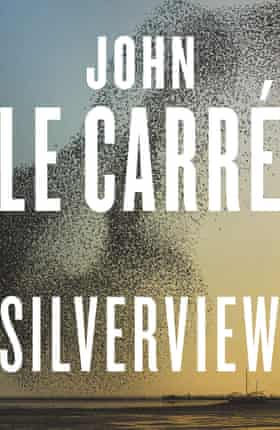
Le Carré’s final complete novel was published in October, in the week of what would have been his 90th birthday. Having made his fortune, Julian Lawndsley has left the City to run a bookshop in East Anglia, where a meeting with an eccentric Polish émigré and former spy draws him into a web of intrigue. The cast of characters, including several husband-and-wife spy pairings, are compromised by secrets, loyalties and allegiances both professional and familial, and no one, least of all the Service itself, is innocent. Valedictory, with a final turn of events that ends surprisingly but pleasingly in a cock-up, this is a satisfying coda to the career of the finest thriller writer of the 20th century.
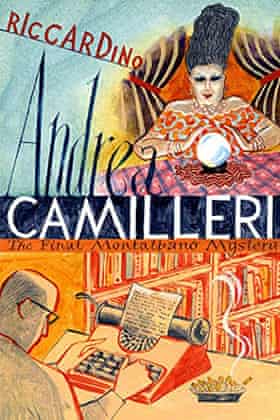
Andrea Camilleri, translated by Stephen Sartarelli(Mantle)
Written in 2005, Camilleri’s final Inspector Montalbano novel was kept in a safe for publication after the author’s death, which occurred in 2019. Like its much loved predecessors, Riccardino is set in the fictional Sicilian town of Vigata, but this time the increasingly tired and tetchy detective is joined by the author himself, who makes ever more far-fetched suggestions as to how the investigation into the death of the titular character should proceed. The absurdity mounts as the Catholic church persists in sticking its Jesuitical oar in and the revelations about the dead man’s private life grow ever more colourful. This novel is a fittingly exuberant last outing.
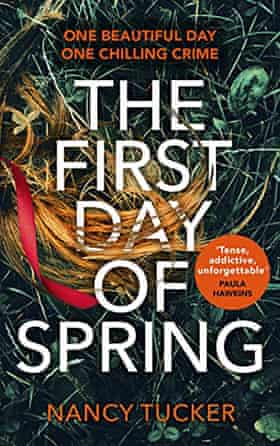
“I killed a little boy today …” From the first line of this assured debut, we know that eight-year-old Chrissie is a murderer. Neglected by her parents to the point of starvation, she is desperate for both physical and emotional nourishment, and her every action – bullying her classmates, making trouble at school, and finally strangling two-year-old Steven – is a heartbreaking attempt to make somebody notice her existence. The narrative is split between the child Chrissie and the adult she becomes, released from a secure unit and renamed Julia, now with a child of her own. Tucker explores the difficult subjects of cruelty, guilt and redemption with compassion and extraordinary finesse, in a way that will resonate long after the final page.
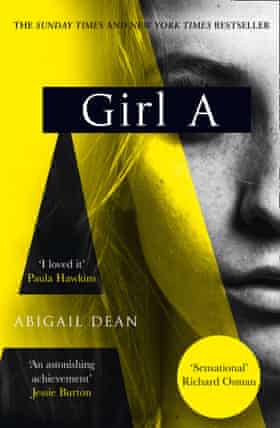
Another superb first novel that is all the more powerful for being unsensational, Girl A is the story of Lex, the eldest daughter of a religious fanatic who, enabled by his wife, abused his children so appallingly that the family home became known as the “house of horrors”. Many years later, Lex, now a lawyer in New York, is compelled to relive the past; she returns to England to oversee the house’s conversion to a community centre and is forced into contact with her siblings, all of whom have reacted to their childhood experiences in markedly different ways. One of the best depictions I have read of the difficulties of “moving on” and the impossibility of explanations to outsiders, this book is haunting and powerful, with a hard-won hope.
Vigilante-for-hire Virgil Wounded Horse acts on behalf of those on the Rosebud Native American Reservation in South Dakota who have been failed by both the toothless tribal police and a foot-dragging US criminal justice system. After his teenage nephew almost dies from a heroin overdose, Virgil is determined to take on the men responsible for bringing the drug into the community. However, with limited authority and some powerful adversaries, his life is becoming both complicated and very dangerous. In his debut novel, Weiden, a member of the Sicangu Lakota Nation, gives a fascinating insight into an often overlooked world, and draws the reader into a satisfying mystery.