Showing posts with label Richard Burton. Show all posts

Sunday, March 24, 2024

Inside the Terry O’Neill Retrospective at Fotografiska New York

Terry O'Neill at Fotografiska

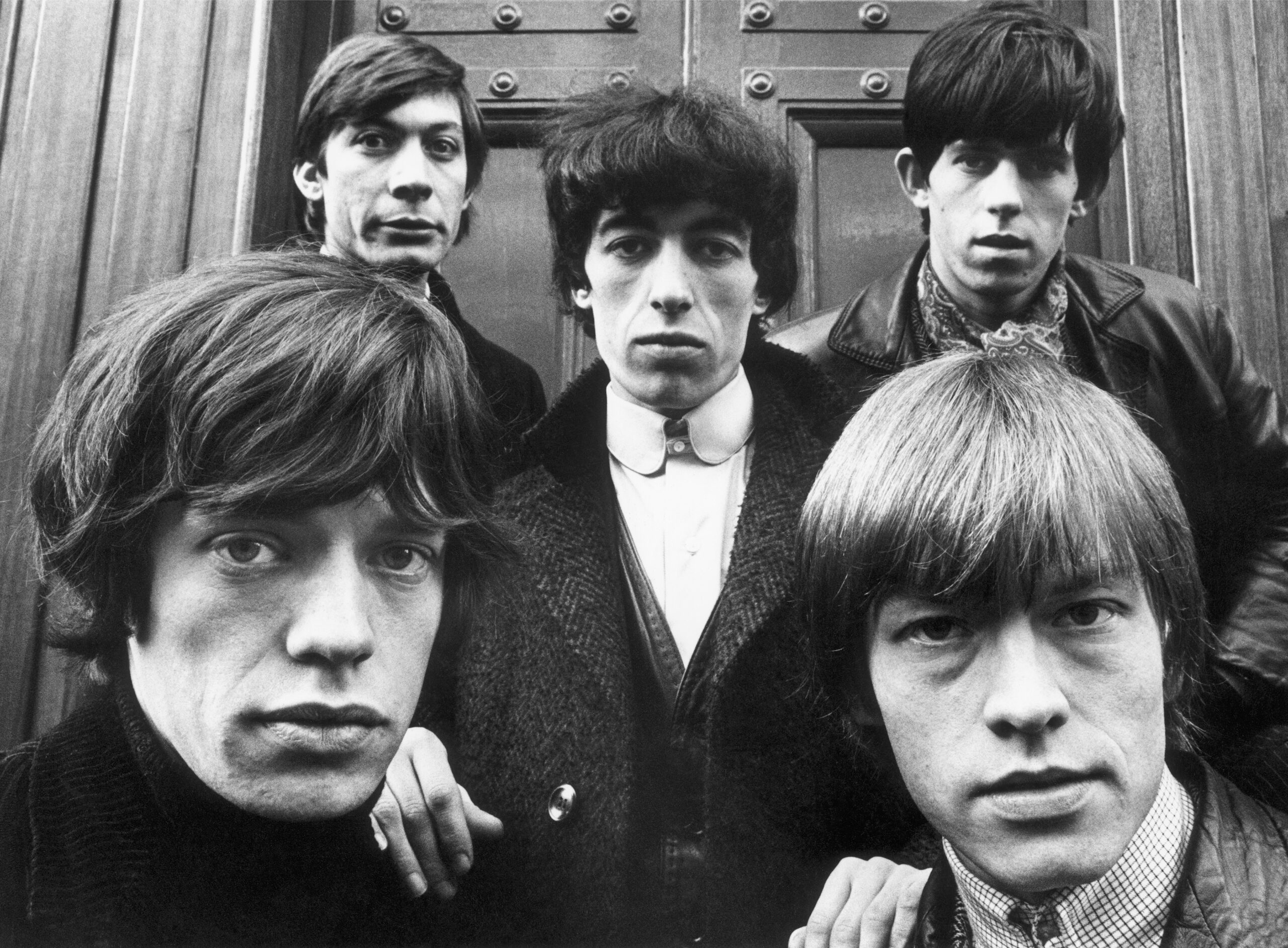
The Rolling Stones outside St. George’s Church in Hanover Square, London, 17th January 1964. Clockwise from bottom left: Mick Jagger, Charlie Watts, Bill Wyman, Keith Richards and Brian Jones (1942 – 1969).


Inside the Terry O’Neill Retrospectiveat Fotografiska New York

It’s never been easier to feel close to your favorite star—all it takes is a few clicks to find a selfie on their Instagram. But before social media, and even the days of peak paparazzi, Terry O’Neill defined the concept of the celebrity story in photographs you can find at Stars, a new exhibition celebrating a half-century of the photographer’s legacy at Fotografiska New York. “I remember my parents talking about stars in the mid-seventies,” says Fotografiska chair Yoram Roth. “They may as well have been talking about Bible characters. These were people who were so unknown to them that every snippet of information was passed around like scripture. To see a photo in a glossy magazine weekly or monthly made you feel like you had access to something that we now take for granted.” Just before the show’s opening, Roth made time to walk us through some of O’Neill’s most iconic images of Faye Dunaway, Mick Jagger, Elizabeth Taylor, and David Bowie.

Monday, December 14, 2020

John le Carré on The Night Manager on TV / They’ve totally changed my book – but it works


John le Carré on The Night Manager on TV: they’ve totally changed my book – but it works

They made the agent a woman, changed the location and the ending. The bestselling thriller writer on the pain and pleasure of adaptations from The Spy Who Came in from the Cold to the BBC’s new six-part series


John le Carré
Sat 20 Feb 2016 08.00 GMT
Last modified on Thu 22 Feb 2018 12.58 GMT


The Spy Who Came in from the Cold provided me with my first experience of the film trade, and in retrospect it was an unusually benign baptism of fire. The director and I got along fine. I enjoyed an amiable relationship with the screenwriter, who as a former instructor in the black arts at a British spy school during the second world war turned out to know much more about espionage than I did. No great liberties were taken with my story – although I no longer see that as a criterion – and my only job was to provide the odd grace note to the screenplay while befriending Richard Burton and keeping a beady eye on his alcohol consumption.

Friday, July 28, 2017

Claire Bloom / 'There's more to life than men'

Claire Bloom

'There's more to life than men'

Actress Claire Bloom's relationships with Rod Steiger, Richard Burton and Philip Roth all failed. But she is relishing her independence, she tells Michael Shelden

Claire Bloom: 'My daughter keeps my head on straight'

IN her twenties, Claire Bloom led a charmed life. Almost overnight, she rose from middle-class obscurity in Finchley to international stardom, playing the leading lady to Richard Burton, Charlie Chaplin and Laurence Olivier. Her elegant beauty was celebrated in the pages of Vogue and Time; her acting talent was praised by Kenneth Tynan as "pure gold".
Then she started having trouble with husbands. Her career lost its direction as she struggled to save three difficult, volatile marriages, each more demanding than the last. Indeed, her divorce from her third husband - American novelist Philip Roth - was so acrimonious that he bombarded her with faxes demanding the return of every penny he had spent on her and sarcastically suggested a "fine" of $62 billion for her alleged violation of their prenuptial agreement.
Now, still beautiful and energetic at 71, she has decided that enough is enough. Fixing me with her sharp gaze, she leans back in her chair and declares, "Freedom is marvellous. There are other things in life besides men."
She sounds convincing, especially when she discusses her ambitious hopes for reviving her film and stage career. In America, she is touring in a one-woman show that features various Shakespearean characters, and she has just completed work on a small film in Montreal.
In her private life, she has formed a new friendship with the writer Marianne Wiggins, an ex-wife of another "high-maintenance" literary star, Salman Rushdie. The two women have become travelling companions, taking a boat trip on the Amazon together and no doubt entertaining each other with stories of famous novelists behaving badly.


Her dark hair is wispy and her glances are often sidelong and furtive, betraying shyness as well as suspicion. One moment, she seems anxious and guarded; the next, relaxed and forthcoming.
"There are definitely two sides to my personality," she admits. "Part of me is childish, playful, dependent. Another part is fiercely independent and protective."
The tension between these two sides is at the heart of her success as an actress. She was brilliant on the London stage as Blanche DuBois in A Streetcar Named Desire, perfectly capturing the torment of a woman caught between the demands of genteel respectability and raging desire. Some of the same tension was also apparent in her celebrated Broadway performances as Nora in A Doll's House.
But in her private life she has suffered from what her friend Gore Vidal describes as her "neurotic" temperament. When I repeat Vidal's succinct commentary on her relationship with Philip Roth - "He's tense; she's tense" - she laughs nervously, but does not deny the accuracy of the description.
Part of the difficulty in her tumultuous love life is that she has been drawn so often to men whose anxieties and obsessions mirror her own. Her first husband, the actor Rod Steiger, didn't seem to know whether he wanted his wife to be a free spirit or an accessory to his own career. They had a child - Anna, now 42 and an opera singer - but the marriage soon collapsed when Bloom found herself attracted to one of her husband's friends, the producer Hillard Elkins.


She now acknowledges that her marriage to Elkins was an enormous mistake and describes him as having "an air of fearful anxiety", yet she was only too willing to join him in a stormy relationship, playing the "child-daughter" to his father-lover.
Significantly, her own father was largely absent from her life. It was her mother who inspired her to pursue an acting career, while her father drifted from job to job and place to place before disappearing from her life. In her childhood she was never quite certain what her father did for a living. "I later found out from my birth certificate that he described himself as a tie salesman, but I have no idea if he actually sold a tie."
After her father abandoned the family, Claire and her brother, John, lived with their mother in greatly reduced circumstances, made worse by the privations of the war. She still has vivid and painful memories of the period.
"It was so dreary and bleak, with rationing and bad food. I came to resent not only the poverty that we saw around us, but the whole caste system of Britain that made any escape from such poverty so difficult. Although you might get a taste of success, you still felt enclosed and unable to move ahead. I couldn't wait to get out of England."
Her chance came in the early Fifties, when her budding career as an actress attracted the attention of Charlie Chaplin, who flew her to New York to audition for a starring part in his film Limelight. He liked what he saw and showered attention on her, generously sharing the cover of Time magazine with her when the film was launched. Suddenly, Hollywood wanted her and she made several big films in America, including The Buccaneer with Yul Brynner.


"I had acting jobs in London, but I wanted to be in America. For me, the one bright thing about England in those days was a Welshman."
She is referring to the first great love of her life, Richard Burton, who starred opposite her in Hamlet at the Old Vic. Unfortunately, he was married at the time and she was never able to enjoy more than brief periods with him.
The fact that their love was frustrated and finally faded is still a source of pain to her, and she does not have much sympathy for Elizabeth Taylor, who eventually lured him into a second marriage. There seems little doubt that he was the favourite of all her lovers.
"He had it all: intelligence, physical beauty, an incredible voice. There was no one else like him. When we were at the Old Vic, he proved that a working-class actor could make it, and I was proud of him. I thought he set a great example in a society that was, and still is, so preoccupied with class and accent."
Her resentment of social distinctions is such a favourite theme that she can't resist interrupting her praise of Burton to deliver a sharp dig at the Queen: "As long as people continue to bow to an uncultivated woman, the caste system will continue."
It is not surprising that she soon drifted away from Britain and made her new home in America, first with Steiger in balmy Malibu and then with Elkins in New York. It was during her early days in New York that she met Roth, who was immediately drawn to her.
"We liked many of the same things. We're both Jewish and bookish. I suppose, at one level, it was a kind of tribal connection that made us fall for each other."
But the relationship grew with painful slowness because Roth was both wary of marriage and deeply jealous of losing Claire's affection. He made it difficult for her to pursue her career and tried to dominate every aspect of her life. So intense was his jealousy that he turned against her daughter, Anna, insisting that the girl was a distraction and consumed too much of Claire's attention.
When Anna was 18, Roth demanded that she leave their house. Claire agonised over his demand but, to her regret, gave in to it.
"He didn't like having her around. It was as simple as that. They are two people with very strong personalities and I couldn't find a way to bring them together. So Anna left. It was a terrible mistake, and she and I have resolved this question only after much difficulty."
Now that Roth is gone, how do relations between mother and daughter stand today?
"She is the most wonderful woman I know and we are very close again. She is so good for me in so many ways. She keeps my head on straight. When I go over the line, she will put me in my place by saying, `Oh, Mom, that's so actressy'."
It took almost 20 years for Bloom to get Roth out of her system. They spent years feeding each other's anxieties and debating their future, and the question of marriage was put off again and again. They lived together in a state that varied from open hostility to quiet domesticity. She tolerated his many emotional outbursts and depressions and nursed him through several illnesses.
"But our love was always doomed to fail. I see that now. Philip can't endure relationships that go on peacefully. He needs controversy and conflict and abrasion. We had many good times, but they were always followed by some outbreak of anger and guilt."
In a vain effort to save their relationship, Claire proposed marriage to Philip. He hesitated, but finally accepted the offer. Their union lasted only three years. And when he turned against her, it was with a vengeance, threatening expensive legal actions and sending angry letters of recrimination.
In 1996, she struck back by turning his instrument of power - the pen - against him. She wrote a brutally candid memoir of their life together and took a literary swipe at him in the title by calling the book Leaving a Doll's House. Over many pages, she details her case against him, attacking him for his selfishness and ingratitude. For her pains, she was criticised in some reviews for airing her dirty laundry in public.
"My crime was that I blew the whistle on Philip Roth. I thought what I was doing was giving the world a truthful picture. Much of it was bad, but there was also great love between us and I tried to convey the spirit of that love."

It is difficult to see the love in her memoir when so much mad obsession seems to swirl around it. He emerges from the book as a nasty, lonely misogynist whose supposed genius hardly serves as an excuse for his wild tantrums and petty cruelties. Bloom seems to think his genius partly redeems him, but it may well be that his self-indulgent fictions will not be read by anyone in 50 years. In which case, she suffered for nothing.
But that bleak view is not one that she is willing to accept. What is most amazing about Claire Bloom, six years after she declared her independence from Roth, is that she still can't seem to let him go.
The more we talk about him, the more she seems to yearn for him, speaking wistfully about their house in Connecticut and reports of his comings and goings in the literary world. In fact, much of her willingness to wash her hands of men seems to be based on the notion that no one else but Roth can suit her. After describing some of their good times together, she says, ruefully, "He is a hard act to follow."
Her devotion to Roth is touching, but he appears not to share her tender memories. In one of his recent books, I Married a Communist, he viciously attacks a character who closely resembles Bloom, portraying her as a double-crossing Jewish actress who betrays her husband.
Given this assault on her reputation, it would seem unlikely that she would have any fondness left for the old brute. But I am stunned by her answer, when I ask if she still loves him.
"Yes," she replies, firmly. And, then without missing a beat, she adds an explanation that seems almost like a chant: "I loved him, I still love him - and I always will love him."


Thursday, August 27, 2015

Five scandalous affairs that changed History

Elizabeth Taylor and Richard Burton


5 SCANDALOUS AFFAIRS THAT CHANGED HISTORY


History is filled with great, enduring love stories, from Napoleon and Josephine to Prince Edward and Wallis Simpson. And then there are those somewhat more unseemly courtships. The ones that began in the shadows as steamy affairs or adulterous liaisons, the consummation of which has produced some of the great love children of literary, political, film and music history. Here are some of history’s most consequential trysts:

1. Mary Godwin & Percy Bysshe Shelley

The Sordid Details: One of the great unions of literary history began in 1814, when the 16-year-old Mary Godwin and the dreamy, but very married, 21-year-old romantic poet Percy Bysshe Shelley met in secret at the grave of Mary’s famous suffragette mother, Mary Wollstonecraft. There, as Mary later recounted, the two touched each other with the “full ardour of love,” an ardor that would eventually leave the aspiring writer pregnant and Shelley estranged from his wife.

Sunday, July 15, 2001

Hugh Hefner and Richard Burton / You've got males


Hugh Hefner

You've got males

Testosterone was everywhere with Richard Burton denying his inner luvvie, Hugh Hefner defying time and Jeremy Clarkson caressing aeroplanes
Hot Wax BBC1
Reputations: Richard Burton BBC2
Speed BBC1
Table 12 BBC2
Kathryn Flett
Sunday 15 July 2001 23.54 BST

'In many ways, these September years are the happiest time of my life. I truly mean that. It's the combination of a tremendous sense of satisfaction at a life well lived, looking back at the childhood, loving the boy who dreamed the dreams and recognising that the dreams came true beyond anything I could have imagined... and sharing in a wonderful way with Kimberley and the children.'
This was Hugh Hefner, speaking to me at the Playboy Mansion in late April 1997, when he was still married, the garden was littered with kiddie detritus, the Grotto smelled fusty from neglect and the signs on the driveway read 'warning: children at play'. The interview was eventually scheduled to run in The Observer on the first Sunday in September and I was halfway through writing it when a princess died in a car crash and Hef was put on the backburner.
A few months later my then editor suggested we update the story: Hef's marriage was now over and he was quite his old self again, clubbing with a new generation of hip young acolytes, including Leonardo DiCaprio, and getting frisky with the first clutch of the now infamous live-in 'girlfriends'. The signs in the driveway had been switched to 'warning: playmates at play'.
I spoke to him on the phone and he was, to say the least, giggly about the shift in his lifestyle. If I had been speaking to any other 72-year-old, he would have said 'well, hey, if an old guy like me can still pull half-a-dozen blondes, why the hell shouldn't I die smiling?'. Hef didn't go quite that far - he is the Playboy of the Western World, after all - but the inference was there.
I kicked myself that I hadn't picked up on the signs the previous year. At one point Hef had let slip that Kimberley spent most of her time with the kids in another house over the fence because the mansion was less of a family home than an office. I didn't blame her: the place crawls with staff, the kitchen is the size of a works canteen and the decor is timewarped, so if Kimberley had managed to stamp any of her own personality on her husband's home then it was hidden well away from the eyes of a journalist.

I was, then, keen to watch Ruby Wax's encounter with Hef, partly to see if he had changed (which I doubted - aside from a conveyor belt of blondes, Hef doesn't much like change) and partly because, to my surprise (and, I'll fess up, pleasure) we had hit it off big time. Still, I suspected he was like that with all the girls.
And so he is. This being Ruby, Hef barely got a word in edgeways, but whenever he did he seemed to be enjoying himself ('What's my best opening line? "Hi, my name's Hugh Hefner"') and Ruby patently adored him. She also achieved something I'd not had the nerve to manage (and regretted just as soon as the taxi was heading back down the drive): she got into his bedroom. Aside from the three bottles of baby oil strategically placed next to the bed, it turned out to be very unsexy and cluttered with videos (far less likely to be blue than they are to be Billy Wilder).
Of the 'girlfriends', Ruby spent most of her time with the brightest one, Kathy, who was funny and smart, as opposed to, say, Regina ('this has been my dream since I was, like, six'), who looked like Faye from Steps and couldn't manage too much joined-up talking. They all live an absurd life, of course, but (sorry, Hef) I don't think as many demands are made on their favours as the boss might like us to think, so it's probably as good a finishing school as any other for an animated Barbie with predictably blond ambitions.
'Are they using you for fame?' Ruby wondered. 'To some extent,' he replied mildly. 'And you don't mind?' 'I don't mind at all!'
Well, why on earth would he? Hef told me he'd never had therapy but, if he hasn't done it already, I'd dearly love Anthony Clare to get him On The Psychiatrist's Couch. Therapy by media he enjoys, I think, because if, out here in the real world, we're all happy to believe that Hef is happy, then that makes Hef - the cartoon posterboy for Having It All - pretty damn happy too.
Richard Burton had it all but, unlike Hef, he didn't enjoy it because he felt guilty. BBC2's Reputations didn't add much to the widely held perception that the man squandered his talent and sold his soul to keep Liz in diamonds as big as the Ritz, but it was entertaining and showed us that Burton's biggest problem, aside from the missus and the drink, was the fact that he just wouldn't give in to his talent and allow himself be a full-blown luvvie: 'After all, the fundamental basis of being an actor is to make money,' he'd admitted in an interview of the kind publicists won't allow stars to give any more. 'I do it because I rather like being famous, I rather like the best seats in the plane and the best seats in the restaurant.'

I was, then, keen to watch Ruby Wax's encounter with Hef, partly to see if he had changed (which I doubted - aside from a conveyor belt of blondes, Hef doesn't much like change) and partly because, to my surprise (and, I'll fess up, pleasure) we had hit it off big time. Still, I suspected he was like that with all the girls.
What with Hef and Burton (and that glorious Wimbledon final - the best since 1981 in my book), it was a mighty good week for testosterone TV. And nestling neatly alongside all the other big boys and their pneumatic toys came the biggest, most swingingest Richard of them all: Jeremy Clarkson. The glib, smug chat shows I would gladly leave the country to avoid watching, but give the man something penis-shaped in burnished metal and he almost quivers with emotion. Like Hef's unfettered obsession with his inner child, I find Clarkson's own fetish oddly touching. And more terrifying than even that admission, sometimes I feel the same way. I once spun a Formula Ford 360 off a track while taking a bend and sat on the verge, gurning with joy and adrenaline, steaming at the ears and vowing to get a race licence - if not in this life, then the next.
And - I'm out and proud! - I also have an abiding passion for very small, very fast, very dangerous, politically incorrect fighter planes (I've even made Airfix models. And I'm sure I shouldn't have shared that with you.) Thus I have enjoyed every nanosecond of every episode of Clarkson's Speed while, obviously, fully intending not to review it under any circumstances. But then last week's edition was a corker, from Clarkson driving, at 215mph, what looked like an oversized coffin on the Utah salt flats to his loving appraisal of the Lockheed SR71, the fastest plane in history - NY to London in 114 minutes. Oh, yes, please! Inside a hangar, Jezza gently caressed a retired Lockheed: 'As you watch it creaking and bleeding you get the impression that it's alive, that it's organic. And when you touch it, it doesn't feel like it's made of metal, it feels sort of vulnerable, like you could hurt it...' Well, I was practically in tears.
The best drama of the week was perfectly pitched for the average summer viewer's distracted attention span, successfully compressing the arc of an entire relationship into a mere 10 minutes - and I doubt Hef can manage that, even on Viagra and autopilot. Table 12 is a series of short films set, unsurprisingly, at the same restaurant table (the delightful Observer local, Moro, in Exmouth Market, for the record) and the first, Settling Up, starred Daniela Nardini as a journalist interviewing and flirting with a fledgling pop star, played by Paul Nicholls. Five minutes into the action and they were already living together and arguing. Three minutes later they had long since split, he was about to marry someone else and Nardini was revealing she was pregnant with his baby.
Another 10 minutes and we'd have covered the child's wedding, his early onset of Alzheimer's and the publication of her memoirs. I loved it. The acting and direction were perfectly pitched and paced and the result was a proper story, far more engaging than whatever Stephen Poliakoff might achieve over several hours.