Showing posts with label Aybike Piyade. Show all posts

Friday, April 24, 2026

Machiavelli’s conception of power and agency in 'The Prince'


Portrait of Niccolò Machiavelli by Santi di Tito


Machiavelli’s conception of power and agency in 'The Prince'

The role of fortune in political success

8 FEBRUARY 2026, 

This analysis explores how Niccolò Machiavelli conceptualizes fortune (fortuna) in the success or failure of a political leader in The Prince. Drawing upon key historical references and philosophical reasoning, it examines how Machiavelli balances the unpredictable nature of fortune with the decisive qualities of virtù—an individual’s capacity to act wisely, courageously, and decisively in ever-changing political landscapes. Through the lens of Renaissance politics and human nature, the text reveals how rulers can, and must, bend fortune to their will to secure political stability and personal power.

The Rwandan genocide: causes and global response


Skulls displayed at the Nyamata Genocide Memorial Site in Nyamata, Rwanda


The Rwandan genocide: causes and global response

A tragic legacy of colonialism and international indifference

8 MAY 2025, 

The continent of Africa is considered the birthplace of humanity, it has become a continent where crimes against humanity have been committed extensively. Crimes against humanity committed on the African continent, especially in Sub-Saharan Africa, also commonly known as Black Africa, have often been seen by the world community as a familiar, usual, and customary part of tribal conflicts and civil wars. In 1994, the press described the genocide in Rwanda as a tribal war between ethnic groups. This definition, which was often seen in the Western press in those years, makes clear the West's stance and its unresponsiveness to crimes against humanity in Rwanda or anywhere else in the world outside of its interests. The genocide in Rwanda took place in a very short period of about 100 days in 1994. 

Friday, August 8, 2025

Han Kang and the memory of the Jeju massacre


A reenactment of the Daranshi Cave massacre on Jeju Island, depicting the tragic events of the 1948 incident, South Korea

Han Kang and the memory of the Jeju massacre

Han Kang turns historical trauma into a quiet meditation on grief and memory

8 JULY 2025, 

Han Kang explores memory and silence in literature through her work. “We Do Not Part” and the historical account of the Jeju Massacre.

Thursday, August 7, 2025

Michael Moore’s critique and its limitations


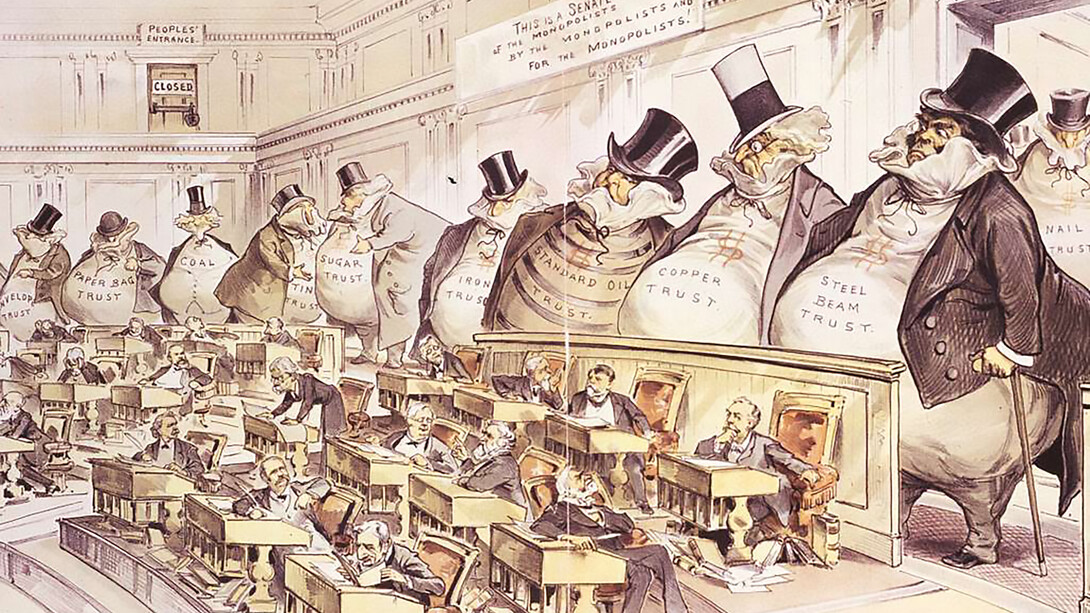
"Bosses of the Senate" by Joseph Keppler 1889

Michael Moore’s critique and its limitations

The systemic exploitation, neoliberal influence, and structural gaps in Moore’s analysis

8 JUNE 2025, 


The primary function of the capitalist system is not to encourage critical thinking or promote self-reflection among individuals, but rather to enforce obedience through dogmatic ideologies such as religion and nationalism. In this context, the working class—often referred to as the proletariat—becomes "dependent on the system" almost as if it were a result of Stockholm Syndrome. The proletariat, conditioned to obey the dominant forces, falls under the control of a system that exploits their labor. However, when the proletariat begins to think critically and gain clarity, they will realize that they do not need the bourgeoisie, and in fact, the bourgeoisie is dependent on them. The system seeks to prevent this realization, as it aims to protect the bourgeoisie, which can be seen as parasitic in its dependence on the labor of the working class.