Showing posts with label Reviews. Show all posts

Monday, October 5, 2026

1945 Brideshead Revisited / Evelyn Waugh's Finest Novel


Evelyn Waugh's Finest Novel

By JOHN K. HUTCHENS

My theme, says the narrator in Evelyn Waugh's latest, his most carefully written and deeply felt novel, "is memory, that winged host." And, with that, the brightly devastating satirist of England's Twenties and Thirties moves from one world to another and a larger one: from the lunacy of a burlesqued Mayfair, very glib and funny and masking the serious point in farce, to a world in which people credibly think and feel. Whether "Brideshead Revisited" is technically as expert, of its kind, as "Decline and Fall, "Vile Bodies" or "A Handful of Dust" may be debatable. The important point just now that it is bigger and richer, and that--to those of Mr. Waugh's admirers who might recently have suspected he was exhausting a rather limited field--it will almost certainly be his most interesting book in ten years: more interesting in story and in style, and not least in what it implies about its author and his growth as an analyst and an artist.

2014 Classic Book Review / ‘Scoop’ by Evelyn Waugh


Tolita Raymond
February 13, 2014
I recently read an article in which an author listed Evelyn Waugh’s ‘Scoop’ amongst his favourite books. He said that he considered it superior to his masterpiece ‘Brideshead Revisited’.

Thursday, October 1, 2026

The Pole and Other Stories by JM Coetzee review – if this is his final book, it is a great one


JM Coetzee

The Pole and Other Stories by JM Coetzee review – if this is his final book, it is a great one

This article is more than 3 years old

The Nobel laureate’s new collection of stories is concerned with death, desire and old age, glinting with flashes of humour and grand, existential strangeness


Declan Fry
Thursday 27 July 2026

Eileen Chang made it to 74. Woolf, 59. Oodgeroo Noonuccal, 72. Wisława Szymborska, 88. Naguib Mahfouz managed 94 (a good innings). Baldwin, 68. Patrick White, 78. Soseki, 49. Cao Xueqin was about 40 or 50; the records vary. Beckett reached 83 – JM Coetzee’s current age. And Imre Kertész, brilliant, embattled – by Parkinson’s, by depression – lived to see 86.

The Death of Jesus by JM Coetzee review / A boy who challenges the world


BOOKS OF THE YEAR

The Death of Jesus by JM Coetzee review – a boy who challenges the world


The final book of Coetzee’s Jesus trilogy is also its darkest, keeping the mystery at the books’ heart intact to the end


Steven Poole
Sat 4 Jan 2020 07.30 GMT


Martin Amis once complained that JM Coetzee had “got no talent”, showing perhaps that obsessive ranking of talent (here used in a far more debased sense than TS Eliot’s) is a pastime favoured by those who are not, like Coetzee, writers of genius. Even more improbably, Amis claimed that Coetzee was not funny, which bespeaks a cloth ear for the more sophisticated kind of irony. It would certainly surprise readers of the hilarious Slow Man, or indeed the first two novels in this sequence, The Childhood of Jesus and The Schooldays of Jesus, in which a dreamlike mode of nowhere and no-when reminiscent of Kafka (and Coetzee’s own early Waiting for the Barbarians) is illuminated by sparks of sardonic humour or sheer childlike silliness. The final book of the trilogy, however, as one might with trepidation expect from its title, is a far darker affair.

Coetzee’s The Death of Jesus


The Death of Jesus
by J. M. Coetzee
(Viking, May 2020)

J.M. COETZEE’S THE DEATH OF JESUS


by Marc Farrant 

During a 1992 interview with Nobel Prize-winning novelist J.M. Coetzee, critic Richard Begam surfaced the well-worn issue of the death of the novel, positing that literature had “fallen into a debilitating narcissism” which produces works “of interest only to the academic” before asking after Coetzee’s thoughts. Notoriously taciturn in public and thoughtful in interviews, Coetzee suggested that the tightening bond between writers and the academy has indeed led to more esoteric forms of the novel, and with regard to himself: “Yes, I may indeed be cutting myself off, at least from today’s readers; nevertheless, what I am engaged in doing is more important than maintaining that contact.” Since the 1990s, it is tempting to see a correlation between increased academic interest in Coetzee’s works and his decreasing engagement with, and from, the public. Coetzee’s Nobel Prize in 2003 largely recognized him as the preeminent writer of the South African experience, for example, as we see in the powerful apartheid allegory Waiting for the Barbarians (1980). Disgrace (1999) grappled with the country’s uneasy transition to a post-apartheid state by reflecting on the career and disgrace of a middle-aged academic. The truth, however, is that by 2003 South Africa had receded into the rearview mirror and Coetzee’s new work, Elizabeth Costello, was positioned firmly on academic soil. This philosophical novel, featuring an eponymous academic protagonist touring the world delivering lectures on topics such as animal rights and renaissance humanism, set the tone for Coetzee’s writings in the 2000s, including the Jesus trilogy and its culminating installment, The Death of Jesus.

Monday, September 28, 2026

Jhumpa Lahir / The Namesake and Me


The Namesake and Me

Lauren Olmeda

July11, 2017


I have a tattoo on my left ribcage; it is made up of four lines, drawn to look like the silhouette of a small house, but without a line sealing it at the bottom. To me, it signifies that home is an open-ended concept, one without a lock on the door, one that can be returned to over and over again. The protagonist of Jhumpa Lahiri’s The Namesake, like me, lives between two worlds but never feels fully comfortable or accepted in either. This purgatory sets the course of his (and my own) life, sneaking up on him in moments he least expects it and driving some of his most important decisions. He does not know quite when to give in to the pull of his ancestry or to the illusion of American-ness he has cultivated his entire life. I grew up stretched across an ocean, pulled between Germany and the United States from the age of barely fifteen. Having moved abroad at such a young age, I was malleable and moldable, ever-changing yet desperately trying to retain whatever American identity I had managed to create by then. I was resistant to my new home, never referring to it as such but instead calling it “this place.” I blamed my parents for yanking the rug out from under me and transporting me to a new continent just as I was beginning to discover myself. I was hesitant to make friends, not wanting to abandon the ones I’d left behind and for whom I stayed up till 5 AM, chatting away online as if we were still in the same time zone. Even as I settled into my new school, the sense that I was betraying who I thought I was nagged at me with persistence. I wanted to be happy, but being happy felt like giving in, accepting my reality, instead of rebelling against it as I’d sworn to do from the very first day.

Friday, September 25, 2026

Liberation Day by George Saunders review – a hell of a ride


Review

Liberation Day by George Saunders review – a hell of a ride

The characters in these absurdly funny stories are trapped by hyper-capitalism and their own foolishness, as Saunders investigates the prisons we make for ourselves


Anne Enright
Thrusday 20 October 2022

Thursday, September 24, 2026

Vigil by George Saunders review – will a world-wrecking oil tycoon repent?


Review

Vigil by George Saunders review – will a world-wrecking oil tycoon repent?


The ghosts of Lincoln in the Bardo return to confront a dying oil man’s destructive legacy – but this time they feel like a gimmick


Beejay Silcox
Wednesday 21 January 2026

Monday, September 21, 2026

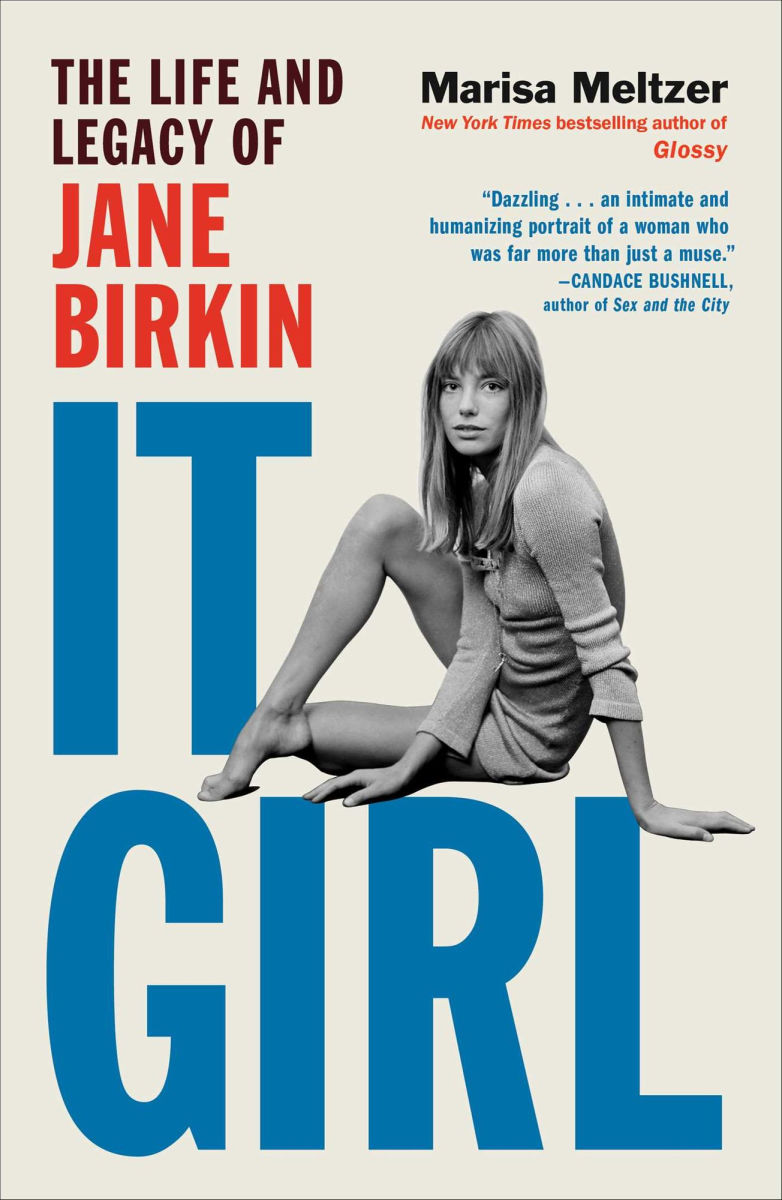
The Object of Our Attention / Marisa Meltzer’s ‘It Girl’


The Object of Our Attention: Marisa Meltzer’s ‘It Girl’


BY
ACREE GRAHAM MACAM
NOVEMBER 20, 2025

 
Marisa Meltzer’s new book, It Girl (Atria, 2025), traces the life of Jane Birkin: her privileged London upbringing, her rise as style icon and trendsetter, her romantic partnerships with famous men, and her role in creating the Hermés Birkin Bag. Of course Birkin, who died in 2023 at age 76, was more than the men and the objects she inspired. She was an actor and singer in her own right. She was a daughter and mother of three. And as her journals—from which Meltzer drew heavily for her research—reveal, she lived a rich interior life that didn’t always square with her public persona. 

Friday, September 11, 2026


Review

The Castle by Jon Ronson review – bizarre tales of modern masculinity

A journalist embarks on a wild goose chase that might – or might not – be informative about the male condition


Anthony Cummings
Tuesday 8 September 2026


Recovering from surgery at home in upstate New York in 2023, Jon Ronson awoke to a string of texts from his adult son about a weird evening he just had at a stranger’s castle in Connecticut. Having gone along with a friend who’d been invited to a party there, he arrived to find a few lost-looking young women with the sixtysomething host, Chris Mark, a steel heir filming a reality show about “101 princesses” whose first rule was “Never say no to King Chris”.

Tuesday, September 8, 2026

Wednesday’s Child / Stories by Yiyun Li

Wednesday’s Child: Stories by Yiyun Li

FICTION
New York. Farrar, Straus and Giroux. 2023. 256 pages.

This new collection of short stories by Yiyun Li will only enhance her reputation as one of the foremost fiction writers in America. She has won numerous awards for her work, most recently the 2022 PEN/Malamud Award and the 2023 PEN/Faulkner Award. Readers familiar with her work will recognize her signature style of layered, rich detail, stories within stories, and intertextuality in settings from America, China, and Europe.

Tuesday, September 1, 2026

Loss, Loneliness, and Love in Yiyun Li’s Latest Collection


Loss, Loneliness, and Love in Yiyun Li’s Latest Collection

'Gold Boy, Emerald Girl' by Yiyun Li 
By Melissa C. Wong

“Welcome to the land of the unfortunate and the deserted,” intones a character in the newest collection of fiction from rising literary star Yiyun Li. This melancholy statement serves as an apt introduction to the nine perfectly-realized worlds in “Gold Boy, Emerald Girl.” Alongside her tales of the miserable and despondent, however, Li’s enchanting prose also nurtures a distinctly more uplifting message. Ultimately, “Gold Boy, Emerald Girl” thrives on a constantly pulsing, energetic undercurrent: a triumphant depiction of the power of interpersonal connection.

Wednesday’s Child by Yiyun Li review – motherhood as loss


Yiyun Li

Review

Wednesday’s Child by Yiyun Li review – motherhood as loss

This article is more than 2 years old

These bruising, beautiful short stories explore the pain of lost children, along with parenthood’s more usual sacrifices – youth, romantic love and a sense of self


Gold Boy, Emerald Girl by Yiyun Li


Sarah Crown

Saturday 30 September 2023


With the title of her new short story collection, the first since 2010’s Gold Boy, Emerald Girl, Yiyun Li offers us a typically finespun hint at what we’re in for. The stories in Wednesday’s Child take as their subject the state of motherhood: its weight and its potency; the questions it raises, and the sacrifices and sublimations it exacts.

Monday, August 31, 2026

Caret by Adam Mars-Jones review – God is in the detail


BOOK OF THE DAY
Review

Caret by Adam Mars-Jones review – God is in the detail


The latest instalment in the novelist’s series based around his idiosyncratic character John Cromer is a marvel of care and attention to language


Adam Mars-Jones managed to find himself twice listed as one of Granta’s best young British novelists, in 1983 and 1993, despite the small matter of never having actually published a novel. Yet the judges were obviously on to something: Caret, his long-awaited new book, is the latest hefty chunk in a comic sequence – described by the author as “semi-infinite” – that, after Pilcrow (2008) and Cedilla (2011), now totals 2,000 pages, as if in overabundant repayment of a debt.

Review Caret by Adam Mars-Jones review – a semi-infinite novel


Review

Caret by Adam Mars-Jones review – a semi-infinite novel

This article is more than 3 years old

The third instalment in the brilliantly immersive autobiography of tragicomic creation John Cromer takes a picaresque tour of 1970s England


Sarah Crown

Wednesday 16 Augusto 2023


C

aret is the third volume of what Adam Mars-Jones’s publisher has dubbed a “semi-infinite novel”: the moment-by-moment autobiography of his tragicomic creation, John Cromer. Like the first two, it takes a proofreading mark for its title. Pilcrow, volume one, was named after the paragraph break symbol; the second, Cedilla, after the Ç accent. Caret, meanwhile, is a mark used by subeditors to indicate a missing word – so it’s clear from the off that Mars-Jones can take, or better yet make, a joke. The plain fact is that there are no missing words here: Caret runs to a whopping 752 pages of text that is dense both literally and figuratively; our hero is not a man to say in a sentence what he could plausibly spin out over the course of a page. No experience is too small to be described; no reflection (“And what is Fybogel? Pulverised isphagula husk, that’s what, and just about as chaffy as it’s possible to get”) too fleeting to set down. As with the first two volumes of Cromer’s story, this is fictional autobiography as big as life; Bildungsroman as immersive experience.

Triage by Claudia Rankine review – how should we respond to the world’s atrocities?


Review

Triage by Claudia Rankine review – how should we respond to the world’s atrocities?

The American poet and essayist weaves memoir, fiction, criticism and lyrical lament into a tale of friendship in an age of existential crisis


Sarah Crown

Any resemblance to actual persons, living or dead, or actual events is purely coincidental,” writes the multi-award winning Jamaican-American poet, essayist and playwright Claudia Rankine in the disclaimer to her latest work. “Unless it isn’t.” The pretzel-logic of this statement, its assertive ambiguity, sets the tone for a book that digs directly into the question of what we are to do with the idea of truth, when the world we live in is asking us “to hold, visually and emotionally, realities we do not yet have a viable system of language for”. In Triage, Rankine borrows from her personal history and from a world whose landscape now encompasses “the rise of fascism, the implementation through deportations of the Great Replacement theory, the starvation of devastated populations subjected to war and climate change”, and uses the material she gathers to pose a simple question. When faced with realities such as these, what do you do? Do you stand, or do you fall?

Sunday, August 30, 2026

Lives Crisscross Through Tumult in Hungary / Stories by Peter Nadas


Lives Crisscross Through Tumult in Hungary

By Adam Langer
Dec. 4, 2011

The physical copy of Peter Nadas’s “Parallel Stories” does not hold up well to a particularly aggressive reading. In at least one reader’s experience, cracking the book’s spine to make the 1,133-page tome into a more manageable bedtime read caused pages to break loose from their binding; by novel’s end piles of disordered pages were scattered every which way.