Showing posts with label Manuel Puig. Show all posts

Friday, August 30, 2024

Many Voices: A Life in Translation


Many Voices: A Life in Translation

By Suzanne Jill Levine
Suzanne Jill Levine reflects upon her lifetime experience of translation, from childhood to present.


“When we first learn to speak as children, we are learning to translate.”—Octavio Paz

One of the first authors I translated, Guillermo Cabrera Infante, said that I had “too much ego” to be a translator. I took the statement as a compliment even though I still don’t know if it’s true.  What I do know is that author and translator both need to be writers. To begin at the beginning: I read somewhere:

[T]he greatest human yearning is to recover the sense of belonging and possibility that attaches to childhood, that ghostly sensation of how it felt when life was most promising, simpler but more mysterious, at a time when things were vivid because they were first impressions. It is the memory of expectation that lies at the bottom of all our lives. That is what I love, what I am forever seeking.

Sunday, March 3, 2013

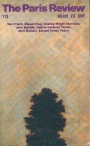
Manuel Puig / The Art of Fiction

Manuel Puig 

The Art of Fiction 

No. 114

Interviewed by Kathleen Wheaton


The Paris Review

Winter II 1989
No. 113


Readers of Argentine writer Manuel Puig have come to expect certain constants from this highly versatile novelist: innovative narrative techniques, dark comedy, and a preoccupation with the effects of popular culture, particularly film, on the human spirit. He was born in 1932 in General Villegas, a small town on the Argentine pampas, and began studying English at the age of ten in order to better understand the American movies he saw every afternoon with his mother. In 1946 he went to Buenos Aires to an American boarding school and then to the University of Buenos Aires, where his interests expanded to include literature, psychology, and philosophy. But his primary ambition was to direct films. In 1955 he went to film school in Italy on a scholarship. The school proved to be a disappointment; he left Italy and traveled to Paris and London, working on screenplays and supporting himself as a language teacher and dishwasher. Puig then returned to the Americas, going first to Buenos Aires and later to New York, and began writing fiction. His first novel, Betrayed by Rita Hayworth, an autobiographical account of his provincial childhood, was published in Buenos Aires in 1968.
Over the next twenty years, Puig lived in Mexico City, Buenos Aires, New York and Rio de Janeiro and wrote seven more novels: Heartbreak Tango (1969); The Buenos Aires Affair(1973); The Kiss of the Spider Woman (1976); Pubis Angelical (1979); Eternal Curse on the Reader of These Pages (1980); Blood of Requited Love (1982); and Cae la noche tropical(1988), which has not been published yet in English. Puig's early passion for the movies is evident both in his narrative style, which relies heavily on dialogue, and in the lives of his characters, where the glamorous and idealized world of films serves as a counterpoint to their own disappointments.
Puig has lived very little of his adult life in Argentina, but all of his novels, with the exception of Blood of Required Love, are about Argentina or Argentines coping with exile. When we met in Puig's home in Rio de Janeiro, I was struck by his very Argentine manner: a grave courtesy and reserve that set him apart from the more free-wheeling Brazilians. He is slender, with a handsome, tanned face and expressive dark eyes. He doesn't care much for interviews, but he did agree to three meetings at six-month intervals. The first he agreed to on the condition that we confine it to a morning's conversation. The morning in question was a cool, rainy Saturday in May, 1988. We sat on comfortable sofas at one end of a pleasant living room with a polished tile floor, many plants, and a poster of Argentine tango idol Carlos Gardel on one whitewashed wall. The interview began somewhat formally in Spanish, and loosened up a bit when we switched to English. As we talked, I saw why it was that interviews exhausted him: he is attentive, thoroughly engaged, and careful about choosing precisely the word he wants, even in a foreign language. When he hits upon it, his face lights up.

INTERVIEWER
What is the difference between movie and book material?
MANUEL PUIG
In my experience, an epic story translates very well into film. Realistic novels—the kind made up of small details and constructed using a certain analytical approach—don't make good films. Films are synthesis. Everyday grayness, everyday realism is especially tough to translate to the screen. I remember discussing this once with a filmmaker, who said, “Yes, but look at the realistic films the Italians made, such as De Sica's Umberto D.” I disagreed. There's nothing of everyday grayness in Umberto D—it's about suicide, about deciding whether to kill yourself or not. It's an epic film disguised as an everyday realistic one. What I like to do in my novels is to show the complexity of everyday life; the subtexture of social tensions and the pressures behind each little act of ours. That's very difficult to put into film. I feel much more comfortable with films dealing with allegorical, larger-than-life characters and stylized situations. 

Saturday, July 16, 2005

Manuel Puig / Kiss of the Spider Woman


Jailbirds

Kiss of the Spider Woman (1985)


Andrew Pulver
Saturday 16 July 2005

Author: Manuel Puig (1932-1990) grew up in a small town in the remote Argentinian pampas, obsessed with films and dabbling in transvestitism. At 23, he won a scholaship to study film-making in Rome, but soon dropped out. After a decade of writing film scripts, Puig returned to Buenos Aires in 1967 and turned a script into his first novel, a semi-autobiographical fable about a movie-world fantasist, Betrayed by Rita Hayworth (1968). However, the flamboyant Puig found it difficult to live in Peronist Argentina, and moved to Brazil in 1973 and New York three years later. Kiss of the Spider Woman was published in 1976. Puig remained in New York - as a high-profile gay writer he was regularly attacked in the Argentinian media - and lectured on creative writing at Columbia university. He finally settled in 1989 in Cuernavaca, Mexico, and died a year later from complications after a gall-bladder operation.
Story: Echoing his film script work, Kiss of the Spider Woman is written almost entirely as dialogue. Two men - a political radical, Arregui, and a gay paedophile, Molina, are imprisoned in the same cell in a Buenos Aires penitentiary. To pass the time, Molina recites the plots of his favourite films, beginning with Jacques Tourneur's 1942 horror movieCat People. Molina's camp fetishism initially irritates Arregui - especially when he realises another of Molina's favourites is a Nazi propaganda piece. Puig inserts a "transcript" of a meeting between Molina and the prison warden, revealing that the authorities have demanded Molina inform on Arregui. But as their relationship deepens (culminating in a sexual episode), Molina agrees to deliver a message for Arregui after he is released. A final "report" reveals that Molina is shot dead in the street as he tries to carry out his mission.


The film-maker: Hector Babenco (b1946) grew up in Argentina but settled in Brazil in 1969. He began directing features in 1975, but made a major international impact with Pixote (1981), an account of the appalling life of São Paulo street children. Babenco spent four years bringing Kiss of the Spider Woman to the screen, casting William Hurt in the pivotal role. (Puig hated Hurt's performance, despite his winning an Oscar.) Shortly after completing the film, Babenco was diagnosed with lymphatic cancer; his doctor, Dráuzio Varella, went on to write the prison stories that would become Babenco's most successful film, Carandiru (2003).
How book and film compare: Though the film's narrative generally sticks close to the novel it excises Puig's lengthy footnotes about clinical assessments of homosexuality, and replaces Molina's fetishisation of real movies with a single, fictitious Nazi-style piece, which is recreated at intervals throughout the story. Much of the detail of Molina's lifestyle is lost in the adaptation, and the "spider woman" is presented as another of Molina's films - whereas she appears in Puig's original as the final image of Arregui's own fantasy as he is tortured.
Inspirations and influences: As an evocation of high camp, Kiss of the Spider Woman brought gay cabaret style into mainstream movies, paving the way for American treatments of similar themes, such as Torch Song Trilogy (1988). It also marked a turning point for Latin American cinema, in the doldrums after the politically inspired cinema novo of the 1960s and 1970s.