Kissing coppers to rutting rhinos: Banksy’s artworks – ranked!
The quality of the enigmatic street artist’s murals veers wildly: from self-satisfied satirical statements to truly funny political provocations. Our critic rates his pieces, from worst to best
Jonathan Jones
Wednesdayt 14 August 2024
One of Banksy’s best-known but emptiest artworks, this mural that first appeared on London’s South Bank in 2002 is the 21st century answer to John Everett Millais’ gooey Victorian painting Bubbles, which was used as an advert for Pear’s Soap. The heart-shaped balloon floats away. The little girl is sad.
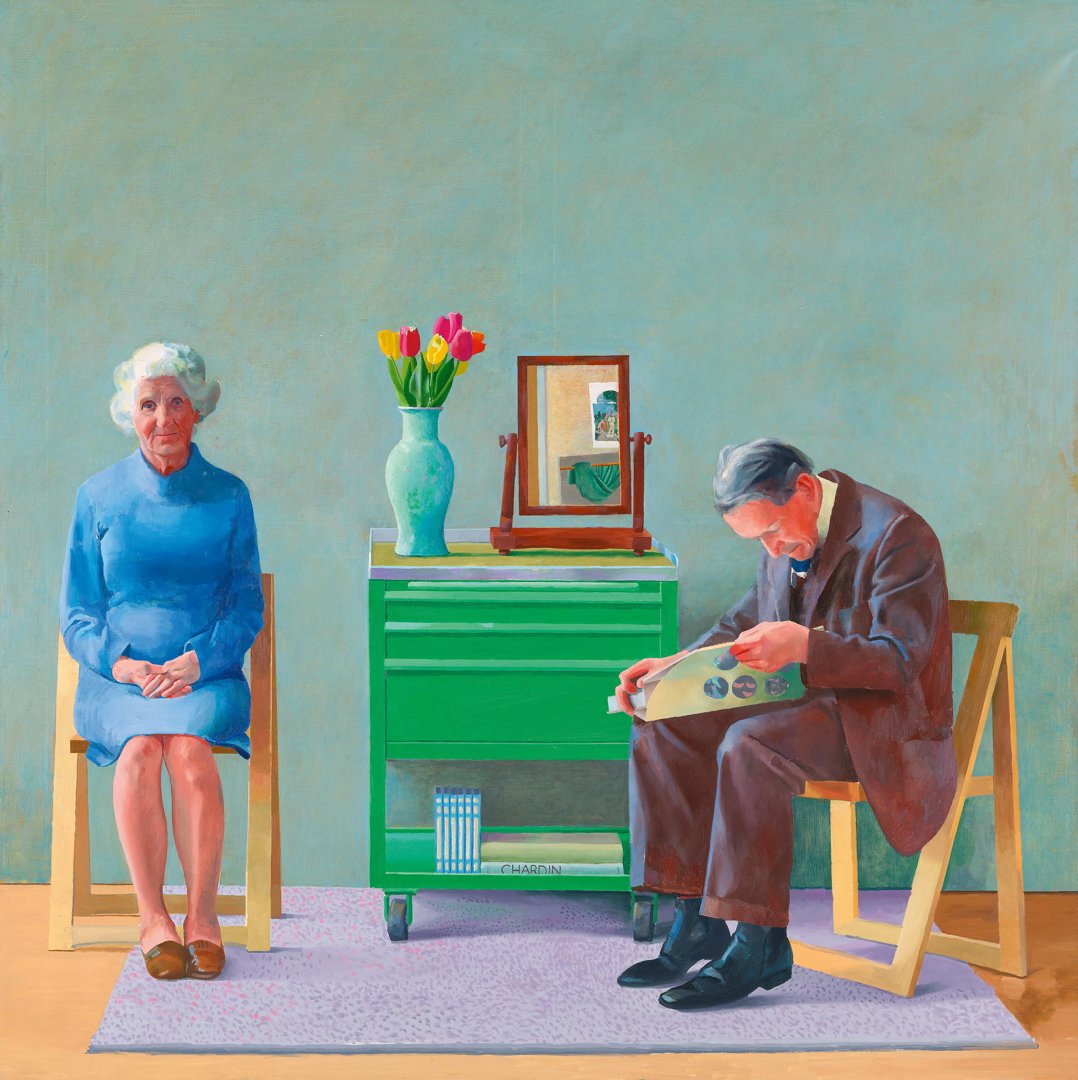
‘His last kiss to the world’: David Hockney’s return to Yorkshire triggered a glorious reawakening
When the artist came home from LA, it seemed like a retirement. But it heralded an astonishing new chapter. Our critic remembers their thrilling dinners together – and the dazzling new works that arrived in his inbox every morning
Jonathan Jones
Monday 15 June 2026
I
t was springtime in Paris and I was floating among young green leaves and white blossom – but I was not in a park. I was on an upper floor of the Fondation Louis Vuitton delighting, wallowing in several of David Hockney’s iPad paintings of his garden in Normandy. In one room, this green oasis was shown by the light of the silvery moon: the darkened chamber was alive with shining white lunar discs, blue clouds and the shadowy fingers of tree branches.
‘He found the right style to show gay life as it is’ … David Hockney, 1966, by Jane Bown.Photograph: Jane Bown/From Observer Picture Library
‘David Hockney changed the world just by looking at it’: a tribute to the artist whose work was a feast of visual pleasures
He was subversive and bold, yet also playful and accepting – putting the fun into pop art and finding freedom and fulfilment amid the blue skies and pools of California. David Hockney, who has died aged 88, lived and painted the truth
Jonathan Jones Friday 12 June 2026
David Hockney’s art was a feast of unabashed visual pleasure, one long orgy of the gaze, the delighted lifelong epiphany of someone who cherished flowers in a vase and freeways in the sun and thought endlessly about new ways of making pictures of such passing treasures. He changed the world just by looking at it. It didn’t seem to occur to him that the way he saw was revolutionary – all he cared about was truth. But no one had ever captured the look and feel of the contemporary world with such acceptance before. He has the same simple perfection as the Beatles – just as they caught the sound of the modern world, he caught its look.
Sensual indulgence … a detail from The Romans in Their Decadence, by Thomas Couture.
Orgies, vampires and jewel-laden tortoises: it’s time we buried the myths of decadence in art
Is western civilisation being destroyed by its own decadence? Was the Roman empire? And does a preference for Lord of the Rings over The Matrix indicate that we are all doomed? Our critic tries to sift fact from fiction …
Jonathan Jones Tuesday 21 January 2025
We are decadent. It’s obvious. Look around you. Books have been replaced by screens, restaurants are bigger cultural events than art (though they too are dying), and our highest cultural temple is The Traitors. “Western civilisation is being destroyed by its own decadence,” ran a Daily Telegraph headline last year. In his book The Decadent Society, American journalist Ross Douthat argues that the US has been in decline ever since Neil Armstrong got back from the moon. And conservative provocateur Michel Houellebecq has made the decadence of the west a pervasive theme of his novels – including the most recent, Annihilation, which I got for Christmas and read by twinkling tree lights, its bleak vision gradually sapping my festive spirit. So now I am going to inflict Houellebecq’s story on you.
‘The flag and the fist together are what make this so powerful’ … Trump’s first in parallel with the American flag. Photograph: Evan Vucci
‘Is this what a second Trump presidency will be like?’ – our art critic on the chilling shooting image
In the heat of the assassination attempt, the bloodied ex-president’s defiance created a picture that echoes works of frontier heroism and religious resurrection. Could it be a warning of what is to come?
This breaks your heart. Or at least it does if you oppose the politics of Donald Trump. For with one image, he may have won the 2024 US presidential election. Photographer Evan Vucci captured it, and has rightly won praise for it, but we should acknowledge that it was Trump who made it. And he made it with presence of mind and courage.
Subversive sexuality amid the smell of cow dung – Duncan Grant: 1920 review
Charleston, East Sussex This exhibition at the Bloomsbury group artist’s mural-filled former home joyously recreates his intensely sexual first solo show
Jonathan Jones Wednesday 15 September 2021
The tale of Venus and Adonis has been used in various sexually ambiguous ways for centuries. Shakespeare adopts the voice of the goddess in his long poem Venus and Adonis: she pleads with her lover – or is it the Bard’s? – not to leave, not to go on the boar hunt in which he’s doomed to die. Its lyricism is echoed in Cy Twombly’s paintings, in which Adonis was his former lover Robert Rauschenberg. For the pioneering British modernist Duncan Grant, in a joyous exhibition at his mural-covered, biography-stained home in the East Sussex hills, the metamorphosing body of Venus allows a shift of identity. This is not a woman but a constructed abstract form with which the artist can merge, to express his own longing for Adonis.
Yayoi Kusama: You, Me and the Balloons review – a psychedelic pop-art garden of earthly delights
Aviva Studios, Manchester The 94-year-old Japanese trailblazer goes big – really big – with warehouse-filling inflatables of dolls, pumpkins and writhing tentacles instilling satisfaction and a stupid happiness
Clearly the architects didn’t get the message that Manchester’s new arts venue Factory International has been renamed, boringly, as Aviva Studios. Because despite the new moniker I can still picture its ultimate inspiration, Tony Wilson, regional TV reporter and founder of the city’s legendary Factory Records, standing on the raised viewing platform in its colossal space, the Warehouse, pretending to be Andy Warhol, looking down on tiny people dwarfed by multicoloured inflatable artworks, pleased that Manchester has finally turned into his fantasy version of Warhol’s New York.
Yayoi Kusama
The Warehouse is a monster of a room that seems to have been inspired by staring at the enigmatic covers of Factory Records LPs while listening to Joy Division. It is an enormous industrial cavern with giant steel doors and towering, shadowy dimensions that appears equally capable of hosting art, gigs or a club. Yayoi Kusama’s opening event You, Me and the Balloons has aspects of all three. The 94-year-old pink-haired artist appears on a screen chanting above a forest of luminous purple tentacles. In front of this loom agargantuan orange pumpkin, a giant statue that resembles Kusama with a skirt made of fat fingers, yapping dogs and lurid clouds.
Cannibalism and genocide: the horrific visions of Ukraine’s best loved artist
Maria Prymachenko created seemingly happy scenes of rural life. But look closer and you see the terror unleashed on her country by Stalin. Now her work has once again become a national symbol, duplicated at rallies worldwide
Jonathan Jones Friday 18 March 2022
At the 1937 International Exposition in Paris, two colossal pavilions faced each other down. One was Hitler’s Germany, crowned with a Nazi eagle. The other was Stalin’s Soviet Union, crowned with a statue of a worker and a peasant holding hands. It was a symbolic clash at a moment when right and left were fighting to the death in Spain. But somewhere inside the Soviet pavilion, among all the socialist realism, were drawings of fabulous beasts and flowers filled with a raw folkloric magic. They subverted the age of the dictators with nothing less than a triumph of the human imagination over terror and mass death.
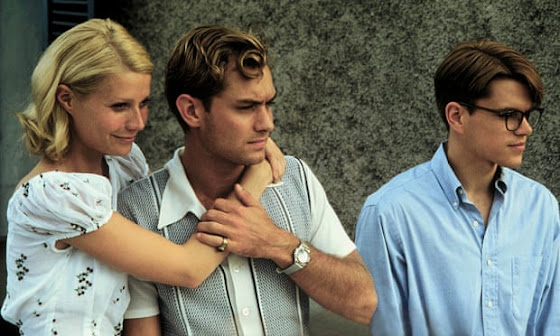
Matt Damon, right, as Ripley, with Gwyneth Paltrow and Jude Law in the film version of The Talented Mr Ripley, the first story in Patricia Highsmith’s Ripley crime series.
Fake art, a fastidious psychopath and Banksy's rodent rampage – the week in art
Patricia Highsmith’s manipulative murderer, Michel Houellebecq’s bitter irony and Orhan Pamuk’s mysterious miniaturists feature in our roundup of the best art novels – all in your weekly dispatch
Jonathan Jones
Friday 17 April 2020
Art novel of the week
Ripley Under Ground by Patricia Highsmith Fastidious psychopath Tom Ripley, a connoisseur who murders to fund the finer things, enters the art world as arch-manipulator of a forgery ring. Fake art results in real death.
The greatest museum of Picasso’s works has been engulfed by scandal and crisis. Closed for the past five years, it is finally ready to reopen its doors to the public. But has the bitter struggle for Picasso’s legacy been resolved?
Jonathan Jones Thursday 16 October 2014
On 30 June 1972 Pablo Picasso created his last self-portrait. He had depicted himself many times before, but never like this. His face looked like a skull with stubble. Its colour was greenish-grey. The mouth was a straight slit. Only the lines under his eyes proved his features were flesh and not raw bone, which seems to protrude from his head at the left of the picture, where it is set against red fire, blood, or a setting sun.
Pablo Picasso
From his youthful self-portraits to his bare-chested appearance, at the age of 75, in Henri-Georges Clouzot’s 1956 film The Mystery of Picasso, the artist, so fit and long-lived, enjoyed showing off his muscular body. But in his last images of himself, the shoulders that were still so powerful when he displayed them in Clouzot’s adoring film had shrunk to the dried flatness of a mummy. This was his 91st year. Picasso looked at himself without illusions, underlining the true state of things with heavy black lines.
Three’s a crowd … Jasper Johns, Cy Twombly and Robert Rauschenberg.
Lust, heartbreak and suggestive sculpture: was this art's greatest love triangle?
For Valentine’s Day, we look at how the interweaving passions of three American greats – Cy Twombly, Jasper Johns and Robert Rauschenberg – were as mesmerising as their art
he sensual American graffitist Cy Twombly, who lived in Italy from the late 1950s until his death in 2011, lushly inscribed his epic canvases with love poetry – Shelley and Keats, Cavafy and Catullus. The work was like an abstract expressionist Valentine’s card. He even used hearts and roses in his work, as well as penises, breasts, anuses and vaginas. But who was his Valentine?
Jasper Johns’ Flags I. Photograph: Jasper Johns/British Museum
Jasper Johns' Flags I is the perfect image to wave in Trump's face
Created in the Watergate era, Johns’ take on the Stars and Stripes has become the perfect symbol of a scarred nation. Its acquisition by the British Museum is inspired
Jonathan Jones
Tue 3 November 2020
From a distance, it looks bold and bright, like the very stars and stripes it is representing, an ideal as much as a flag. But come closer and you’ll notice how pockmarked and scarred its surface is, full of mysterious holes as if nibbled by cockroaches. Could there be a more fitting symbol of America right now?
TheBritish Museumhas marked the United States’big voteby announcing its acquisition of Flags I, the screenprint byJasper Johnsthat is said to be worth millions. Three years ago, the London venue put this image on the posters and catalogue for an exhibition called The American Dream. That title sounds almost quaint today. Who, at the close of Donald Trump’s first term in the White House, can now utter that phrase without irony? American Dream? Can those words really apply, given that the arrival of this election has been marked by shops and businesses being boarded up, and with Trump making bizarre remarkschallenging the sanctity of the poll, threatening the entire democratic process?
What makes Johns’ American flag so perfect for this charged, climactic moment? Well, this is an anxious image of the nation fraying. But to fully understand this work, you need to follow Johns’ very personal interpretations of the flag over nearly 70 years.
Johns is not an overtly political artist. He’s reticent about every aspect of his art and life. In the 1950s he, Robert RauschenbergandCy Twomblyformed both an art movement and a love triangle. They all broke with the austere sublimity of abstract expressionism to incorporate real life in their creations – from Rauschenberg mixing photographs, paint and stuffed animals in his Combines, to Twombly spattering enigmatic graffiti on to canvas. But the breakthrough for this new approach, to art and to life, came when Johns made his first US flag in 1954-55.
Simply called Flag, and owned by New York’s MoMA, it is made of a layer of collage covered with a much thicker piling-up of encaustic paint that produces an enduring, almost rubbery surface. It gives Flag a solid feel, more like a sculpture than a painting. But what does it say about the actual US flag? Everything. Nothing. Through the colours, you can make out fragments of newspaper headlines in the collage below. They don’t add up to any readable narrative but instead imply complexity and mystery.
Johns made this Flag at the very centre of the 20th century, which has been called The American Century, given the country’s rise and increasing global influence during those 100 years. But no one has ever mistaken the work for a simple patriotic banner. It’s never going to be held sacred by conservatives or flaunted by crazed militias. Why is that?
Fitting image … Johns at work. Photograph: Peter Stackpole/The LIFE Picture Collection/Getty Images
There is a distancing, a questioning, in it. Johns said simply that he dreamed of the flag so he made a flag. He never said what kind of dream. This unwaveable flag, frozen in wax, full of hints of stories, invites you to stand back, to contemplate it coolly. It is a flag in quotation marks. Johns has shrunken America itself to something on a wall. But his irony is not cold. It’s moving. What he does is to shift the meaning of patriotism. Instead of a brash icon, this Flag has become a great American novel or a song on the radio played on the lost highway.
That poetry becomes still more haunting in White Flag, from 1955, which strips out the famous colours to leave a pale spectre, like a civil war ghost. It’s a bit blunt, but also true, to say that Johns – as a young gay man in socially conservative 50s America – was finding his own patriotism, his own country.
But by the time he created Flags I, the print now in the British Museum, a lot had changed. It was 1973. Johns was rich and famous. The 60s had been and gone. The realm of public life was starting to darken, as it has in our century. Flags I was created the year after the Watergate affair began. The cracks and damage to the stars and stripes are, surely, the marks of national shame and fury after this revelation of conspiracy and corruption at the heart of government.
From our historical moment, the rise and fall of President Richard Nixon looks like a modest dress rehearsal for Trump’s assault on democratic norms. Nixon had mobilised what he called a conservative “silent majority” against the perceived dangers of Vietnam war protests. Trump openly praises his supporters for apparently trying to run Joe Biden’s bus off the road.
But you can’t reduce Johns to any simple “message”. He is interested in complexity. The whole point of his art is to take a simple found image or thing – a target, a map, a beer can, the flag – and remake it in a subtle, elusive way. The British Museum’s new addition is a riposte to the delight in bold icons taken by such pop artists as Andy Warhol and Roy Lichtenstein. It was Johns’ first attempt at screenprinting, which they loved.
Johns thought it a “simple-minded” technique. But he learned from Japanese printmakers how to make a multi-layered, sophisticated version that subverted the Warholian clarity of the method. He gleefully said the result, Flags I, “might properly be considered an abuse of the medium”. It takes pop printmaking into unfathomable layers of technical finesse.
Complexity. Nuance. Ambiguity. None of these are very Trumpian concepts. But neither does Johns satisfy anyone’s anti-American sentiment. He has explored what the US flag means more thoroughly than any artist. He’s revealed that it is much more than a coarse political symbol. Officially selected as the republic’s flag back in 1777, in the age of Washington and Hamilton, the Stars and Stripes is loaded with the emotions of generations. It was draped on Lincoln’s funeral train, raised at Iwo Jima, Ground Zero and even on the moon, as well as being flown in every song by Bruce Springsteen.
Yes, there’s plenty of bad stuff, too. But, since he made that first Flag, as a bohemian outsider in postwar America, Johns has been showing – in his gentle, witty, lyrical way – that everyone owns a bit of this flag. It is not the property of bigots. It is not even the exclusive property of Americans. Much of the world is hoping that, after this election, our dreams, too, can inhabit the Stars and Stripes again.