Showing posts with label Richard Flanagan. Show all posts

Friday, June 27, 2025

Richard Flanagan / ‘When I reread Evelyn Waugh’s Scoop it had corked badly’


Richard Flanagan


The

Books

 0f my 

life


Richard Flanagan: ‘When I reread Evelyn Waugh’s Scoop it had corked badly’

This article is more than 4 months old

The Booker-winning author on taking inspiration from Kafka, and a youthful passion for Jackie Collins


Friday 27 June 2025

My earliest reading memory
My mother reading Kenneth Grahame’s The Wind in the Willows to me – and reading it again and again, because I loved it and her. I was perhaps three. We lived in a little mining town in the middle of the rainforest. It was always raining and the rain drummed on the tin roof. To this day that’s the sound I long to hear when I relax into a book – a voice in the stormy dark reminding me that I am not alone.

My favourite book growing up
Books were an odyssey in which I lost and found myself, with new favourites being constantly supplanted by fresh astonishments. Rather than a favourite book I had a favourite place: the local public library. I enjoyed an inestimable amount of trash, beginning with comics and slowly venturing out into penny dreadful westerns and bad science fiction and on to the wonderfully lurid pulp of Harold Robbins, Henri Charrière, Alistair MacLean and Jackie Collins, erratically veering towards the beckoning mysteries of the adult world.

The book that changed me as a teenager
Albert Camus’s The Outsider. It didn’t offer a Damascene revelation, though. I was 11. I absorbed it like you might absorb an unexploded cluster bomb.

The writer who changed my mind
When I was 27, working as a doorman for the local council, counting exhibition attenders, I read in ever more fevered snatches Kafka’s Metamorphosis, which I had to keep hidden beneath the table where I sat, balanced on my knees. A close family forsaking their son because he has turned into a giant cockroach, after the death of which they marvel at their daughter’s vitality and looks? It dawned on me that writing could do anything and if it didn’t try it was worth nothing. Beneath that paperback was a notebook with the beginnings of my first novel. I crossed it out and began again.

The book that made me want to be a writer
No book, but one writer suggested it might be possible for me – so far from anywhere – that I perhaps too could be a writer. And that was William Faulkner. He seemed, well, Tasmanian. I later discovered that in Latin America he seemed Latin American and in Africa, African. He is also French. Yet he never left nor forsook his benighted home of Oxford, Mississippi, but instead made it his subject. Some years ago I was made an honorary citizen of Faulkner’s home town. I felt I had come home.

The book or author I came back to
When I was young, Thomas Bernhard seemed an astringent, even unpleasant taste. But perhaps his throatless laughter, his instinctive revulsion when confronted with power and his incantatory rage speak to our times.

The book I reread
Most years, Bohumil Hrabal’s Too Loud A Solitude, humane and deeply funny; and Anna Karenina, every decade or so, over the passage of which time I discover mad count Lev has again written an entirely different and even more astounding novel than the one I read last time.

The book I could never read again
On being asked to talk in Italy on my favourite comic novel I reread Evelyn Waugh’s Scoop. It had corked badly. My fundamental disappointment was with myself, as if I had just lost an arm or a leg, and if I simply looked around it would turn back up. It didn’t.

The book I discovered later in life
Great stylists rarely write great novels. Marguerite Duras, for me a recent revelation, was an exception. For her, style and story were indivisible. Her best books are fierce, sensual, direct – and yet finally mysterious. I have also just read all of Carys Davies’s marvellous novels, which deserve a much larger readership.

The book I am currently reading
Konstantin Paustovsky’s memoir The Story of a Life, in which the author meets a poor but happy man in the starving Moscow of 1918 who has a small garden. “There are all sorts of ways to live. You can fight for freedom, you can try to remake humanity or you can grow tomatoes.” God gets Genesis. History gets Lenin. Literature gets the tomato-growers.

My comfort read
Of late, in our age of dire portents, I have been returning to the mischievous joy of James Boswell’s Life of Samuel Johnson: “There is nothing worth the wear of winning, but the laughter and love of friends.”


THE GUARDIAN


Monday, December 15, 2014

Readers' 10 best books of 2014


Readers' 10 best books of 2014

These are the books our readers picked as the best of 2014 – from searing polemic to stunning fiction and a story of very intimate science

Marta Bausells
Mon 15 Dec 2014 15.56 GMT


W
e asked you to nominate your favourite books of 2014 and here, in no particular order, are the results - the 10 books that attracted the most consensus. Below you’ll find acclaimed fiction, memoir, fantasy and polemic. Interestingly, the list differs greatly from readers’ choices halfway through the year – take a look at those here.

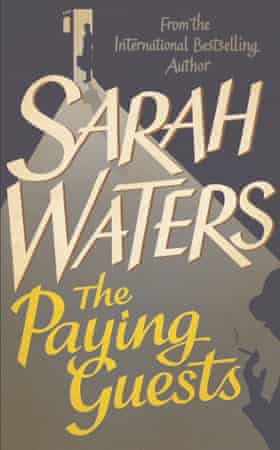
1. The Paying Guests | Sarah Waters

paying guests

“Five hundred pages-plus of effortless reading. A story that begins with the simple premise of a mother and daughter taking in paying guests to help with financial difficulties. It turns into a page-turning extraordinary thriller.” jkinnaird

“Sarah Waters is well-informed and skilful in unfolding a story, presenting detailed descriptions of people whose inner lives and social histories are generally ignored by traditional literature. Waters describes housework, lesbian sexuality among ordinary people, and untold class and money issues created by the first world war and its aftermath.” Dianne Hunter

What we said: “Satire meets costume drama” – read the Guardian review

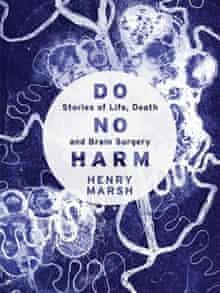
2. Do No Harm: Stories of Life, Death and Brain Surgery | Henry Marsh

henry marsh

“A stunningly honest and moving memoir of Dr Marsh’s life as a neurosurgeon.” stilllistening

“This is the book which explains why I so often prefer non-fiction to fiction these days. Who could make up a story as interesting and moving as this? It is suspenseful, sometimes chilling, humane and wise. And, it has the funniest anecdote about computers and lost passwords which tops all yours! I laughed out loud and immediately shared it with friends. You can’t not read this book.” philipskel

“Honest, fascinating, funny and moving.” Diana Patel

“Gripping, surprisingly honest, very well written memoir of a brain surgeon.” howardjl

What we said: “Patients see neurosurgeons as gods, but what is the reality? Henry Marsh has written a memoir of startling candour” – read the Guardian review

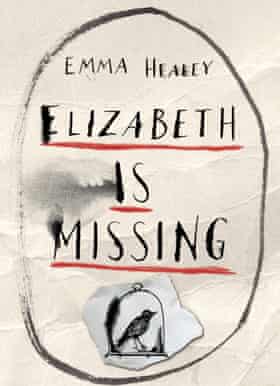
3. Elizabeth Is Missing | Emma Healey

elizabeth

“Poignant but deadly accurate depiction of someone suffering from dementia solving a crime. Anyone with a relative suffering dementia will recognise the black humour! A brilliant debut.” xerif

“A beautifully written insight into the mind of a dementia sufferer, it certainly opened my eyes. It’s both funny and heartbreakingly sad. It’s a very simple read, but the reader takes away a clearer, more complex understanding of a condition which is likely to affect many of us in modern times. I would highly recommend this book.” scotty01

What we said: “Emma Healey’s dementia detective story” – read the Guardian review

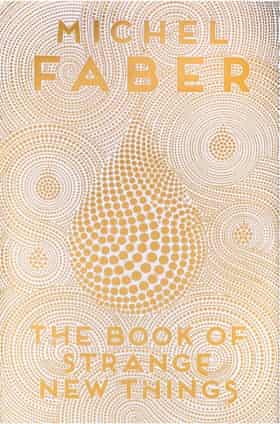
4. The Book of Strange New Things | Michel Faber

book of strange new things

“Michel Faber is a wonderful author. His writing skills and use of language are superb. In this new novel he introduces themes which could make the book difficult to read or perhaps follow, but I could not leave it alone until I had finished it. There is a poignancy to the book that remains long after the reading of it has finished.” maureenglasgow

What we said: “Astonishing and deeply affecting” – read the Guardian review

5. We Are All Completely Beside Ourselves | Karen Joy Fowler

fowler

“ A masterly study of family interactions, behaviours, and the nature of memory. It tackles some serious moral issues without getting heavy.” Roburite

“Because the story was completely unexpected, as well as enjoying the book, I also learned a few things.” Isabelle Leinster

“I liked the character, story, twist and interesting use of scientific studies of chimps and it is v well written and narrator was very funny at times.” ID9694371

What we said: “A provocative take on family love” – read the Guardian review

6. All the Light We Cannot See | Anthony Doerr

Light

“Beautifully written, a beautiful story about family, duty, and personal honour.” Melody Alder Maysonet

“This is a novel with many layers and beautiful language.” HeleneM

What we said: “A story of morality, science and Nazi occupation” – read the Guardian review

Normandy
Anthony Doerr’s book takes in the Nazi occupation of France and the D-Day landings. Photograph: Hulton-Deutsch Collection/Corbis


7. The Bone Clocks | David Mitchell

“There are many reasons this novel is great - its richly characterised voices, its sumptuous period details, its dark sense of humour and healthy but never grating awareness of itself. None of these even gets close to why it’s such a marvel. Its plot is truly ridiculous. It is basically unspoilable. It’s the kind of labyrinthine sci-fi that teenage boys love and everyone else gives a heartening smile and pats on the head. But 600 pages fly by without stopping for a second to think, wait, how did I just let any of this happen?” Nicholas Watts

What we said: “Dazzle of narrative fireworks” – read the Guardian review

8. This Changes Everything: Capitalism Vs. the Climate | Naomi Klein

Naomi Klein

“The impact of climate change, as Margaret Atwood says, is a conversation we need to have now. It cannot be put off any longer and Klein’s book reinforces that thought with clarity.” LaikaLizzie

“Naomi Klein is a mainstream author, and she was bold for writing about a topic that is still not considered appropriate when people socialise. This book spells out reality, it’s easy to read and the message is incredibly important. I read about 35 books a year – this is top of my list over the last 12 months.” Ian James

What we said: “It addresses a potential catastrophe yet is calm and welcoming” – read the Guardian review

9. The Narrow Road to the Deep North | Richard Flanagan

Flanagan

“No one needs telling even once that war is a horrible business for everyone involved, during and after, but sometimes it’s good to be told in a way that is painfully beautiful and moving. As this book is.” zendik

“I don’t think I have ever read a book like it. The harrowing descriptions of the POWs’ existence in Burma juxtaposed with a passionate but ill-fated love affair said so much to me about the potential of human experience to be at once beautiful and terrible; I have felt haunted by it ever since.” philojo

“Literary quality of the writing combined with ethical philosophy and believable characterisation. Great historical fiction.” 100blague

What we said: “A rich insight into how the Burma railway claimed the lives of Australian PoWs, even after they had survived the camps” – read the Guardian review

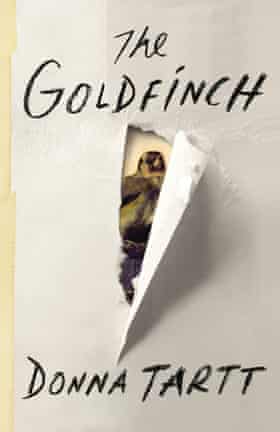
10. The Goldfinch | Donna Tart

goldfinch

It wouldn’t be a proper end-of-year list without a bit of cheating. The Goldfinch came out at the end of 2013, but it was published in paperback this year and that’s when the majority of readers have had a chance to read it – so we decided to accept the nominations.

“A long book, with not a word wasted. Wonderful characters in an utterly compelling story. Clever, funny and curiously misunderstood. Could read it again already!” lilycarver

“It is an experience, dreamlike, sharp with grief and the growing up on it. I love Theo like he is a real person. He is more than three dimensional, he has a psyche. This will remain an all-time favourite book.” Madeleineann

“Just a wonderfully woven dark (and richly long) tale of redemption, sacrifice, loss, life choices and beauty, all in the beholder’s eye. I read professionally for work, so to devote my time (and then desire) to delve into this 850+ page wonder-read – on a colleague’s recommendation, no less – and then to so thoroughly enjoy the writing so as not to want to put it down, is statement enough. 2014’s deserved Pulitzer winner.” Jennifer Cross


THE GUARDIAN