The best recent science fiction, fantasy and horror – review roundup
Massif by Garth Nix; Revolution in the Heart: Stories Inspired By Ursula K Le Guin edited by Jonathan Strahan; An Immaculate Deception by Isabela Livino; Serenity Falls by CJ Tudor
The best recent science fiction, fantasy and horror – review roundup
The Library of Traumatic Memory by Neil Jordan; The Red Winter by Cameron Sullivan; Travel Light by Naomi Mitchison; Between Two Fires by Christopher Buehlman; Spoiled Milk by Avery Curran
Lisa Tuttle
Friday 13 March 2026
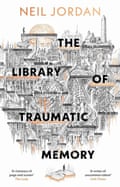
The Library of Traumatic Memory by Neil Jordan (Head of Zeus, £20) Better known as a film-maker, Jordan has never stopped writing novels. His latest opens in 2084 in rural Ireland, where Christian Cartwright works for the Huxley Institute in the titular library, secretly misusing its memory storage technology to talk with his dead lover Isolde, restoring her to a semblance of digital life. The story moves between Christian’s experiences and similar events two centuries earlier in the life of his ancestor, Montagu Cartwright, the architect responsible for the Huxley Mansion and local church, who owned an ancient obsidian mirror, believed to have been the famous scrying glass of John Dee. Lyrically written, brimming with ideas, sometimes sinister and often humorous, it’s an enchanting read.
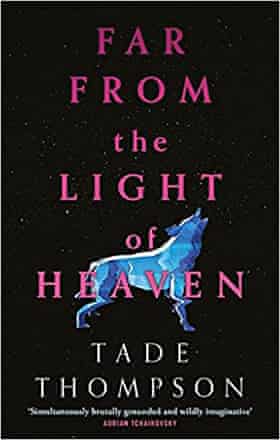
Tade Thompson’s Far from the Light of Heaven is a locked-room mystery in space. Photograph: Irina Dmitrienko
The best recent science fiction, fantasy and horror – reviews roundup
Far From the Light of Heaven by Tade Thompson; The Cabinet by Un-su Kim; Femlandia by Christina Dalcher; When Things Get Dark edited by Ellen Datlow; The Workshop of Filthy Creation by Richard Gadz
Lisa Tuttle Fri 8 Oct 2021 12.00 BST
Far from the Light of Heaven by Tade Thompson (Orbit, £8.99) When rookie pilot Michelle is assured on her first trip into outer space that the AI never fails, readers will guess that she’ll wind up in sole charge of the spaceship Ragtime, responsible for the lives of hundreds of passengers on their way from Earth to colony planet Bloodroot. But that’s the only predictable thing in the Rosewater author’s inventive, exciting and compulsively readable new novel. The plot involves a classic locked-room mystery, but the stakes are far higher than they could be for any Earth-bound detective. Campion is constantly on the brink of death, along with everyone else on her ship, unless she can discover and neutralise the murderer. This book is like the Tardis, larger inside than out, with a range of ideas, characters and fascinating future settings making it probably the best science fiction novel of the year.
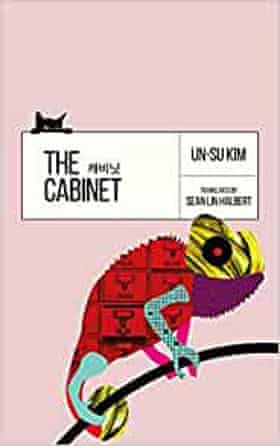
The Cabinet by Un-su Kim, translated by Sean Lin Halbert (Angry Robot, £9.99) Before bursting on to the international scene in 2019 with crime novel The Plotters, Un-su Kim won an award in South Korea for this, his first novel, in 2006. Cabinet 13 is where a bored office worker discovers hidden case studies of people known as “symptomers”. They display such unusual symptoms as hosting a tongue-eating lizard, growing a ginkgo tree on a finger, or falling asleep for years at a time. The studies were written by Professor Kwon over four decades. On his deathbed, he tasks his assistant with keeping the files hidden until such time as the symptomers may be recognised as humanity’s heirs – but there are sinister figures determined to exploit them. What begins as a rather whimsical set of stories turns into a much darker novel, raising issues of difference and acceptance, what people must do to survive, and what is truly monstrous.
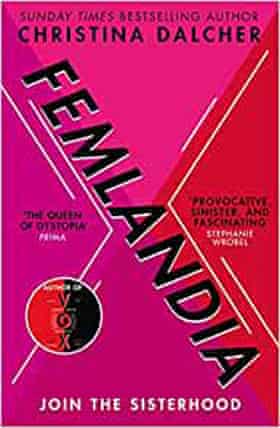
Femlandia by Christina Dalcher (HarperCollins, £14.99) Dalcher’s bestselling debut Vox was a feminist dystopia, but the villains of this story are women who take their desire to live free from male domination too far. In a very near future US suffering from catastrophic economic collapse, formerly wealthy Miranda is a destitute widow, soon to be made homeless. Her main concern is to keep her teenage daughter safe, and after a close escape from a gang of rapists, she overcomes her antipathy to radical feminism to seek shelter in Femlandia, a women-only commune founded by her estranged mother. As with most utopian communes, the reality has strayed far from the original intent, and Femlandia holds a sinister secret at its core. Dalcher is not a subtle writer, but she knows how to hit the emotional buttons; even if you see the twists coming, this is a compelling, fast-paced read.
When Things Get Dark edited by Ellen Datlow (Titan, £17.99) In a new collection of short stories inspired by Shirley Jackson, Carmen Maria Machado references without ever naming the “cup of stars” from The Haunting of Hill Housefor a powerfully suggestive story about childhood abuse and memory. Elizabeth Hand’s response to the same novel is a very different sort of haunted house story. John Langan seems to have taken his inspiration from Jackson’s gently humorous pieces about family life but injected a shot of horror. Other stories are equally memorable, but for me, the outstanding one is Skinder’s Veil, a breathtaking blend of fairytale, dream and reality by the incomparable Kelly Link.
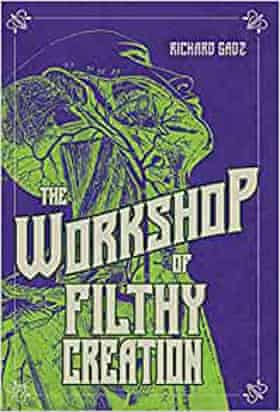
The Workshop of Filthy Creation by Richard Gadz (Deixis, £14.99) As the title suggests, Richard Gadz riffs on Frankenstein, imagining Mary Shelley’s novel was based on actual experiments conducted by a certain Count Victor von Frakken. By 1879, a descendent of von Frakken has made huge strides in creating unnatural life, but his attempts to enlist the aid of an English scientist have resulted in the escape of one of his creations. Gadz (pseudonym of horror writer Simon Cheshire) brings the squalor of Victorian London to life, managing to make some modern medical procedures seem almost plausible in that setting. The fast-moving story maintains a good balance between the outright horror of gleefully gruesome scenes and the increasingly sympathetic character of the “monstrous” Maria, as she learns what it means to be human.