Showing posts with label Forgotten authors. Show all posts

Wednesday, March 22, 2023

Forgotten Authors No.14 / Richard Bach


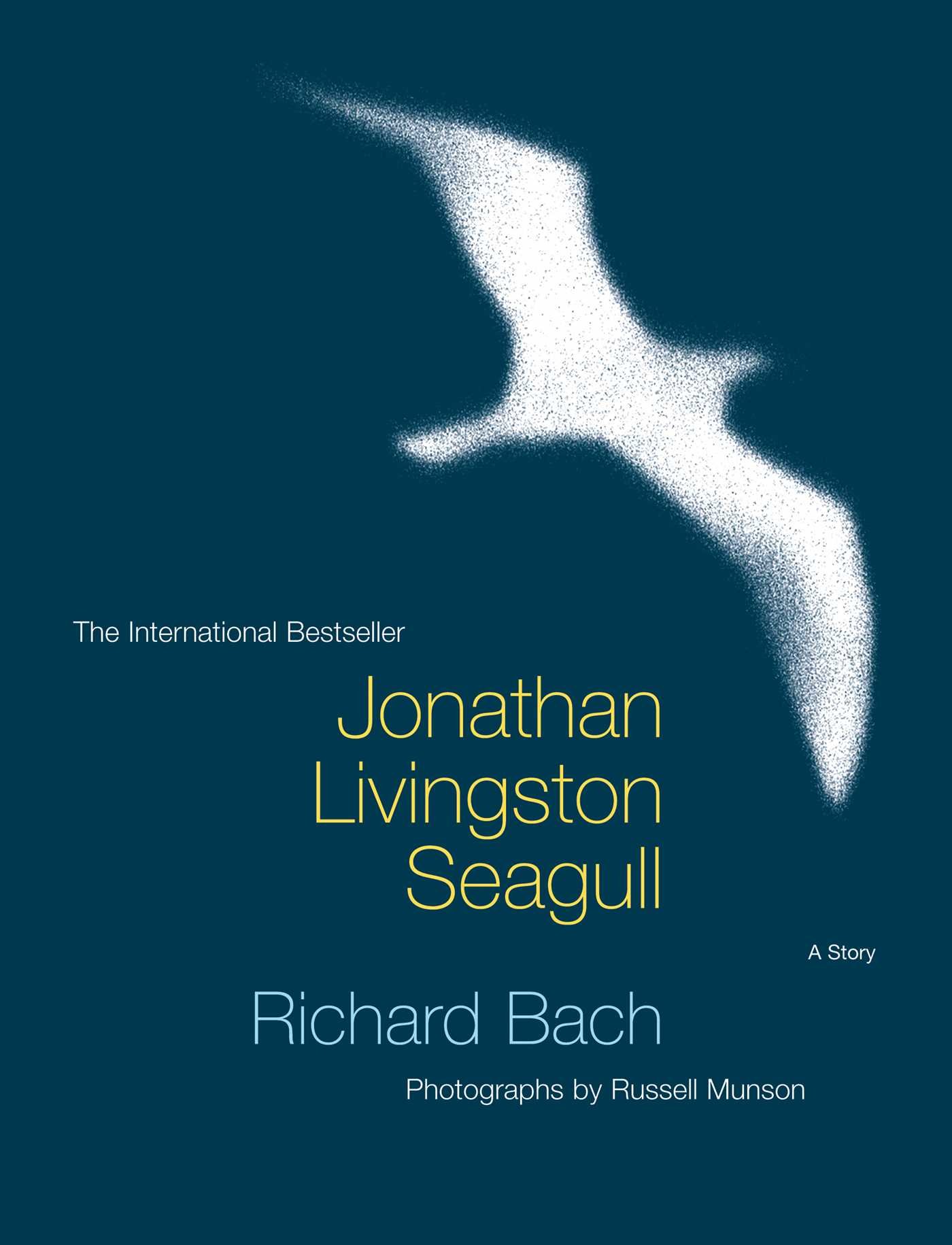
Amazon.com: Jonathan Livingston Seagull: The Complete Edition ...

Forgotten Authors 

No.14 

Richard Bach

Christopher Fowler
Sunday 16 November 2008

Jonathan Livingston Seagull author Richard Bach crashes plane ...
Richard Bach
There are certain books only college students have the patience to read. In the Seventies, Everything You Always Wanted to Know About Sex but Were Afraid to Ask and Zen and the Art of Motorcycle Maintenance were romping up the book charts in university towns. Each generation of wide-eyed freshers promotes one of these into the bestsellers, and at least it can be said that the standard is improving. For all I know, Jonathan Safran Foer's Everything Is Illuminated could be wonderful beyond page 17.
Back in 1970, though, students were prepared to read a book exploring the life philosophy of a seagull. Richard Bach's Jonathan Livingstone Seagull smashed the bestseller records. The slender, square tome was to be found poking out of backpacks the world over. It concerns an anthropomorphic seagull that yearns to fly higher instead of just worrying about where its next whiting is coming from. Millions swallowed the inspirational Christian parable which, at 120 pages (heavily illustrated), took about 12 minutes to digest. It was so successful that it became a film consisting of shots of seagulls floating about to wiffly Neil Diamond songs, the overall effect of which was like lapsing into a coma caused by a getting a paper cut from a Hallmark card.
Bach followed this with Illusions and One, the message being that we transcend the gravity of our bodies and believe in ourselves, or something. Bach described The Bridge Across Forever as "a story about a knight who was dying, and the princess who saved his life," which, as it concerned the second lady in his life, must have felt like a smack in the face to his first and third partners.
Claiming to be a direct descendent of Johann Sebastian Bach, the former pilot-turned-novelist loved to explore the metaphysical aspects of flying. Bach's books are fictional versions of moments in his life that illustrate his philosophy. Call me a curmudgeon, but I like to think that his books fell from popularity because students became too sophisticated not to see through this kind of tendentious new-age sputum.

Forgotten Authors No 54 / Richmal Crompton

Richmal Crompton


Forgotten Authors 

No 54

Richmal Crompton


Christopher Fowler
Sunday 23 May 2010 00:00


Writers of children's books tread a fine line. They need their lead characters to be interesting and a little wayward, but if they are too wild, the wrath of parents and librarians will be incurred; too soft, and their target audience will lose interest.
Certain schoolboy heroes from the past have fallen from fashion, the victims of changing attitudes; the once hugely popular Billy Bunter books have been expunged from history, presumably for being calorifically challenged (I'd like to have covered Frank Richards' series, but couldn't find any copies). Happily, several of Crompton's Just William books are available in reprint, though they are now a minority taste that probably appeals to older fans with a sense of nostalgia.
Most readers thought Richmal Crompton Lamburn was a man. So shy was she that she did not disabuse them of the notion, even as her anarchic, disruptive schoolboy, shown with his cap askew and tie undone, graced nearly 40 volumes of exploits. Crompton wrote for adults too, but her lasting claim to fame is this William Brown, whose adventures were populated with a gang of rebels called the Outlaws, including Ginger, Henry, Douglas and the awful, frilly, lisping Violet Elizabeth (catchphrase; "'I'm going to thcream and thcream until I'm thick!"), who was appropriately played in a TV adaptation by Bonnie Langford.
Crompton was born in Lancashire in 1890. The first William story appeared in Home magazine in 1919, and she continued writing them throughout her life, the last being published in 1970 after her death; there is something touching about a writer who never married producing books beloved by children.
With a certain amount of boring inevitability, Crompton's books were later attacked by critics for being irrelevant and middle-class, as if being able to write well was itself a liability. One reader points out that nowadays the books aren't a very easy read for preteens because they are peppered with words such as "epicurean", "apoplectic" and "discoursing", to which I say, "Look it up."
And of course, William's rebelliousness – performing a conjuring trick with an egg that goes wrong, trying to arrange a marriage for his sister or planning to sell Ginger's brothers as slaves to raise money – are hopelessly mild compared with the minefield of dangers facing modern parents. But perhaps an updated version, "William and the Crack Dealers", featuring a schoolboy wielding a sharpened screwdriver instead of a catapult, might rob the books of their childhood charms.

Monday, August 31, 2020

Forgotten Authors No. 5 / R. Austin Freeman

R Austin Freeman, Crime Novelist – Collectors' Notes and Bibliography –  BookAddiction

Forgotten Authors

 No 5

 R. Austin Freeman


“Freeman … treats criminals in a more balanced manner than Conan Doyle. His working-class characters – particularly in Mr Polton Explains – are decent, skilled and hard-working, but are still crushed by the system. His 30-odd books are certainly worth rediscovery.”

The Complete Dr. Thorndyke - Volume III: Short Stories Part II - Dr.  Thorndyke's Casebook, The Puzzle Lock and The Magic Casket: Amazon.es:  Freeman, R. Austin, Marcum, David: Libros en idiomas extranjeros


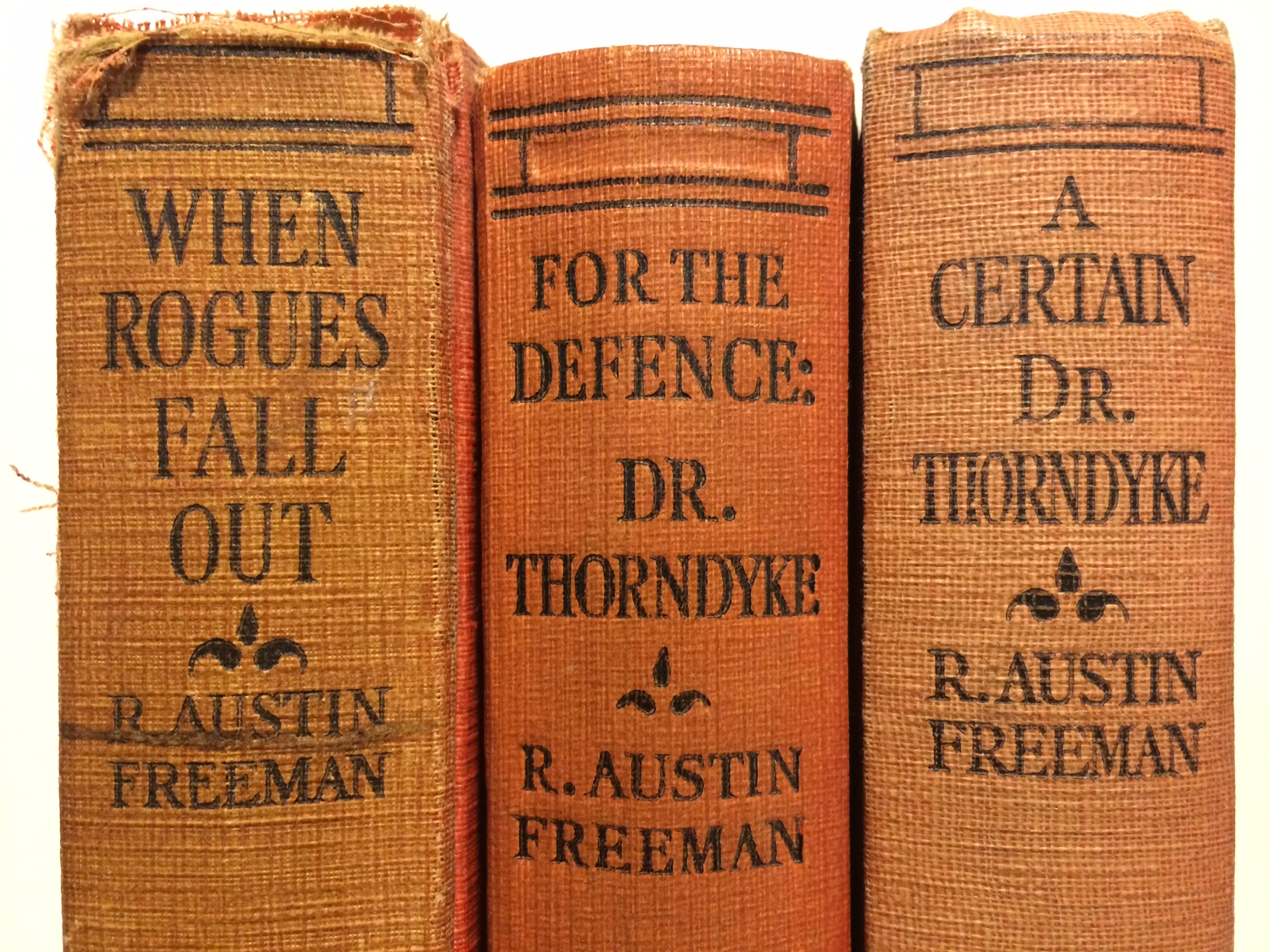
Richard Austin Freeman enjoyed a prolific career that saw him gain qualification as pharmacist and surgeon, pull off a diplomatic coup along the Gold Coast, work for Holloway Prison and become a formidable man of fiction. For the first twenty-five years of his writing career, Freeman was to dominate and remain unrivalled in the world of detective fiction, introducing the well-loved and highly memorable Dr Thorndyke. Through the creation of this character, Richard Austin Freeman continues to be read as an extremely popular addition to the world of the mystery novel.

Essential Novelists - R. Austin Freeman eBook by R. Austin Freeman -  9783967999976 | Rakuten Kobo Greece

Dr. Richard Austin Freeman MRCS LSA (11 April 1862 – 28 September 1943) was a British writer of detective stories, mostly featuring the medico-legal forensic investigator Dr. Thorndyke. He invented the inverted detective story (a crime fiction in which the commission of the crime is described at the beginning, usually including the identity of the perpetrator, with the story then describing the detective's attempt to solve the mystery). Roberts said that this invention was Freeman's most noticeable contribution to detective fiction. Freeman used some of his early experiences as a colonial surgeon in his novels. Many of the Dr. Thorndyke stories involve genuine, but sometimes arcane, points of scientific knowledge, from areas such as tropical medicinemetallurgy and toxicology.

Amazon.com: The Best Dr. Thorndyke Detective Stories (Dover Mystery  Classics) (0800759814817): Freeman, R. Austin, Bleiler, E. F.: Books
Early life

Austin Freeman was the youngest of the five children of tailor Richard Freeman and Ann Maria Dunn. At the age of 18 he entered the medical school of the Middlesex Hospital and qualified MRCS and LSA in 1886.


After qualifying, Freeman spent a year as a house physician at the hospital. He married his childhood sweetheart Annie Elizabeth Edwards in London on 15 April 1887,[4] and the couple later had two sons. He then entered the Colonial Service in 1887 as an assistant surgeon. He served for a time in KetaGhana, in 1887 during which time he dealt with an epidemic of black water fever which killed forty percent of the European population at that port. He had six months of leave from mid 1888 and returned to Accra on the Gold Coast just in time to volunteer for the post of medical officer on the planned expedition to Ashanti and Jaman.
Freeman was the doctor, naturalist and surveyor for an expedition to Ashanti and Jaman, two independent states in the Gold Coast. The expedition set out from Accra on 8 December 1888, with a band consisting of a band-master and six boys playing two side drums and five fifes,[7] three European officers (Freeman, the Commissioner, and the Officer in Charge of the Constables), one Native officer, 100 Hausa constables, a gunners' party with a rocket trough, an apothecary, apothecary's assistant, a hospital orderly, and 200 bearers. The expedition went first to Kumasi (or Coolmassie as it appears in older accounts), the capital of the then independent kingdom of Ashanti. Their second port of call was BondoukouIvory Coast, where they arrived only to find that the king had just signed a protectorate treaty with the French.
However, the expedition was a political failure as the British spokesman blurted out in front of the chiefs the British were willing to supply the loan of £400 which the king had requested. However the King had requested this loan with the proviso that it be kept secret from his chiefs. He therefore denied any knowledge of the loan and the expedition moved on to Bontúku, the capital of Jaman. Here they were left cooling their heels while the King there finalised a treaty with the French, who had been quicker off the mark. The expedition was recalled after five months.[9] Bleiler asserts, without any supporting evidence, that It was mostly through Freeman's intelligence and tact that the expedition was not massacred. Although the mission overall was a failure, the collection of data by Freeman was a success, and his future in the colonial service seemed assured. Unfortunately, he became ill with blackwater fever and was invalided home in 1891, being discharged from the service two months before the minimum qualification period for a pension.
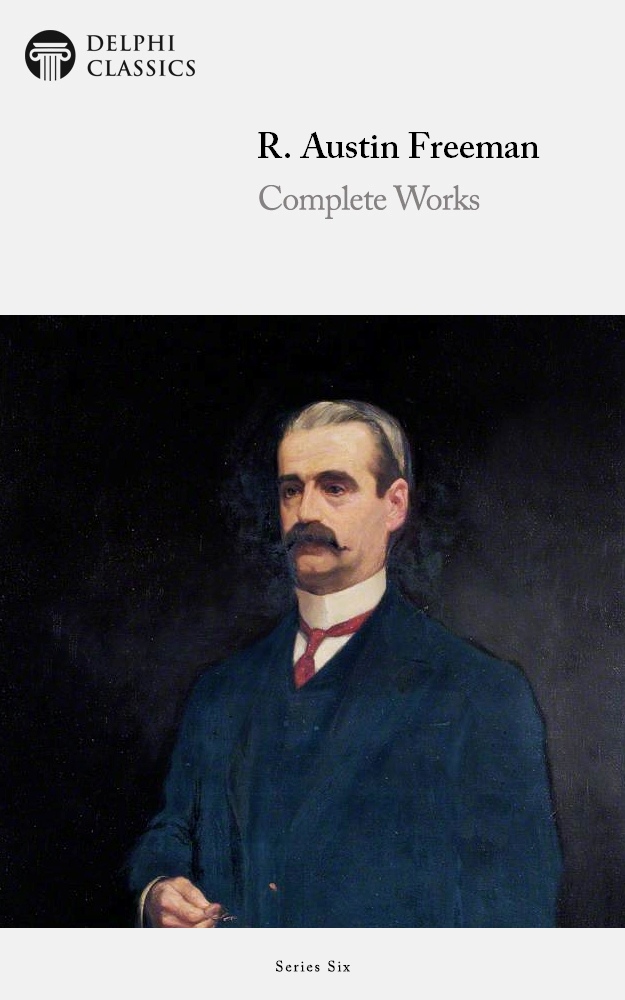
R. Austin Freeman – Delphi Classics

Career


Thus, he returned to London in 1891, and in c. 1892 served as temporary Acting Surgeon in Charge of the Throat and Ear Department at Middlesex Hospital. He was in general practice in London for about five years. He was appointed acting Deputy Medical Officer of Holloway Prison in c. 1901, and Acting Assistant Medical Officer of the Port of London in 1904. A year later he suffered a complete breakdown in his health and gave up medicine for authorship.
His first successful stories were the Romney Pringle rogue stories published in Cassell's Magazine in 1902 and 1903,[13] written in collaboration with John James Pitcairn (1860–1936), medical officer at Holloway Prison, and published under the nom de plume "Clifford Ashdown".
In 1905 Freeman published his first solo novel, The Golden Pool, with the background drawn from his own time in West Africa. The hero is a young Englishman who steals a fetish treasure. Barzun and Taylor make the point that while this is a crime, the book is not regarded as crime fiction as according to old notions stealing things from African natives is no crime. Bleiler says it is a colorful, thrilling story, all the more unusual in being ethnographically accurate . . . and that . . . it used to be required reading for members of the British colonial services in Africa.
His first Thorndyke story, The Red Thumb Mark, was published in 1907, and shortly afterwards he pioneered the inverted detective story, in which the identity of the criminal is shown from the beginning. Some short stories with this feature were collected in The Singing Bone in 1912. During the First World War he served as an induction physician and a captain in the Royal Army Medical Corps and afterwards produced a Thorndyke novel almost every year until his death in 1943.
The Eye Of Osiris eBook por R. Austin Freeman - 9788827561393 | Rakuten  Kobo México
Later life

Freeman briefly stopped writing at the outbreak of the Second World War, but then resumed writing in an air-raid shelter he had built in his garden. Freeman was plagued by Parkinson's disease in his later years. This makes his achievement all the more remarkable, as in his declining years he wrote both Mr. Polton explains, which Bleiler says . . . is in some ways his best novel,[ and the Jacob Street Mystery (1942) in which Roberts considers that Thorndyke . . . is at his analytical best . . . He was living at 94, Windmill Street, GravesendKent when he died on 28 September 1943.[ His estate was valued at £6,471 5s 11d. Thorndyke was buried in the old Gravesend and Milton Cemetery at Gravesend. The Thorndyke File started a funding drive to erect a granite marker for Freeman's grave, and this was erected in September 1979, with the text: Richard Austin Freeman, 1862 – 1943, Physician and Author, Erected by the friends of "Dr. Thorndyke", 1979.

7 BEST SHORT STORIES BY R. AUSTIN FREEMAN EBOOK | AUGUST NEMO | Descargar  libro PDF o EPUB 9783968583280

Political views
Freeman held conservative political views.As early as 1914 in his novel The Uttermost Farthing, the main character espouses views unacceptable today, referring to the "criminal class" as vermin that needed to be exterminated—which the character, Humphrey Challoner, proceeds to do. The motivating factor was Challoner's wife was killed by a burglar whom she caught in the act. Challoner sets himself on the path of revenge. Before he finally happens on the actual perpetrator, he acts as prosecutor, judge, jury, and executioner to kill 24 other men. He then displays their skeletons in his "museum" and processes their heads to shrunken heads, which he keeps hidden.


In his 1921 book Social Decay and Regeneration Freeman put forth the view that mechanization had flooded Britain with poor-quality goods and created a "homogenized, restless, unionized working class". Freeman supported the eugenics movement and argued that people with "undesirable" biological traits should be prevented from breeding through "segregation, marriage restriction, and sterilization". The book also attacked the British Labour movement and criticised the British government for permitting immigrants (whom Freeman referred to as "Sub-Man") to settle in Britain. Social Decay and Regeneration referred to the Russian Revolution as "the Russian catastrophe" and argued society needed to protected from "degenerates of the destructive or" Bolshevik "type."  Sections of Social Decay and Regeneration were reprinted in Eugenics Review, the journal of the British Eugenics Society.

R. Austin Freeman. The Cat's Eye. New York: Dodd, Mead and Company, | Lot  #70337 | Heritage Auctions
Anti-Semitism
Freeman's views on Jews were complex stereotypes. They are clearly set out in his eugenicist book Social Decay and Regeneration (1921). Here Freeman states that of vulgarity the only ancient peoples who exhibited it on an appreciable scale were the Jews and especially the Phoenician.[29] Freeman notes that a large proportion of the Alien Unfit crowding the East End of Londonlargely natives of Easter Europe are Jews. However, the criticism is of the poor rather than of Jews overall as these unfit aliens were far from being the elect of their respective races.Freeman regards that, through restricting marriage with non-Jews, Jews as having practised racial segregation for thousands of years with the greatest success and with very evident benefit to the race. Not surprisingly, some of these views spill over into his fiction.
Grost states that Helen Vardon's Confession (1922) is another bad Freeman novel suffering from offensive racial stereotypes, Helen Vardon is blackmailed into marrying the fat, old, moneylender Otway, who was distinctly Semitic in appearance, and is surrounded by Jews, to save her father from prison. Otway acts in bad faith, and is grasping, keeping only one servant despite his great wealth. The whole plot is a gratuitously offensive anti-Semitic stereotype. Grost also states that the use of racial stereotypes in The D'Arblay Mystery (1926) marks it as a low point in Freeman's fiction. However, the villain is not Jewish at all, and the only question of stereotypes comes up in the questions about whether the villains (false) hooked nose is a curved Jewish type or, or a squarer Roman nose? There are no anti-Semitic tropes in the book, no grasping money-lender etc. Grost describes Pontifex, Son and Thorndyke (1931), as degenerating into another of Freeman's anti-Semitic diatribes. In this novel the villains are largely Jewish, and come from the community of unfit aliens that Freeman lambastes in Social Decay and Regeneration.[32]
Such offensive representations of Jews in fiction were typical of the time. Rubinstein and Jolles note that while the work of many of the leading detective story writers, such as Agatha ChristieDorothy L. Sayers, and Freeman, featured many gratuitously negative depictions of stereotyped Jewish characters, this ended with the rise of Hitler, and they then portrayed Jews and Jewish refugees in a sympathetic light. Thus with Freeman, the later novels no longer present such gratuitously offensive racial stereotypes, put present Jews much more positively.
In When Rogues Fall Out (1932) Mr. Toke describes the Jewish cabinetmaker Levy as A most excellent workman and a thoroughly honest man, high praise from Freeman's pen. The counsel for Dolby the burglar, a good-looking Jew named Lyon executes a particularly brilliant defence of his client which Thorndyke admires. In Felo de Se; or Death at the Inn (1937) the croupier is described as: a pleasant faced Jew, calm, impassive and courteous, though obviously very much "on the spot". In The Stoneware Monkey (1938) Thorndyke is using a young Jewish man as his messenger. In Mr Polton Explains (1938) Polton is assisted first by the Jewish watchmaker Abraham and then by the Jewish solicitor Cohen comes to Polton's aid not once but twice, not only representing him without cost, but feeding him and loaning him money without interest or term.

659: Spoiler Warning 14 – The Eye of Osiris, a.k.a. The Vanishing Man  (1911) by R. Austin Freeman | The Invisible Event
Writing
In Bloody MurderJulian Symons wrote that Freeman's . . . talents as a writer were negligible. Reading a Freeman story is very much like chewing dry straw.[37] Symons then went on to criticise the way in which Thorndyke spoke. De Blacam also noted Thorndyke's ponderous legal phraseology. However, that pedantic ponderousness is the nature of Thorndyke's character. He is a Barrister and used to weighing his words carefully. He never discusses his analysis until he has built the whole picture. Others do not agree with his assessment of Freeman's writing skills. Raymond Chandler, in a 13 December 1949 letter to Hamish Hamilton said: This man Austin Freeman is a wonderful performer. He has no equal in his genre and he is also a much better writer than you might think, if you were superficially inclined, because in spite of the immense leisure of his writing he accomplishes an even suspense which is quite unexpected.
Binyon's also rates Freeman's writing as inferior to Doyle saying Thorndyke might be the superior detective, Conan Doyle is undeniably the better writer.[40] The Birmingham Daily Post considered that Mr. Austin Freeman was not, perhaps, among the finer artists of the short story, and his longer stories could limp, sometimes but that his approach was very effective.
However, de Blacam makes the point that, quite apart from the description of the investigation, each of the descriptions of the crimes in the inverted stories was a fine piece of descriptive writing. Grost agrees that Freeman's descriptive writing is excellent  Adey finds that: Freeman’s writing, though lacking Doyle’s atmospheric touch, was clear and concise, with dry humor and a keen eye for deductive detail. Adams agreed that Freeman had considerable powers of narrative description when he stated that Nothing but the author’s remarkable skill in character delineation and graphic narrative could save his stories from being regarded as technical studies for a course on forensic medicine.
The proof of the pudding is in the eating, and Bleiler noted in 1973 that Freeman . . . is one of the very few Edwardian detective story writers who are still read.


Friday, August 28, 2020

Forgotten Authors No 01 / E M Delafield

Delafield, E. M. - LIBROS DEL ASTEROIDE
EM Delafiel

Forgotten Authors

No 01

E M Delafield


Christopher Fowler
Sunday 10 August 2008


Edmée Elizabeth Monica De La Pasture lived through two world wars, writing immensely popular novels, stories and non-fiction, could be as laugh-out-loud funny as PG Wodehouse, and numbered housewives and prime ministers among her fans. The Sussex-born daughter of a Count, she enlisted as a nurse in the First World War and as a lowly ARP worker in the second, and also worked on a Russian collective farm. In the UK, only a handful of her 30-plus publications can now be found on bookshelves.

Her five most famous books are largely autobiographical. The Diary of a Provincial Lady chronicles the author's daily life as she tries to balance the housekeeping books and run a family. Written in a deceptively relaxed shorthand, it's a Pooterish masterpiece of 20th-century humour that shows how easily Delafield could communicate unspoken feelings of embarrassment and annoyance. Here she is at tea:
"Lady B asks me how the children are, and adds, to the table at large, that I am 'A Perfect Mother'. Am naturally avoided, conversationally, after this, by everybody at the teatable. Later on, Lady B tells us about the South of France. She quotes repartees made by herself in French, and then translates them. (Unavoidable query presents itself here: Would a verdict of Justifiable Homicide delivered against their mother affect future careers of children unfavourably?)" And here she is on the blackouts: "Serena alleges that anonymous friend of hers goes out in the dark with extra layer of chalk-white powder on her nose so as to be seen, and resembles the Dong With The Luminous Nose. (Query: Is it in any way true that war very often brings out the best in civil population? Answer: So far as I am concerned, Not at all.)"
Perhaps Delafield's gossamer charm is not suited to coarser times. Virago did her no favours by shoving four volumes into one dense paperback, prefaced with a peculiarly mean-spirited forward that they later had the good sense to remove. Provincial Lady was eventually serialised for radio in the UK, but Delafield's other novels remain virtually lost. The diaries are comedies of manners, but she also tackled lesbian feelings, real-life murder, alcoholism, all manner of family cruelties, adulteries and betrayals. Delafield's reasonable voice is currently out of favour, but thankfully she survives in the nation's second-hand bookshops, awaiting rediscovery.

Forgotten Authors No 45 / Winifred Watson

Winifred Margaret Watson-Armstrong (1894–1912)
Winifred Watson


Forgotten Authors

No. 45

Winifred Watson


Christopher Fowler
Sunday 3 January 2010 01:00

When it comes to literary success, timing is everything. Before JK Rowling's boy wizard there had been a virtual industry of magic-schoolboy tales, but Harry Potter was the one that clicked. Winifred Watson's literary career was curtailed by three major events; the depression, the attack on Pearl Harbor and the Blitz.
Watson was born in 1906 in Newcastle upon Tyne, and remained there all her life. Due to follow her sisters into higher education, she found the way blocked when her father's shoe shops failed in the Depression of 1929. She wrote her first book, the Northumbrian historical drama Fell Top, in dull days stuck behind a secretarial desk, after her boss suggested bringing in knitting to keep herself amused. Finishing it in six weeks, she stuck it in a drawer and forgot about it until she spotted an advert from Methuen looking for new writers. The novel was critically well-received and became a radio play. Watson was young and pretty, and got local coverage, so the publishers asked her for more. The result was Odd Shoes, produced in a different style that benefited from proper research.

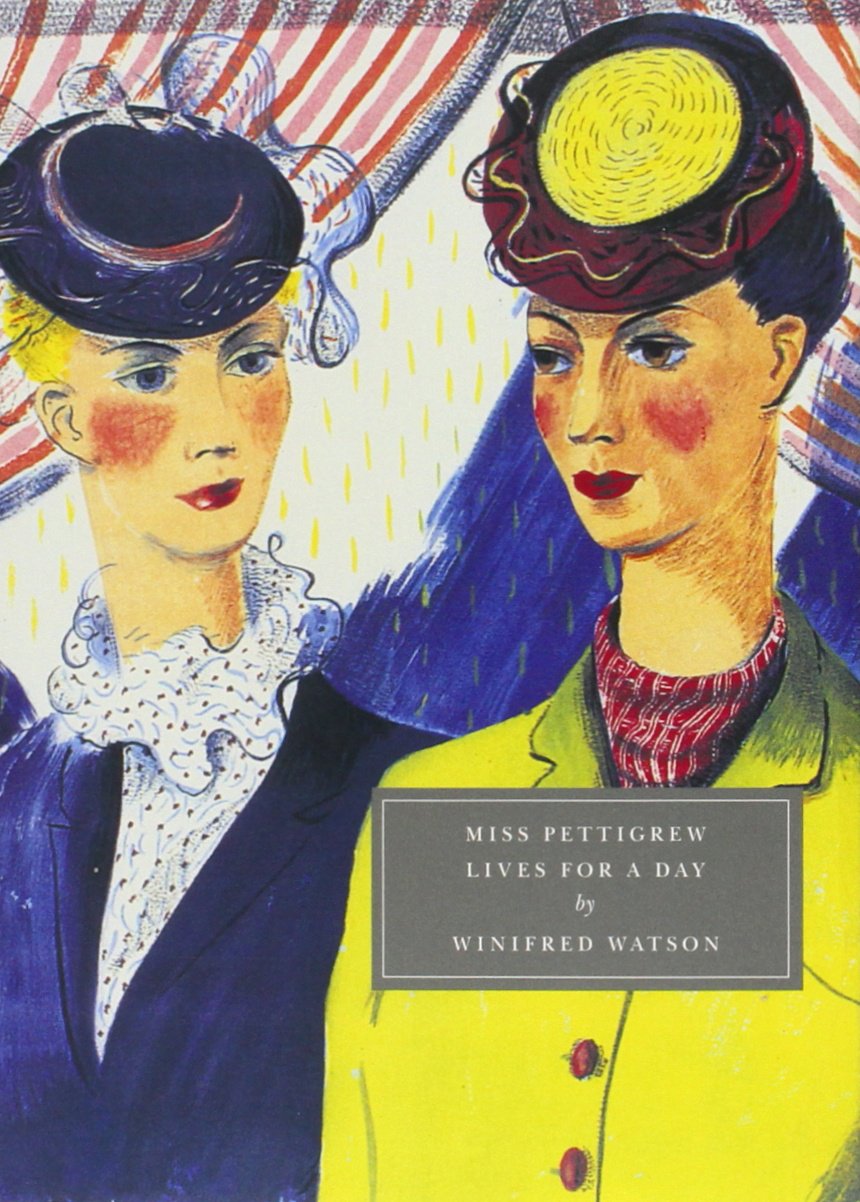
Watson, W: Miss Pettigrew Lives for a Day Persephone Classics ...

Her third book horrified Methuen. Instead of being serious, it was fun, and she was writing on subjects she knew nothing about. The book was Miss Pettigrew Lives for a Day, about a frumpy governess who is accidentally sent by her agency to work for a louche actress and nightclub singer running a complicated love life. Watson said: "I didn't know anyone like Miss Pettigrew. I just made it all up. I haven't the faintest idea what governesses really do. I've never been to a nightclub and I certainly didn't know anyone who took cocaine."
The book was an immediate hit, and a Hollywood musical was planned starring Billie Burke, the good witch from The Wizard Of Oz. The bombing of Pearl Harbor put paid to that. "I wish the Japanese had waited six months," she said later.


Watson married and wrote every day, but when the house next door was blown up in the war, her family was forced to move into one room with her parents, making writing impossible.
Persephone Books persevered with the republication of Miss Pettigrew, and the book found its way on to Hollywood desks once more. A rather charming film version starring Frances McDormand and Amy Adams finally appeared in 2008, six years after Watson's death.


The Book of Forgotten Authors by Christopher Fowler / Book review by David Hill

The Book of Forgotten Authors by Christopher Fowler – book review


Arthur Mee. Photo/Alamy
Obituaries of authors, many of whom are not dead, make an entertaining read.
I’m pretty sure it was Tessa Duder who remarked of a writer, in a critical essay, that “she lived long enough to see her books forgotten”. I remember the shudder of recognition down my spine. Who was the sad she? Sorry, I’ve … forgotten.
Distilled from years of Independent on Sunday columns, Christopher Fowler’s obituaries (they are not meant to be, but they often read that way) are not so much a who’s who as a “Who?”
There are 99 mini-essays on individuals, plus a few diversions into Forgotten Booker Authors, including a winner who had died; Forgotten Nonsense Writers, including the laceratingly funny Harry Graham; Forgotten Dickens, including something called Mugby Junction.
Each 500-word entry is a brief bio, a smattering of titles, an assessment, a couple of anecdotes. Breath-catchingly amoral Simon Raven once telegraphed his wife, “Sorry no money. Suggest eat baby”; Lobsang Rampa of The Third Eye was a Devon plumber called Cyril. Isn’t that just great?
Fowler’s choices are sometimes provocative, as they should be. Mystery writer Margery Allingham has vanished? What a mysterious claim. Arthur Upfield, Barbara Pym, Georgette Heyer? Make up your own mind.
You’ll accept the obscurity of others. Try Kyril Bonfiglioli, Lucille Fletcher, or the gloriously christened Edward John Moreton Drax Plunkett. As I’m sure you know, they were respectively the creator of mincing 1970s art thief Charlie Mordecai, a US script writer hugely admired by Orson Welles and an Anglo-Irish aristocratic novelist who always used a quill pen.
So what edged them and many others into the shadows? Chance. Marketing. The Blitz. Illness. Chance. Changing social mores. Addiction. Chance.
It’s a commendably eclectic selection. We get Frank Richards of Billy Bunter fame; Ian Fleming’s older brother Peter; Michael Green, who wrote books entitled The Art of Coarse [insert subject] about just about everythingArthur Mee, children’s encyclopaedist and author of that seminal article “Our Wonderful Glands”.
Evaluations are free and frank: “a disgraceful cliffhanger”; “a horrible human being”. Fowler won’t be getting a Christmas card from the author of Jonathan Livingston Seagull (“artery-hardening New Age sputum”) or Booker-topping The Sellout (“motor-mouth”).
He may have written the most emetically coy author note of the decade, but the guy cares about books and their authors. A lot of his pieces build to a plea for restoring reputations, and he gets quite emotional about the arbitrary injustice of neglect. True: why is Keith Waterhouse here, and not Jeffrey Archer? A paradoxically reassuring book – for writers – in its emphasis on Fortune’s wheel. Its other paradox is that it may boost the subjects’ sales. In second-hand bookshops, anyway.

Sunday, September 6, 2009

Forgotten authors No 37 / Lionel Davidson

Bajo los montes de Kolima, de Lionel Davidson - Diario del Sureste
Lionel Davidson

Forgotten authors

No 37 

Lionel Davidson


Christopher Fowler
Sunday 6 September 2009


Oddly, Lionel Davidson is one of those authors who turns up a lot on the racks of second-hand bookshops, in sexy little Penguin editions that fit a pocket.
A Yorkshireman who spent years as a freelance reporter, Davidson's versatile, pacy novels propelled him into the forefront of thriller writing. Although they are now back in print, mentioning his name to younger readers produces blank looks. Let's put that right; he's a terrific writer.

Night of Wenceslas | Lionel Davidson | Second Printing


His first novel, The Night of Wenceslas (pictured), concerns a young spendthrift forced into a spying trip to Prague during the Cold War in order to retain his beloved car (used as a stake in his debts). Our anti-hero manages to get beaten up before flushing the information down the toilet, and falls deep into a trap of his own making. It's a typical Davidson ploy, to graft a sympathetic character into an increasingly elaborate plot.


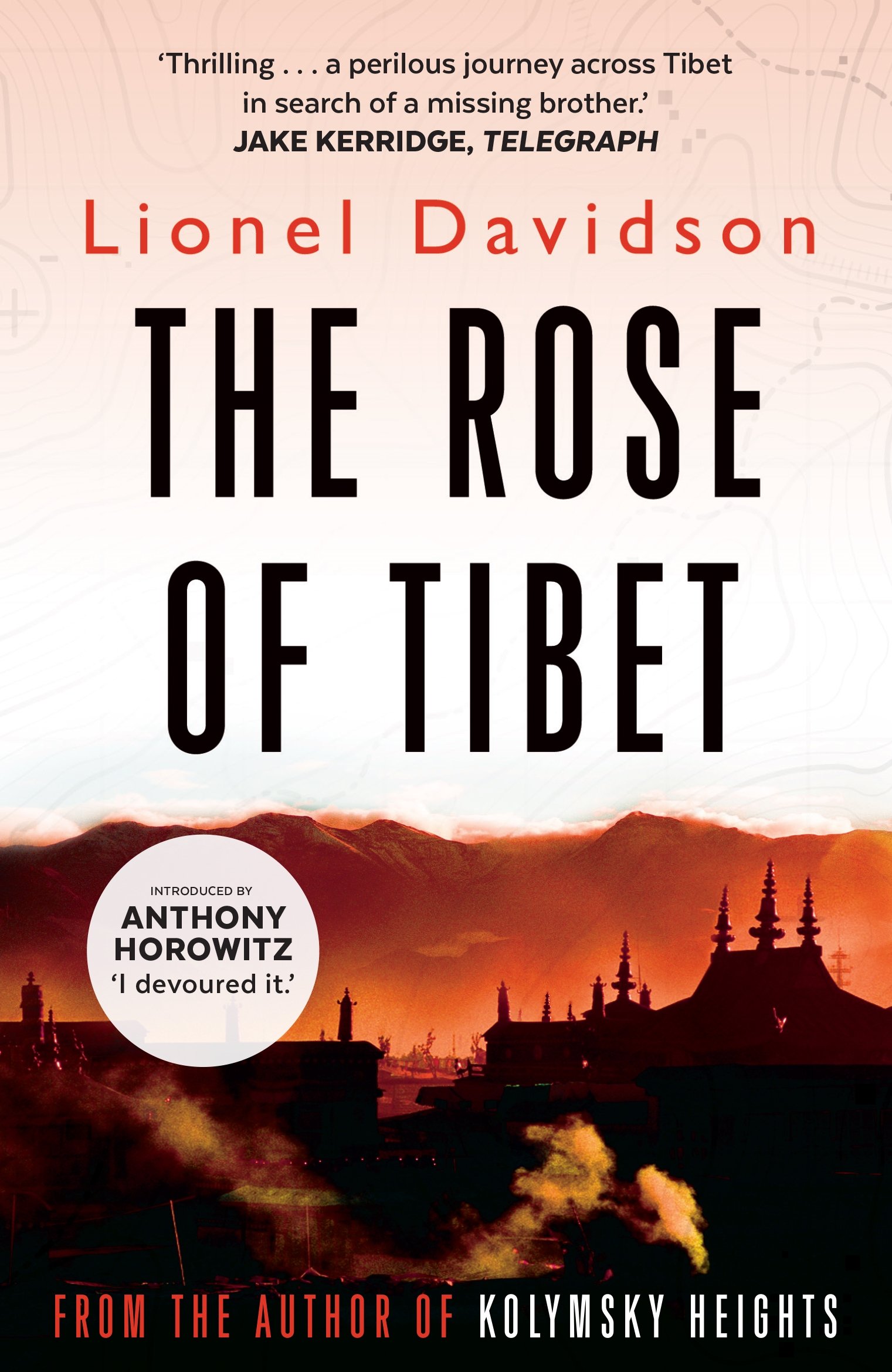
The Rose of Tibet: Amazon.es: Davidson, Lionel, Horowitz, Anthony ...His second novel, The Rose of Tibet, had something of H Rider Haggard about it, and was a genuine adventure that won the admiration of Graham Greene and Daphne du Maurier. This tale of a quest for treasure from India to Tibet should, by rights, have been a Harrison Ford film.
I first discovered Davidson in his 1971 novel Smith's Gazelle, and being of an impressionable age, was moved to tears. It's a fable concerning a small Jewish boy and a wizened old Arab, who join forces during the Six Day War to save the titular gazelle (the last of its species) from extinction. The story has a wonderful timelessness and a compelling message.
The Chelsea Murders won Davidson the Gold Dagger Award for best thriller. It presents a chillingly disguised murderer and a raft of memorably louche Chelsea characters, although the plot favours method over motive a little too much. It also has a problem common with books from the 1970s: a lack of political correctness that was simply the linguistic currency of the time, and which is no direct fault of the author's.

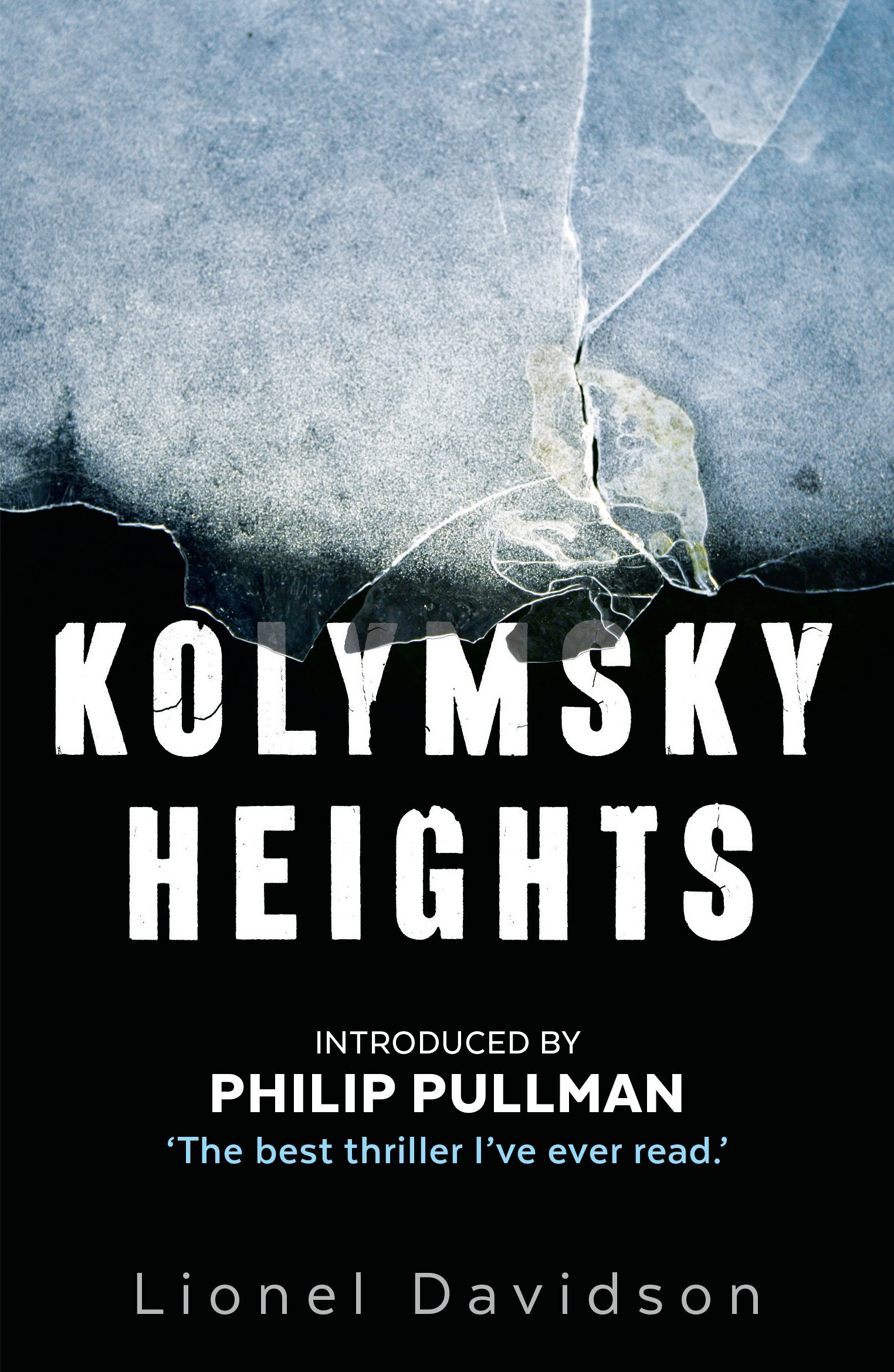
Kolymsky Heights: Amazon.es: Davidson, Lionel, Pullman, Philip ...


Davidson's most recent thriller, Kolymsky Heights (1994), has a terrific premise: the hero is a Canadian-Indian with a linguistic talent that allows him to infiltrate one of the most forbidding places on earth – a secret laboratory buried deep in the permafrost of Siberia. The question is not just whether he'll succeed in his mission, but how he'll ever get out. As usual, the style and pacing of the story is superb.