‘Knock, knock.’ ‘Who’s there…?’: 10 Haunted House Stories
Ten Haunted House Stories
Top 10 ghost stories
Possibly our favourite sub-genre of the Gothic, haunted house stories make for spooky fun reading on stormy winter nights. For added thrills, we recommend enjoying the list below when you’re home alone or housesitting.
The home is supposed to be a safe space, a refuge from the evils of the world, so perhaps its not so shocking that when Horace Walpole penned the first Gothic novel, The House of Otranto (1764), he used his own estate for inspiration. After all, what could be more terrifying than finding unspeakable horror lurking in the one place it ought not exist?
Since Walpole’s days, there’s been a proliferation of haunted house stories, and by now, we all know roughly what to expect: a family or group of friends take up residence in old house where an awful thing, or series of awful things, has happened. After a brief period of ‘isn’t this house lovely! What could possibly go wrong?’ Night descends and the terror begins.
At the heart of these stories are family secrets, a cursed house pointing to something rotten and hidden within the family. Incest and illegitimacy are common themes. A haunted house is also a site of domestic terror and, unsurprisingly, the hero-victims of the genre are often women. In the 19th century, when the Gothic was at its zenith, women ruled the domestic sphere but they were also imprisoned within it and the haunted house became a vehicle for externalising their isolation and distress. Male characters are often unaware of the horror visited upon female protagonists and much gas lighting ensues. It is up to the women to restore order. Or not.
While in early haunted house stories crumbling estates are often tenanted by ghosts and serve as externalisations of the protagonist’s psychological landscape, more recently (as readers have become less credulous towards ghostly apparitions and psychoanalysis has fallen out of vogue) it’s the houses themselves that are ‘sick’ and the narratives focus on broader social themes—the house intent on keeping outsiders out and insiders in. In some ways these later stories are more frightening still, with the house itself becoming not only an insidious and unpredictable monster, but also occasionally a narrator.
 An ancient prophecy predicts that ‘the castle and lordship of Otranto should pass from the present family, whenever the real owner should be grown too large to inhabit it’. On his wedding day the heir of Otranto is killed, his body found crushed beneath a giant helmet. His father, Manfred, Prince of Otranto, fears the prophecy is coming true and contrives to divorce his current wife and marry his son’s betrothed, Isabella, to produce a new heir. However, Manfred carries a family secret and as his desperation to capture Isabella grows, supernatural forces awake within the castle.
While The Castle of Otranto is unlikely to hold the same terror for 21st century readers as it did back in the day, it remains a must-read for Gothic enthusiasts.
 One of Poe’s most famous stories, ‘The Fall of the House of Usher’ is narrated by an unnamed man who arrives at the House of Usher to nurse his friend and master of the house, Roderick Usher. The house appears to be falling apart and both Usher and his twin sister, Madeline, are infected with a strange illness. When Madeline dies, the narrator helps Usher entomb her in the family crypt. A storm rises and strange happenings within the house begin to drive the occupants mad.
‘The Fall of the House of Usher’ remains a chilling tale almost two hundred years on. The narrator’s descent from reason to madness is as unsettling as the horror that occurs within the house.
 A woman suffering what we today understand as post-natal depression is taken to the counrty by her doctor husband and forced to rest in what was once a nursery decorated with peculiar yellow wallpaper. Within the pattern the narrator spies another woman creeping, creeping around the room.
‘The Yellow Wallpaper’ is just 6000 words long, but will make you shudder to think of it years after reading.
 A governess takes a position looking after two orphaned children on a remote country estate. Soon after arriving she begins to sight a strange man and a woman moving about the house and grounds. She becomes convinced that the couple are in fact the children’s former governess, Miss Jessel, and her lover and fellow employee, Peter Quint—now both dead. The governess becomes increasingly alarmed when she learns that these ghostly apparitions are visiting the children.
The Turn of the Screw remains a terrifying read today. James’ apparitions are truly creepy and made more so by his use of an unreliable narrator. A word of warning: stay well away from the windows while reading this one. #justsaying
 One of the most famous (and frightening) haunted house stories ever written, The Haunting of Hill House establishes many of the tropes of the modern haunted house story. Paranormal investigator Dr. John Montague is determined to find proof of the supernatural. He rents a rumoured ‘haunted house’ where several violent deaths have occurred and invites a number of people with links to the supernatural to join him in the house for the summer. Only three accept his invitation: Luke Sanderson, heir to the estate; Theodora a bohemian artist; and Eleanor Vance, a painfully shy woman who encountered a poltergeist as a child and spent her youth nursing her invalid mother.
All four inhabitants of the house experience strange and frightening phenomena, but the supernatural occurrences appear to target Eleanor. As she begins to lose her grip on reality it becomes increasingly unclear how much of the terror that unfolds exists only in Eleanor’s mind and whether it is the house or Eleanor herself conjuring the strange occurrences. Either way, the more unnerving things get, the more determined Eleanor is to remain in the house.
Shirley Jackson has an uncanny knack for the unnerving and The Haunting of Hill House may be her most disturbing work. If you’re in the mood for genuine chills, this should be top of your TBR pile.
 Technically The Shining is the story of a haunted hotel rather than a haunted house, but that just broadens the scope for terror. Aspiring writer and recovering alcoholic, Jack Torrance, takes a job as caretaker at the Overlook Hotel during the off-season, bringing his wife and young son along for the adventure. While Jack hopes the winter will give him time to sober up and write his book, the Overlook has other plans. His son, Danny, has ‘the shining’—a gift that enables him to see the horror of the hotel’s past—which he must use to stop his father from killing himself and his mother.
Fun fact: the story was partly inspired by King’s own recovery from alcoholism and his stay at The Stanley Hotel.
In 2013 King followed up The Shining with a sequel, Doctor Sleep.
 It’s a big call to make, but House of Leaves might just be the scariest book of all time ever. The primary story follows the classic haunted house plot. A filmmaker moves his family into an old house only to discover a sometimes-there-sometimes-not doorway in the living room that leads to a dark maze beneath the house. Against all common sense, the filmmaker decides to investigate and document the process. Unspeakable terror ensues.
Danielewski fragments his story through frame narratives, footnotes, photographs, interviews and appendices. The words on the page shake loose, distort and rearrange themselves until the reader, like the filmmaker finds themselves drawn into the labyrinth, spiralling round and round, closer and closer to the unnamed, unknown horror at its centre.
Danielewski is an experimental writer and for him the physical object of the book and the way the reader interacts with it form part of the narrative. If that sounds wanky, then this one isn’t for you. But if you’re up for a properly challenging and frightening read, the reward is more than worth the effort.
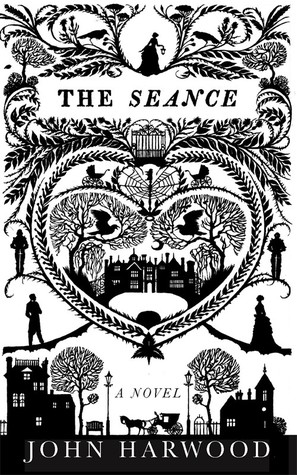
 Winner of the 2008 Aurealis Award for Best Horror Novel, The Seance is the second book in what might loosely be called a trilogy, preceded by The Ghost Writer (2004) and rounded out with The Asylum (2013). The three novels aren’t explicitly linked, but they are connected through Harwood’s nuanced understanding of Victorian Gothic and all pay homage to the archetypal stories and voices of the genre.
In The Seance protagonist Constance Langton comes into possession of Wraxford Hall, a crumbling estate where strange and inexplicable events are rumoured to have occurred. In a bid to help her mother recover from the death of Constance’s sister, Constance becomes ensnared in the world of necromancy and soon finds herself alone with Wraxford Hall and all its mysteries looming ominously over her.
Harwood is a master of suspense, mystery and terror and The Seance makes for an excellent companion on a dark and stormy night.
 Set in post-war 1940s England, The Little Stranger narrates the financial ruin of the noble Ayres family and general decline of the landed gentry that occurred in post war Britain. Country doctor, Faraday, befriends the Ayres family after attending a sick maid at their estate, Hundreds Hall. However, as he draws closer to the family and comes to understand the extent of their financial distress and struggle to keep the house, unsettling events begin to occur on the estate, threatening the lives of its inhabitants.
Ideal reading for those who like their terror infused with social upheaval.
 Part coming-of-age narrative, part haunted house story, White is for Witching is sinister and surreal. After the death of her mother, eighteen-year-old Miri develops pica—a rare mental illness compelling her to eat chalk, stones and other non-foods. Meanwhile, the ancestral home her father runs as a bed an breakfast stirs to life, scaring off staff and guests, and a mysterious figure, the Goodlady, walks invisible through the rooms.
White is for Witching earns bonus points for having parts of the story narrated by the house itself.
LECTITO