Showing posts with label NoViolet Bulawayo. Show all posts

Monday, July 24, 2023

Glory by NoViolet Bulawayo review / An Orwellian satire in Africa


Glory by NoViolet Bulawayo review – an Orwellian satire in Africa

Animal Farm provides the inspiration for an imaginative allegorical tale about tyranny in Zimbabwe


Hephzibah Anderson
Sun 17 Apr 2022 10.00 BST

In the fictional African country of Jidada, a tyrant known as the Old Horse is finally set to be ousted from power. With his penchant for autocratic rule, clothing emblazoned with his own image, and a scheming, Gucci-clad wife, NoViolet Bulawayo’s ruler is all too recognisable but for one key factor: he really is an old horse.

Sunday, November 6, 2022

Booker prize 2022 / Alan Garner becomes oldest author to be shortlisted


Booker prize shortlisted authors … top (from left): Percival Everett, Elizabeth Strout, NoViolet Bulawayo; bottom (from left): Claire Keegan, Alan Garner, Shehan Karunatilaka

Booker prize: Alan Garner becomes oldest author to be shortlisted

This article is more than 1 month old

Only British writer on list will collect prize on 88th birthday if successful, and is among a list of books judges say ‘speak powerfully about important things’


Sarah Shaffi
Tue 6 September 2022

Alan Garner has become the oldest author to be shortlisted for the Booker prize, and is the only British writer on this year’s list.

He is joined on the shortlist, described by chair of judges Neil MacGregor as six books that “speak powerfully about important things”, by one Irish writer, two Americans, a Zimbabwean and a writer from Sri Lanka.

Historian MacGregor said the judges were looking for books in which “something momentous happens”, as well as novels that would “demonstrate how great writing gives the human predicament a shape”.

MacGregor was joined on the judging panel by academic and broadcaster Shahidha Bari; historian Helen Castor; novelist and critic M John Harrison; and novelist, poet and professor Alain Mabanckou.

If Garner goes on to win for his novel Treacle Walker, about a young boy who is visited by a wandering healer, he will receive the award on his 88th birthday. Treacle Walker is also the shortest book on the list, coming in at around 15,000 words.

The judges called it a “mysterious, beautifully written and affecting glimpse into the deep work of being human”, and said the book had made some of them cry.

Also making the cut are former shortlistees NoViolet Bulawayo and Elizabeth Strout. Zimbabwean Bulawayo, who was shortlisted in 2013 for her debut We Need New Names, is through to the final six again with the Animal Farm-inspired political satire Glory, narrated by a chorus of animals. The judges called it “a magical crossing of the African continent, in its political excesses and its wacky characters”.

American author Strout was shortlisted in 2006 with My Name is Lucy Barton. The title on this year’s list, Oh William!, is also part of her Lucy Barton series and sees the character reconnect with her first husband. The judges described it as “one of those quietly radiant books that finds the deepest mysteries in the simplest things”.

Shehan Karunatilaka’s The Seven Moons of Maali Almeida is about a photographer caught up in the horrors of civil war, and is his second novel, published 10 years after his first. He is the second Sri Lankan author in two years to make the Booker shortlist, and has written a novel “full of ghosts, gags and a deep humanity”, say the judges.

American writer Percival Everett’s The Trees is about detectives who investigate a series of gruesome murders in Money, Mississippi, where Emmett Till was lynched 65 years earlier. The judges said it was “horrifying and howlingly funny” and that it “asks questions about history and justice and allows not a single easy answer”.

Irish author Claire Keegan is shortlisted for the slim Small Things Like These, set in the run-up to Christmas in a small Irish town. The panel said Keegan was “measured and merciless as she dissects the silent acquiescence of a 1980s Irish town in the Church’s cruel treatment of unmarried mothers”.

There had been, said director of the Booker prize foundation, Gaby Wood, “virtually no arguments, no proper rows” between the judges when deciding on the list. They had chosen books that bring history to life and, said Bari, “books that use humour as a strategy”.

Half of the titles on the list are published by independents: Small Things Like These by Faber, The Seven Moons of Maali Almeida by Sort Of, and The Trees by Influx.

Bea Carvalho, head of fiction at Waterstones said the shortlist showed “astonishing literary experience and prestige, with nominees who booksellers have enjoyed championing for many years”.

“We are delighted that the Booker judges have chosen such a commercially strong and wide-reaching selection and can’t wait to see what they choose as 2022’s winner,” she added.

The 2022 winner will be announced on Monday 17 October in an awards ceremony held at the Roundhouse in London. The six shortlisted authors each receive £2,500 and a specially bound edition of their book; the winner will receive £50,000.

THE GUARDIAN


Wednesday, October 26, 2022

This is the winner of the Booker Prize 2022 - and the other 5 books on the shortlist


This is the winner of the Booker Prize 2022 - and the other 5 books on the shortlist


Booker prize / Alan Garner becomes oldest author to be shortlisted


  • The Booker Prize 2022 has been won by Sri Lankan author Shehan Karunatilaka.
  • The shortlist featured six works of fiction by authors across four continents and five different nationalities.
  • From civil war to politics, racism, myth and folklore, here's what you need to know about the winner and the other five novels shortlisted.

Tuesday, September 6, 2022

Booker prize 2022 / The story had been stirring in me for most of my life’: How I wrote a Booker-shortlisted novel

Clockwise from top left: Percival Everett, Elizabeth Strout, NoViolet Bulawayo, Shehan Karunatilaka, Alan Garner and Claire Keegan

Booker prize 2022


‘The story had been stirring in me for most of my life’: How I wrote a Booker-shortlisted novel


Saturday 8 October 2022


NoViolet Bulawayo on Glory

The front cover of Glory by NoViolet Bulawayo

On 14 November 2017, things fell apart for Robert G Mugabe, the long-serving president of Zimbabwe. The strongman, who’d once upon a glorious time gloated “Only God, who appointed me will remove me,” was deposed through a sanitised military coup and replaced by his former deputy.

Monday, November 8, 2021

Zimbabwean author NoViolet Bulawayo / 'I like to write from the bone'


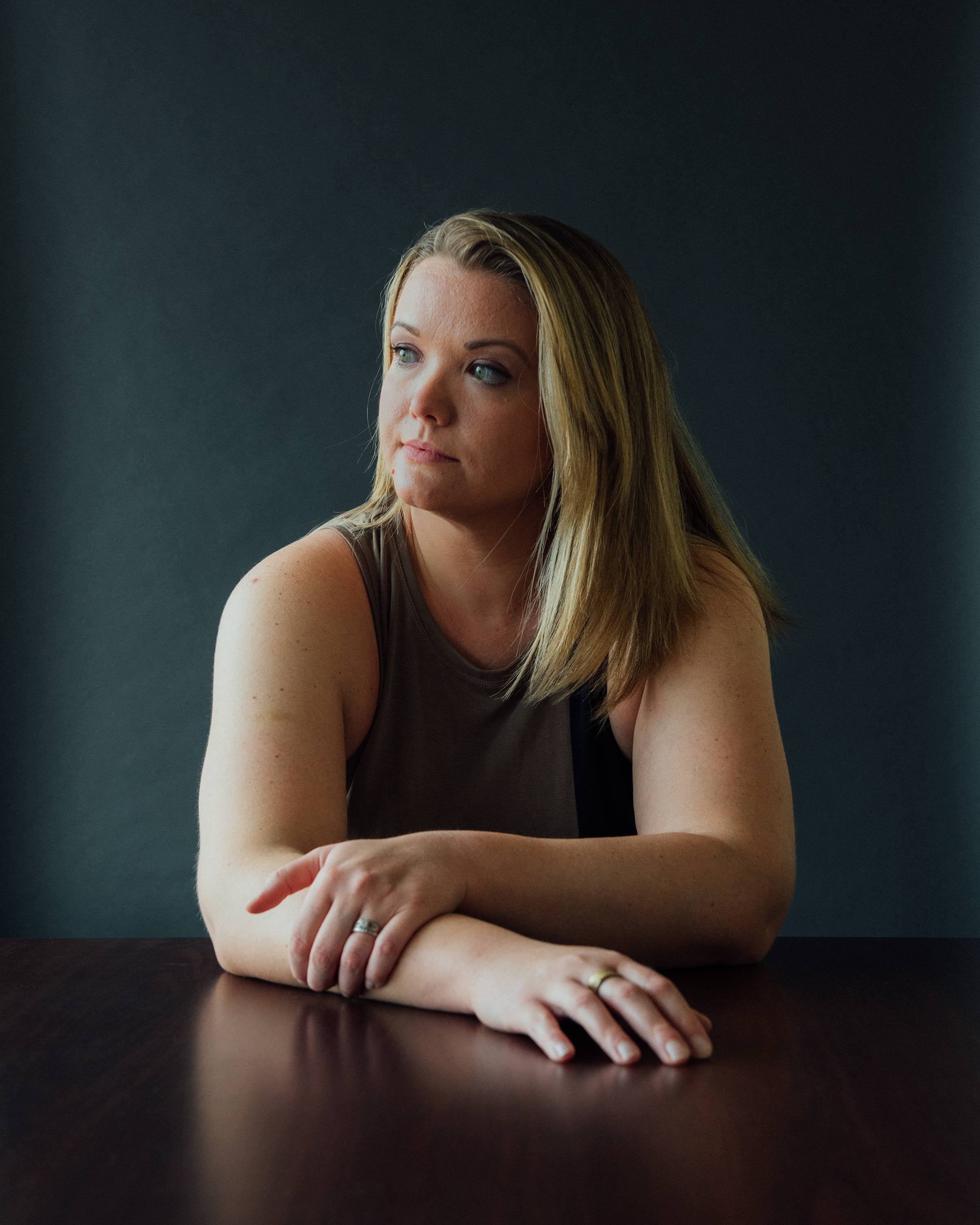
NoViolet Bulawayo in Berlin, Copyright: DW/S. Peschel

Zimbabwean author NoViolet Bulawayo: 'I like to write from the bone'

Writing about Zimbabwe while living in the US has changed her language and her identity, says NoViolet Bulawayo, the author of "We Need New Names." DW met up with the young African writer on her first visit to Germany.

Wednesday, June 17, 2020

The 10 Best Debut Novels of the Decade

Téa Obreht Releases Inland 8 Years After The Tiger's Wife | Time
Téa Obreht

The 10 Best Debut Novels 
of the Decade

Emily Temple
23 December, 2019

Friends, it’s true: the end of the decade approaches. It’s been a difficult, anxiety-provoking, morally compromised decade, but at least it’s been populated by some fine literature. We’ll take our silver linings where we can.
So, as is our hallowed duty as a literary and culture website—though with full awareness of the potentially fruitless and endlessly contestable nature of the task—in the coming weeks, we’ll be taking a look at the best and most important (these being not always the same) books of the decade that was. We will do this, of course, by means of a variety of lists, and it’s only appropriate to begin our journey with the best debut novels published in English between 2010 and 2019.
The following books were chosen after much debate (and several rounds of voting) by the Literary Hub staff. Tears were spilled, feelings were hurt, books were re-read. And as you’ll shortly see, we had a hard time choosing just ten—so we’ve also included a list of dissenting opinions, and an even longer list of also-rans. Feel free to add any favorites we’ve missed in the comments below.
***

The Top Ten

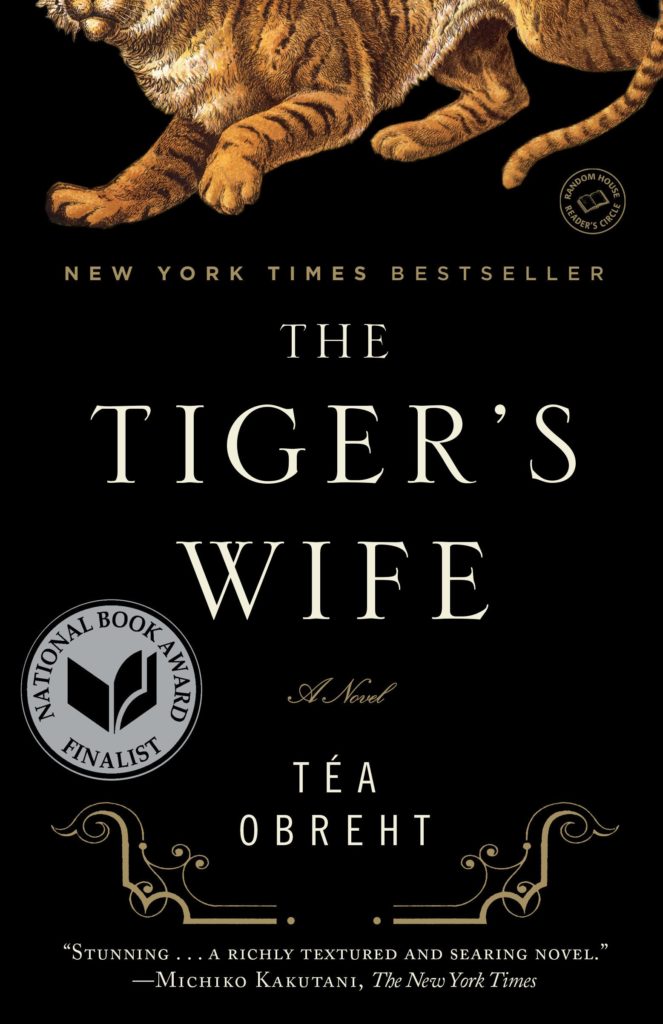
Téa Obreht, The Tiger's WifeTÉA OBREHT, THE TIGER’S WIFE
(2011)
It’s easy to forget, reading The Tiger’s Wife, that Obreht was only 25 when it was published in 2011 (that year, she became the youngest-ever winner of the UK’s Orange Prize—and did you know it was the first book ever sold by her agent, and the second book ever acquired by her editor? Yes, I feel bad too.). I say “easy to forget,” but it might be more accurate to say “hard to believe,” because this debut is so ambitious, so assured, and so richly textured that it feels like something that could only come from decades of toil.
It is an astonishing book for a writer of any age, half fable, half gritty portrait of an unnamed Balkan country recovering from civil war. It is a novel about story, and about family, two things that inform and describe one another. “Everything necessary to understand my grandfather lies between two stories,” our narrator Natalia tells us, “the story of the tiger’s wife, and the story of the deathless man. These stories run like secret rivers through all the other stories of his life.” Part of the magic of Obreht’s writing (it’s also true in her latest novel, Inland) is how secure you feel in the worlds she creates—the feeling is akin to stepping into a photograph, or a documentary: you look around and clock every detail; you never doubt. You can feel reality hovering underneath the sentences, even when they’re describing something patently impossible. And yet in this novel, she’s always reminding you how these worlds can change, and how we can change them in the telling.

Wednesday, July 19, 2017

Top 10 opening scenes in books


Top 10 opening scenes in books


From Kazuo Ishiguro’s laconic intimations to Mark Twain’s garrulous energy, these are masterclasses in the difficult art of beginning


S
ometimes I want an opening to slap me in the face; other times I’d rather it come on like a creepy hand across my shoulder. There are millions of ways a voice can convince me to listen, but there are even more ways it can fail. I have little patience for the latter. Life is not long enough to ingest sub-par art.


It all gets so much more fraught when I’m the writer, not the reader, of that opening scene. I worked and reworked, un-worked and reworked the first chapter of my second novel, The Answers, trying to get the tone just right. It began as 12 pages, a braid of the main character’s memories and anxieties, then whittled down to 10, then eight, then five. For a year, I thought that five-page opening was perfect. Then, in a rare late-night revision fit, I deleted it and replaced the whole thing with a single paragraph. Now it wastes no time in opening the book with the right feeling –a mix of regret and menace and mystery. 
Here are 10 openings that satisfied me enough to be memorable. As usual, the list is unranked and inherently incomplete.


“Nikki, the name we finally gave my younger daughter, is not an abbreviation; it was a compromise I reached with her father. For paradoxically it was he who wanted to give her a Japanese name and I – perhaps out of some selfish desire not to be reminded of the past – insisted on an English one.”
I was first compelled by the nervous, halting voice, but in only two sentences the narrator has hinted at tensions between past and present, mother and father, England and Japan.
“Everyone had always said that John would be a preacher when he grew up, just like his father. It had been said so often that John, without ever thinking about it, had come to believe it himself. Not until the morning of his 14th birthday did he really begin to think about it, and by then it was already too late.”
The language here is so deliciously clear, yet the content is about how brutal and controlling an inherited story can be, how the repeated words of others can predetermine the life of another. Few writers have elucidated this human predicament as well as Baldwin.

“Her first name was India – she was never able to get used to it. It seemed to her that her parents must have been thinking of someone else when they named her. Or were they hoping for another sort of daughter? As a child she was often on the point of inquiring, but time passed, and she never did.”
The utter exasperation and estrangement. Enough said.
“The disease has been in remission for seven years. Now I can try to remember what happened. Not understand. Just remember.
“For seven years I tried not to remember too much because there was too much to remember, and I didn’t want to fall any further behind with the events of my life. I still don’t have a vegetable garden. I still haven’t been to France. I have gone to bed with enough people that they seem like actual people now, but while I was going to bed with them I thought I was catching up. I am sorry. I had lost what seemed like a lot of time.”
Manguso makes memoir seem easy, but do not be fooled. Her works are often short and spare because she knows how to discern what is unnecessary from what is vital. 
“One way of looking at it is that it was just an unfortunate by-product of Hurricane Edna.”
Perhaps my years in New Orleans predispose me to want to know every unfortunate by-product of a hurricane, but I can assure you that what the narrator is referring to here is much stranger than anything you could easily imagine. Lightning Rods is one of the most marvellous books about subterranean sexual forces in the modern era.
acebookPinterest
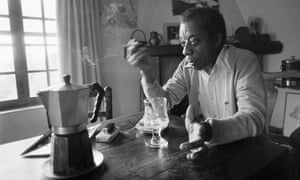
Deliciously clear language … James Baldwin at home in Saint-Paul-de-Vence, southern France, in 1979. Photograph: Ralph 

“‘Quite like old times,’ the room says. ‘Yes? No?’
“There are two beds, a big one for madame and a smaller one on the opposite side for monsieur. The wash-basin is shut off by a curtain. It is a large room, the smell of cheap hotels faint, almost imperceptible. The street outside is narrow, cobble-stoned, going sharply uphill and ending in a flight of steps. What they call an impasse.”
I am not often a fan of overt scene-setting as a first paragraph, but here Rhys uses it to slyly convey a sense of ruin and disappointment. That last sentence always makes me smile darkly.
“Thirty years ago, Marseilles lay burning in the sun, one day.
“A blazing sun upon a fierce August day was no greater rarity in southern France then, than at any other time, before or since. Every thing in Marseilles, and about Marseilles, had stared at the fervid sky, and been stared at in return, until a staring habit had become universal there. Strangers were stared out of countenance by staring white houses, staring white walls, staring white streets, staring tracts of arid road, staring hills from which verdure was burnt away. The only things to be seen not fixedly staring and glaring were the vines drooping under their loads of grapes. These did occasionally wink a little, as the hot air barely moved their faint leaves.”
I’m sure I don’t need to convince you to read Dickens, but has there ever been a description of a place more bizarre and clear at once? He manages to be hilarious and lucid, loose and exacting – all these things in a simple description of a place. Not a cliche in sight.

“Nobody died that year. Nobody prospered. There were no births or marriages. Seventeen reverent satires were written – disrupting a cliche and, presumably, creating a genre. There was a dream, of course, but many of the most important things, I find, are the ones learned in your sleep. Speech, tennis, music, skiing, manners, love – you try them waking and perhaps balk at the jump, and then you’re over.”
This one breaks a lot of rules you would be taught in a creative writing class, but it has enough mystery and momentum that I don’t care. Every time I read something by Adler, I go immediately into that trance that is the closest thing to being another person I can imagine.
“We are on our way to Budapest. Bastard and Chipo and Godknows and Sbho and Stina and me. We are going even though we are not allowed to cross Mizilikazi Road, even though Bastard is supposed to be watching his sister Fraction, even though Mother would kill me dead if she found out; we are just going.”
All I thought when I read this was, I’m going too.


“You don’t know about me, without you have read a book by the name of The Adventures of Tom Sawyer, but that ain’t no matter. That book was made by Mr Mark Twain, and he told the truth, mainly. There was things he stretched, but mainly he told the truth. That is nothing.”
It’s all about the voice and playfulness and warmth here. It’s another example of how Twain could transfer the sound of a story well-told to the page, giving it nuance and depth without losing any colloquial heat.

  • The Answers by Catherine Lacey is published by Granta.


Wednesday, September 18, 2013

NoViolet Bulawayo / We Need New Names / Review

NoViolet Bulawayo

We Need New Names by NoViolet Bulawayo – review

NoViolet Bulawayo has extended her Caine prize-winning short story about a Zimbabwean girl coming of age in the US into a novel. But has the prize created an African aesthetic of suffering?
Snowflakes
Bulawayo on snowflakes … 'So big they shroud everything but you don't even hear them coming'. Photograph: Ross M Horowitz/Getty Images
I was at a Caine prize seminar a few years back and the discussion was on the state of the new fiction coming out of Africa. One of the panellists, in passing, accused the new writers of "performing Africa" for the world. To perform Africa, the distinguished panellist explained, is to inundate one's writing with images and symbols and allusions that evoke, to borrow a phrase from Aristotle, pity and fear, but not in a real tragic sense, more in a CNN, western-media-coverage-of-Africa, poverty-porn sense. We are talking child soldiers, genocide, child prostitution, female genital mutilation, political violence, police brutality, dictatorships, predatory preachers, dead bodies on the roadside. The result, for the reader, isn't always catharsis, as Aristotle suggested, but its direct opposite: a sort of creeping horror that leads to a desensitisation to the reality being represented.
  1. We Need New Names
  2. by NoViolet Bulawayo

The question to be asked then is whether this new writing is a fair representation of the existential realities of Africa, or if it is just a "Caine-prize aesthetic" that has emerged in a vacuum created by the judges and the publishers and agents over the years, and which has begun to perpetuate itself. Writing is an incestuous business: style feeds on style, especially if that particular style has proven itself capable of winning prizes and book deals and celebrity.
NoViolet Bulawayo's new novel, We Need New Names, is an extension of her Caine prize-winning short story, "Hitting Budapest", and yes, it has fraudulent preachers and is partly set in a soul-crushing ghetto called Paradise, somewhere in Zimbabwe. Yes, there is a dead body hanging from a tree; there is Aids – the narrator's father is dying of it; there is political violence (pro-Mugabe partisans attacking white folk and expelling them from their homes and chanting "Africa for Africans!"); there are street children – from the ranks of whom the narrator, Darling, finally emerges and escapes to America and a better life. Did I mention that one of the children, 10- or 12-year-old Chipo, is pregnant after being raped by her grandfather?
There is a palpable anxiety to cover every "African" topic; almost as if the writer had a checklist made from the morning's news on Africa. There's even a rather inexplicable chapter on how the Chinese are taking over Africa, and how, as one of the street kids puts it, the Chinese "are not even our friends". Such moments are made possible by its rather free-ranging, episodic plot structure.
And this is all in the first hundred pages, before the narrator is whisked away to America – to Detroit, Michigan, or as the children call it, "Destroyedmichygen".
What stops the book collapsing under its own thematic weight is a certain linguistic verve, and the sense that this is a really talented and ambitious author who might at any moment surprise the reader by a plot twist, some technical bravura, or a thematic transcendence that will take the story beyond its gratuitously dark concerns to another, more meaningful level. For really, what is the purpose of suffering in literature, especially in a coming-of-age novel, but to serve as midwife to spiritual and psychological growth?
In America, the narrator does grow when she finds out that, despite the material wealth, all she has dreamed of won't necessarily come true. Her aunt Fostalina's marriage falls apart even as she struggles every day to look like the rake-thin women she sees on TV. "When Aunt Fostalina finishes walking she asks, 'You think I am losing weight? ... Who is fatter, me or your mother?' ... Then she lifts those metals and says, 'I will be going on a fruit diet.'" The failure of the marriage becomes a metaphor for the illusoriness of the American dream.
Bulawayo's keen powers of observation and social commentary, and her refreshing sense of humour, come through best in moments when she seems to have forgotten her checklist and goes unscripted: where, for example, we find Darling and her friends Krystal, the African American, and Marina, the Nigerian, watching porn in the basement, and they turn off the volume so they can make all the groaning and moaning noises themselves. Or when, on describing snow falling outside the window, she writes: "How does something so big it shrouds everything come down just like that and you don't even hear it coming?"
These moments show what Bulawayo can do when she is enjoying herself – when she doesn't feel she needs to be both a player and a commentator at the same time. The world is a dark and ugly place, a lot of that ugliness and injustice is present in Africa, but we don't turn to literature to confirm that. The news is enough. What we turn to literature for is its ability to transport us beyond the headlines.
• Helon Habila's Oil on Water is published by Penguin.

NoViolet Bulawayo

Coming Of Age Amid 

Upheaval In 

'We Need New Names'

We Need New Names
We Need New Names
Hardcover, 296 pages 


In 2011, NoViolet Bulawayo was awarded the Caine Prize for African Writing for her short story "Hitting Budapest." In this raw, fierce tale of a gang of near-feral children on the hunt for guavas, the young writer delivered one of the most powerful works of fiction to come out of Zimbabwe in recent years — a clear-eyed indictment of a government whose policies, in the decades since independence, have left many of its citizens destitute.
Two years later in her debut novel, We Need New Names, Bulawayo continues the story of her feisty young protagonist, Darling, who lives with her best friends Bastard, Chipo, Godknows, Sbho and Stina in a shantytown named Paradise. Although the early chapters are told in a child's voice, there is no whimsy to Bulawayo's writing. Early in the book the children come across a dead woman, a suicide whose body hangs from a tree. Initially frightened, they start to run away. Then Bastard points out that the woman's shoes are almost new; they could sell them and buy themselves fresh bread. The children go back to wrest the shoes from the hanging corpse. These are serious times, and while there is play and laughter, too, the harsh realities of empty stomachs, fractured families and social decay are never far away.
Darling's father returns from South Africa with "the sickness" (no one can bring themselves to say AIDS out loud); her mother has gone to the border to trade; and her grandmother, convinced she can find a spiritual cure for her son's disease, is in thrall to a religious charlatan who demands payment in U.S. dollars. These are days of dynamic and catastrophic change. The national currency is defunct, the family's savings now useless; U.S. dollars may as well be diamonds for all the chance the citizens of Paradise have of obtaining them.
NoViolet Bulawayo is a "Born Free," a term that describes citizens born after 1980, the year of Zimbabwe's independence. Even as she applies her critical eye to the social realities of her homeland, Bulawayo gives her protagonist a voice imbued with dignity and pride. A visit from well-meaning aid workers affords a rare chance to witness the dehumanizing impact of charity: "The man starts taking pictures with his big camera. ... They don't care that we are embarrassed by our dirt and torn clothing, that we would prefer they didn't do it; they just take the pictures anyway, take and take. We don't complain because we know that after the picture-taking comes the giving of gifts."
In Bulawayo's steady hands, what could be a tale of woe becomes a story of resilience. Even as the government sends in bulldozers to "clear" the shantytowns, the adults of Paradise go out to vote. Although she devotes only a few pages to the reprisals that in reality followed these elections — punishment for areas that voted the "wrong" way — her spare description of the aftermath is powerfully affecting. Bulawayo shows the desperation of men unable to provide for their families, denied the change they have voted for. Drying the tears they've shed in private, these "Solid Jericho walls of men" try to hide their pain:
And when they returned ... they stuck hands deep inside torn pockets until they felt their dry thighs, kicked little stones out of the way, and erected themselves like walls again, but then the women, who knew all the ways of weeping and all there was to know about falling apart, would not be deceived; they gently rose from the hearths, beat dust off their skirts, and planted themselves like rocks in front of their men and children and shacks, and only then did all appear almost tolerable.
Darling's dreams finally come true, and her aunt Fostalina sends for her to come to America, the "big baboon of the world." If there is a fault in the book, it's the abruptness of this transition. After a detailed telling of Darling's childhood, the reader is suddenly thrust into a new reality and is momentarily dislocated. These later chapters lack the visceral immediacy of Darling's earlier life. But perhaps this is how it would feel for our young protagonist. In this new land there is food aplenty, and now, spared the struggle of daily survival, Darling must reinvent herself as an American teenager — making new friends, bagging groceries in a supermarket, discovering the Internet and facing the realization that not all of her dreams will come true.
In the end, Darling realizes that, although it is now all that she has, America can never be home. For Darling, a girl now on the verge of womanhood, an illegal immigrant, America is a land to be endured.
Toward the end of the book, Darling has a strained conversation with her friend Chipo. The childhood gang has scattered — to America, to South Africa, to Dubai. Chipo alone has stayed home. "You think watching on the BBC means you know what is going on? No, you don't my friend," says Chipo, brushing off Darling's halfhearted attempt to decry the fate of their country. The house was burning, Chipo continues, and Darling and her kind have left it to others to put out the flames.
Ellah Allfrey is deputy editor of Granta magazine. She lives in London.