Showing posts with label Dickens. Show all posts

Saturday, April 4, 2026

What history’s love letters reveal


Alamy (Credit: Alamy)Alamy


What history’s love letters reveal

Fiona Macdonald
November 2016


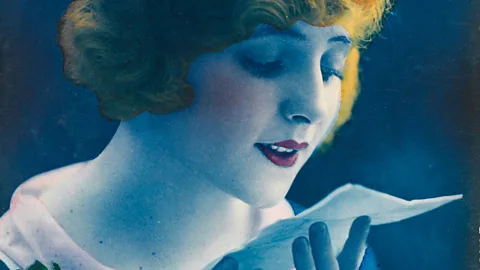
Charlotte Brontë’s infatuated notes, Henry VIII’s lovesick doodles and the anguished scribbles of Nelson’s mistress: Fiona Macdonald picks eight love letters that offer a different slant on history.

Wednesday, April 1, 2026

Dickens’s critique of reason without imagination


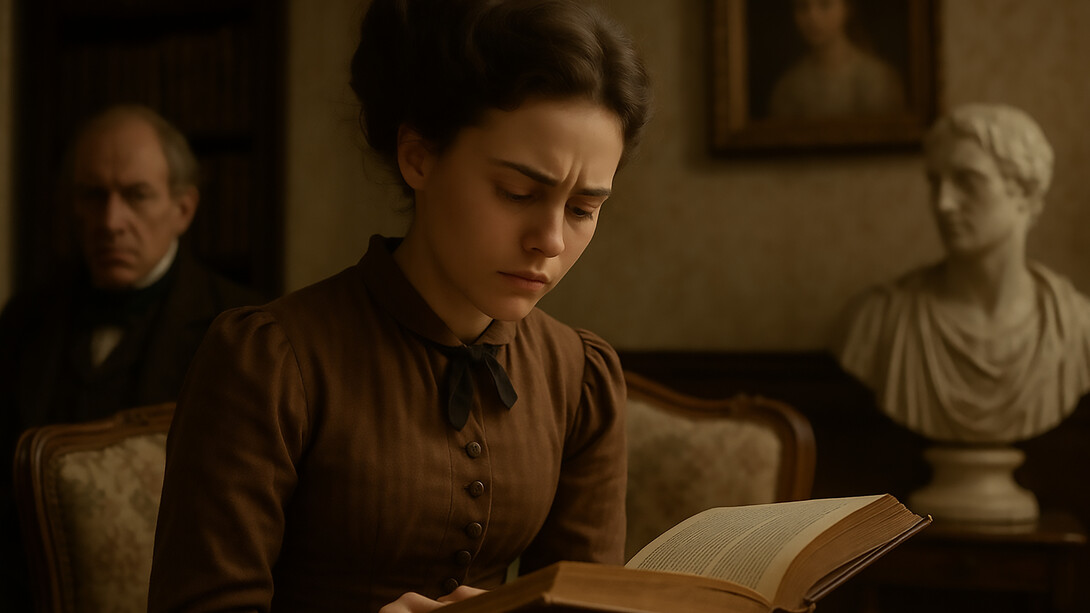
A young woman studies in a Victorian room, caught between the weight of facts and the quiet stirrings of imagination


Dickens’s critique of reason without imagination

Hard Times exposes the emotional, moral, and social costs of a world built on rigid rationality

10 FEBRUARY 2026, 


The Age of Enlightenment emphasised reason over emotion, with the unexplained relegated to the realms of superstition and ignorance. Gothic writers of the late eighteenth century and Romantic poets of the early nineteenth century sought to reintroduce a sense of wonder and awe of the natural world. In Hard Times, Dickens looks at how facts stifle and corrupt individual expression of emotion and empathy. He also exposes the delusion and hypocrisy the characters labour under regarding their own lives.

Wednesday, March 25, 2026

How guest Hans Christian Andersen destroyed his friendship with Dickens


Hans Christian Andersen


How guest Hans Christian Andersen destroyed his friendship with Dickens

This article is more than 8 years old

The Danish writer’s behaviour on an extended visit killed the authors’ friendship, letters show


Hans Christian Andersen / Bedtime stories


Vanessa Thorpe

Sunday 10 September 2017


It was not, to say the least, a successful visit. The burgeoning friendship between a pair of literary stars, Charles Dickens and Hans Christian Andersen, had looked set to last. But it could not survive an overlong stay by the Danish author at the British novelist’s family home in Kent. Just how bad things became, on one side at least, has been revealed by a surprisingly frank letter sold at auction on Saturday.

Saturday, October 25, 2025

Charles Dickens’s Christmas Carol / Tells us the necessity of Universal Health Care


Charles Dickens was an famous author from Victorian London

Charles Dickens’s Christmas Carol

Tells us the necessity of Universal Health Care

24 DECEMBER 2022, 

The achievement of Universal Coverage in Health Care represents the best of humanity. Thanks to its creation, the solidarity of a few countries, replaced the dependence on charity suffered by a large part of the population to access medical and social services. Access to health care is a human right, not some sort of philanthropy.

Monday, July 14, 2025

Dickens & Prince by Nick Hornby review – a tale of two greats


Charles Dickens and Prince


Dickens & Prince by Nick Hornby review – a tale of two greats

This article is more than 2 years old

Hornby draws parallels between the Victorian novelist and the musician in this heartfelt homage to these brilliant, driven individuals


Peter Conrad
Mon 28 Nov 2022 


At the start of this heartfelt exercise in hero worship, Nick Hornby gathers together a throng of what he calls “My People” and ushers them into a VIP room in his head. They make up an eclectic pantheon, with Arsène Wenger jostling Joan Didion and the sitcom scriptwriters Galton and Simpson next to the gloomy painter Edward Hopper. Dickens and Prince are “two among many” in the gilded crowd, but Hornby singles them out for special homage. Dickens rescued him from the stupor of adolescence by showing that books were an escape route for the mind; Prince, with his keening falsetto, the prestidigitation of his guitar-playing and his hyperkinetic dance moves, delivered a physical excitement that is music’s special prerogative. Dickens made Hornby laugh, while Prince thrilled him by seeming to offer “hours of erotic ecstasy”.

Saturday, July 12, 2025

Who is better, Dickens or Shakespeare? We asked nine prominent writers


Who is better, Dickens or Shakespeare? We asked nine prominent writers

This article is more than 4 months old

Elif Shafak, Sarah Perry, Jeffrey Boakye and others tell us which of the two totemic literary figures they favour

Killian Fox

Sunday 2 March 2025


Emma Smith. Circular Panelist. DO NOT USE FOR ANY OTHER PURPOSE!

Emma Smith

Professor of Shakespeare Studies at Hertford College Oxford and author of This Is Shakespeare

It’s a brilliantly preposterous thesis that Peter sets out but I disagree. What’s great about Dickens is the maximalist, chock-a-block, teeming sense you get of that world. His work is like an extraordinary baroque cathedral that you could spend your life looking at, absorbed in the detail. By contrast, Shakespeare is more like a black box. There’s a huge amount of potential to do these plays in very different worlds with very different outcomes. So what’s great about Dickens is it’s all there. But what’s completely indispensable about Shakespeare is it’s waiting for us to combine with it to make something new. I don’t think rereading Dickens makes a new Dickens, but rereading or reperforming Shakespeare does make a new Shakespeare.

‘He contains the whole of literature’: is Dickens better than Shakespeare?


‘He contains the whole of literature’: is Dickens better than Shakespeare?

This article is more than 4 months old

After rereading the entire works of the great Victorian novelist during the pandemic, Peter Conrad became convinced – whisper it – that Dickens is an even greater writer than that other British literary giant, the Bard


Peter Conrad
Sunday 2 March 2025

Early in 2020, as society shut down, I retreated behind closed doors with Charles Dickens, who kept me company and cheered me up throughout the pandemic. Carried along by narratives that Dickens thought of as speedy locomotives and warmed by a combustible imagination that he compared to an industrial forge, I soon felt no need for tame timed circuits of the local park, and I even stopped fretting about the imminent end of the world. But although Dickens saved from me one disease, he infected me with another: escaping Covid-19, I contracted an incurable monomania instead.

Wednesday, February 7, 2024

Sister-in-law’s letters provide insights into Charles Dickens’ life and legacy


Sister-in-law’s letters provide insights into Charles Dickens’ life and legacy

Parts of an extensive collection of letters from Dickens’ relative and housekeeper Georgina Hogarth reveal her role in the making of a literary giant

Kate McCusker

Wednesday 7 February 2024

A collection of letters from one of Charles Dickens’ most valued confidantes will go on display in London for the first time this week to mark 212 years since the literary giant’s birth.

Thursday, December 21, 2023

Zadie Smith / On Killing Charles Dickens


Charles Dickens

On Killing Charles Dickens

I did everything I could to avoid writing my historical novel. When I finally started “The Fraud,” one principle was clear: no Dickens.

Friday, December 2, 2022

Book Review 015 / David Copperfield by Charles Dickens


David Copperfield

by Charles Dickens

 1850


The novel celebrates humanity while exposing Victorian society's ills


Esther Lombardi
Updated on January 14, 2020

"David Copperfield" is probably the most autobiographical novel by Charles Dickens. He uses many incidents of his childhood and early life to create a considerable fictional achievement.

"David Copperfield" also stands as a midpoint in Dickens' oeuvre and is at least somewhat indicative of Dickens' work. This novel contains a complicated plot structure, a concentration on the moral and social worlds, and some of Dickens' most wonderful comic creations. "David Copperfield" is a broad canvas on which the great master of Victorian fiction uses his entire palette. Unlike many of his other novels, however, "David Copperfield" is written from the point of view of its titular character, looking back on the ups and downs of his long life.