Showing posts with label Quentin Blake. Show all posts

Saturday, May 30, 2026

‘I am very serious about being silly’: children’s illustrators on the art of storytelling


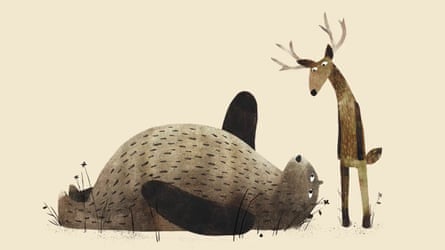
I Want My Hat Back by Jon Klassen. Illustration: Walker Publishers / Jon Klassen


‘I am very serious about being silly’: children’s illustrators on the art of storytelling

From The Twits to The Gruffalo and an angry bear in search of his hat… Quentin Blake, Cressida Cowell, Axel Sheffler, Lauren Child and more reveal how they bring children’s books to life


Sat 30 May 2026


Spread across a sprawling 17th-century industrial complex in London’s Clerkenwell, the Quentin Blake Centre for Illustration, which opens next month, is being billed as the largest institution of its kind anywhere in the world: a permanent national home for an art form that shapes everything from children’s books and political cartoons to animation, fashion, advertising and digital culture. Part museum, part gallery and part creative laboratory, the centre represents an extraordinary attempt to drag illustration out of the margins and finally place it at the heart of British cultural life.

Friday, April 17, 2026

Michael Rosen's Sad Book


Illustration by Quentin Blake

Michael Rosen's Sad Book

Wednesday 9 November 2016
During a recent visit to The National Museum of Wales we got to view the Quentin Blake Exhibition. This has been running from July 16th and goes through until November 20th and celebrates the wonderful work of the popular author and illustrator. The exhibition is free, as in entry to the museum itself, and is located upstairs. We enjoyed looking at the many works of Quentin Blake, discovering his various work tools, film footage of him working and exploring the artwork. In a large, open and bright area of the room was a long table with books illustrated by Quentin with paper and colouring pencils for visitors to try their hand at their own illustrations.

Monday, March 30, 2026

Quentin Blake reveals he has not received a penny in royalties from Steven Spielberg blockbuster XLISTO


Quentin Blake reveals he has not received a penny in royalties from Steven Spielberg blockbuster


BFG
The BFG, as played by Mark Rylance in last year's animated blockbuster CREDIT: DISNEY FILM


With his wispy grey hair, shaggy sideburns, big nose and brown waistcoat, the image of Roald Dahl’s Big Friendly Giant is as instantly recognisable to millions as his giant peach,  child-catching Twits and a certain top-hatted confectionery magnate  

Thursday, July 17, 2025

Roald Dahl threatened publisher with ‘enormous crocodile’ if they changed his words


From left: Roald Dahl, Francis Bacon and Barry Joule during a weekend in 1982 at Dahl's home in Great Missenden, Buckinghamshire.
Photograph: Barry Joule

Roald Dahl threatened publisher with ‘enormous crocodile’ if they changed his words

This article is more than 2 years old

Conversation with Francis Bacon emerges amid the row over updating controversial language in the children’s author’s books


Dalya Alberge
Sat 25 Feb 2023 


One of Roald Dahl’s best-known characters was the Enormous Crocodile, “a horrid greedy grumptious brute” who “wants to eat something juicy and delicious”.

Friday, April 12, 2024

New artworks set to brighten up prison visiting halls


New artworks set to brighten up prison visiting halls


Friday 5th April 2024


In an exciting new project, Quentin has produced a series of 5 illustrations about family relationships, for display in prison visiting halls across England and Wales.  

The rooms, where children meet their incarcerated parents, were perceived by HM Prisons service workers as stressful and unwelcoming for young visitors.  Appoximately 200,000 children in England and Wales have a parent currently in custody.

Monday, October 30, 2023

Quentin Blake / ‘Spend time with children? Good God, no'


‘I couldn’t tell you where these ideas come from’ … Quentin Blake.
Photograph: David Levene
I

Quentin Blake: ‘Spend time with children? Good God, no'


The writer and illustrator talks about bringing some of the most cherished children’s characters to life, his work with Roald Dahl and Michael Rosen – and the tiny weed that inspired his latest book

Fiona Sturges
Saturday 29 February 2020

The writer and illustrator Quentin Blake lives in west London in a pretty 19th-century square that has its own private gardens. Every morning, the 87-year-old takes the two-minute stroll from his flat to a nearby basement office where his assistants help to keep the Blake empire ticking over. Last year, while walking to the office, he noticed a tiny weed growing in a crack between the pavement and the bottom of the garden railings. “Each day I came past it had got a little bit bigger,” he says. “I could show you exactly where it was. In the end, it had these little white flowers. It probably only lasted three weeks, but I thought to myself: ‘Ah.’”

Portraits by Quientin Blake


PORTRAITS
by Quentin Blake


Monday, December 4, 2017

Darkness in literature / Sad Book by Michael Rosen


Darkness in literature

Sad Book by Michael Rosen


Michael Rosen's Sad Book, written after the death of his son, deals with spiritual darkness - but its devastating conclusion is also curiously uplifting
Sam Jordison
Wednesday 12 December 2012 12.35 GMT


I
was having dinner with friends when someone first passed me Michael Rosen's Sad Book. "But don't look at it now if you don't want to cry," she said.

I thought she was joking. Besides, I'm not a crier. And I loved the cover. The man on it looked distraught all right, but there was a funny little scrawny Quentin Blake dog and an upturned bin. It seemed to me that there would be just as many light moments as dark ones. So I started reading.
Within moments, as I remember it now, the chatter around the table, the warming laughter and chinking glasses, disappeared. Sad Book is instantly overwhelming.

It starts with a very funny Quentin Blake picture of Michael Rosen, pulling a very funny grin, on his very funny face. Of course, you have to smile too, until you read the words:
"This is me being sad.
Maybe you think I'm being happy in this picture.
Really, I'm being sad but pretending I'm happy.
I'm doing that because I think people won't
like me if I'm being sad."
Ouch. It doesn't get any easier when you learn what makes Rosen most sad. His son Eddie died when he was 18. "I loved him very, very much," Rosen says, "but he died anyway."
In the rest of the book Rosen explains how he copes – or doesn't cope – when he is in that "deep dark" place and feels sad. It's a deeply personal insight; but also universal. We feel sad with and for Rosen, and by extension with and for Quentin Blake, who has given the book such heartrending illustrations.


Rosen and Blake feeling sad? To know that it's these two in such misery adds special poignance. These two are bringers of joy. And not just any joy: they make children laugh. It's as unsettling as it would be to see Animalmake a cameo in The Seventh Seal – or death stalking the Muppets. And yet, it's true. Here they are expressing terrible pain. It's heartbreaking.
I didn't cry though; not until I got to the last page. I was thinking I must have an especially tough hide, when I turned to that final image, and, damn it, found myself snatching my breath, turning away from the dinner table, and – through a film of tears – looking round the room for something to distract my attention and stop me from tipping all the way over into helpless blubbing.
It is the most devastating conclusion. Harder than Sophie's ChoiceOf Mice And MenBambi or Watership Down. To say too much would spoil the surprise. No, wrong word: the shock. Suffice to say that it is an image of shattering despair. But also – and this is the real beauty of this precious book – curiously uplifting. Sad Book doesn't hide the darkness. It doesn't try to pretend that suffering and sadness are easy to bear. But it does at least show that it's okay to feel bad sometimes. We all do it – and so none of us is ever entirely alone. There's always some light, even if it's a single, lonely candle. Sad Book is a book I'd recommend to anyone. Or almost anyone. I've bought a copy for my daughter. But I don't know if I can bear to show it to her yet.


Wednesday, September 13, 2017

Quentin Blake / ‘A new Roald Dahl character to draw, nearly 40 years after my first’


 From Billy and the Minpins.
Quentin Blake 2017


Quentin Blake: ‘A new Roald Dahl character to draw, nearly 40 years after my first’


The celebrated illustrator reveals how he came to create Billy, the Minpins and the other characters in a new version of one of Dahl’s last books
Quentin Blake

The last of Roald’s books that were illustrated in his lifetime were Esio Trot and The Minpins. I worked on the first, while the other was commissioned from Patrick Benson. Benson is an artist I know and admire; his book was a large format and in colour, and he made something wonderful of it, with dramatic and detailed views of fire and smoke and of forest and clouds.

Early in 2015, 25 years later, my publisher, Penguin Random House, approached me about a possible reillustration of the book. This was not because of any dissatisfaction with the existing work, but because Penguin had, over time, become aware that there was no way that the existing version could appear except in the original format; the scale and detail of the pictures wouldn’t allow it. The publishers realised that they needed a book that could sit alongside the other Dahl titles, go into paperback and be stuffed into pockets. Would I take this on?

I was reassured to know that the original version was to be kept in print. Although my text was to be identical, it was going to be called Billy and the Minpins, which was the alternative title that appears in Roald’s handwriting on the original manuscript. The new book, in small format, would have about 120 pages; the words would run to nearly 60 pages, so that virtually half the space was available for illustration.

‘The Minpins are described as having eccentric headwear – another rewarding opportunity.’
Quentin Blake 2017


I have said “the new book”, and to me it did seem very like a new book. Forty years after I first read the manuscript of The Enormous Crocodile, I was setting about a story that, excitingly, I felt I didn’t really know. Now words and pictures ran very closely together, hand in hand. The text was divided into chapters; I was allowed to invent the titles but, even more interestingly, it meant I had to cut up the printed text (in the old-fashioned way) and make a complete layout of the book: Billy’s increasing panic, for instance, as he is pursued by the frightening Gruncher – the sequence of expressions on his face and the quantity of smoke is followed over several pages.

Saturday, July 12, 2014

How we made The Boy in the Dress / Walliams and Quentin Blake

David Walliams and Quentin Blake: how we made The Boy in the Dress

David Walliams, writer: 'I didn't want to start using the word transvestite in a book for eight-year-olds'
By Nancy Groves
The Guardian, Monday 7 july 2014


A Quentin Blake illustration for The Boy in the DressView larger picture
One of Quentin Blake's illustrations for The Boy in the Dress. © Quentin Blake 2008. Click to enlarge

David Walliams, writer

I was at school in Surrey when I first wore a dress. I was cast in a production of [the children's opera] All the King's Men – as Queen Henrietta – and I wore a wedding dress that my mum had found for me and a wig from the Girl Guides jumble sale. I was 11 or 12 and I remember getting lots of laughs. It was the first time I felt any kind of power.
    The Boy in the Dress isn't autobiographical, but it does feel very personal. I didn't want to start using terms like transvestite in a book for eight- to 12-year-olds. I just wanted to tell the story of this one boy, Dennis, and the tension between him liking manly things like playing football and something quite different like reading Vogue. When you're writing for children, you have to remember what it was like to be a child and you do tend to put a lot of yourself into your lead character. Except the football – I was never any good at that.
    When an idea is floating around in your head, you think it's perfect and finished. Of course, the work really comes when you start writing it. Me and Matt [Lucas] were making the American series of Little Britain at the time, so we were travelling a lot. I wrote on the plane – all those trips to Los Angeles and back with very little distraction. It probably went through at least 20 drafts.
    I always wanted it to have illustrations, but getting Quentin Blake was a pipe dream. I was asked by my publisher who I'd like and I said his name, thinking: he'll never do it. Why would Quentin get involved with me, having worked with legends like Roald Dahl?
    We met for the first time in the Wolsey, over breakfast, and he showed me the picture he'd done of Dennis for the front cover. He's looking at me asking: "What do you think?" It was perfect, of course, but who says no to Quentin Blake? It would be like telling Paul McCartney one of his songs was no good.
    A number of celebrities had been giving writing a bad name with books they hadn't actually written. I didn't want people to think I was just another Katie Price. But Quentin choosing this book gave me real confidence – I felt like a writer. When I first saw a copy, my life felt complete. In sketches, you don't really get to flesh out the emotional lives of your characters. You might glimpse them at times – like with Lou and Andy in Little Britain– but it's all over in two minutes. You're not spending 200 pages with them.
    The book didn't sell brilliantly at first. Maybe people were scared that I had come from doing a very adult comedy show or perhaps parents were worried about the theme. It's now sold more than half a million copies. On World Book Day, boys go into school as Dennis in a dress and football boots. When I think back to the 1980s, that would never have happened.
    The message is: it's OK to be different. I also wanted to make a point about hypocrisy. As a child you're given all these rules – told you should never do this or that – and when you grow up you realise it's the adults breaking them. So it was important that Dennis's headmaster, Mr Hawtrey (I named all the characters after people in Carry On films), turns out to cross-dress himself. We're now casting the TV adaptation, but I'm not going to play him. Instead I'm thinking: which distinguished British actor would I most like to see wearing a dress?
    The Boy in the DressThe Boy in the Dress. Photograph: © Quentin Blake 2008

    Quentin Blake, illustrator

    I'm offered a lot of books that I don't end up illustrating – slightly fewer perhaps nowadays, as people know the writers I particularly like working with: Roald Dahl when I could, Michael Rosen, John Yeoman and Russell Hoban, till he died last year. I tend to go back to the people I know.
    But I wanted to do David's book as soon as I read it. It wasn't what I expected. It was funny; it was surprisingly (now I know David, not so surprisingly) sensitive; and it took place in a environment that didn't seem so terribly different from the one I'd grown up in more than 60 years ago at Sidcup Grammar School.
    I also liked the prospect of doing black-and-white drawings in a book of text. You don't get that much any more, though it's how Roald and I started out. I do enjoy working in colour but there's something basic about having just a pen and ink and a little bit of grey watercolour to tell a story.
    Not everyone understands this, but as an illustrator you collaborate with the words first – it's only later, if you need to, that you talk to the author. I read English literature at Cambridge; I've never had any proper art training except lots of life classes. People tell me my style is very recognisable but it's a question of adapting that style to the mood and atmosphere of the book.
    I needed to draw Dennis straight away. I often say you get to know people by drawing them, but Dennis I knew immediately. In some strange way, I related The Boy in the Dress to my own school days and to all the young people who turn up to my exhibitions in their school uniforms. It's not about being gay – I think Dennis just wants to know what it's like to be a girl. In fact, he's terribly taken with the character of Lisa – at one point, he even says, "I'm going to marry her."
    David is very aware of Dahl. He's even been compared to him. In my mind, The Boy in a Dress is nearest in tone to Danny the Champion of the World. It has the same relationship to reality – I was almost drawing from life. While I was working, these pictures of schoolboys and girls just kept on coming, which is why I asked for so many extra pages at the front and back.
    • Quentin Blake: Inside Stories is at House of Illustration, London N1, until 2 November. Details: houseofillustration.org.uk