My top 10
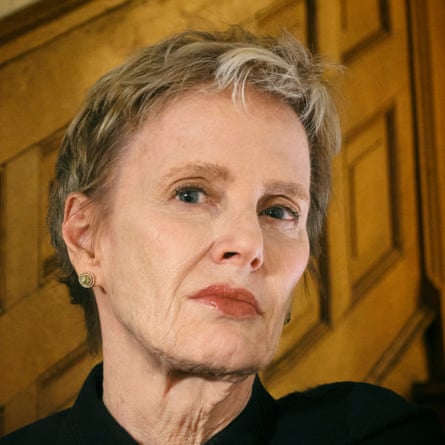
Siri Hustvedt
Author
1
2
3
4
5
6
7The Scarlet Letter
8
9
10Waiting for the Barbarians


 |
| Siri Hustvedt |
What’s it like to lose your partner of more than 40 years? The novelist and essayist reflects on going from ‘we’ to ‘I’
 |
| Siri Hustvedt Photo by Chris Buck |
First there was the double tragedy that tore the family apart – then came a deadly diagnosis. The writer reflects on life after the death of her novelist husband
Iam alive. My husband, Paul Auster, is dead. He died on 30 April 2024, at 6.58pm here in the Brooklyn house where I am now writing these words. He was diagnosed with non-small cell lung cancer in January 2023. But before that, in early November 2022, Paul had a CT scan in the emergency room at Mount Sinai West hospital. The radiologist spotted a mass in his right lung and noted it might be cancer.
 |
| Siri Hustvedt |
The American writer is 120 pages into a memoir about her relationship with the New York Trilogy author, entitled Ghost Stories
Lucy Knight
Thursday 17 October 2024
Siri Hustvedt has revealed that she is working on a memoir about her late husband, Paul Auster, author of the acclaimed New York Trilogy.

This article is more than 24 years old
New York: Big, bad and back to its ballsy best
 |
| Siri Hustvedt: ‘I loved Ann Petry’s biography, Harriet Tubman: Conductor on the Underground Railroad.’ |
Siri Hustvedt: ‘I responded viscerally to De Beauvoir’s The Second Sex’
The US author on becoming a feminist, growing into Gertrude Stein, and the comfort of folk tales
My earliest reading memory
At six I became fascinated with the Lonely Doll books by Dare Wright that I found in the public library of my small town, Northfield, Minnesota. They used photographs, not drawings, as illustrations; they gave me an uncanny feeling of secrets lurking behind the words and images. It is a feeling I have never forgotten.
My favourite book growing up
I loved Ann Petry’s biography, Harriet Tubman: Conductor on the Underground Railroad. I found it in my school library in 1965, 10 years after it was first published. I was 10 years old and intensely aware of the civil rights movement, despite the fact that I lived in an all-white town and had seen black people only on forays to Minneapolis every Christmas. I was passionately attached to the story of this extraordinary, heroic woman.
The book that changed me as a teenager
When I was 14 or 15 I read Simone de Beauvoir’s The Second Sex. Despite my lack of philosophical sophistication, I responded viscerally to the book. Rereading it later, I wonder exactly what I understood at the time. It is not an easy book. I suspect that, despite my struggles with the text, I gleaned its essential message – that women were treated as outsiders to history as the eternal feminine, had always been other to man, and that these injustices ran deep. I became a feminist.
The writer who changed my mind
I was in my early 30s when I first read the French philosopher Maurice Merleau-Ponty, whose book Phenomenology of Perception reordered my thinking about the mind/body problem. His work changed my “mind” by bringing it into my body. He skewers the mind-body substance dualism in the philosophy of Descartes and his heirs. The philosopher’s interest in the science of the moment and its flawed assumptions, as well as his use of neurological case studies to illustrate his thought, have remained highly influential for my own thinking.
The book that made me want to be a writer
David Copperfield by Charles Dickens. I was 13. It was the summer of 1968, and I was in Reykjavik, Iceland, where my father was studying the Icelandic sagas. Political upheaval was dimly present in my consciousness, but I lived on and in novels. The sun never set, and my disturbed circadian rhythms kept me awake. I read and read, one novel after another, but it was that book that set my nerves on fire. One night, moved to tears by a particular passage, which I no longer remember, I walked to the window and made a vow – if this is what books could do, then this is what I wanted to do. I began writing. Years later, I wrote my doctoral dissertation on Dickens. Although I sometimes tired of me and my insights while working on the thesis, I never lost a feeling of awe for the inimitable CD.
The book or author I came back to
I didn’t “get” Gertrude Stein as a teenager. I had to grow into an adult to feel the music, humour and rigour of her work.
The book I reread
I have read Emily Brontë’s Wuthering Heights five times now. I read it first at 13 during the same Icelandic summer, and it scared me witless. The older I get, the more profound and radical the book has become. I have come to view it as an insurrectionist text that razes our assumptions about borders between this and that, I and you, life and death and grinds them into dust.
The book I could never read again
I am ashamed about Gone With the Wind. I read it that same fateful Icelandic summer. I checked it out of Reykjavik public library, didn’t understand that the author was writing about the Ku Klux Klan, and I had to ask my mother what the word “rape” meant. This horrible, cheesy book advanced the disgusting “lost cause” narrative still dear to the American south and parts of the north.
The book I discovered later in life
I did not read Simone Weil’s Gravity and Grace until I was well into my 40s. I now think this was exactly the right moment for me because I was able to place the text in a broader context. At the same time, the lightning precision of Weil’s extraordinary mind would no doubt have bowled me over as a young person too.
The book I am currently reading
A wonderful recently published book, In Defence of the Human Being by Thomas Fuchs. Fuchs is a professor of philosophy and psychiatry at Heidelberg University and is a lucid, brilliant defender of a new form of humanism.
My comfort read
Fairy and folk tales – any kind from any country.
.jpg)
THE BOOKS OF MY LIFE
2021
The books of my life / Amanda Gorman / ‘I wanted my words to re-sanctify the steps of the Capitol’Mary Beard / ‘Virgil was a radical rap artist of the first century BC’
Stephen King: ‘I loved Lord of the Flies the way kids love Harry Potter’
Gabriel Byrne: ‘I’ve never played Hamlet, but in many ways I am him’
Curtis Sittenfeld / ‘Sweet Valley High is not respected – but I found the books riveting’
Elif Shafak / ‘Reading Orlando was like plunging into a cold but beautifully blue sea’
Jason Reynolds / “Reading rap lyrics made me realise that poetry could be for me”
Michael Rosen / ‘My comfort read? Great Expectations’
Siri Hustvedt / ‘I responded viscerally to De Beauvoir’s The Second Sex’
Alan Garner / ‘The Chronicles of Narnia are atrociously written’
Rose Tremain / ‘My comfort reads are MasterChef cookbooks’
Oliver Jeffers / ‘Catch-22 was the first time I had a physical reaction to a book’
Penelope Lively / ‘Beatrix Potter seemed so exotic, unlike my world of palm trees’
2022
David Baddiel / The book that changed me? John Berger’s Ways of Seeing
David Baddiel / The book that changed me? John Berger’s Ways of Seeing
Edmund White / ‘My earliest reading memory is a lady toad with a nasty temper’
David Mitchell / ‘If I need cheering up, Jamie Oliver’s recipes usually help’
Isabel Allende / ‘I have been displaced most of my life’
Barbara Kingsolver / ‘Middlemarch is about everything, for every person, at every age’
2023
Richard Ford / ‘I don’t read for comfort. Comfort I source elsewhere’
Bret Easton Ellis: ‘I connected with Quentin Tarantino’
Lauren Groff / ‘Virginia Woolf’s Flush is delightfully bananas’
Natalie Haynes / ‘I couldn’t stop reading Stephen King - even at the top of the Eiffel Tower’
Richard Armitage / ‘I used to stand on the Lord of the Rings to reach the top shelf in my wardrobe’
2024
Mieko Kawakami / “Franz Kafka es mi lectura reconfortante”
2025
Niall Williams / ‘When I first read Chekhov, I thought: “He’s not so great”’
Graham Norton / ‘The Bell Jar changed how I felt about books’

 |
| Paul Auster |
The novelist on Trump’s America and publishing the book of his life at 70
Paul Laity |
| ‘I started the book at 66, which is the year my father died. Once I passed that boundary, I began to live in a very creepy world’ … Paul Auster Photograph: Tim Knox for the Guardian |
Auster didn’t realise the boy had died instantly. “So I dragged him into the clearing. And for an hour, as we were pounded by intense rain, and attacked by lightning spears, I was holding on to the boy’s tongue so he didn’t swallow it”. Two or three other kids nearby had also been struck and were moaning; “it was like a war scene. Little by little, the boy’s face was turning blue; his eyes were half open, half shut, the whites were showing.” It took Auster a little while to absorb that, had the strike occurred just a few seconds later, it would have been him. “I’ve always been haunted by what happened, the utter randomness of it,” he says. “I think it was the most important day of my life.”A similar incident occurs in Auster’s new novel, 4321. Archie Ferguson, a 13-year-old full of promise, enthralled by The Catcher in the Rye and his first kisses, runs under a tree during a storm at summer camp. When lightning strikes, he is killed by a falling branch: “as his inert body lay on the water-soaked ground … thunder continued to crack, and from one end of the earth to the other, the gods were silent”.

