Showing posts with label Harper Lee. Show all posts

Monday, February 9, 2026

The Hidden Harper Lee


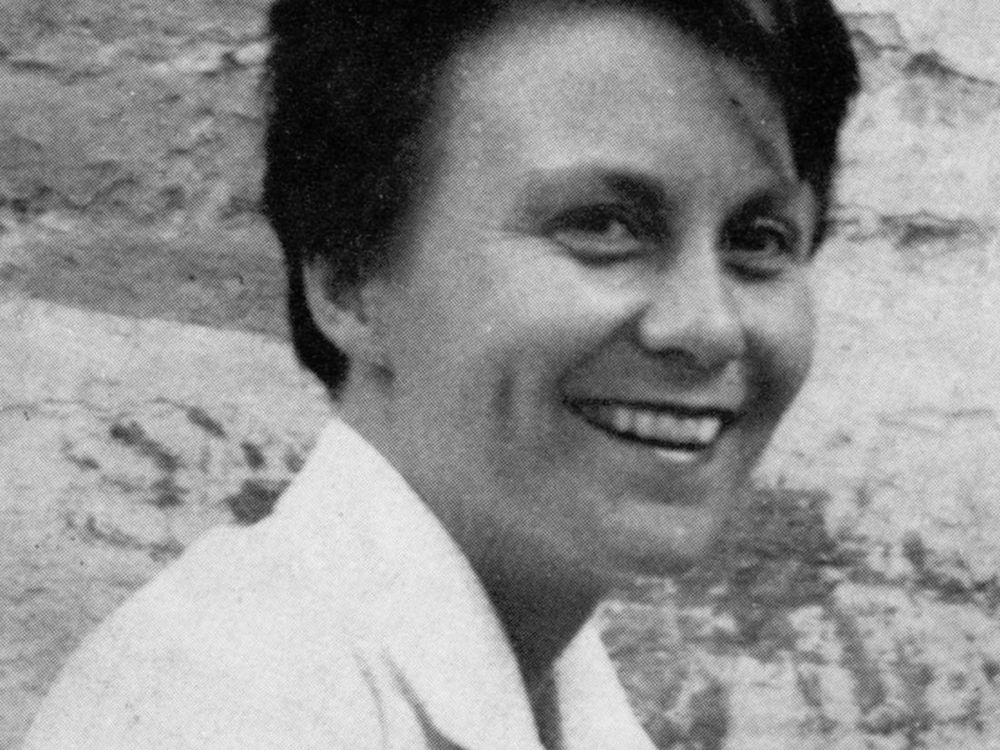
HARPER LEE. PHOTO: MICHAEL BROWN. © MICHAEL BROWN.

The Hidden Harper Lee

By 
 

At the end of the profile that Harper Lee wrote of Truman Capote when he published In Cold Blood, she speculated that “Kansans will spend the rest of their days at the tantalizing game of discovering Truman.” It was an odd claim; Capote loved publicity so much that even before he died, there was little left to discover about his time in Kansas, or anywhere else. Lee, by contrast, was so elusive that even her mysteries have mysteries: not only what she wrote, but how; not only when she stopped, but why.

Saturday, July 8, 2023

Big Bird / A biography of the novelist Harper Lee

Harper Lee

BIG BIRD

A biography of the novelist Harper Lee

"Harper Lee is the moral conscience of the film,” Bennett Miller, the director of “Capote,” explains in an interview included on the movie’s DVD. “We were looking for an actor who had composure and dignity and a maturity of spirit and a morality and a sober-mindedness.” But though Miller acknowledges that “people who have those qualities tend not to go into acting, as a rule,” he fails to note that such people do not tend to swell the ranks of creative writers, either. Any viewer of Catherine Keener’s lambent performance in “Capote” is prepared to believe that she possesses all these traits, but they would not naturally recommend her for an authentic portrayal of the plain and sometimes stubborn Harper Lee, the subject of Charles J. Shields’s new biography, “Mockingbird” (Holt; $25).

Saturday, November 19, 2022

Book Review 078 / To Kill a Mockingbird by Harper Lee


To Kill a Mockingbird by Harper Lee - review

'To Kill a Mockingbird will never stop being a good book, and it will never stop inspiring good people'

David
Thu 17 April 2013

To Kill a Mockingbird is one of those books that almost everyone reads at some point in their lives. Whether you've been forced to read it at school, or you've had a look because everyone's been urging you to, most people have their own personal experience of reading Mockingbird.

Wednesday, August 29, 2018

Michael Connelly's Top Ten List

Michael Connelly
Photo by Miriam Berkley

Michael Connelly's Top Ten List

Hide

Michael Connelly (born 1956) is an American author of detective novels and crime fiction best known for his series featuring LAPD Detective Hieronymus “Harry” Bosch and another featuring criminal defense attorney Mickey Haller. His bestselling books have been translated into dozens of languages. After working for years as crime reporter for several newspapers, including the Los Angeles Times, he published his first novel, The Black Echo, in 1992, which introduced Bosch. Other novels in the series include The Black Ice (1993),The Closers (2005), The Black Box (2012) and The Burning Room (2014). The Haller series (several of which feature Bosch) includes The Lincoln Lawyer(2005), The Brass Verdict (2008) and The Gods of Guilt (2013). Connelly has won almost every major award given to mystery writers in the United States - including the Edgar Award, Anthony Award, Macavity Award and the Nero Award – and many international awards, including the Maltese Falcon Award (Japan), .38 Caliber Award (France), Grand Prix Award (France) andPremio Bancarella Award (Italy).
1. The Great Gatsby by F. Scott Fitzgerald (1925). Perhaps the most searching fable of the American Dream ever written, this glittering novel of the Jazz Age paints an unforgettable portrait of its day — the flappers, the bootleg gin, the careless, giddy wealth. Self-made millionaire Jay Gatsby, determined to win back the heart of the girl he loved and lost, emerges as an emblem for romantic yearning, and the novel’s narrator, Nick Carroway, brilliantly illuminates the post–World War I end to American innocence.

2. The Day of the Locust by Nathanael West (1939). Hollywood is not alluring in this savage, apocalyptic novel about fame and its perversions. Painter Tod Hackett comes to Hollywood to design sets and find success. Instead, he finds a population of the physically and psychically maimed crouching at the edges of the film industry, desperately believing that only luck and time separate them from stardom. At the end, their disappointment explodes into violence and Tod sums up his despair with his single great painting: The Burning of Los Angeles.

3. To Kill a Mockingbird by Harper Lee (1960). Tomboy Scout and her brother Jem are the children of the profoundly decent widower Atticus Finch, a small-town Alabama lawyer defending a black man accused of raping a white woman. Although Tom Robinson’s trial is the centerpiece of this Pulitzer Prize–winning novel —raising profound questions of race and conscience —this is, at heart, a tale about the fears and mysteries of growing up, as the children learn about bravery, empathy, and societal expectations through a series of evocative set pieces that conjure the Depression-era South.

4. One Flew Over the Cuckoo’s Nest by Ken Kesey (1962). In Ken Kesey’s first novel, the insane asylum becomes an allegory for the larger world as the patients are roused from their lethargy by the arrival of Randall Patrick McMurphy, a genial, larger than life con man who fakes insanity to get out of a ninety-day prison sentence. By the time McMurphy learns that he is now under the cruel control of Nurse Ratched and the asylum, he has already set the wheels of rebellion in motion. Narrated by Chief Broom Bromden, an Indian who has not spoken in so long he is believed to be deaf and mute, McMurphy’s rebellion is a spectacular foretelling of what the 1960s were to bring.

5. Catch-22 by Joseph Heller (1962). After flying forty-eight missions, Yossarian, a bomber pilot in World War II, is going crazy trying to find an excuse to be grounded. But the military has a catch, Catch 22, which states, (a) a sane man must fight, unless (b) he can prove he is insane, in which case (a) must apply —for what sane person doesn’t want to avoid fighting? This novel is a congery of appallingly funny, logical, logistical, and mortal horrors. It defined the cultural moment of the 1960s, when black humor became America’s pop idiom.

6. For Whom the Bell Tolls by Ernest Hemingway (1940). Hemingway’s ambivalence toward war —its nobility and its pointlessness —are delineated in this account of Robert Jordan, an idealistic American professor who enlists with the antifascist forces in the Spanish Civil War. Jordan’s idealism is quickly tested by the bloody reality of combat and the cynical pragmatism of his comrades.

7. The Long Goodbye by Raymond Chandler (1953). Chandler’s sardonic and chivalric gumshoe Philip Marlowe winds up in jail when he refuses to betray a client to the Los Angeles police investigating the murder of a wealthy woman. Marlowe’s incorruptibility and concentration on the case are challenged even more when the obsessively independent private eye falls in love, apparently for the first time, with a different rich and sexy woman. She proposes marriage, but he puts her off, claiming he feels “like a pearl onion on a banana split” among her set.

8. Slaughterhouse-Five by Kurt Vonnegut (1969). Part science fiction, part war story, this is the story of Billy Pilgrim, a former World War II prisoner of war who survived the firebombing of Dresden, as did Vonnegut himself. Abducted by visitors from the planet Trafalmadore, Pilgrim comes “unstuck in time” and is thus able to revisit key points in his life and even his future. Written at the height of the Vietnam War, this muscular satire reveals the absurdity and brutality of modern war.

9. The Public Burning by Robert Coover (1976). It is 1953 and Russian spies are everywhere, according to Fightin’ Joe McCarthy. Ethel and Julius Rosenberg are scheduled to fry in the electric chair in Times Square, and Uncle Sam has delegated Vice President Richard Nixon (who narrates much of the story) to ensure that the show goes off. Coover is a master of lingos, from Uncle Sam’s Davy Crockett yawps to Nixon’s resentful Rotarian tones. Oddly, Tricky Dick comes off as a rather endearing soul, a 1950s Everyman helplessly folded, spindled, and mutilated in Coover’s funhouse mirrors.

10. Mildred Pierce by James M. Cain (1941). After shedding her philandering, unemployed husband, Mildred Pierce works menial jobs to support her two children before discovering a gift for making and selling pies in Depression-era California. She’s a strong woman with two fatal flaws —an attraction to weak men and blind devotion to her monstrously selfish daughter Veda. These weaknesses join to form a perfect storm of betrayal and murder in this hard-boiled tale.


Sunday, October 9, 2016

14 Things You Didn’t Know About Harper Lee and Truman Capote’s Friendship

Truman Capote and Harper Lee

14 Things You Didn’t Know About Harper Lee and Truman Capote’s Friendship


Ernest Hemingway and F. Scott Fitzgerald, Kingsley Amis and Philip Larkin, C.S. Lewis and J.R.R. Tolkien, Mary Shelley and Lord Byron—the history of literature is full of writers who were each other’s companions, critics, and close friends.
At first glance, Harper Lee’s friendship with Truman Capote looks unlikely. Lee shied away from publicity while Capote courted it. Lee sought out a quiet life with her sister at home in Alabama, while Capote lived a hard partying, jet-setting existence among celebrities. Capote wrote prolifically, publishing novels, short stories, magazines articles and TV scrips. Lee published one novel in 1960, the Pulitzer Prize-winning To Kill a Mockingbird, and is set to release her second, Go Set a Watchman, on July 14.

Monday, March 16, 2015

The 100 best novels / No 78 / To Kill a Mockingbird by Harper Lee (1960)


The 100 best novels

writtein English

The 100 best novels

writtein English

No 55

To Kill a Mockingbird by Harper Lee 

(1960)


Her second novel is finally arriving this summer, but Harper Lee’s first did enough alone to secure her lasting fame, and remains a truly popular classic


Robert McCrum
Monday 16 March 2015 05.45 GMT


E
arlier in this series, I excluded Uncle Tom’s Cabin by Harriet Beecher Stowe (1852) from this series on the grounds that, in the 19th century, much of its phenomenal popularity derived from its timely advocacy of abolition in the run-up to the American civil war. Similarly, To Kill a Mockingbird owed some of its success to extra-literary circumstances: it was published in the year JFK went to the White House, then caught the mood of the civil rights movement,sold tens of millions of copies, and inspired a movie classic starring Gregory Peck. But, where Uncle Tom’s Cabin is a simple tale with an explicit moral, intended to change hearts and minds, Harper Lee’s only published book to date is a complex and subtle work of literature that has inspired and influenced generations of schoolchildren in the US and, most especially, in the UK. It’s that rare thing: a truly popular classic.
Narrated by Jean Louise “Scout” Finch, at the outset the six-year-old tomboy daughter of widowed small-town lawyer Atticus Finch, To Kill a Mockingbird is ostensibly about race prejudice in the American south. At the core of its main plot is the trial of Tom Robinson, an African-American accused of raping a white girl. When Atticus Finch is instructed to conduct Robinson’s defence, his fortune-cookie declaration that “You never really understand a person until ... you climb inside his skin” becomes the rhetorical heart of a novel based on Nelle Harper Lee’s formative years in the Alabama of the 1930s. Scout’s coming of age, another major strand in the story, will involve her realisation that “Boo” Radley is a benign mystery in her life and that many childhood terrors have mature meaning.
For all Atticus Finch’s noble defence, Robinson is convicted by an all-white jury, condemned to death, and shot dead while attempting a jailbreak. The death of an innocent man is linked to the dominant metaphor expressed in the novel’s title. The mockingbird (Mimus polyglottos), a thrush-like bird with a long tail, creamy grey breast and white flashes, is a popular creature in American folklore. ForHarper Lee it is the quintessence of innocence and the goodness of the natural world. Mockingbirds, says one character, “don’t do one thing but sing their hearts out for us. That’s why it’s a sin to kill a mockingbird”.


A note on the text

To Kill a Mockingbird was published by JB Lippincott on 11 July 1960. It was initially titled Atticus but Lee renamed it to represent a novel that went far beyond a character study. Her editor at Lippincott warned Lee to anticipate a modest sale of a few thousand copies. She herself once said, “I never expected any sort of success”, and claimed that she was “hoping for a quick and merciful death at the hands of the reviewers”. This is disingenuous. She also remarked that “at the same time, I sort of hoped someone would like it enough to give me encouragement. I hoped for a little, but I got rather a whole lot, and in some ways this was just about as frightening as the quick, merciful death I’d expected.” Instead of a “quick and merciful death”, a Reader’s Digest reprint gave the novel an immediate audience, with sales eventually topping 40m worldwide (and counting). Despite her publisher’s warnings, the book soon brought acclaim to Lee in her hometown of Monroeville, and throughout Alabama.

Critical reactions varied. To The New Yorker it was “skilled, unpretentious and totally ingenious”. Time magazine declared that the novel “teaches the reader an astonishing number of useful truths about little girls and about Southern life”. Some reviewers lamented the use of poor white southerners, and one-dimensional black victims. The great southern writer, Flannery O’Connor, said: “I think for a child’s book it does all right. It’s interesting that all the folks that are buying it don’t know they’re reading a child’s book. Somebody ought to say what it is.”
Within a year of its publication To Kill a Mockingbird had been translated into 10 languages. In the years since then it has been translated into more than 40, has never been out of print in hardcover or paperback, and has become part of the standard school curriculum. A 1991 survey by the Book of the Month Club found that To Kill a Mockingbird was rated behind only the Bible in books that are “most often cited as making a difference”. Chimamanda Ngozi Adichie, writing in theGuardian, stated that Lee writes with “a fiercely progressive ink, in which there is nothing inevitable about racism and its very foundation is open to question”, and compared her to Faulkner, who wrote about racism as an inevitability.

Further books from Harper Lee


American literature has several examples of one-book writers who burned out fast. In 1946, for instance, Raintree County by Ross Lockridge Jr and Mister Roberts by Thomas Heggen both became bestsellers and got the Hollywood treatment. But then Lockridge and Heggen became hopelessly blocked. By the end of the 40s, both had committed suicide.
Until last month, Harper Lee was famous as the quintessential one-book author, often the subject, over many years, of wild rumours. One of the most bizarre was that her friend Truman Capote (whose In Cold Blood she helped research) was the true author of Mockingbird. More seriously, she claimed to be working on another novel “ever so slowly”, a manuscript entitled The Long Goodbye. But it remained unseen, and the rumours continued to ebb and flow.
But now we have a new rumour, and one that seems to be essentially true. There is, apparently, more to come at last. In February, HarperCollins announced the forthcoming publication of Go Set a Watchman, news which came with a quote from the 88-year-old Harper Lee in which she declared herself “humbled and amazed” that this book, revisiting some of her old characters, would see the light of day, 55 years after her first novel. Inevitably, there is controversy about the timing of this news. Harper Lee’s lawyer, Tonja Carter, is at the centre of the mystery surrounding the book, which is said to be in production with a first printing of 2m copies.


THE 100 BEST NOVELS WRITTEN IN ENGLISH
007 Emma by Jane Austen (1816)
014 Fair by William Thackeray (1848)  
031 Dracula by Bram Stoker  (1897)
035 The Call of the Wild by Jack London (1903)
036 The Golden Bowl by Henry James (1904)
039 The History of Mr Polly by HG Wells (1910)
040 Zuleika Dobson by Max Beerbohm (1915)
041 The Good Soldier by Ford Madox Ford (1915)
042 The Thirty-Nine Steps by John Buchan (1915)
043 The Rainbow by DH Lawrence (1915)
044 Of Human Bondage by W Somerset Waugham (1915)
045 The Age of Innocence by Edith Warthon (1920)
046 Ulysses by James Joyce (1922)
047 Babbitt by Sinclair Lewis (1922)
048 A Pasage to India by EM Forster (1922)
049 Gentlemen Prefer Blondes by Anita Loss ( 1925)
050 Mrs Dalloway by Virginia Woolf (1925)

Tuesday, February 10, 2015

In Defense of ‘To Kill A Mockingbird’


In Defense of ‘To Kill A Mockingbird’


Alexandra Kowal
Emertainment Monthly Staff Writer
September 26, 2014

Printed in 1960 by J.B. Lippincott and Company, To Kill A Mockingbird is Harper Lee’s only published novel to date. It is often described as a Southern Gothic novel or a Bildungsroman (coming-of-age story). The book quickly gained popularity and went on to win the Pulitzer Prize for Fiction in 1961.
The story features young Scout and Jem Finch, along with their friend Dill, as they navigate living in the town of Maycomb, Alabama during the early 1930s. Two main storylines anchor the book – the children’s fascination with their reclusive neighbor, Boo Radley, and the trial of Tom Robinson, a black man accused of rape. As the novel progresses, the children learn about prejudice, the justice system, and what it means to be different in a place that doesn’t tolerate those who operate outside the social norm.
The book has been banned for inappropriate language (including racial slurs and swearing), as well as the controversial themes of discrimination, rape, and violence. Yet, Lee’s treatment of these subjects is for the most part both realistic and respectful. To censor the racial slurs included is to ignore history; to disregard the controversial topics is to ignore reality. Lee merely tries to describe everything as truthfully as she can.
She paints such a complete picture of an old Southern town, likely due in part to her experiences growing up in Monroeville, Alabama. The attention to detail makes Maycomb seem like a real place. Likewise, the characters are varied and believable. A whole host of people from the honorable Atticus Finch to the despicable Bob Ewell populate Lee’s fictional town. Although one can argue that Scout is often unnaturally wise beyond her years, she still realistically has her moments of childishness. The three main children are all likable characters who bring an innocence and inquisitive nature to the issues at hand. They are not infallible, but they are generally “good”. And who can find fault in Atticus, the shining moral example in a corrupt Southern town?
Lee’s writing is descriptive, yet straightforward. Her narrative style raises many questions and allows readers to come to their own conclusions. To Kill A Mockingbirdmanages to be political, yet personal. Readers share in Scout’s hardships when her father agrees to represent Tom. Humorous scenes filled with childhood antics add some levity to the serious plot – just imagine Scout dressed as a giant ham for Halloween.
Lee obviously has an agenda, but the plot does not suffer for it. She is an extremely talented storyteller.
The novel doesn’t shy away from hard truths, most notably seen in the conclusion of Tom Robinson’s trial. Lee isn’t afraid to show unpleasant outcomes, rather than appease the reader with a “happy” ending. However, To Kill A Mockingbird still ends on a hopeful note. Despite what’s happened, Atticus tells Scout that most people are nice when you finally see them. With that passage, Lee implies kindness is fundamental to human nature and extends that faith to her readers.
The issues Lee deals with – race, class, violence – are as relevant today as they were fifty-four years ago. To Kill A Mockingbird is not only an enjoyable read, but an important one.