Showing posts with label The Art of Fiction / The Paris Review. Show all posts

Saturday, August 9, 2025

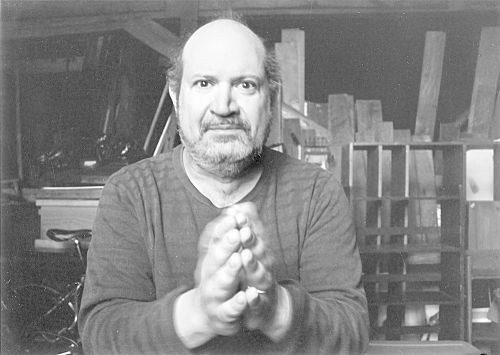
The Art of Fiction / Sam Lipsyte


PHOTO CERIDWEN MORRIS


Sam Lipsyte, The Art of Fiction No. 242

Interviewed by Mark Doten

ISSUE 227, WINTER 


The characters in Sam Lipsyte’s fiction exist in a fog of neoliberal precarity and despair, hustling for affection, for drugs, for a paycheck, for a new story to tell, ranting and bantering their way from one dead end to the next. From his debut, Venus Drive (2000), a collection populated by a string of outsiders and misfits (a tormented summer camper, a small-time coke dealer, a peep-show habitué and his comatose sister), to the near-future dystopia of Hark (2019), his fourth novel, the Lipsyte-verse is fueled by failed or failing relationships and the comically agonized involutions of liberal self-consciousness. His work is as endlessly self-correcting and ­unstable as Dostoyevsky’s Notes from Underground, told with a compression and exacting attention to language that follows Stanley Elkin, Gordon Lish, and Barry Hannah. Lipsyte maps a world where the old-fashioned, middle-class American dream has been vaporized by rising inequality and greed, though his characters know full well—and won’t hesitate to let you know that they know, with the hangdog brio at the heart of his work—that the dream was never more than a corrupt, exclusionary sham from the beginning. 

Wednesday, June 4, 2025

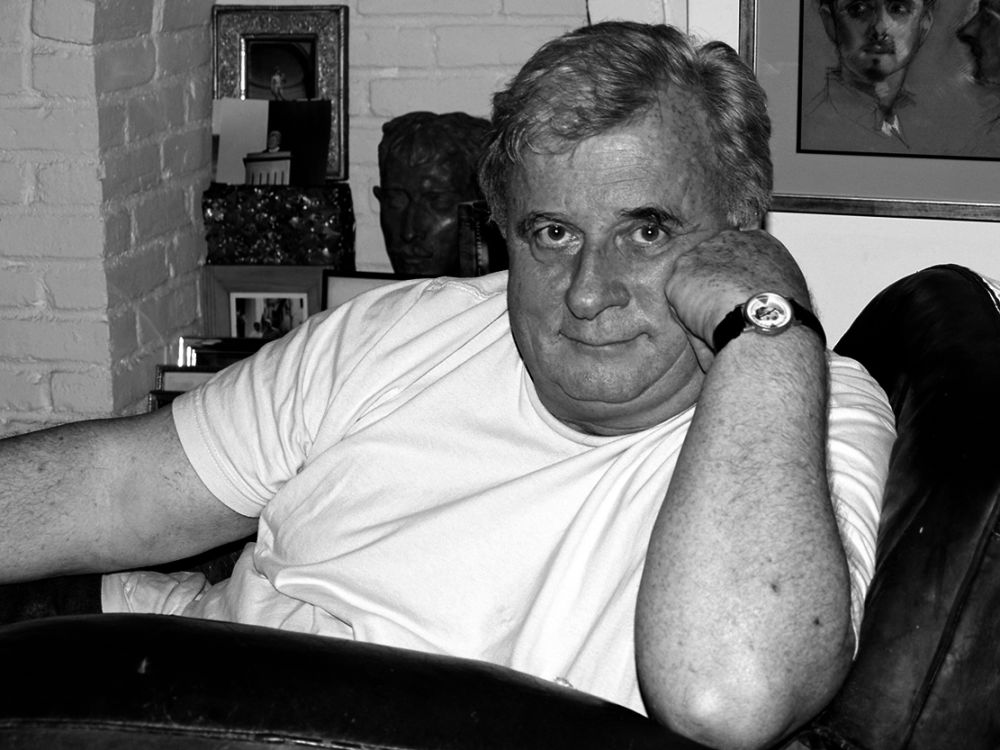
Edmund White / The Art of Fiction No. 105


undefinedEDMUND WHITE, CA. 2007. PHOTOGRAPH BY DAVID SHANKBONE

Edmund White

 The Art of Fiction No. 105


Interviewed by Jordan Elgrably
The Paris Review

ISSUE 108, FALL 


I first met Edmund White following his move from New York to Paris in 1983. His novel A Boy’s Own Story (1982) had been recommended to me by Odile Hellier, in whose American bookshop, The Village Voice, White was scheduled to read. On the evening of the reading, the upstairs wing of Hellier’s store was packed with curious newcomers. White’s generous and genial personality, as well as his affective reading of his autobiographical novel—the first in a tetralogy dealing with gay experience in America—won White many new readers and inspired me to ask him to sit for an interview for the International Herald Tribune in April, 1984.

Wednesday, July 31, 2024

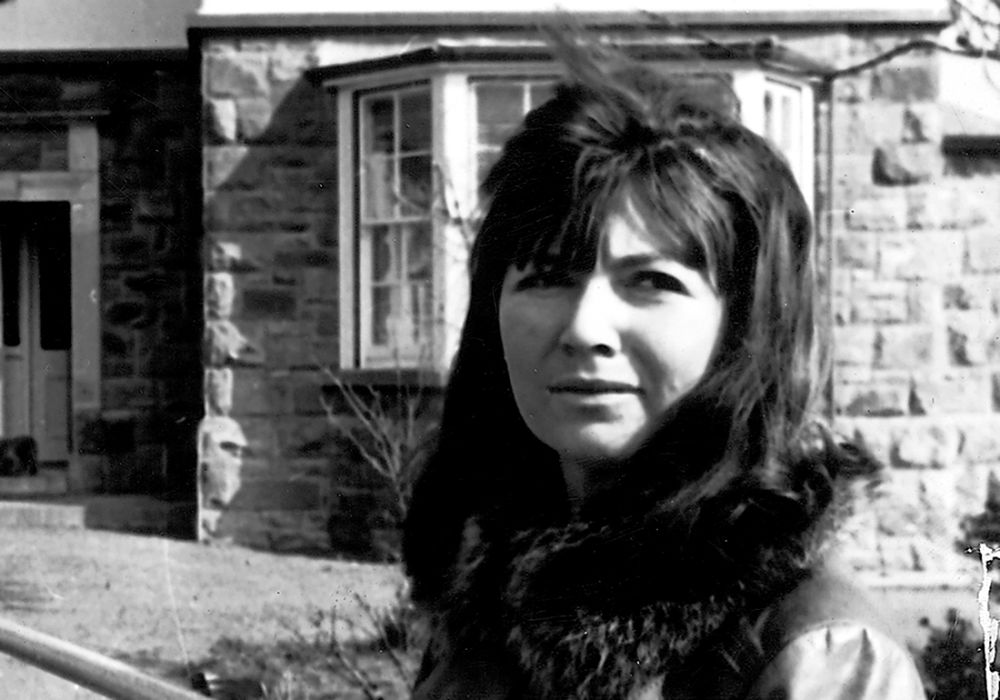
The Art of Fiction/ Edna O’Brien


undefined© EDNA O'BRIEN.


Edna O’Brien

The Art of Fiction No. 82

Interviewed by Shusha Guppy

ISSUE 92, SUMMER 


Edna O’Brien was born in the west of Ireland in a small village she describes as “enclosed, fervid, and bigoted.” Literature was taboo, and those books that penetrated the parish were loaned by the page. O’Brien’s father was a farmer who “carried on in that glorious line of profligate Irishmen.” Her mother, who had worked as a maid in Brooklyn, always yearned to return to America. O’Brien’s childhood was unhappy, but she believes it gave her both the need and the impetus to write. “Writing,” she says, “is the product of a deeply disturbed psyche, and by no means therapeutic.”

Wednesday, April 3, 2024

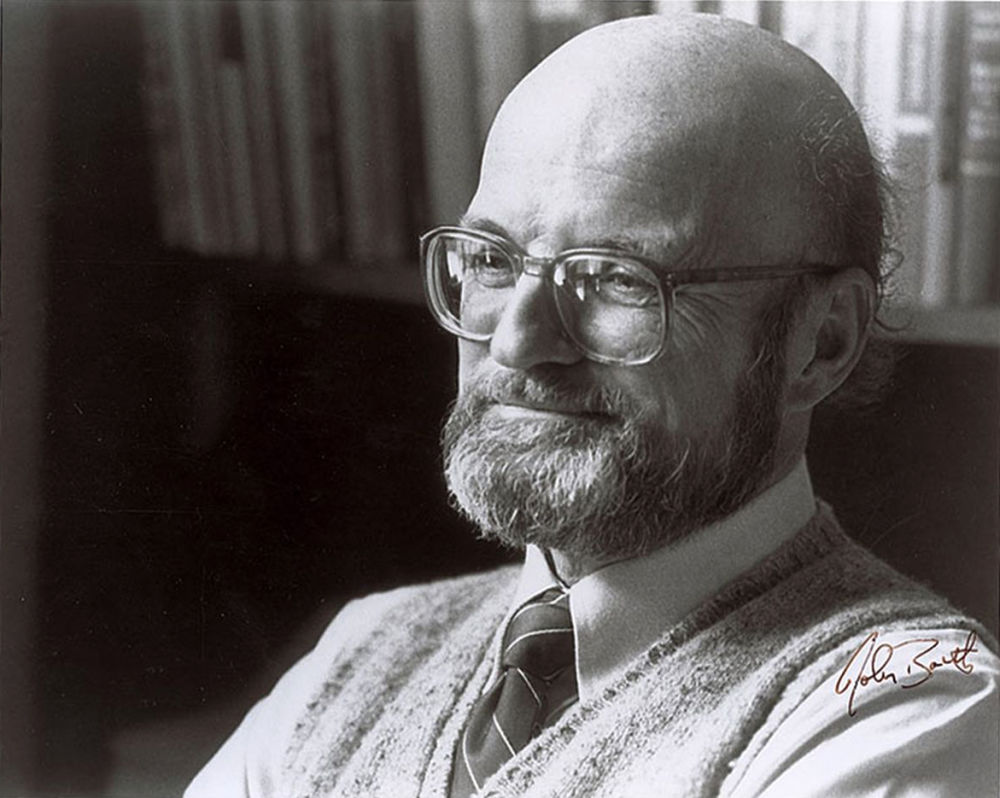
John Barth / The Art of Fiction


undefined
 Photo by Nancy Crampton


This interview with John Barth was conducted in the studios of KUHT in Houston, Texas, for a series entitled The Writer in Society. The stage set was made up to resemble a writer’s den—the decor including a small globe of the world, bronze Remington-like animal statuary, a stand-up bookshelf with glass shelves on which were placed some potted plants and a haphazard collection of books, a few volumes of the Reader’s Digest condensed novel series among them. Large pots of plants were set about. Barth sat amongst them in a cane chair. He is a tall man with a domed forehead; a pair of very large-rimmed spectacles give him a professorial, owlish look. He is a caricaturist’s delight. He sports a very wide and straight mustache. Recently he had grown a beard. In manner, Barth has been described as a combination of British officer and Southern gentleman.

Saturday, November 18, 2023

AS Byatt / The Art of Fiction


AS Byatt


 A. S. Byatt

The Art 

of Fiction

 No. 168

Interviewed by Philip Hensher


Fall 2001


The Paris Review No. 159


A. S. Byatt lives and writes in her handsome west London house and, in the summer months, in her house in the south of France. Both are filled with art, predominantly by her contemporaries, libraries of extravagant, Borgesian range and curiosa of many kinds, hinting at her unusual fecundity of mind: exotic preserved insects, the intricate examples of Venetian millefiori glassware and objects rare and fascinating of all imaginable varieties. The impression given by her houses is confirmed by her conversation, which moves confidently between literature, biology, the fine arts, and theoretical preoccupations and displays a mind turned always outwards. She is not a writer one can imagine being tempted to write a memoir: solipsism is not in her nature.

Saturday, April 17, 2021

Italo Calvino / The Art of Fiction


Italo Calvino


Italo Calvino

The Art of Fiction 

No. 130


Interviewed by William Weaver & Damien Pettigrew
ISSUE 124, FALL 1992

Upon  hearing of Italo Calvino’s death in September of 1985, John Updike commented, “Calvino was a genial as well as brilliant writer. He took fiction into new places where it had never been before, and back into the fabulous and ancient sources of narrative.” At that time Calvino was the preeminent Italian writer, the influence of his fantastic novels and stories reaching far beyond the Mediterranean.

Two years before, The Paris Review had commissioned a Writers at Work interview with Calvino to be conducted by William Weaver, his longtime English translator. It was never completed, though Weaver later rewrote his introduction as a remembrance. Still later, The Paris Review purchased transcripts of a videotaped interview with Calvino (produced and directed by Damien Pettigrew and Gaspard Di Caro) and a memoir by Pietro Citati, the Italian critic. What follows—these three selections and a transcript of Calvino’s thoughts before being interviewed—is a collage, an oblique portrait.

Rowan Gaither, 1992


Italo Calvino was born on October 15, 1923 in Santiago de Las Vegas, a suburb of Havana. His father Mario was an agronomist who had spent a number of years in tropical countries, mostly in Latin America. Calvino’s mother Eva, a native of Sardinia, was also a scientist, a botanist. Shortly after their son’s birth, the Calvinos returned to Italy and settled in Liguria, Professor Calvino’s native region. As Calvino grew up, he divided his time between the seaside town of San Remo, where his father directed an experimental floriculture station, and the family’s country house in the hills, where the senior Calvino pioneered the growing of grapefruit and avocados.

The future writer studied in San Remo and then enrolled in the agriculture department of the University of Turin, lasting there only until the first examinations. When the Germans occupied Liguria and the rest of northern Italy during World War II, Calvino and his sixteen-year-old brother evaded the Fascist draft and joined the partisans.

Tuesday, October 20, 2020

Lawrence Durrell / The Art of Fiction

Lawrence Durrell
Lawrence Durrell

The Art of Fiction 

No. 23

Interviewed by Gene Andrewski & Julian Mitchell


Autumn-Winter 1959-1960
The Paris Review No. 22


The interview took place at Durrell’s home in the Midi. It is a peasant cottage with four rooms to which he has added a bathroom and a lavatory. He writes in a room without windows, with notices of his work in foreign languages he cannot understand pinned to the bookcase. The sitting room, where the interview was held, has a large fireplace and a French window leading onto a terrace constructed by Durrell himself. From the terrace one has a view of the small valley at the end of which he lives. It is a bare rocky district, full of twisted olive trees destroyed in a blight a few years back.
Lawrence Durrell is a short man, but in no sense a small one. Dressed in jeans, a tartan shirt, a navy-blue pea jacket, he looks like a minor trade-union official who has successfully absconded with the funds. He is a voluble, volatile personality, who talks fast and with enormous energy. He is a gift for an interviewer, turning quite stupid questions into apparently intelligent ones by assuming that the interviewer meant something else. Though he was rather distrustful of the tape recorder, he acquiesced in its use. He smokes heavily, Gauloises bleues. When at rest he looks like Laurence Olivier; at other times his face has all the ferocity of a professional wrestler’s.
The interview was recorded on April 23, 1959, the birthday of William Shakespeare and Scobie of Durrell’s Quartet. Beginning after lunch and continuing that evening, it commenced with Durrell reviewing his early life, his schooling at Canterbury, and his failure to enter Cambridge.

Sunday, October 18, 2020

Ali Smith / The Art of Fiction


undefined

Ali Smith, with Leo, in Cambridge, 2003.


Ali Smith

THE ART OF FICTION

No. 167

Interviewed by Adam Begley


Summer 2017
The Paris Review No. 236


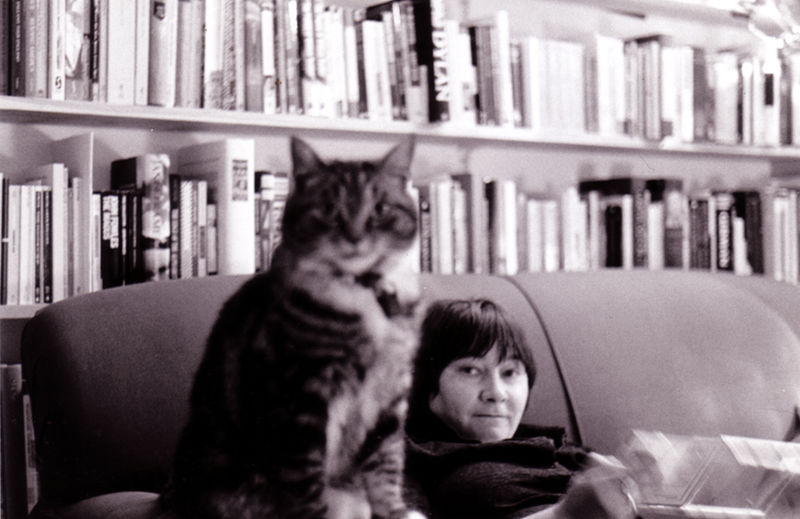
In a review of Autumn, her most recent novel, a New York Times critic declared, “Ali Smith has a beautiful mind.” That’s the impression she gives—that she’s genial, funny, and ­dazzlingly nimble—when she’s sitting perfectly still, one leg tucked under her, on the rumpled sofa in the cozy, agreeably cluttered living room downstairs from her study. She works in a small, two-story brick row house off a back street in Cambridge, England, a few doors along from a similar house, also small, where she lives with her partner, Sarah Wood. Smith talks quickly and softly with a mild Scottish lilt, a rush of words that seems often to end in a shared laugh. She wants to be in cahoots, to make conversation collaborative. 

Born in 1962 and raised in Inverness, the youngest child in a large working-class family, Smith had an Irish mother, an English father, and a Scottish education (until she started a Ph.D. at Newnham College, Cambridge). In her late twenties, after a debilitating bout of chronic fatigue syndrome derailed her career in academia, she started to write. Now the author of eight novels and six short-story collections, she fashions what might be called experimental fiction if it weren’t easy, pleasant, and thrilling to read. She has become a darling of critics on both sides of the Atlantic. How to be both (2014), which won a handful of prizes, is printed in two vice-versa editions, one of which begins with a grieving modern-day teenage girl called George, the other with a gender-bending Quattrocento painter thrust into twenty-first-century London. Does that sound complicated? Smith made it simple and marvelously resonant. 

This interview took shape over the course of a year, in three long sessions. The tape of the first session presented its Paris Review transcriber with a daunting challenge: how to make sense of the barely audible recording of Smith’s rapid, accented, and richly allusive patter. With the microphone placed much closer to the author, and the interviewer pausing where necessary to repeat phrases and spell out names, the subsequent recordings proved easier to decipher. 

Thursday, August 1, 2019

Lorrie Moore / The Art of Fiction

Lorrie Moore
Poster by Triunfo Arciniegas


Lorrie Moore

THE ART OF FICTION

No. 167

Interviewed by Elizabeth Gaffney


Spring-Summer 2001
The Paris Review No. 158

When The Paris Review approached Lorrie Moore about doing a Writers at Work interview, she responded with a warning (“My life is impossible to make interesting—others have tried before”) and a lament (“Alas, I am virtually incoherent speaking in person”). She then proposed that we simply begin with a written interview rather than “making our way politely toward one.” We compromised on an initial interview session to be followed by extensive questions and answers exchanged via U.S. mail and fax (but not e-mail, which she abjures). Of course, Moore turned out to be exquisitely coherent in person. Our meeting took place on an afternoon in the spring of 2000 at a bar in Gramercy Park, and substantial parts of the conversation eventually did make their way into this interview in some form. True to her word, however, Moore rejected much of the original transcript, saying she didn’t agree with it and couldn’t hear herself in its sentences. Indeed, when some of the original questions were later reiterated, her responses were subtler, more nuanced, funnier, and occasionally just entirely different. Where there had been a joking demurral, a thoughtful reflection appeared; where she had waxed on, she substituted a quip; she also deemed irrelevant various digressions, including one on her interest in the JonBenet Ramsey child beauty queen murder case (it has all the stuff of the great American novel, she said). What became clear over the year that we corresponded—usually just one or two questions or answers per letter, sometimes on a daily or weekly basis, sometimes monthly—is that Moore guards her words carefully, whatever form she works in and regardless of whether her tone is serious or light. “Nothing’s a joke with me,” as one of her characters says. “It just all comes out like one.”


Moore’s literary career began at the precocious age of nineteen, when she won Seventeen’s fiction award; she was an English major at St. Lawrence University in upstate New York at the time. After graduating, she moved to New York City, where she was a paralegal, and then enrolled in the M.F.A. program in writing at Cornell University. In 1985, her first collection of short stories, Self-Help, was published to considerable critical acclaim. The following year brought her inclusion in the influential anthology 20 Under 30, as well as her first novel, Anagrams, which challenged some more timid reviewers with its experimental form. A children’s book, The Forgotten Helper, was published in 1987 (and rereleased in 2000). In 1989, “You’re Ugly, Too” became the first of Moore’s many stories to appear in The New Yorker (notwithstanding the fact that the quirks of its prose broke a number of the magazine’s infamous rules of style and diction). In 1990 that story was published with seven others in Like Life, a collection that demonstrated Moore’s remarkable ability to juggle everyday outrage and high tragedy with a hand so deft that her most poignant passages are often also the most hilarious or sardonic. With her second book of stories Moore’s reputation as a story writer was cemented, but it was her third, Birds of America, that firmly superglued her to the pantheon of contemporary American writers. For the first time, the praise of critics and her cult status among literary readers was matched by a several-week run on the New York Times best-seller list. But Moore does not define herself as primarily a short-story writer: halfway into writing the stories in Birds of America—an eight-year endeavor—there came a second novel, Who Will Run the Frog Hospital? and she is presently at work on her third. Since the mid-eighties, she has taught English and creative writing at the University of Wisconsin at Madison, where she holds the Delmore Schwartz Professorship in the Humanities.

Wednesday, March 14, 2018

Graham Greene / The Art of Fiction


Graham Greene

 The Art of Fiction 

No. 3

Interviewed by Simon Raven 
& Martin Shuttleworth


Autumn 1953
The Paris Review No. 3

The eighteenth century succeeds to the twentieth on the ground floors at the bottom of St. James’s Street. The gloss and the cellophane of oyster bars and travel agencies are wrapped incongruously round the legs of the dignified houses. Graham Greene lives here at the commercial end of this thoroughfare in a flat on the first floor of a narrow house sandwiched between the clubs of the aristocracy and St. James’s Palace. Above him, General Auchinleck, the soldier who was beaten by Rommel; below him, the smartest oyster bar in Europe; opposite, the second smartest.

Sunday, October 2, 2016

Dorothy Parker / The Art of Fiction


Dorothy Parker
Dorothy Parker

The Art of Fiction 

No. 13

Interviewed by Marion Capron

Summer 1956
The Paris Review No. 13


At the time of this interview, Mrs. Parker was living in a midtown New York hotel. She shared her small apartment with a youthful poodle that had the run of the place and had caused it to look, as Mrs. Parker said apologetically, somewhat “Hogarthian”: newspapers spread about the floor, picked lamb chops here and there, and a rubber doll—its throat torn from ear to ear—which Mrs. Parker lobbed left-handed from her chair into corners of the room for the poodle to retrieve—as it did, never tiring of the opportunity. The room was sparsely decorated, its one overpowering fixture being a large dog portrait, not of the poodle, but of a sheepdog owned by the author Philip Wylie, and painted by his wife. The portrait indicated a dog of such size that if it were real, would have dwarfed Mrs. Parker, who was a small woman, her voice gentle, her tone often apologetic, but occasionally, given the opportunity to comment on matters she felt strongly about, she spoke almost harshly, and her sentences were punctuated with observations phrased with lethal force. Hers was still the wit that made her a legend as a member of the Round Table of the Algonquin—a humor whose particular quality seemed a coupling of brilliant social commentary with a mind of devastating inventiveness. She seemed able to produce the well-turned phrase for any occasion. A friend remembered sitting next to her at the theater when the news was announced of the death of the stolid Calvin Coolidge. “How can they tell?” whispered Mrs. Parker.
Readers of this interview, however, will find that Mrs. Parker had only contempt for the eager reception accorded her wit. “Why, it got so bad,” she had said bitterly, “that they began to laugh before I opened my mouth.” And she had a similar attitude toward her value as a serious writer. But Mrs. Parker was her own worst critic. Her three books of poetry may have established her reputation as a master of light verse, but her short stories were essentially serious in tone—serious in that they reflected her own life, which was in many ways an unhappy one—and also serious in their intention. Franklin P. Adams described them in an introduction to her work: “Nobody can write such ironic things unless he has a deep sense of injustice—injustice to those members of the race who are the victims of the stupid, the pretentious and the hypocritical.”

INTERVIEWER
Your first job was on Vogue, wasn’t it? How did you go about getting hired, and why Vogue?

DOROTHY PARKER
After my father died there wasn’t any money. I had to work, you see, and Mr. Crowninshield, God rest his soul, paid twelve dollars for a small verse of mine and gave me a job at ten dollars a week. Well, I thought I was Edith Sitwell. I lived in a boarding house at 103rd and Broadway, paying eight dollars a week for my room and two meals, breakfast and dinner. Thorne Smith was there, and another man. We used to sit around in the evening and talk. There was no money, but, Jesus, we had fun.

Saturday, October 1, 2016

Frank O´Connor / The Art of Fiction

Frank O'Connor
Poster by T.A.
Frank O’Connor
BIOGRAPHY

 The Art of Fiction 

No. 19

Interviewed by Anthony Whittier


Autumn-Winter 1957
The Paris Review No. 17


SCENE: Frank O’Connor is of medium height and build; he has heavy silver hair, brushed back; dark, heavy eyebrows; and a mustache. His voice is bass-baritone in pitch and very resonant—what has been described as jukebox bass. His accent is Irish, but with no suggestion of the “flannel-mouth,” his intonation musical. He enjoys talk and needed no urging regarding the subject of the  interview. His clothes tend toward the tweedy and casual: desert boots, corduroy jacket, rough tweed topcoat; and a bit of California touch evident in a heavy silver ornament hung on a cord around his neck in place of a tie.
Although a friendly and approachable man, O’Connor has a way of appraising you on early meetings, which suggests the Irishman who would just as soon knock you down as look at you if he doesn’t like what he sees. His wife provides a description of an encounter with a group of loitering teenagers while the two of them were out for a walk. A remark of some sort was made, O’Connor whipped over to them and told them to get home if they knew what was good for them. The boys took him in, silvery hair and all, and moved off.

Friday, September 30, 2016

Hemingway / The Art of Fiction


Ernest Hemingway
Poster by T.A.
Ernest Hemingway
BIOGRAPHY

The Art of Fiction 

No. 21

Interviewed by George Plimpton

Spring 1958
The Paris Review No. 18


HEMINGWAY
You go to the races?

INTERVIEWER
Yes, occasionally.

HEMINGWAY
Then you read the Racing Form ... There you have the true art of fiction.

—Conversation in a Madrid café, May 1954


Ernest Hemingway writes in the bedroom of his house in the Havana suburb of San Francisco de Paula. He has a special workroom prepared for him in a square tower at the southwest corner of the house, but prefers to work in his bedroom, climbing to the tower room only when “characters” drive him up there.
The bedroom is on the ground floor and connects with the main room of the house. The door between the two is kept ajar by a heavy volume listing and describing The World’s Aircraft Engines. The bedroom is large, sunny, the windows facing east and south letting in the day’s light on white walls and a yellow-tinged tile floor.
The room is divided into two alcoves by a pair of chest-high bookcases that stand out into the room at right angles from opposite walls. A large and low double bed dominates one section, oversized slippers and loafers neatly arranged at the foot, the two bedside tables at the head piled seven-high with books. In the other alcove stands a massive flat-top desk with a chair at either side, its surface an ordered clutter of papers and mementos. Beyond it, at the far end of the room, is an armoire with a leopard skin draped across the top. The other walls are lined with white-painted bookcases from which books overflow to the floor, and are piled on top among old newspapers, bullfight journals, and stacks of letters bound together by rubber bands.
It is on the top of one of these cluttered bookcases—the one against the wall by the east window and three feet or so from his bed—that Hemingway has his “work desk”—a square foot of cramped area hemmed in by books on one side and on the other by a newspaper-covered heap of papers, manuscripts, and pamphlets. There is just enough space left on top of the bookcase for a typewriter, surmounted by a wooden reading board, five or six pencils, and a chunk of copper ore to weight down papers when the wind blows in from the east window.

Thursday, September 29, 2016

William Faulkner / The Art of Fiction

William Faulkner

William Faulkner

The Art of Fiction 

No. 12

Interviewed by Jean Stein

Spring 1956
The Paris Review No. 12


William Faulkner was born in 1897 in New Albany, Mississippi, where his father was then working as a conductor on the railroad built by the novelist’s great-grandfather, Colonel William Falkner (without the “u”), author of The White Rose of Memphis. Soon the family moved to Oxford, thirty-five miles away, where young Faulkner, although he was a voracious reader, failed to earn enough credits to be graduated from the local high school. In 1918 he enlisted as a student flyer in the Royal Canadian Air Force. He spent a little more than a year as a special student at the state university, Ole Miss, and later worked as postmaster at the university station until he was fired for reading on the job.
Encouraged by Sherwood Anderson, he wrote Soldier’s Pay (1926). His first widely read book was Sanctuary (1931), a sensational novel which he says that he wrote for money after his previous books—including Mosquitoes (1927), Sartoris(1929), The Sound and the Fury (1929), and As I Lay Dying (1930)—had failed to earn enough royalties to support a family.
A steady succession of novels followed, most of them related to what has come to be called the Yoknapatawpha saga: Light in August (1932), Pylon (1935), Absalom, Absalom! (1936), The Unvanquished (1938), The Wild Palms (1939), The Hamlet(1940), and Go Down, Moses, and Other Stories (1941). Since World War II his principal works have been Intruder in the Dust (1948), A Fable (1954), and The Town (1957). His Collected Stories received the National Book Award in 1951, as didA Fable in 1955. In 1949 Faulkner was awarded the Nobel Prize for Literature.
Recently, though shy and retiring, Faulkner has traveled widely, lecturing for the United States Information Service. This conversation took place in New York City, early in 1956.

INTERVIEWER
Mr. Faulkner, you were saying a while ago that you don’t like interviews.

WILLIAM FAULKNER
The reason I don’t like interviews is that I seem to react violently to personal questions. If the questions are about the work, I try to answer them. When they are about me, I may answer or I may not, but even if I do, if the same question is asked tomorrow, the answer may be different.

Wednesday, September 28, 2016

Grace Paley / The Art of Fiction

Grace Paley
Poster by T.A.
Grace Paley
BIOGRAPHY

The Art of Fiction 

No. 131

Interviewed by Jonathan Dee, Barbara Jones, Larissa MacFarquhar


Fall 1992
The Paris Review No. 124


When Grace Paley visits New York, she stays in her old apartment on West Eleventh Street. Her block has for the most part escaped the gentrification that has transformed the West Village since Paley moved there in the forties. The building where Paley lived for most of her adult life and where she raised her two children by her first husband, the filmmaker Jess Paley, is a rent-controlled brownstone walk-up with linoleum hallways. Mercifully spared mid-career renovations, Paley’s apartment retains the disheveled, variegated look of an apartment with children. Paley now lives in Thetford, Vermont with her second husband, poet and playwright Robert Nichols, but we arranged to speak with her in New York. We met her on the street outside her apartment—she was returning home from a Passover celebration with friends elsewhere in the city. We recognized her from half a block away—a tiny woman with fluffy white hair in a brown overcoat.
People often ask Grace Paley why she has written so little—three story collections and three chapbooks of poetry in seventy years. Paley has a number of answers to this question. Mostly she explains that she is lazy and that this is her major flaw as a writer. Occasionally she will admit that, though it is “not nice” of her to say so, she believes that she can accomplish as much in a few stories as her longer-winded colleagues do in a novel. And she points out that she has had many other important things to do with her time, such as raising children and participating in politics. “Art,” she explains, “is too long, and life is too short.” Paley is noticeably unaffected by the pressures of mortality which drive most writers to publish. Donald Barthelme scavenged her apartment for the stories that made up her first book, and her agent says she periodically raids Paley’s drawers and kitchen cabinets for material. Her first collection of stories, The Little Disturbances of Man, did not appear until 1959, when Paley was thirty-seven. Since then she has published just two collections of stories (Enormous Changes at the Last Minute in 1974 and Later the Same Day in 1985) and three collections of poems—Leaning Forward (1985). New and Collected Poems(1992) and Long Walks and Intimate Talks (1991). Though Paley is better known as a short-story writer than as a poet, her stories are so dense and rigorously pruned that they frequently resemble poetry as much as fiction. Her conversation is as cerebral and distilled as her prose. The oft-noted Paley paradox is the contrast between her grandmotherly appearance and her no-schmaltz personality. Paley says only what is necessary. Ask her a yes-or-no question, and she will answer yes or no. Ask her a foolish question, and she will kindly but clearly convey her impatience. Talking with her, one develops the impression that she listens and speaks in two different, sometimes conflicting capacities. As a person she is tolerant and easygoing, as a user of words, merciless. On politics Paley speaks unreservedly and in earnest, on writing, she is drier, more careful.
Grace Goodside was born in the Bronx in December 1922, seventeen years after her parents immigrated to New York and one year after the invention of the sanitary napkin (as she notes in her poem “Song Stanzas of Private Luck”). Her father, Isaac, was a doctor who learned English by reading Dickens and was, like her mother, Mary, a committed socialist. The family spoke Russian and Yiddish at home and English to the world with a Bronx twang that remains one of the more noticeable signs of Paley’s attitude towards the establishment. Writing has only occasionally been Paley’s main occupation. She spent a lot of time in playgrounds when her children were young. She has always been very active in the feminist and peace movements. She has been on the faculty at City College and taught courses at Columbia University, and until recently, Sarah Lawrence College.