

Best summer books 2018, as picked by writers and cultural figures – part eight
From Pulitzer prize-winners to Penguin classics, poetry anthologies to the latest page-turners, here are the books to take to the beach this summer
Sun 8 Jul 2018 09.00 BST
Hera Lindsay Bird
This summer I’m going to Krakow for a residency and I’m taking The Idiot (Vintage) by Elif Batuman, a brain-meltingly funny Bildungsroman about communication breakdowns in the dawn of the internet era. I’ve already read it twice, but can’t bear to be without it. I’ll also be taking See What Can Be Done (Faber) by Lorrie Moore, my favourite short-story writer’s collected nonfiction, and The New Animals (Victoria University Press) by Pip Adam, the breakthrough New Zealand novel of 2017, which is about the generational divide, the fashion industry – and I can’t say more or I’ll ruin the ending. It’s ambitious, compulsive and strange as all hell.
Liv Little
I’m going to New York and Lisbon this summer and I’m going to reread Maya Angelou’s The Heart of a Woman (Virago). I like these simple stories of people’s lives and experiences. The book gives you an insight into the intelligent, passionate woman that Angelou undoubtedly is. I will also take Edith Jackson (Puffin) by Rosa Guy. I have a really old library copy. It’s a story documenting the life of one girl in America with more than her share of life’s challenges. Nicole Dennis-Benn’s Here Comes the Sun (Oneworld) was the first Jamaica-set book I read. As a Jamaican woman, that was really exciting. It follows three women: two sisters and their mum. The older sister is navigating sexuality and being a queer woman, the younger is battling identity, being a darker-skinned girl, bleaching. It’s really addictive.
Sunny Singh
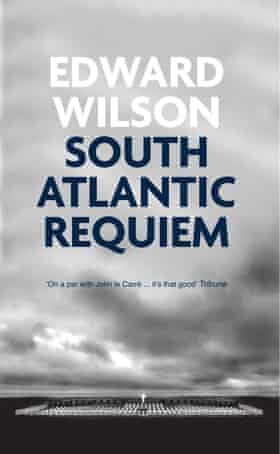
I’m heading to Savoie in the French Alps. I’m taking South Atlantic Requiem (Arcadia) by Edward Wilson, one of my favourite spy novelists, and I Hid My Voice (Abacus, translated by Sanam Kalantari) by Parinoush Saniee, an Iranian novelist, which is about a patriarchal family that is symbolic of the Iranian regime. I’m rereading George F Kennan’s Realities of American Foreign Policy (WW Norton). Written in 1954, it feels relevant again, given what’s happening now between the US and Russia. I’d also recommend Princess Bari (Periscope, translated by Sora Kim-Russell) by South Korean author Hwang Sok-yong and Thinner Than Skin (Jacaranda) by Uzma Aslam Khan, a Pakistani-American novelist. Both are wonderful in so many ways.
Alex Preston
I’m just back from the inspirational Worlds festival at the National Centre for Writing, Norwich. I came away laden with books and have already finished three of them. The Swan Book (Constable) by Alexis Wright is a devastating dystopian vision of a future Australia. I thought Behold, America (Bloomsbury) by Sarah Churchwell both brilliant and painfully timely, while Panashe Chigumadzi’s These Bones Will Rise Again (Indigo) is an extraordinary and thrilling history of Zimbabwe, culminating in the overthrow of Robert Mugabe. If you holiday anywhere near water, do take along the newly reissued edition of Charles Sprawson’s classic Haunts of the Black Masseur (Vintage). I’ll be rereading it between swims in Hydra in Greece.
Sharon Olds
Peter Carey’s A Long Way from Home (Faber), Ian Brown’s The Boy in the Moon and Zadie Smith’s essays Feel Free (Hamish Hamilton) would all make perfect holiday reading. Meanwhile, my own stack of summer books include The Unaccompanied (Faber) by Simon Armitage, Untitled (Mainstream) by Carol Ann Duffy, The Bonniest Companie (Picador) by Kathleen Jamie, Jackself (Picador) by Jacob Polley and Don’t Call Us Dead (Chatto & Windus) by Danez Smith. I’ll be carrying these gorgeous volumes back and forth between my New York City apartment and my old farmhouse upstate.
James Graham
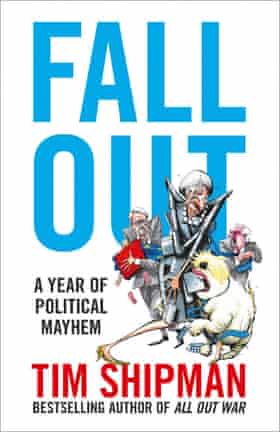
Anyone who has the slightest interest in politics has to read Tim Shipman’s Fallout (William Collins), the follow-up to his thrilling referendum account, All Out War. Holidays may be about escapism, but this fly-on-the-wall unravelling of the 2017 election is car-crash exhilarating. For a made-up thriller, though, I enjoyed returning to the world of George Smiley in John Le Carré’s A Legacy of Spies (Penguin) in an age when the global distrust of the cold war feels unnervingly prescient. I’ve also been deeply moved and inspired by Didier Eribon’s Returning to Reims (Allen Lane, translated by Michael Lucey), having missed the stage adaptation at the Manchester international festival last year. It’s an autobiographical account of the young gay author’s journey back to his working-class, industrial French town.
Celeste Ng
The stories in Neel Patel’s If You See Me, Don’t Say Hi (Flatiron) are perfect bitesize morsels for the beach, travel legs or quiet moments. Mackenzi Lee’s Gentleman’s Guide to Vice and Virtue (Harper Collins)is a giddy whirlwind romp of a love story; I can’t wait for the forthcoming sequel. Rebecca Solnit’s Hope in the Dark (Canongate) is an argument for continuing to take action, even when everything feels uncertain, and will send you back home from holiday ready to carry on. I’m going to London with my family, and bringing Ta-Nehisi Coates’s Between the World and Me (Text), Justina Ireland’s Dread Nation (Balzer & Bray) – zombies plus the American civil war plus a fierce female fighter – and an advance copy of Edward Carey’s forthcoming Little (Aardvark Bureau), about the girl who grows up to become Madame Tussaud.
Jackie Kay
I’d recommend the recently republished Faces in the Water (Virago) by Janet Frame. She’s a true original, her work is a joy to return to, and it never ages. Kintu by Jennifer Nansubuga Makumbi (Oneworld) is a great, big, roaring Ugandan epic that follows the trials and tribulations of the Kintu clan from the 1750s to today. I’m taking poetry, too: it travels light and packs a punch. I’ll include Us (Faber) by Zaffar Kunial, a poet whose work thrills me, who makes you return to the origins of things, places, language and people again and again. He’s a poet who takes traditions seriously but makes of them something entirely new – a must. I’m taking Gerda Stevenson’s fabulous Quines (Luath) – the old Aberdonian word for women – which takes us through a vivid, moving history of outstanding Scottish women in poetry. It’s a groundbreaker of a book, rich and resonant, strong of voice. I’m going to go back to Eigg, an inspiring island run by its own people, and I’ll daytrip to Muck and Canna just cos I canny not.
Maria Balshaw
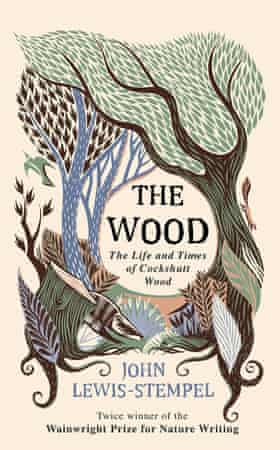
My first recommendation is The Wood: The Life and Times of Cockshutt Wood (Doubleday) by John Lewis Stempel. It is a glorious evocation of the rhythm and dynamism of an English woodland, connecting us to a much longer timeframe: a needed balance to the working, urban lives most of us have. My second is Audre Lorde’s Your Silence Will Not Protect You (Silver), the collected essays of this important poet, writer and intersectional feminist. It is a book of our times, not least because it reminds us that current issues of gender, race and power have been being contested, here in incandescent and penetrating prose and poetry, since the 1960s.
I will be spending my summer break being very quiet indeed in the Kent countryside. I shall take a pile of books including Stuart Hall’s Familiar Stranger: A Life Between Two Islands (Penguin), the posthumous memoir by this vital cultural theorist; Colm Tóibín’s The House of Names (Viking); Nan Shepherd’s The Living Mountain (Canongate); and Chimamanda Ngozi Adichie’s Purple Hibiscus (Fourth Estate). I’ll also be remembering Manchester, my home until last year, with Dave Haslam’s wonderful biography, Sonic Youth Slept on My Floor (Constable), and rereading Ursula Le Guin’s The Left Hand of Darkness (Gollancz) and Margaret Atwood’s The Handmaid’s Tale (Vintage), to feel again their potent, timely power.
Olivia Laing
The Stopping Places: A Journey Through Gypsy Britain (Chatto & Windus) by Damian Le Bas is the perfect accompaniment to any holiday in the British Isles. It maps a secret world, and made me want to live outdoors, at least for a summer. I’m going to Folegandros in August, and I plan to take Lara Pawson’s jagged, stunning meditation on war, violence and love, This Is the Place to Be (CB Editions). I’ve read it once and it was like drinking lightning; I can’t wait to rip through it again.
Guy Gunaratne
This summer I’m staying home so I’ll be reading around current erratic obsessions, mostly translated fiction and Trump. The recently published Call Me Zebra by Azareen Van der Vliet Oloomi sounds mad and tricksy. Moroccan writer and film-maker Ahmed Bouanani’s The Hospital, a short hallucinatory novel is appearing for the first time in English translation by Lara Vergnaud. Also, Mistaken Identity by Asad Haider, which deals with class and race post-Trump, and I’ve been eagerly awaiting new translations of Brazilian writer Machado de Assis. A new complete collection will be published later this month translated by Margaret Jull Costa and Robin Patterson.


