
The Lottery Ticket
IVAN DMITRITCH,
a middle-class man who lived with his family on an income of twelve hundred a
year and was very well satisfied with his lot, sat down on the sofa after
supper and began reading the newspaper.


.jpg)
 |
| Anton Chekhov with his wife Olga Knipper. |
In 1902, as he pondered The Cherry Orchard, Anton Chekhov had another question on his mind: who was the father of his wife’s unborn child?
William Boyd
Monday 20 August 2018
O
 |
| William Boyd |
The novelist William Boyd tells us about the authors, from Chekhov to Heller, who most influenced his own development as a writer – and reveals the secret to a well-crafted sex scene
After writing 17 novels, do you feel as inspired now as you did 20 or 30 years ago?
Yes, I do actually. Funnily enough, I feel in the last three of four years a new surge of energy. I don’t know whether it’s because I’m getting older, but I actually feel I’m working harder than I’ve worked ever before in my life. I seem to have so many things on. It’s not by any great intent, it’s just the way things have panned out. I can’t write for as long as I used to. I used to write for five hours a day and now I’m down to about three. But I do feel very creatively energised as I approach my 60th birthday, which is reassuring. It’s strange how these things happen. It’s not just new novels, I’m also writing short stories and for film and television. I feel very busy and I enjoy that. I don’t feel under any pressure so obviously the brain is still working well.

 |
| Ilustration by Ofra Amit |

Heartbreaking tales of love, devotion, innocence – and philosophy. From Homer to Kafka, these works show humanity intimately observed by its best friend
Jill Ciment
Wednesday 26 August 2015
Man created dog, or dog created man, about 30,000 years ago somewhere in east Asia. Dogs witnessed us when we were still part very much part of the animal kingdom, marginal creatures foraging for a living, before we had stone tools, before we mastered agriculture, invented money, built cities, and polluted the earth. Dogs are like a first lover who knew us when: they know where we really come from, and who we really are.
They have shared our hearths and meals and affections for longer than any other animal. A 12,000-year-old grave in Israel contains the skeleton of a woman holding the skeleton of a puppy. We have even shared death with them. How could they not make their way into our imaginations?
While dogs have been bearing witness to our behaviour for 30,000 years, we have also been closely observing them. We are their first loves, too. We knew them when they were still wolves, before they tasted kibble, had their nails trimmed and their teeth brushed.
In my novel, Heroic Measures, one of the points of view belongs to Dorothy, a 12-year-old dachshund who stands 12 inches tall and weighs 10lb 2oz. Entering her consciousness seemed no different to me as a writer than visiting the minds of the older couple, Ruth and Alex, who have been Dorothy’s family since she was eight weeks old. Dorothy’s character is as idiosyncratic and individual as any human I have created.
Here are 10 favourite narratives told from a dog’s point of view.

Argos, Odysseus’s loyal hound, is one of the first dogs in western literature. After waiting 20 years for his master’s return, Argos must make a most painful decision. He realises that Odysseus is in disguise. If he greets his master, or if his master acknowledges him, Odysseus will be in mortal danger. Argos has to accept that after two decades of longing for this moment, he will only be rewarded with a glimpse of the man he loves.

All of London’s dog novels hark back to the courting stage of man and wolf, when we were still both beasts. London’s plots are really love stories - two wary beings learn to trust each other and fall in love. Buck, a huge St Bernard/shepherd mix, is kidnapped from his comfortable middle-class home, sold into bondage, and escapes. In the Alaskan wilderness, he discovers the bestial instinct within himself. Only late in life does Buck fall in love with a man, John Thornton, who saves his life. When he loses John to an Indian’s arrow, he returns to the wild and joins a wolf pack. London intends for Buck’s howl, “the song of the pack”, to be a dirge.

3.
Poprishchin, a lowly clerk infatuated with his supervisor’s beautiful daughter, keeps a diary as he sinks into madness. He begins to suspect that his dog, Fidel, is having an affair with her dog, Meggy, and exchanging love letters. The first epistolary dog’s tale.
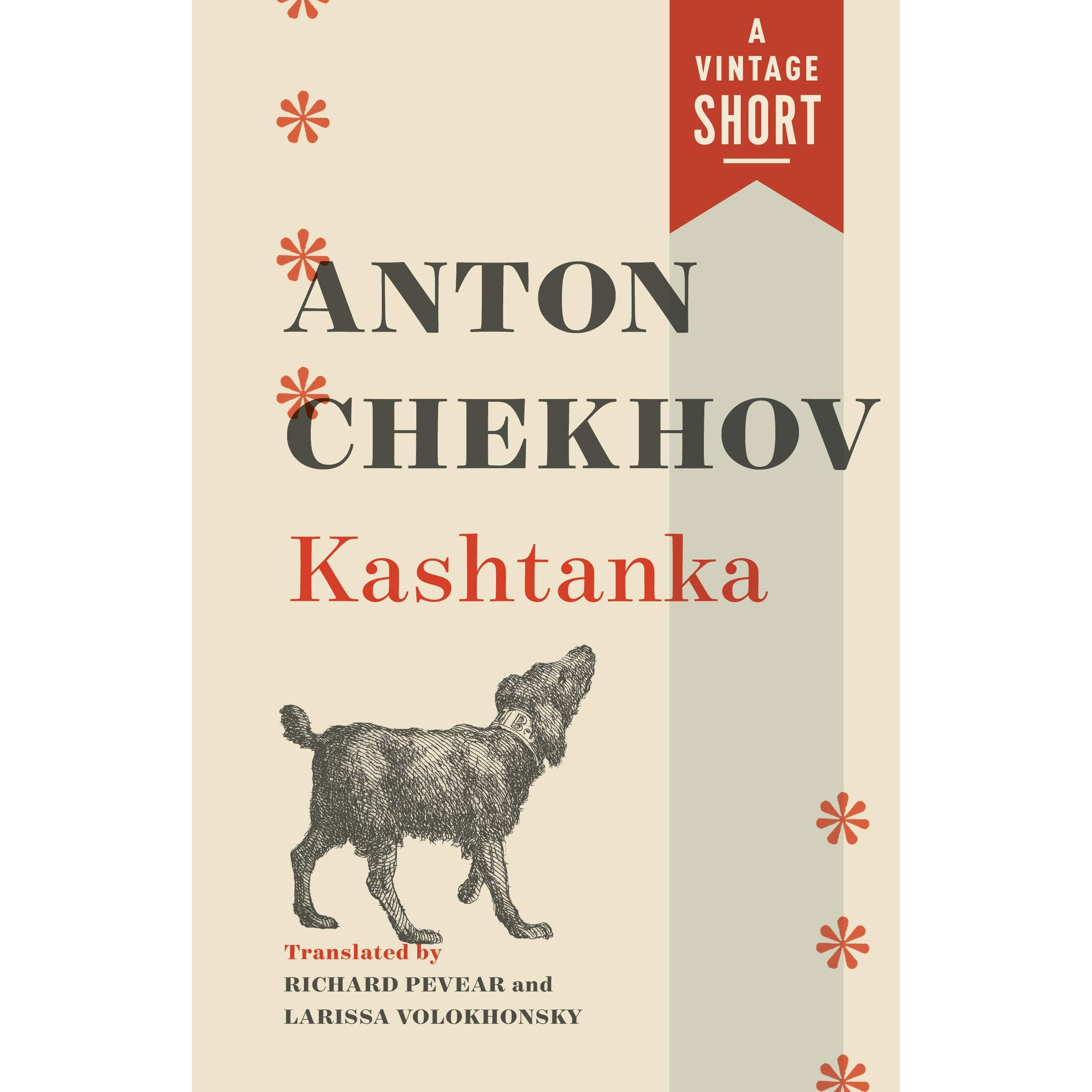
4.
Narrated from the point of view of a dachshund mix, and presented as a children’s tale, this is a horrifying story of a beaten dog who joins the circus only to return to her original cruel master because she feels more comfortable being kicked than loved. Janet Malcolm, in her book, Reading Chekhov, writes that Kashtanka might be the great man’s most autobiographical story.

Sharik, a stray, finds himself adopted by a successful surgeon and thinks he has entered earthly paradise, only to discover that the doctor’s real intentions are to perform medical experiments on him. During one procedure, the doctor attaches a pair of human testicles to Sharik. To the doctor’s delight and the dog’s astonishment, Sharik transmogrifies into a primitive man. But though he looks like a man …


The erudite dog who narrates this meditation on the origins of nourishment believes himself to be not “different from any other dog”, and yet he asks if it is possible for a creature to be “more unfortunate still” than he is. Kafka, like Plato, believed that the dog is the most philosophical beast in the world.
At the end of Kafka’s Metamorphosis, the insect-being that had been the man Gregor dies, much to the relief of his family who never reconciled with his horridness. Our narrator in Investigations of a Dog summits on the point of isolation and silence and never really descends. Kafka seems to be saying that knowledge unshared distances us from one another as much as it enlightens.
His biographer Elias Canetti writes:
"The uniqueness of his work, in which emotions hardly appear, though literature otherwise swarms with them, volubly and chaotically. If one thinks about it with a little courage, our world has indeed become one in which fear and indifference predominate. Expressing his own reality without indulgence, Kafka was the first to present the image of this world."
A shot rings out on a farm in rural Illinois – one neighbour has murdered another. Late in the novel, Maxwell allows the murderer’s dog a point of view. The dog has witnessed her human in his most heinous state, but of course she never passes judgment on him.

8.
A grieving man, Joe, is walking Victor, his dead wife’s dog, when they are approached by an aggressive dog twice Victor’s size. The man scares off the mongrel and Victor thinks: “What devotion! Almost canine.” But safe once again, Victor remembers that Joe never wanted him. If not for the wife, Victor would still be in the pound. In a moment of doggy insight, Victor tells Joe that he loved his dead mistress more than Joe loved his dead wife.

King, the dog and guardian of a homeless couple, narrates this story dramatising 24 hours of precarious survival on a scrap heap somewhere near a motorway in France. The term “dog-eat-dog society” has never been more cleanly defined.

The title says it all. A wonderful collection of doggerel. Disclaimer: Sadie, the dachshund whom my character, Dorothy, was based on, has a poem in it.
THE GUARDIAN

 |
| Anton Chekhov |
 Autumn Leaves, Lake George, 1924 |
| Georgia O'Keeffe |
Their colour provides solace as we struggle to adjust from summer to darker nights and rain
T


