
Review
Knife by Salman Rushdie review – a life interrupted
While the author’s account of the 2022 murder attempt is a courageous defence of free speech, it is also shot through with self-regard, making it a sometimes hard book to admire

While the author’s account of the 2022 murder attempt is a courageous defence of free speech, it is also shot through with self-regard, making it a sometimes hard book to admire
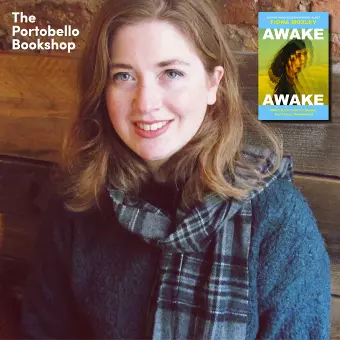
From the Booker-shortlisted author, a tantalisingly unreliable account of childhood, history and mental uncertainty
The historian and novelist Fiona Mozley acknowledged in a 2018 piece for the Guardian that the city of York had a major influence on both her careers. Childhood and adolescence in a place such as York, full of time and times, can generate conflict between “the desire to live in the past and the need to extract oneself from it”. Awake Awake, a follow-up to her previous novels, 2017’s Booker-shortlisted Elmet and 2021’s Hot Stew, engages with two types of memory: the personal and the historical. They’re not exactly at odds, but as far as living in the past is concerned they feed on one another in a complex, entangled relationship.

A companion novel to the brilliant Writers & Lovers, this delightfully witty tale of college romance matures into midlife poignancy
The university experience is a risky business in fiction. Generally, the feelings are intense, but the stakes are low; it’s all very formative for the individual character, but it can feel a bit trivial to anyone else. In fact, reading an account of someone’s university days is surely only one or two stages removed from having to hear about the dream they had last night.

“A Feast of Snakes” by Harry Crews is searing, hypnotic, disgusting, brutal, visceral, hilarious, and deeply tragic. It’s a book that grabs you like a pitbull and locks its jaw.
 |
| Hamnet |
Chloé Zhao’s film version of Maggie O’Farrell’s myth-making novel powerfully reimagines the agonising loss of a child as the source of Hamlet’s grand stage drama
Peter Bradshaw
6 January 2026
The joys of parents are secret, and so are their griefs and fears …” This is Francis Bacon’s essay Of Parents and Children; maybe they were more secret in his day than ours. This kind of secrecy and revelation is part of Chloé Zhao’s deeply felt romantic fantasy about the origin of William Shakespeare’s tragedy Hamlet. It locates the play’s beginning in the imagined anguish of Shakespeare and his wife Agnes (or Anne) Hathaway at the death of their son Hamnet at the age of 11 in 1596, a few years before the play’s first performance.
The nearness of the names is not supposed to be some monumental Freudian slip; there is linguistic evidence that the two could be used interchangeably. The movie is inspired by Maggie O’Farrell’s 2020 novel of the same name – Zhao co-wrote the screenplay with O’Farrell – as well as the 2004 essay The Death of Hamnet and the Making of Hamlet by literary scholar Stephen Greenblatt. This film succeeds, not because it solves the mystery, but because it deepens it still further. It is contrived and speculative, but ingenious and impassioned at the same time.
On one level, the narrative is a fallacious misreading, based on treating Shakespeare like you would a contemporary novelist with contemporary ideas about the speakability of this kind of bereavement; it relies heavily on a name coincidence which could be simply that, a coincidence. Moreover, the Hamnetisation of tragic themes could as easily be applied to any of the plays. (Shakespeare’s horror at the death of Hamnet could have remained dormant for more years than this, and then surfaced in Macbeth at the murder of Macduff’s wife and young son.) You can remain unconvinced. And yet there is such terrific daring in Zhao and O’Farrell’s stretch: a thrilling act of creative audacity, reaching back through the centuries to embrace Shakespeare and Agnes as human beings.
Zhao takes her movie at walking pace at first, following Agnes as she wanders endlessly through a forest, a habit that has earned her a witch-like reputation like her late mother, dreamily registering the sky through the branches and a hawk that has swooped down to her hand. Agnes is in a trance of rapture in the folk-horror woodland outside Stratford-upon-Avon, a premonition of creative inspiration from the depths of despair. It is an unselfconsciously beguiling performance from Jessie Buckley, who gives every look and smile a piercing significance. Her beauty captivates young William Shakespeare, a would-be poet seething at having to follow his abusive father into the gloving business, and played with intelligent force by Paul Mescal.
They marry, to the deep unease of William’s mother Mary (Emily Watson), and the film imagines Agnes having her first baby (Susanna) actually in the forest. But when she reaches the end of her second pregnancy, she is forced to give birth indoors, a bad augury; these are the twins Judith and Hamnet. And while William is away in London following his dream of becoming a star of the London playhouse, illness and calamity strike.
The death of Hamnet could be compared to that of Thomas Cromwell’s wife and daughters from sickness early in Hilary Mantel’s Wolf Hall; it is an inciting event, a terrible event which in some sense explains everything that happens next. Cromwell had to cauterise his inner agony by throwing himself into his career, pursuing it ruthlessly and making it of overwhelming importance – but he did not dwell on those that he has lost as Shakespeare is supposed to be doing here. Zhao and O’Farrell suggest that Shakespeare transformed and displaced his grief into every line of his play: the agony, the futility of carrying on, the dazed inability to decide on the point of anything. In a way, he, Shakespeare, is the ghost, the undead phantom condemned to wander miserably through the world while Hamnet is left alive. The boy’s soul has not been murdered as the father’s has.
It could all be true – although it comes down to the name, and there is a line in Romeo and Juliet about what there is in a name. The cinematography by Łukasz Żal is beautiful and pellucid and Max Richter’s score swarms all around the action. It is a film that moves because of the performances which are so absorbing.
Decades ago, Tom Stoppard’s play Rosencrantz and Guildenstern Are Dead provided a whole new way into Hamlet. Perhaps Zhao and O’Farrell will do the same thing with this tender and moving new creation myth.
Hamnet is out now in the US, on 9 January in the UK, and on 15 January in Australia.

Iam not the kind of reader who naturally gravitates toward slice-of-life Americana. I’m an enthusiast for the sort of American fiction where cowboys make dolent pronouncements while staring into fires, sure – but less the kind where people are generally nice, and go to places called things like “Fink’s Drugstore” to drink “root beer floats”.
 |
| Picasso and Françoise Gilot |
Françoise Gilot is the most compelling figure in this biography of the painter’s lovers – but you get the feeling she would have loathed this book
“No woman leaves a man like me,” Pablo Picasso is supposed to have declared to Françoise Gilot, his partner and the mother of two of his children, in the spring of 1953. The couple had by this point been together for a decade, their first encounter having taken place in 1943 in a black market cafe in Paris (Picasso, who was then 61, had approached the 21-year-old Gilot bearing a bowl of cherries). But now he’d become involved with Jacqueline Roque, the woman with whom he’d go on to spend the final years of his life.
What to do about this? Gilot would not confront him. Better simply to call his bluff. “I am very secretive,” she said in an interview in 2016. “I smile and I’m polite, but that doesn’t mean that… I will do as I said I will do… He thought I would react like all his other women. That was a completely wrong opinion.” The following year, the question of her relationship with Picasso was resolved when she married a painter called Luc Simon.

Gilot, clever and hard working, was an artist in her own right whose relationship to Picasso even in later life was vexed. In 1964, she published a brilliant, bestselling memoir of her time with him (he was enraged, and so was the French establishment on his behalf), but thereafter, she often disdained to talk of him. She preferred to discuss her work, which is held by, among other institutions, the Museum of Modern Art in New York and the Pompidou Centre in Paris. If Picasso’s influence on her art was clear, she was adamant that it had made its mark before she met him (she had studied his pictures). Leaving him hadn’t been liberating, she insisted, for the simple reason that she hadn’t been a prisoner in the first place.
Gilot appears on the cover of Sue Roe’s new book, Hidden Portraits: The Untold Stories of Six Women Who Loved Picasso, in a famous photograph by Robert Doisneau, and from the moment you look at it – her famous lover reclines on a divan in the background, wearing a Breton shirt – the feeling grows that there’s something wrong here. She would surely have loathed this book, and not only because it defines all its subjects only in relation to Picasso; try as Roe might to insist that each of her women is equally worthy of attention, there’s no getting away from the fact that this is not the case. Several books have been written about Gilot, and I’d be happy to read any of them (I recommend About Women, a collection of conversations between her and the American writer Lisa Alther). But about other of Picasso’s lovers there is, I’m afraid, somewhat less to be said.

The book comprises six biographical essays, though self-containment is tricky given that Picasso usually began his next relationship before he had ended his last (the book’s structure isn’t always fit for the time frames involved). It begins with Fernande Olivier, the artist’s model who lived with him in Montmartre between 1905 and 1912, and who appears, in various guises, in many of the Rose Period portraits. She is succeeded by the Russian ballet dancer Olga Khokhlova, and she, in turn, by the model Marie-Thérèse Walter. Next comes Dora Maar, the photographer and painter, to be followed by Gilot and Roque, a saleswoman in a pottery shop. After Gilot, Maar is the most interesting, not least for her influence on Picasso’s Guernica (she first caught Picasso’s attention in a cafe by peeling off her gloves and stabbing between her fingers with a penknife).
Sometimes, there’s light relief. The scene – possibly unreliable, since several different accounts of it exist – in which Walter and Maar physically fight as Picasso looks on is straight out of a film by François Ozon. But mostly – Gilot being the exception – Picasso leaves these women devastated. It’s not only his restlessness and unthinking cruelty; while once they were living in Technicolor, now they’re back in black and white. Roe tells her stories straightforwardly, though she can be both repetitive and a touch Mills & Boon (“We can only imagine the chemistry between the charismatic, seductive, black-eyed painter, who by all accounts exuded charisma even when standing still; and the poised, serious dancer…”). If this territory is new to you, the book won’t be without interest. But as a feminist project, however well-intentioned, it misfires badly.

