Showing posts with label Donald Ray Pollock. Show all posts

Sunday, February 8, 2026

Pills by Donald Ray Pollock


Pills

by Donald Ray Pollock


was hiding out in Frankie Johnson’s car, a canary yellow '69 Super Bee that could shit and get. We were on a spree, stealing anything we could get our hands on—tape players and car batteries, gasoline and beer. It was a day or two after my sixteenth birthday, and I hadn't been home in a week. And even though my old man was telling everyone around Knockemstiff that he hoped I was dead, he kept driving up and down the township roads with his head out the window looking for me like I was one of his lost coonhounds. 

Donald Ray Pollock / A Good Man Is Impossible to Find


A Good Man Is Impossible to Find

From the opening sentences of Donald Ray Pollock’s violence-­soaked first novel, “The Devil All the Time,” it’s clear that blood will out. The West Virginia and southern Ohio landscapes of this book seem riven by one long, coal-smeared and hell-­harrowed gash in the earth, and the stories that vent from it file past in a crimson procession of evils so brutally creative, and so exactingly and lovingly detailed by Pollock, that over the course of the novel it becomes unclear whether they’ve been spawned for the purposes of plot or purely for atavistic pleasure.

Donald Ray Pollock / A Review of Knockenstiff


Donald Ray Pollock: A Review of Knockenstiff

thnlsypg92In my research of late into Country noir I came across the name Donald Ray Pollock. Born in 1954 and raised in Knockemstiff, Ohio, Pollock has lived his entire adult life in Chillicothe, Ohio, where he worked at the Mead Paper Mill as a laborer and truck driver until age 50, when he enrolled in the English program at Ohio State University. While there, Doubleday published his debut short story collection, Knockemstiff, and the New York Times regularly posted his election dispatches from southern Ohio throughout the 2008 campaign. The Devil All the Time, his first novel, was published in 2011. His work has appeared in various literary journals, including Epoch, Sou’wester, Granta, Third Coast, River Styx, The Journal, Boulevard, Tin House, and PEN America. His newest book, a novel called The Heavenly Table, was published by Doubleday on July 12th, 2016.1 Find him on his website: http://donaldraypollock.net/

Saturday, February 7, 2026

Donald Ray Pollock / Reading Knockemstiff


Donald Ray Pollock

Reading Knockemstiff

Donald Ray Pollock takes Chapter 16 on a tour of the Ohio mill town where he worked for decades before turning to fiction

August 19, 2011

It seemed unlikely that Donald Ray Pollock’s debut collection, Knockemstiff, published in 2008, would cause much fuss in the literary world. Its eighteen stories feature a cast of characters so unseemly and depraved, so lacking in common sense or decency, that the book was sure to sell a few copies to a few weirdoes and be forgotten. But Pollock’s voice is so assured and his vision so precise (and his humor so black) that critics couldn’t help but praise the book as a minor masterpiece.

Donald Ray Pollock / On Finding Fiction Late In Life


Donald Ray Pollock


Donald Ray Pollock 

On Finding Fiction Late In Life


Knockemstiff, Ohio, is a tiny hamlet in southern Ohio. In the 1950s, Knockemstiff had three stores, a bar and a population of about 450 people. Most of those people, says fiction writer Donald Ray Pollock, were "connected by blood through one godforsaken calamity or another."

Demian Naón interviews writer Donald Ray Pollock


Demian Naón interviews writer Donald Ray Pollock 


What was your childhood like in relation to writing? 


Of course, as most people know by now, I grew up in a very small community in southern Ohio called Knockemstiff.  Most of the people who lived there were poor, and my family was related to many of them.  However, my father, who had only an eighth grade education, was lucky enough to have a union job in a paper mill in nearby Chillicothe, and I suppose we were what would now be called lower middle-class.  There were no books in our house, but there were magazines, trashy stuff mostly dealing with crime and romance, and so that’s what I started out reading.   Many of the characters in my work feel stuck in the place they were born in, and want to escape to somewhere else, which was also one of my dominant desires when I was a kid.  But like them, I never did.

Sincerity, rawness, Ohio / Conversation with Donald Ray Pollock


Donald Ray Pollock


Sincerity, rawness,Ohio

Conversation with Donald Ray Pollock

Question: Knockemstiff was a lacerating piece of writing, harsh and gritty, sometimes even nasty and cruel. Its sudden appearance on the literary scene was like a punch in the face that knocked quite a few readers out. The stories leave us with a feeling of emptiness which grows and grows as we keep on reading, partly because we are aware that they are based on real events and real people. Was Knockemstiff an introspective effort to release yourself from the drowsy grip of the city itself, of your hometown?

An Interview with Donald Ray Pollock


AN INTERVIEW WITH DONALD RAY POLLOCK

by Elizabeth Ellen

It takes a lot to get me to read an entire book. I buy, borrow and steal books by the hundreds, but the actual number I read from beginning to end are very few. In the last seven years, I've probably read ten: [this is where I listed the actual ten, but the Hobart editor wisely deleted them saying, "Who really gives a shit what ten books you've read?"]. Most of the time I'd rather read a book I already know and love than take a chance on a new one. I'm the same way with movies. And music. And alcoholic beverages. But I digress.

Friday, July 1, 2016

21 Books You Should Read This July_Three part


Hisham Matar


21 Books You Should Read This July 

PART THREE


We Asked Lit Hub Contributors About What They're Looking Forward To

JULY 1, 2016


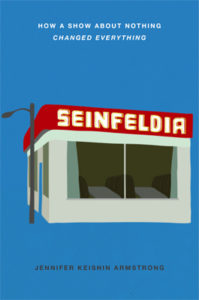
seinfeldia

Seinfeldia, Jennifer Keishin Armstrong (Simon & Schuster)

I think about Seinfeld a few times an hour. There’s always something happening that has me flashing back to the show that I’ve watched all the way through at least three times, but I didn’t realize how little I knew about the history of the show until I read Jennifer Keishin Armstrong’s wonderful deep dive into the “show about nothing.” Really a must for any fan of the show, or just a really weird and wonderful moment in television history.

–Jason Diamond (Lit Hub contributor)
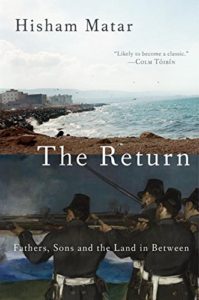
hisham matar the return

The Return, Hisham Matar (Random House)

Hisham Matar’s first novel, In the Country of Men, was narrated by a nine-year-old who watches Gaddafi’s dictatorship divide his country and his family and wonders, “Can you become a man without becoming your father?” That novel was a National Book Critics Circle and Man Booker finalist. Matar’s memoir tells of life under the dictatorship, of exile, and the ongoing grief of losing his father, a major opposition leader. (His father was kidnapped from their apartment in Cairo in 1990, and imprisoned in Libya, never to be seen again.) After the revolution, he returns to find out his father’s fate. Grief is “a divider,” he writes. “It moved each one of us into a territory of private shadows, where the torment was incommunicable, so horribly outside of language.”

–Jane Ciabattari (Lit Hub contributor)
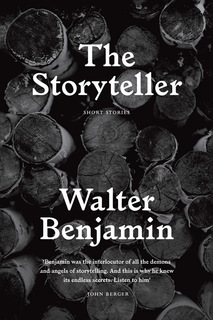
walter benjamin

The Storyteller: Tales Out of LonelinessWalter Benjamin, illustrated by Paul Klee (Verso)

In college I carried around an acid-yellow copy of Illuminations and waxed haughty-as-a-motherfucker about the angel of history and the aura of authenticity and the arcade and the flaneur. But time rushes on (with its face to the past) and life presents ever fewer opportunities to take a Hegelian-Marxist-Kabbalistic-Romantic deep-dive. Until you find out Benjamin wrote riddles that are weirder and even more tender and arch than you’d expect (and make you feel like a genius to solve). And then you find out he wrote fiction too.

–Emily Firetog (Lit Hub Managing Editor)
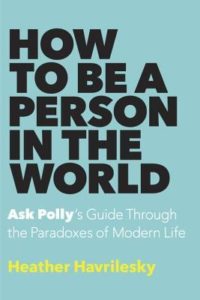
how to be a person in the world

How to Be a Person in the World, Heather Havrilesky (Doubleday)

As a Virgo, and thus, a detail-oriented rule follower, I am particularly amenable to being told what to do. This is doubly true when I’m being told by Heather Havrilesky, the woman behind The Cut’s (previously The Awl’s) Ask Polly advice column and several of my least disastrous personal decisions. If you’re in need of someone to tell you, lovingly, how to get your shit together, in prose expertly seasoned with “fucks,” I am certain this book will do the trick. (Havrilesky also writes an excellent column for Bookforum. She’s not paying me, I promise).

Jess Bergman (Lit Hub Assistant Editor)
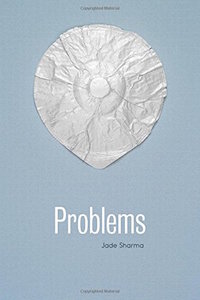
problems cover

ProblemsJade Sharma (Coffee House Press/Emily Books)

Since it was announced, I’ve been very excited for Coffee House’s new imprint, Emily Books; their first title is Jade Sharma’s debut novel, Problems. Although, as the title suggests, the book deals with a host of serious issues (including, but not limited to, the narrator Maya’s “heroin hobby,” deeply troubled marriage, chronically ill mother, eating disorder, and much older, ex-professor lover), the voice is incredibly funny, offhandedly insightful, and captivating.

—Blair Beusman (Lit Hub Associate Editor)
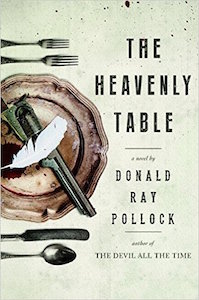
The Heavenly Table

The Heavenly Table, Donald Ray Pollock (Doubleday)

The Heavenly Table—a darkly comic new novel from “Hillbilly Gothic” maestro Donald Ray Pollock about a trio of dirt-poor Ohio brothers who, in the throes of their newfound zeal for violence and mayhem, cross paths with a down-on-his-luck farmer named Ellsworth. Set against the backdrop of America’s entry into WWI, with the echoes of the Civil War still reverberating through the country, it looks like a hell of a ride.

–Dan Sheehan (Lit Hub Assistant Editor)
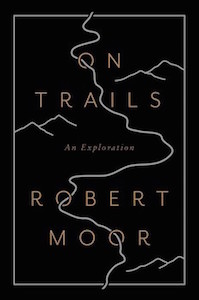
On Trails, Robert Moor (Simon & Schuster)

After walking the length of the Appalachian Trail, from Georgia to Maine, Robert Moor returned to New York City and began to see trails everywhere: ants marching across his windowsill, dirt-track shortcuts across the corners of parks, the feint grooves in old stone steps… Fascinated by the way we create trails (and how they create us) Moor’s On Trails is a thoroughly researched blend of science and philosophy that offers a fresh perspective on the lived world.

–Jonny Diamond (Lit Hub Editor)


https://lithub.com/21-books-you-should-read-this-july/