Showing posts with label Dennis Cooper. Show all posts

Thursday, October 28, 2021

Dennis Cooper on writing as sculpture


Dennis Cooper on writing as sculpture

From a conversation with Brandon Stosuy
October 18, 2016

The L.A.-born, Paris-based writer Dennis Cooper is an iconic voice in gay and experimental literature. For 14 years, he ran the popular blog, The Weaklings. In recent years, it was hosted by Google’s Blogger Platform. When Cooper tried to access his Gmail account on June 27, 2016, it had been disabled. When he checked the blog, he was met with this message: “Sorry, the blog at denniscooper-theweakling.sblogspot.com has been removed. This address is not available for new blogs.” Cooper reached out to Google to see why, and didn’t get a response. It didn’t seem like he’d get a response, or the defunct blog’s data, until a few publications like Artforumthe Guardianthe NY Times and the New Yorker, picked up the story, brought up issues of censorship, and Cooper hired a lawyer. Almost two months later, on August 19, Cooper got his data and email archives back from Google, including a just-finished animated GIF novel (his most recent form of writing).

Diarmuid Hester’s Wrong / A Critical Biography of Dennis Cooper


Dennis Cooper


Diarmuid Hester’s Wrong: A Critical Biography of Dennis Cooper

Andrew Strombeck
December 17, 2020 

For many years, with the exception of Kathy Acker, the rich experimental prose of the underground writers of the 1980s and 1990s—such as David Wojnarowicz, Lynne Tillman, and Robert Glück—was largely invisible in the literary academy. While “autofiction” has become a buzzword for much-discussed work by Chris Kraus, Ben Lerner, and Maggie Nelson, the similar techniques used by the earlier group of writers were seldom given careful scrutiny at the time. All of that has changed in the past decade, particularly in the growing body of work on New Narrative. With Wrong, his critical biography of Dennis Cooper, Hester shows us both why this neglect occurred and why readers should attend to these writers. In Hester’s hands, Cooper emerges as a one-man microhistory of the queer American underground.

Dennis Cooper, Probably


Dennis Cooper

Dennis Cooper, Probably

FINDING THE POSTMODERN ANNABEL LEE FOR A TIGER-BEAT BECKETT


“Literature is preferable to experience, since it is for the most part the closest one can get to nothing.”

—Laura Riding, Anarchism Is Not Enough


August 1, 2005
Jason McBride


It’s an infantile and homophobic belief that the obsessions fuelling the quintessential Dennis Cooper novel—pedophilia, violent murder (and mutilation, dismemberment, etc.), kiddie porn, sexual abuse, unrepentant drug use—do not constitute serious literature. Cooper himself precisely counters such sentiment in “Container”: “I shove the knot of my feelings as deep as they’ll go into as compact and smoothed-out a prose style as I can build out of what I know. But they don’t belong here, any more than a man’s fist belongs in a boy’s ass.”

Saturday, October 23, 2021

Dennis Cooper / “I’ve Never Written a Book That’s Personal Like This Before”

Dennis Cooper

Dennis Cooper: “I’ve Never Written a Book That’s Personal Like This Before”

The writer sits down with Barry Pierce to discuss the George Miles Cycle, the state of transgressive literature and why his latest novel I Wished is his most personal to date


SEPTEMBER 13, 2021
TEXT Barry Pierce
LEAD IMAGEDennis CooperPhotography by Assaf Shoshan

There are few writers like Dennis Cooper. To read his novels is to gaze into the bleakest depths of humanity and to come out the other side feeling utterly violated. What more could you want? Murder, rape, paedophilia, incest and castration are all constants throughout Cooper’s work and have led him to win praise from transgressive icons such as Kathy Acker and William Burroughs. The George Miles Cycle, his series of five interconnected novels published between 1989 and 2000, is a landmark of American literature and was inspired by his real-life friendship with a man named George Miles. Cooper has built a mythology around Miles in his work but with his latest novel, I Wished, it seems Cooper is finally ready to pull back the curtain on the legendary figure. I caught up with the author on a Monday afternoon as he sat and smoked in his Parisian apartment.Barry Pierce: How would you describe I Wished?

Dennis Cooper and Richard Hawkins on Books, Naked Bodies, and OnlyFans


Dennis Cooper at his apartment in Paris.


Dennis Cooper and Richard Hawkins
on Books, Naked Bodies, and OnlyFans

In the puritanism of American fiction (with its endless moral posturing, constant need for redemption narratives, and characters that seem required by law to learn valuable life lessons by the end of their run), Dennis Cooper stands like a pagan god—wild, fearsome, fulsome, something to worship and tremble in front of, and maybe even to feed a little blood. Or perhaps Cooper is more like the bookstore bogeyman waiting for you down at the end of the isles of flowery fiction, ready to swallow you whole. Or maybe he’s just a different kind of literary mystic. Whatever Cooper represents in the landscape of contemporary literature, he’s without a doubt one of the most vital and important writers to emerge in the past 50 years, and his genius goes far beyond mere taboo-breaking (although it’s very difficult to read one of his deadpan, hardcore novels and not walk away a few degrees less innocent than you were on page one). Cooper’s books are dissection tables of desire; they take a bone saw to the dreams, sexual fantasies, obsessions, youthful delusions, and myths of fame and individuality that have come to define our private and public selves.

Dennis Cooper in Translation / An Interview by Paul Cunningham

Dennis Cooper

Dennis Cooper in Translation: An Interview by Paul Cunningham

December 23, 2020

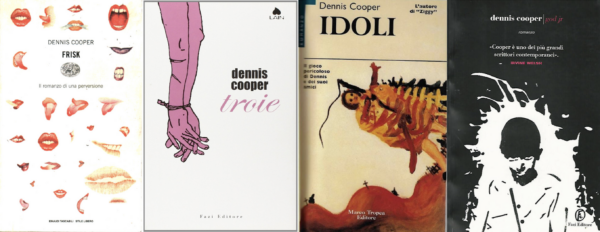
FriskTry (Troie), Idols (Idoli), and God Jr. in Italy

Paul Cunningham: As Diarmuid Hester points out in Wrong: A Critical Biography of Dennis Cooper, two of your earliest and most significant influences include Arthur Rimbaud and Marquis de Sade. You’ve called Sade’s 120 Days of Sodom a “giant discovery” at the age of 15. Aase Berg’s With Deer was my own giant discovery at 17. For a long time, Johannes Göransson and Joyelle McSweeney of Action Books have both argued that translation can have a renovative, transformative effect on U.S. poetry. Was it a coincidence that so many of the works that influenced you in the beginning were translations? If not, what do you think it was that was happening in those books-in-translation that maybe wasn’t happening in American poetry at the time?

Eileen Myles and Dennis Cooper on staying sane, sending snail mail and the old New York City


Eileen Myles


Eileen Myles and Dennis Cooper on staying sane, sending snail mail and the old New York City


Text by
Joshua Glass

Photography by
Andreas Laszlo Konrath

Posted
January 28, 2018

The poet Eileen Myles ran as an “openly-female” write-in candidate in the U.S. presidential election against George H. W. Bush in 1992. At a time when a minority win was nearly unfathomable (then Arkansas’s governor Bill Clinton and the businessman Ross Perot headed the Democratic and Independent parties’ tickets), her act was one of championship and social defiance. She had done so after Bush declared that the country’s greatest threat to free speech was posed by what he deemed “the politically correct”—the marginalized activists, minorities, women, people of color, queers, and those Myles described as “everybody who he didn’t want to hear from more than once”—were a source of conflict. While Clinton eventually took hold of office, Myles’s nearly year-and-a-half-long campaign / pseudo-performance piece was emblematic of the queer writer’s own creative oeuvre. In her nearly two dozen printed and published works in full, Myles has exploited raw emotion and social critiques with biting wit. Much of her work decodes New York City as a locale—a place that she first moved to in 1974 to become a poet and would eventually become a hub for her creative friends, like the author turned publisher Dennis Cooper. Although situated across the country in Los Angeles, Cooper was a steady fixture in the 80s literary scene and quickly became pen pals with Myles. They first met, in fact, via U.S. postage, when each had been sent copies of the other’s magazine: Myles’s Dodgems (1977-1979), which published radical poems from the likes of John Ashbery and Barbara Guest and Cooper’s cross-discipline Little Caesar, which eventually became his imprint. Here, the old friends speak for the first time in nearly a decade about their early beginnings and the changes they’ve encountered along the way.

Novelist Dennis Cooper thinks the kids are alright


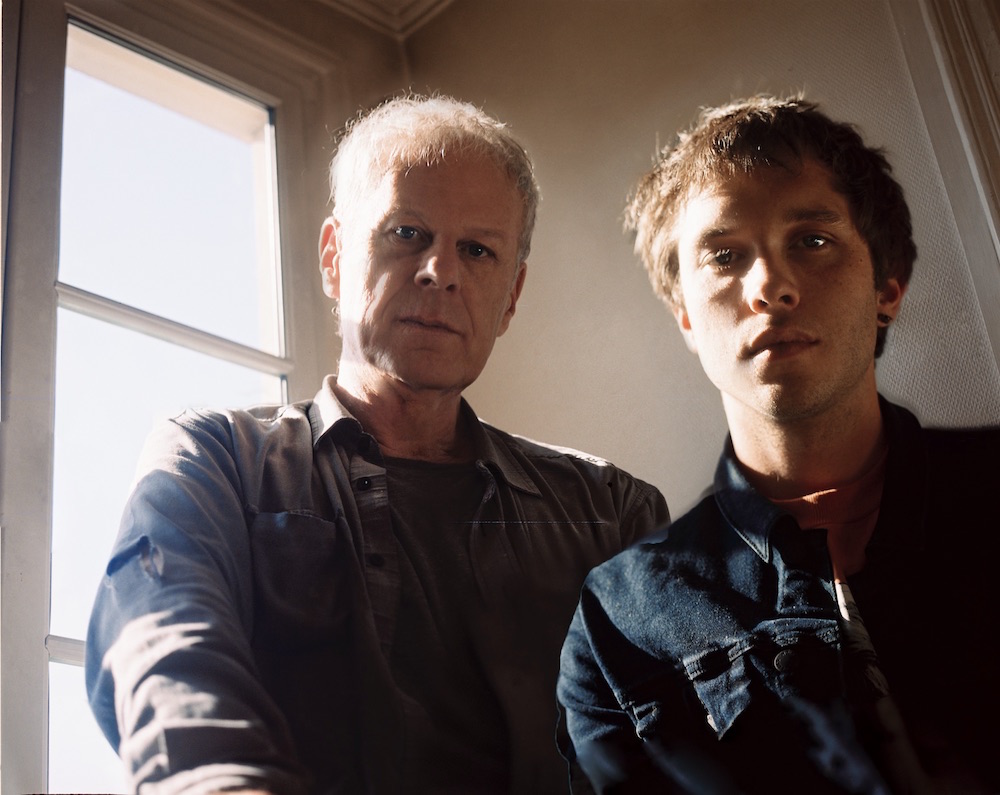
DENNIS COOPER, LEFT, WITH COLLABORATOR ZAC FARLEY

Novelist Dennis Cooper
thinks the kids are alright

The first Dennis Cooper novel I read was The Sluts [2007], his chronicle of a young male prostitute’s brutal life as told through comments on an online message board. Unfortunately for the author, I couldn’t put the book down, and finished it right there in the store without buying it. Fortunately for him, I bought three more of his books on the spot.

Friday, October 22, 2021

Dennis Cooper by Tim Guest

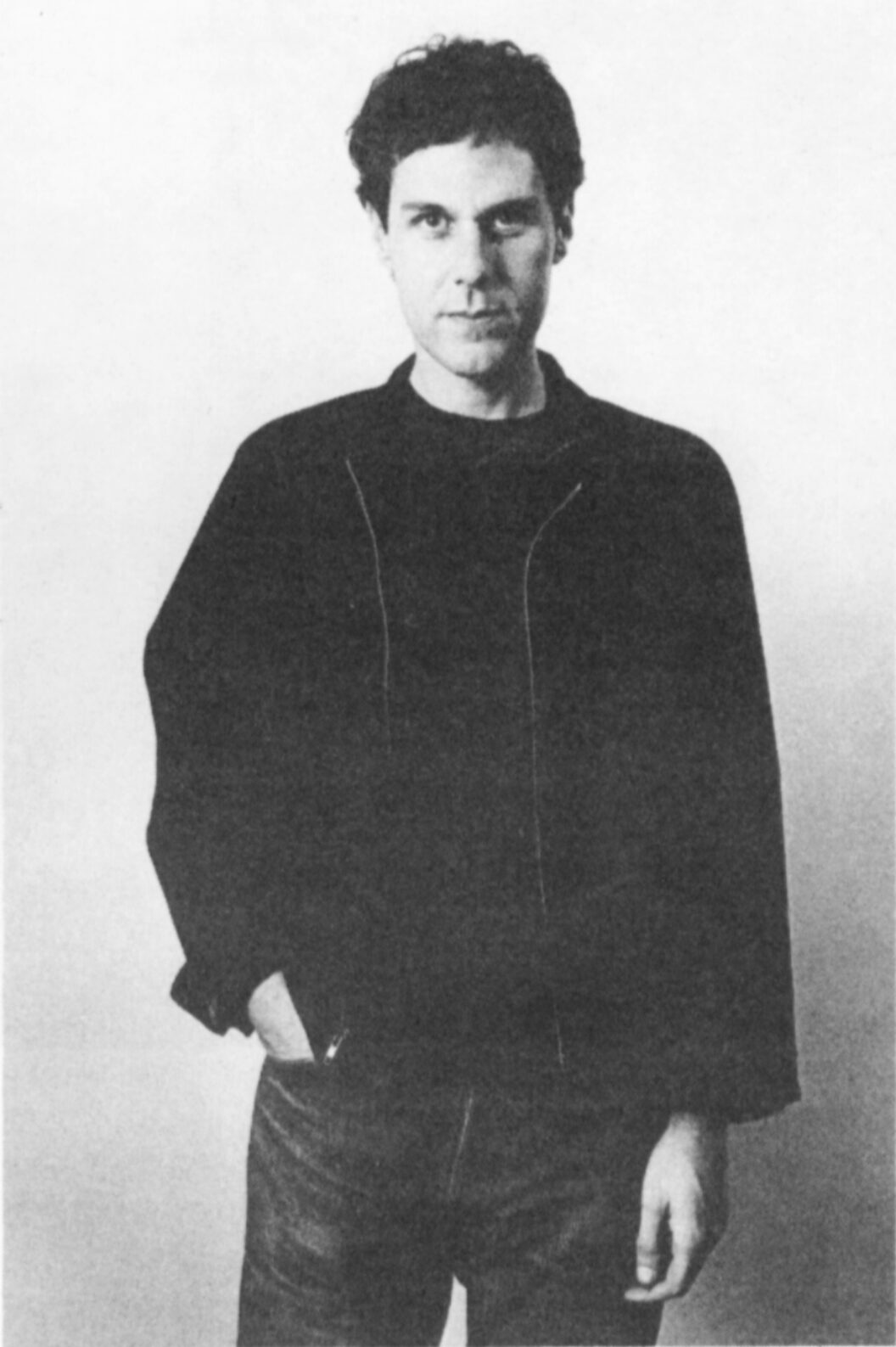
Dennis Cooper, 1989
Photo by James Hamilton


Dennis Cooper by Tim Guest

APRIL 1, 1989

The writer, Dennis Cooper, first became known as the editor of Little Caesar, a landmark literary magazine out of Los Angeles. Cooper’s book length prose poem, Safe, was published in 1984, but the real celebration comes now, with the appearance of his first novel, Closer, just out from Grove Press.

Dennis Cooper / Windows on the World


Windows on the World
by Dennis Cooper

A series on what writers from around the world see from their windows.

This is the only window in the room where I live. It looks over the former grounds of the former monastery turned artists residency in the 10th arrondissement of Paris where I reside. I only look through it when I’m smoking. 


DE OTROS MUNDOS
Dennis Cooper / Chaperos / Sadomasoquismo internauta
Dennis Cooper / Todos los males, el mal
Dennis Cooper / El creep entre nosotros
Dennis Cooper / “Si pudiese sintetizar lo que hago en un Tweet, no seguiría escribiendo novelas”
Chaperos
Dennis Cooper / Chaperos / Prólogo de Juan Bonilla
Dennis Cooper / El ‘escritor más peligroso de los EE UU’ publica una novela con gifs animados
Google rapta la nueva novela de Dennis Cooper
Dennis Cooper / Lo peor

Dennis Cooper / Contacto / Anagrama

Dennis Cooper / Cacheo / Anagrama

FICCIONES
Casa de citas / Dennis Cooper / Sobre la destrucción
Casa de citas / Dennis Cooper / Franceses
Casa de citas / Dennis Cooper / Chaperos
Casa de citas / Dennis Cooper / La ciberconectividad
Casa de citas / Dennis Cooper / Provocador
Casa de citas / Dennis Cooper / Guía
Casa de citas / Dennis Cooper / Autores
Casa de citas / Dennis Cooper / Sobre la naturaleza del deseo

MESTER DE BREVERÍA
Dennis Cooper / El muerto
Dennis Cooper / Niña
Dennis Cooper / Hacha
Dennis Cooper / El cerdo


Biographies / Dennis Cooper


Dennis Cooper

Dennis Cooper

(1953)

"It’s a stylized version of a really boring world where nothing ever happens. There’s no momentum in the book at all except for the meeting of these different people. Just like a drift … like drifting. The characters are in school. I have them in school because it’s a set pattern of school-home, school-home, and sleep. A kind of mechanical going back and forth. The characters are always trying to overcome the banality and terror of the world they live in by constructing some sort of mental world, the main character, George especially. Disneyland is his idea of what perfection is, a place where everything, every emotion is stylized in order to be entertaining. Nothing really hurts, nothing’s really scary, and everything’s fed into you. The drugs he takes function in the same way. It’s as though these characters—even the murderers—are each trying to transcend a life in which nothing happens. All of them are trying to discover some kind of sensation. They’re attempting to find it in all these different ways; they link together because they see in each other the opportunity to feel something. I tried to construct the book so that it had a blankness, like you said, but there is also a … compression. The characters are trying to force something into their lives by doing these extreme things … criminal and perverse. And the way I made the book, in a kind of overly rigorous structure, for example, in stanzaic paragraphs that are always the same length, is an attempt to force some sort of beauty and rigor into their world."

Dennis Cooper on Closer