Humans and climate change drove the woolly rhino to extinction
Of the more than 60 species of megafauna that existed during the last ice age, only eight remain and most are in critical danger of disappearing
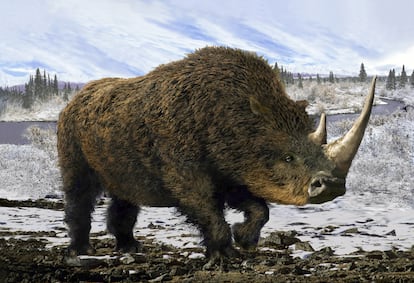
It was what the military calls an encircling maneuver. After 2.5 million years thriving throughout Eurasia, the woolly rhinoceros (Coelodonta antiquitatis) retreated further and further east and further and further north, as they fled the unfavorable climate. The species was then finished off by Neanderthals and modern humans. In the end, when the Ice Age had passed and the planet was entering the present era, only a few remained in the extreme northeast of Siberia. They did not make it across the Bering Strait to America; they became extinct earlier. Now, the modeling of that retreat has made it possible to apportion the blame: climatic swings created their deathbed and human hunting put the nail in the coffin. The authors of the new study believe that four of the five remaining rhino species are also on the same highway to extinction. But they have a few ways out left.