‘He made the wild milkshake of the world a place of granular human interest’ … Hockney’s A Bigger Splash, 1967. Photograph: David Hockney
‘I think about him every time I go swimming’: David Hockney remembered by Rachel Whiteread, Jeremy Deller and more
Artists and cultural figures celebrate the great Yorkshire painter who could ‘make teabags and toothpaste glamorous’ – with a poem from a fellow YorkshiremanRachel Whiteread, artist: ‘It was like he was breathing art’
Cuddy by Benjamin Myers review – a visionary history
An Anglo-Saxon saint speaks down the centuries in a sensational piece of storytelling about Britain’s past and present
Nina Allan Thursday 9 March 2023
C
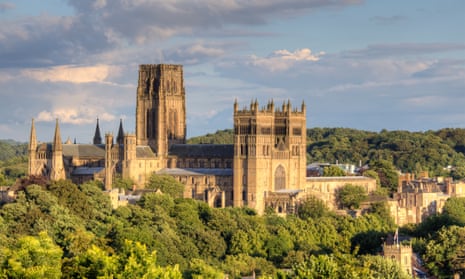
uddy is the affectionate name for Saint Cuthbert of Lindisfarne (c634-687), a shepherd boy born in the Border country who rose to become prior of Melrose Abbey and who ended his life as a hermit on a tiny, inhospitable island off the coast of Northumbria. Cuthbert is one of Britain’s most popular saints, widely venerated for his affinity with animals, his sympathy for ordinary working people and his association with the landscapes and holy places of the north of England. At the time he died, Christianity was a relatively new religion in Britain. Following his interment on Lindisfarne, Cuthbert’s remains were removed to the mainland in order to prevent their desecration by invading Danes. Loyal monks and shifting bands of followers conveyed Cuthbert’s coffin to Chester-le-Street, where it remained until 995, when Viking invaders again made it necessary to move it to safety. It is on the final leg of this journey that Benjamin Myers’s novel opens, with the great cathedral, founded in Cuthbert’s honour in 1093 at what will later be Durham, still nothing but a holy vision of his most fervent disciples.
Cuddy is divided into four parts, with an additional prologue and interlude. In order to fully disentangle the mostly factual from the possibly fictional, you would need to immerse yourself in the surfeit of sources liberally quoted by Myers in his construction of this literary edifice. You may well be inspired to do so, if only to prolong your acquaintanceship with its landscapes and people; but you might equally embark on this journey as I did, knowing next to nothing about the titular figure, and find yourself swept along on a tide of pure literary sensation.
The first part of the novel, Saint Cuddy, is told in the voice of Ediva, an orphan taken in by the monks as a child, now travelling with them as healer, cook and helper as they search for a final resting place for Cuddy’s coffin. Ediva is alive to the rhythms of the landscape in a way that marks her out as different; she also sees visions of the future cathedral – a building “bigger than anything man has ever built, so big it rears up like a mountain, like a great beast” – where the saint will finally be laid to rest.
Book two, The Mason’s Mark, carries us forward to 1346. Fletcher Bullard – champion archer, domestic abuser – is off fighting the Scots. When his wife, Eda, meets Francis Rolfe, one of a team of masons engaged in repairing and enhancing Durham Cathedral’s decorative stonework, what occurs will live on in the stone.
Book three, The Corpse in the Cathedral, finds us in the company of a 19th-century Oxford professor, Forbes Fawcett-Black, invited to witness the opening of Cuthbert’s tomb. Entertaining though the professor is, with his insufferably cocksure tone and almost cartoonish hatred of the north of England, he initially had me wondering if Myers had committed a misstep. The increasingly serious turn taken by this chapter had the effect of removing my doubts, as well as shaking the professor’s loudly proclaimed contempt for the ineffable. Forbes Fawcett-Black resembles those unfortunate scholars dreamed up by MR James, whose much verbalised confidence in the scientific pursuit of knowledge is no defence against the darker forces they have dismissed as superstition. The Corpse in the Cathedral is a ghost story all the more satisfying for being populated by ghosts we have already met.
The final part of the novel, Daft Lad, brings us at last to the present, or rather the very recent past of 2019. Michael Cuthbert lives with his dying mother in a village three miles outside Durham. He never knew his father, who has done time in prison, and his lack of qualifications leaves him dependent on zero-hours labouring contracts. After an off-the-books job removing old asbestos, Michael is offered a stint of lifting and carrying at Durham Cathedral, where his personal history and unconscious heritage combine to open his eyes to a world that has previously seemed closed to him.
One of the many pleasures of Cuddy lies in spotting the multitude of links between the chapters. There is always an owl-eyed youth, a provider of victuals and seer of visions, a bad monk and a violent man, their prominence ebbing and flowing from story to story. Always and throughout there is the voice of Cuddy, speaking to them in dreams, borne on the wind and in the sound of the sea, passed down the generations through the memories and cherished relics of those who went before.
The language of this novel is as essential to its storytelling as the characters. Ediva’s narrative in book one dances off the page in a free-flowing, discursive stream, forever on the point of coalescing into more formal poetic structures. Book two is delivered in monolithic slabs of language, monumental as the blocks of stone that made the cathedral itself. The playscript of the interlude and the ornate pastiche of the Victorian ghost story lead us to the rich and resonant prosody of the final section, its twin emphasis on sense of place and societal disjuncture keenly familiar from Myers’s previous work in novels including The Gallows Pole and The Perfect Golden Circle.
Michael Cuthbert’s connection with the landscape is of an intensity we might expect from a character in an Alan Garner novel. Michael’s elegiac, impassioned narrative, with its layered connections back to earlier chapters, sets the seal on a novel that has far more to say about who we are as a nation, where we came from and where we are headed than any number of more self-consciously political “state of England” novels. Myers’s experience as a writer shows in his elliptical approach to history and those who make it, and his willingness to take on complex material that retains its mystery even as it compels further discussion. The symbiosis of poetry and story, of knowledge and deep love, marks out Cuddy as a singular and significant achievement.
Cuddy by Benjamin Myers is published by Bloomsbury.
Best books of 2017: indie publishers on their favourite books of the year
India’s answer to Lear, a teen tale set amid the London riots and the first great book on grime. Experts pick 2017’s smartest, oddest and most overlooked reads
Interviews by Eloise Millar Fri 29 Dec 2017 08.00 GMT
Sarah Davis Goff
Co-director, Tramp Press
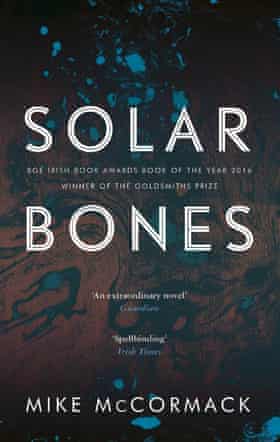
The book that made my year: We spoke last year about Mike McCormack’s wonderful Solar Bones, which garnered rave reviews and a rake of prizes including the Goldsmiths and two BGE Irish Book Awards. We suspected it was only gathering speed – and we were so delighted when it was longlisted for the 2017 Man Booker (thanks to Canongate publishing their gorgeous edition). And Sara Baume’s wondrous A Line Made By Walking helped make 2017 a brilliant year.
Our book that deserved to do better: Our Recovered Voices series is how we republish lost classics: this year we followed up our very successful haunted house story, The Uninvited, with The Unforeseen, also by Dorothy Macardle. Set in Wicklow just before the second world war, it’s an eerie and gorgeously written tale.
I wish I’d published: The End We Start From by Megan Hunter (Picador) is all my favourites – short, sharp, apocalyptic and beautiful.
Bibi Bakare-Yusuf
Publishing director, Cassava Republic
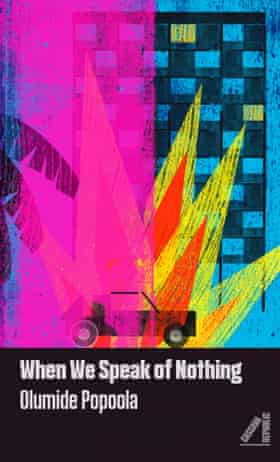
The book that made my year: When We Speak of Nothing by Olumide Popoola. We’re really proud of this one. Set in King’s Cross and Port Harcourt, it is the coming-of-age story about two black adolescents and their friendship. The novel taps into issues of queer identity and social divides at the time of the 2011 London riots. Olumide captures a voice of black British youth that has been almost entirely absent from literary fiction.
Our book that deserved to do better: The Hidden Star by K Sello Duiker. Published posthumously, this magical YA quest is set in South Africa. We had a good deal of success with it in Africa, but I feel it was overlooked by UK reviewers. I wish I’d published: Irenosen Okojie’s Speak Gigantular (Jacaranda Books) is an eclectic, disturbing and erotically charged short story collection by a scorching talent. And Diana Evans’s Ordinary People (Chatto & Windus) – brilliant.
Sam Jordison
Co-director, Galley Beggar Press
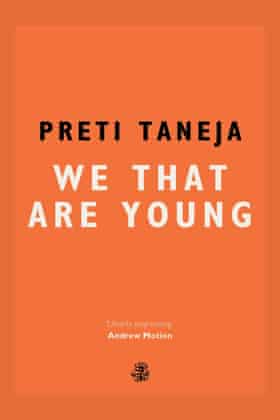
The book that made my year: We That Are Young by Preti Taneja. A translation of King Lear into a contemporary Indian setting, We That Are Young is a devastating novel; we’ve been overwhelmed by the fantastic reviews and reader reactions.
Our book that deserved to do better: We Are the End by Gonzalo Garcia is a wonderful book about a messed-up young man called Tomas, who (like all of us) gets things wrong. He isn’t much of a hero, though, and that’s proved tricky. It has really touched some readers – but I worry others judged the protagonist rather than the book about him, and maybe missed its humour and sadness.
Our book that deserved to do better:1947: When Now Begins by Elisabeth Åsbrink is a work of narrative nonfiction that reads like poetry. Although it has received a share of acclaim already, it deserves to be a bona fide bestseller.
I wish I’d published: I was electrified by The Adversary, by French writer Emmanuel Carrère. Reissued by Vintage this summer, it’s a true-crime account of an infamous con man, but the intensity and self-scrutiny of Carrère’s writing turns it into a disconcerting and unputdownable moral thriller.
Daniela Petracco
Director, Europa Editions
Photograph: PR
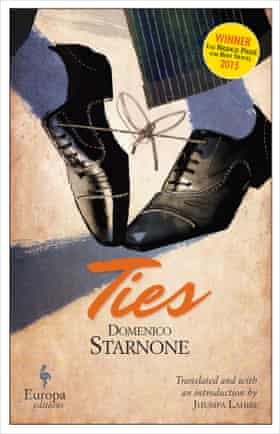
The book that made my year: Ties by Domenico Starnone is a powerful short novel about relationships, family, love and the ineluctable consequences of our actions. Lucidly rendered into English by Jhumpa Lahiri, it was selected by the Sunday Times as best novel in translation of 2017.
Our book that deserved to do better:The Gringo Champion by Mexican author Aura Xilonen is a contemporary take on the picaresque novel and a literary antidote to the growing xenophobia of our times.
I wish I’d published: Broken River by J Robert Lennon (Serpent’s Tail): genre-defying, deeply unsettling and wickedly suspenseful.
The book that made my year: Leone Ross’s sparky and transgressive short story collection, Come Let Us Sing Anyway, has gathered some very admiring reviews and sold respectably. The other book that made my year – it’s only just out – is Jacob Ross’s collected stories, Tell No One About This. Heart-breaking, radical in its social insights and finely honed.
Our book that deserved to do better: Jennifer Rahim’s Curfew Chronicles hasn’t yet been recognised outside Trinidad for the brilliantly inventive way it builds short narratives into a kind of mini-Ulysses, taking place over 24 hours in Trinidad during a state of emergency.
I wish I’d published: Lorna Goodison’s Collected Poems (Carcanet). A Caribbean and international great.
Jacques Testard
Publisher, Fitzcarraldo Editions
The book that made my year: Compass by Mathias Énard (translated by Charlotte Mandell) is a brilliant novel, a fictionalised history of orientalism told by an insomniac musicologist in Vienna. It has been fun to watch Énard’s reputation grow in the anglophone world. In 2018 we’ll publish a fourth novel in English, on the possibly apocryphal story of Michelangelo designing a bridge over the Bosphorus.
Our book that deserved to do better:This Little Art by Kate Briggs, a genre-bending song for the practice of translation, has had a lot of recognition in translation circles – but I’m longing for it to find a wider audience. Lydia Davis called it “highly enjoyable” – what more do you need?
I wish I’d published: Ferocity by Nicola Lagioia (translated by Anthony Shugaar, Europa Editions), a Lynchian noir set in southern Italy.
Nathan Connolly
Publisher, Dead Ink
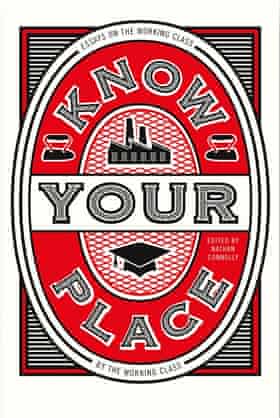
The book that made my year: Without a doubt, Know Your Place: Essays on the Working Class By the Working Class. After raising £10k on Kickstarter, this collection has gone on to be our bestselling book ever. The important conversations it has started about being working class in Britain today are vital.
Our book that deserved to do better: Not that it hasn’t done well, but Naomi Booth’s Sealed is a book that everyone should be reading. An expertly crafted eco-horror that is so beautifully written that it should be sold as poetry. No book has summed up our precarious position in the world so well for me.
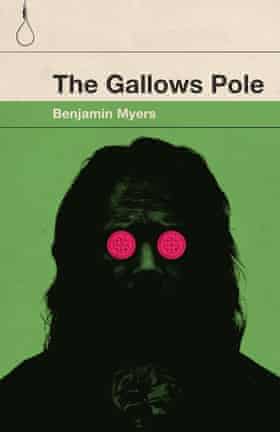
I wish I’d published:The Gallows Pole by Benjamin Myers. Within this book there is something beyond truth: a mythology of England’s North.
Deborah Smith Publisher, Tilted Axis
The book that made my year: Prabda Yoon’s The Sad Part Was – a witty, touching, whip-smart story collection by an author who has been a household name in Thailand for over a decade yet had never had anything in English; in fact, this is the first contemporary Thai fiction published in the UK. It was also Mui Poopoksakul’s first book-length translation – she did such a superb job.
Our book that deserved to do better: We were expecting a lot from Abandon, the second novel from “India’s Ferrante” Sangeeta Bandyopadhyay, translated by Arunava Sinha. We were all set for a big UK tour, but Sangeeta couldn’t get a visa. This happens to far too many writers.
I wish I’d published: I read the Singaporean edition of Unrest by Yeng Pway Ngon, translated from the Chinese by Jeremy Tiang, and loved it, but it had already been snapped up for UK publication by Balestier Press. It’s a wonderful novel.
Kevin Duffy
Director, Bluemoose
Photograph: PR
The book that made my year: The Gallows Pole by Benjamin Myers is about a popular uprising against the establishment in the 18th century that has many links with our current political climate. Joanne Harris and Robert Macfarlane chose it as one of their books of the year.
Our book that deserved to do better: Man With a Seagull on His Head by Harriet Paige was runner-up in the Guardian’s Not the Booker prize. It is already being compared to early Ishiguro and McEwan by the US publisher we have just sold rights to.
I wish I’d published: Know Your Place, edited by Nathan Connolly (Dead Ink): 24 essays on the working class by working class writers. Every publisher, editor and agent must read this if the industry is really interested in challenging inequality.
Stefan Tobler
Publisher, And Other Stories
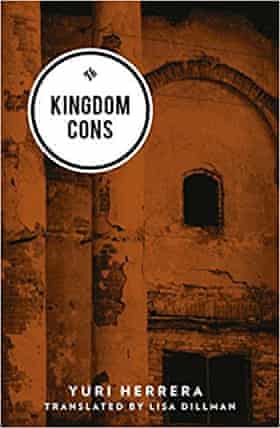
The book that made my year: Yuri Herrera’s Kingdom Cons, translated with such verve by Lisa Dillman. It’s about a singer in the court of the King, a Mexican gang lord, but really it’s a fable about any artist working in a system of patronage: how to make a living and be truthful. It has been a joy to see it receive the acclaim it deserves.
Our book that deserved to do better: Patty Yumi Cottrell’s novel Sorry to Disrupt the Peace had some high praise, but we thought more people should read it. It’s rare to find such a pleasurable, intelligent book.
I wish I’d published: Han Yujoo’s The Impossible Fairytale, translated by Janet Hong, was a novel I tried to publish but lost out on. It is great.
Kit Caless
Co-director, Influx
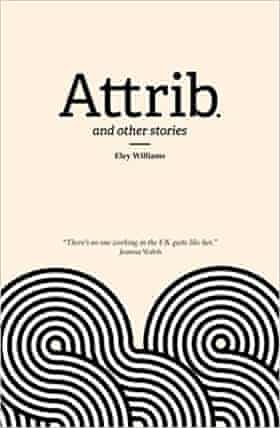
The book that made my year: Attrib. and Other Stories. When we asked Eley Williams to write this book we knew it would be brilliant, but we had no idea quite how brilliant. It’s a masterpiece. We’re really happy that so many people have felt the same.
Our book that deserved to do better: In terms of publicity and media coverage, Hold Tight by Jeffrey Boakye. This is one of the first major books about grime music and its culture. The music press were brilliant in picking it up and shouting about it, but in general, arts and book editors ignored it. They missed an opportunity to reach a young, engaged audience and open up their readership.
I wish I’d published: Know Your Place (Dead Ink) is excellent.