From author to anime hero: the unlikely revival of a Japanese literary star
This article is more than 1 month old
More than seven decades after they were first released, the dark novels of Osamu Dazai have become a publishing sensation, as a new generation of readers engage with his bleakness, humour and brilliance
There’s something eerie about reading Osamu Dazai today. Not because of his death, though drowning in a canal with your lover does linger. Not because of his depression, though it claws through every line. But because Dazai, dead since 1948, feels like he’s writing from inside your head. Even now.
Rea Amit: Hiroko, many consider you to be a representative of contemporary Japanese fiction. While you clearly write in the Japanese language, your works that have been translated into English appear to lack a specific sense of place or time. How do you situate the environment in your fiction within the context of contemporary Japan?
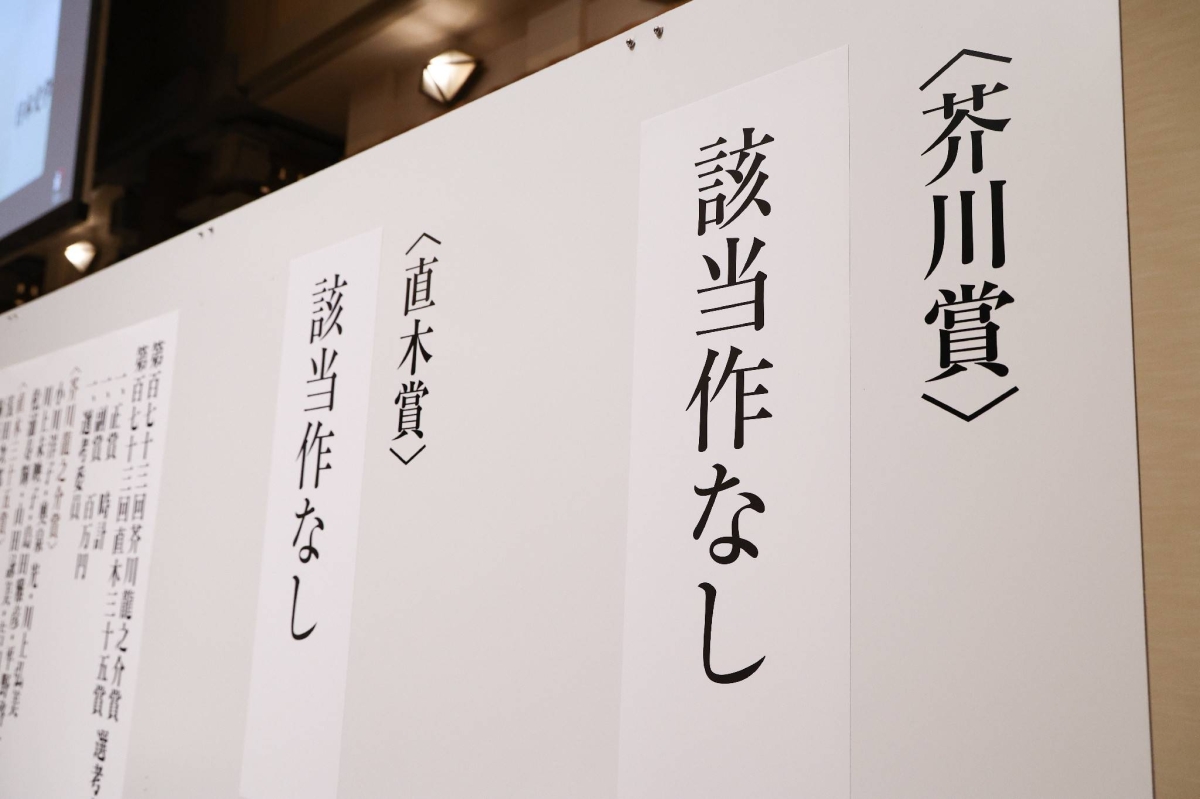
The selection committee for the Akutagawa and Naoki literary awards announced Wednesday that no works would receive the awards this time — for the first time in 27 years.
Awarded biannually in January and July, the Akutagawa and Naoki prizes are Japan’s most prestigious literary honors. The committee’s decision marks the sixth time since their inception, in 1935, that both prizes have had no winners. The last instance was in January 1998.
An Artist Who Summarized the Beauty of Japan in Haiku While on a Life-Risking Journey
9 August 2023
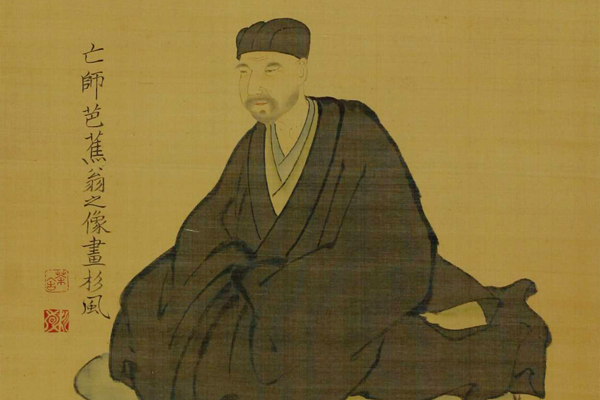
Do you know someone who is famous for haiku? In Japan, there are several people that are famous for their haiku. Among them, Matsuo Basho, who was active in the Edo period (1603-1867), is known worldwide for developing haikai, the original form of haiku.
In this article, we will introduce who Matsuo Basho was and what his masterpiece “Oku no Hosomichi” (The Narrow Road to the Interior) is all about.
The theatrical life and death 50 years ago of one of Japan’s most celebrated and controversial authors created an enduring – but troubling myth, writes Thomas Graham.
Yukio Mishima: The strange tale of Japan novelist
Thomas Graham
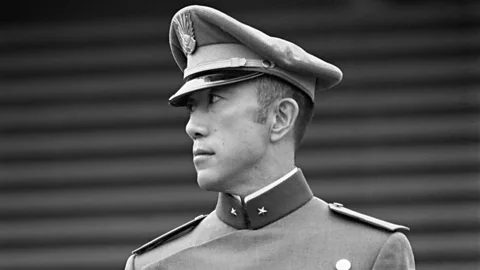
Standing on a balcony, as if on stage, the small, immaculate figure appeals to the army assembled below. The figure is Yukio Mishima, real name Kimitake Hiraoka. He was Japan’s most famous living novelist when, on 25 November 1970, he went to an army base in Tokyo, kidnapped the commander, had him assemble the garrison, then tried to start a coup. He railed against the US-backed state and constitution, berated the soldiers for their submissiveness and challenged them to return the Emperor to his pre-war position as living god and national leader. The audience, at first politely quiet, or just stunned into silence, soon drowned him out with jeers. Mishima stepped back inside and said: “I don’t think they heard me.” Then he knelt down and killed himself by seppuku, the Samurai’s ritual suicide.
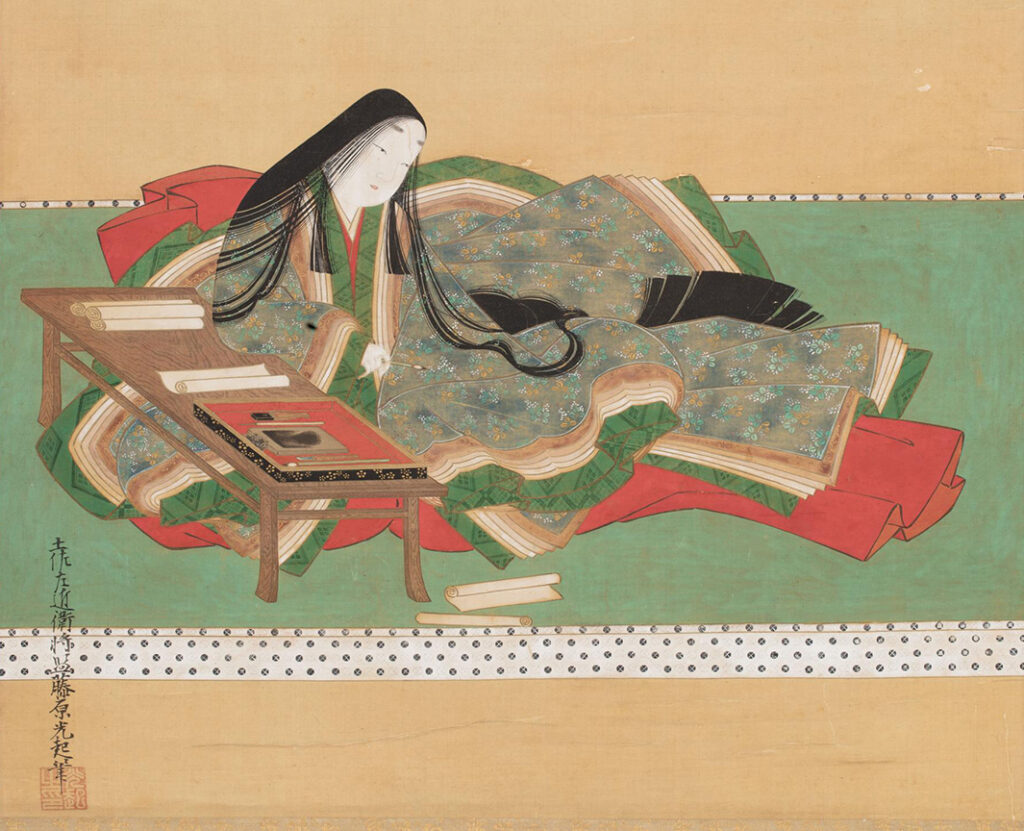
The exact year of Murasaki Shikibu’s birth and death are not known. Furthermore, the name “Murasaki Shikibu” is not actually her real name. In the Heian period, unless a woman was a consort or a child of the emperor, her real name and the year of her birth and death were often unknown. It is said that she came to be called Murasaki Shikibu after “Murasaki no Ue,” a character in her story “The Tale of Genji.”
Issa Kobayashi, born in 1763 in Shinano Province (now Nagano Prefecture), lived a life marked by hardship and resilience. His real name was Yataro, and he came from a farming family. Issa’s early years were challenging. His mother passed away when he was just three years old, and his father remarried when Issa was eight. Unfortunately, his relationship with his stepmother was strained. She favored her own children, leaving Issa to care for his younger half-siblings. When the baby cried, Issa would be scolded, making him feel isolated and unloved. At the age of 15, his father sent him to Edo (modern-day Tokyo) to work. Feeling abandoned, Issa despaired, believing that even his father had turned his back on him. However, his father’s decision stemmed from a desire to protect Issa from the toxic environment at home. This difficult upbringing shaped the emotional depth that would later become evident in Issa’s haiku poetry.
Choosing the fifty best Japanese books ever written is a monumental task, invariably leading to the omission of so many wonderful works of literature. After all, Japan has given rise to some of the world’s best writers, both past and present, with styles that have borrowed from and further informed Western literature. But here are 65 books that, together, speak to the rich history of literature in Japan.
Japan has the prestigious honour of being the birthplace of the world’s first novel, and of three authors who have gone on to win the Nobel Prize in Literature. From classical Edo poets to modern authors and manga creators, Japan’s literary depth and breadth is astonishing. You could read nothing but Japanese literature your entire life and experience the entire scale of human emotion and experience.
Thanks to the work of translators and publishers, Japanese literature is now more accessible than ever to English-speaking audiences. If you'd like to learn more about Japanese culture and literature, you cannot go wrong with listening to audiobooks from Japan. We've compiled a list of the most famous Japanese authors who have helped define Japanese literature, and their notable works. Collectively, these Japanese authors have written across genres and time periods to create a diverse, fascinating body of work.
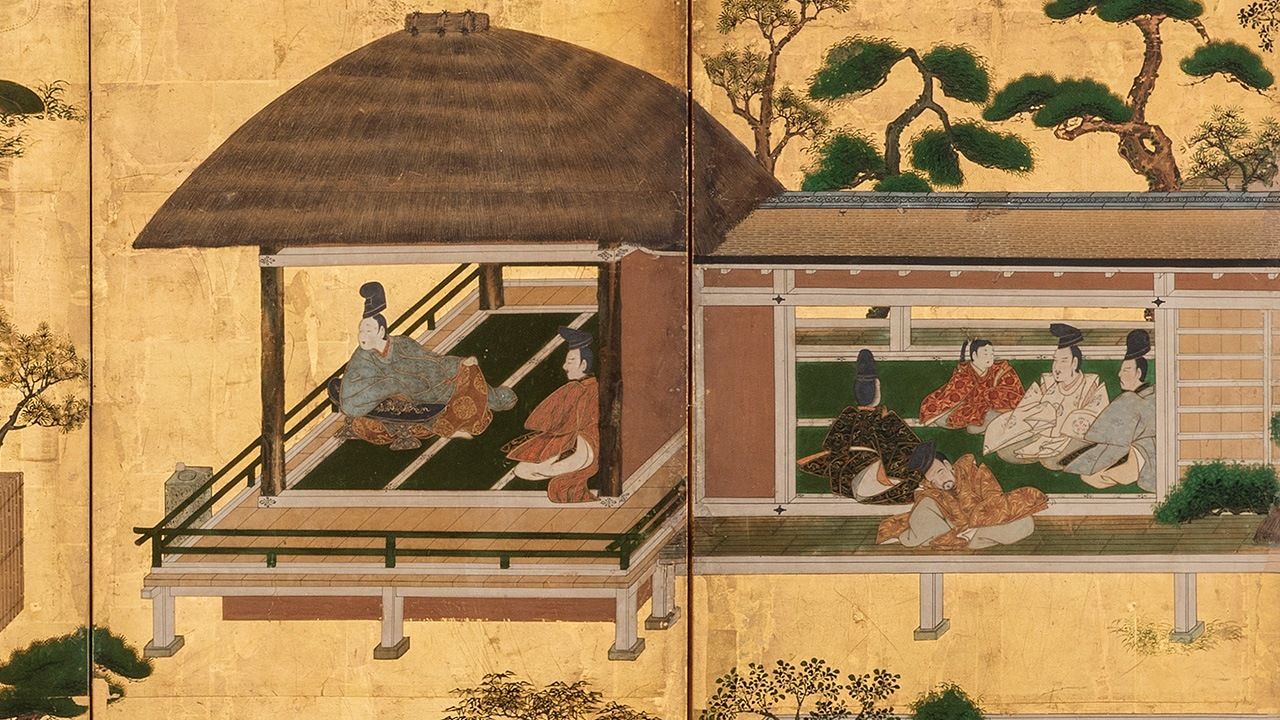
The Tale of Genji has played a substantial role in the formation of Japanese culture, and has lost none of its radiance in the millennium since it was written.
Reading The Tale of Genjiis an excellent way to understand Japanese literature, and the country’s culture in general. Its devoted readers over the centuries include Kawabata Yasunari, the winner of the 1968 Nobel Prize for Literature, whose writings were suffused with the Japanese sense of aesthetics. His protégé Mishima Yukio, seen as a strong Nobel candidate, also took ideas fromGenji.
Photography by Reiko Toyama Styling by Shotaro Yamaguchi
Growing up in Osaka, Japan, novelist Mieko Kawakami was the victim of a common playground prank in which boys would flip up girls’ skirts, hoping to expose their underwear. Yet, she recalls, it was equally humiliating if you weren’t one of the girls chosen. “It meant you weren’t popular,” she told the New York Times in May. “It’s a humiliation among women not to be desired by men. That’s a very strong code in Japanese society.”
Mieko Kawakami is the reigning queen of contemporary Japanese literature for good reason.
Her fiction grapples with essential questions of humanity, while grounding her characters in a muddy reality populated by broken families, absent fathers and children struggling to find meaning in a hostile world. In “Heaven,” newly translated into English by Sam Bett and David Boyd, the writer melds philosophy and truth into a lacerating examination of power, ultimately asking: Who wields it, and why?
Heaven, by Mieko KawakamiTranslated by Sam Bett and David Boyd192 pagesEUROPA EDITIONS
Haruki Murakami: ‘My books have been criticised so much over the years, I don’t pay much attention’
As his new novel is published, the acclaimed author discusses complexity, writing female characters and meeting his fans
John Self
Saturday 23 November 2024
The City and Its Uncertain Walls is based on a novella you wrote in 1980. Why was it important to give it a new audience now? That work is the only one I’ve ever written that I never allowed to be reprinted in book form. To put it another way, I just wasn’t satisfied with the story. I thought its theme was very important but unfortunately I lacked the writing skills at the time to convey it in the way I’d hoped to. I decided to bide my time, until I’d acquired the necessary skill set as a writer, and only then do a complete rewrite of the story.
In the interim, though, I had lots of other work I wanted to undertake and just couldn’t get started on this project. The next thing I knew, 40 years had passed (in a flash, it seemed), and I reached my 70s. I thought I’d better get going if I wanted to really do this, since I might not have all that much time left. I also felt a strong need to fulfil my responsibilities as a novelist.
You wrote the book during lockdown, and rarely left your home when doing so. Did this way of writing affect the tone or content of the story? Certainly, when I was writing this novel I needed a certain amount of peace and quiet, and the time to contemplate things. The situation of the town surrounded by walls was also a metaphor of the worldwide lockdown. How is it possible for both extreme isolation and warm feelings of empathy to coexist? That was one of the major themes of this novel, and in that sense it’s a significant leap forward compared with the original novella.
Some Japanese readers were confused by the book. Others find the strangeness and surreal elements some of the greatest pleasures of your novels. Do you like to leave readers with unanswered questions? I think an outstanding novel will always aim to present some compelling questions – but not give a clear-cut, straightforward conclusion. I’d like to leave my readers, after they’ve finished my books, with something to think about. Like, what endings would be possible here? I drop some hints inside each story in order to leave them thinking. What I’d like is for readers to pick up on these and each arrive at their own, unique ending.
Countless readers have written telling me: “I’ve enjoyed reading the same book of yours so many times.” As the author, nothing could please me more.
When you write about a character like the narrator in The City …, or Toru in The Wind-Up Bird Chronicle, or Kafka in Kafka on the Shore, to what extent are you writing about yourself? The first-person protagonists of my novels are not, strictly speaking, the real me, but the me who might have been. It’s fascinating to pursue those possibilities, since there aren’t many opportunities to become someone other than yourself.
Among the many English-language writers you have translated into Japanese, including Salinger, Fitzgerald, Chandler, Carver and Capote, which of them mean most to you? I’ve been influenced by each writer. I’m very much drawn to Fitzgerald’s and Capote’s brilliant, luminous writing style, though it’s totally different from my own. Personally, I’m really fond of Chandler’s style.
How has the Japanese literary scene changed since you started writing and publishing more than 40 years ago, and do you feel part of that scene or outside it? I think younger writers nowadays have set aside any pretentious ideas about “this is what constitutes literature” and write fiction with a more free, flexible approach. Which I really applaud. In my case, though, I just keep on working in my own way, and I can’t say what relationship I might have with those changes in the literary scene.
What changes have you seen in your readership, both within Japan and internationally, and does it get easier, or harder, to write as you go on? Both in Japan and abroad it seems the number of my readers around the world continues to go up, and I often find the numbers startling. In Laos I’ve had a Thai reader stop me to say hello, in Dresden it was a reader from Albania, and in Tokyo it was an Indonesian reader. I often feel like I’m not my real self, that instead I’ve turned into some kind of fictitious person …
None of that, though, has made writing novels either easier, or more difficult. I’m simply grateful that so many people, a number I never anticipated, read my books. Not everyone is as blessed as I am.
Japanese fiction now represents a quarter of all translated fiction sold in Britain. Why do you think it has such a wide appeal? I didn’t know that Japanese novels are that popular in Britain. What’s the reason? I have no idea. Maybe you could tell me – I’d like to know.
The Japanese economy is not doing well these days, and I think it’s a good thing that cultural exports can make a contribution of sorts, though literary exports don’t make that much of one, do they?
Did Mieko Kawakami’s criticism of the women in your books, made in 2017, have any effect on how you write female characters? My books have been criticised so much over the years that I can’t remember in what context the criticisms were made. And I don’t pay much attention to it, either.
Mieko is a close friend and a very intelligent woman, so I’m sure whatever criticism she made was spot on. But honestly, I don’t recall what exactly she criticised. Speaking of women and my works, though, incidentally my readers are pretty much equally divided between men and women, a fact that makes me very happy.