Showing posts with label Chilean writers. Show all posts

Tuesday, May 12, 2026

Gaseosa by María José Bilbao


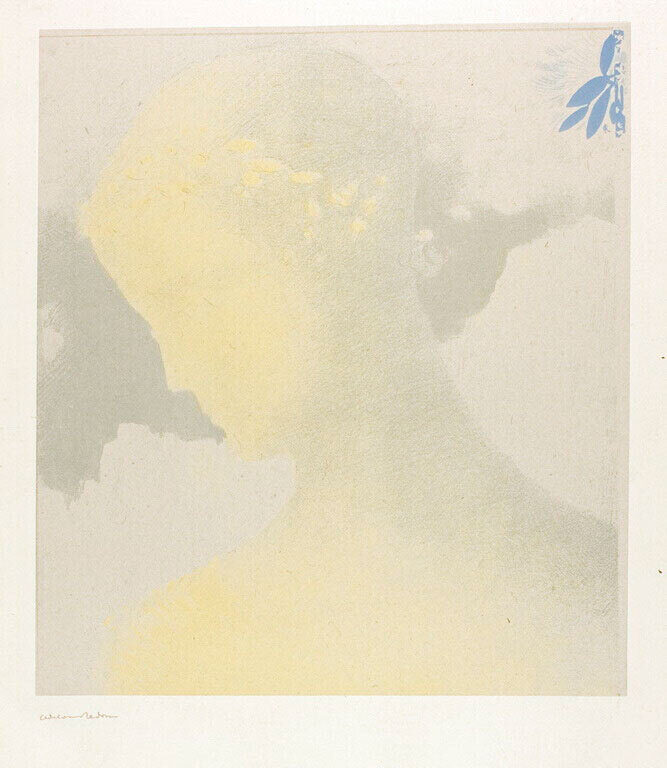
Odilon Redon, Beatrice, 1897. Courtesy the Cleveland Museum of Art, Gift of The Print Club of Cleveland

Gaseosa

By María José Bilbao

Translate by
 Abby Melick


NOW THE WHOLE WORLD knows her as the woman who gave up her body. According to official statistics, she’s the third person to become a gas in all of South America.

Monday, June 17, 2024

Ariel Dorfman, co-author of ‘How to Read Donald Duck’ / ‘Disney wanted children who would compete and embrace a fierce individualism’


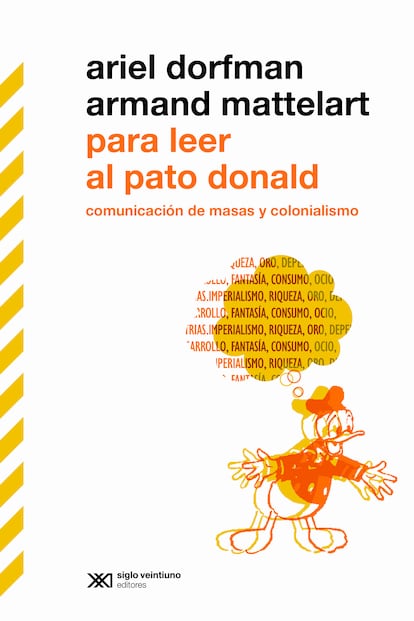
The cover of the most recent Spanish-language edition of 'How to Read Donald Duck'.SIGLO VEINTIUNO EDITORES

Ariel Dorfman, co-author of ‘How to Read Donald Duck’: ‘Disney wanted children who would compete and embrace a fierce individualism’

On the 100th anniversary of the entertainment company, the Chilean writer analyzes the validity of his 1972 work, which points out how iconic cartoon characters have been utilized as means of American propaganda

90 years of Donald Duck: Why Disney’s grumpiest character has been such a success


Caio Ruvenal
Madrid, 29 October 2023

Ariel Dorfman
The Chilean writer Ariel Dorfman in Madrid circa 2009, when he staged his play 'Purgatory.'ULY MARTÍN

How to Read Donald Duck (1972) is a study by Chilean author Ariel Dorfman and Belgian sociologist Armand Mattelart about how Disney comics have transcended their literary value to become symbols. The work deals with decolonial thought and anti-imperialist discourse; it was published at a time when Latin America was seeking to economically and politically emancipate itself from the United States.

Sunday, June 16, 2024

Isabel Allende / ‘It would be terrible for the United States, and for humanity, if Trump were to be elected president again’


Isabel Allende

Isabel Allende: ‘It would be terrible for the United States, and for humanity, if Trump were to be elected president again’

The Chilean writer has authored her first children’s book: ‘Perla The Mighty Dog.’ In this work, she explores the problem of bullying and the importance of facing our fears. ‘If we face what we fear the most, it turns out that it’s not so terrible,’ she says, during a interview with EL PAÍS

Carlos S. Maldonado

México, 31 May 2024

The prolific Chilean writer Isabel Allende returned to bookstores this week, with her first children’s book: Perla: The Mighty Dog. It’s a story that was born from an everyday event. One day, Allende, 81, had gone out to walk with her little dog, who has the same name as the pet in her book. Perla approached a tree and started barking at a squirrel. Suddenly, a large dog broke off its leash and began to attack her.

Friday, February 11, 2022

Isabel Allende / ‘I have been displaced most of my life’


‘I have been displaced most of my life – reading Neruda takes me back to my roots’ … 
Isabel Allende. Photograph: Lori Barra


The 

Books

 0f my 

life


Isabel Allende: ‘I have been displaced most of my life’

The Chilean American author on the allure of Arabian Nights, the inspiration of Gabriel García Márquez and the heartbreak of Jack London


Isabel Allende

Friday 11 February 2022


My earliest reading memory
When I started reading, age five, an uncle gave me a book of Nordic fairytales with illustrations of princesses in furs, bears, ice and snow. I was fascinated. I had never seen snow.

My favourite book growing up
I was 10 when I read (many times) The Call of the Wild by Jack London. The Sled dog Buck’s ordeals broke my heart. I am a crazy animal lover.

The book that changed me as a teenager
Arabian Nights, which I read in the perfect setting of Beirut in the 1950s, hiding in my stepfather’s armoire where he kept (locked up) liquor, cigarettes, chocolates and four leather-bound volumes, which obviously he didn’t want me to read. I found a way of opening the armoire when he was not home and I read the books with a flashlight. Those one thousand and one stories initiated me into eroticism, fantasy and the incurable vice of storytelling.

The writer who changed my mind
I read Eduardo Galeano’s 1971 book Open Veins of Latin America when I was 29. It was the time of the socialist government of Salvador Allende in Chile, when the country was in turmoil. Reading Galeano I became keenly aware of the political and social struggles in Latin America and particularly in Chile. Galeano inspired my politics to this day.

The book that made me want to be a writer
Between 1978 and 1980, while living in exile in Venezuela, I read and reread all the great books of the boom of Latin American literature. I was in my late 30s, had a boring job, my marriage was failing and my kids didn’t need me any more. Those books, especially One Hundred Years of Solitude by Gabriel García Márquez, made me want to tell the story of my family and my country. I started writing my first novel, The House of the Spirits, as an exercise in nostalgia.

The book I came back to
I could never finish Don Quixote by Miguel de Cervantes until 2011, when I received the Alcalá de Henares award. That’s the city where supposedly Cervantes was born, and the award is given in his honour.

The book I reread
Complete Works by Pablo Neruda. I have been displaced most of my life. Neruda takes me back to my roots and the landscapes of Chile. Now that I live in English [in the US], I read Neruda every 7 January, the day before I start writing another book. (I start all my books on 8 January.) His words trigger my imagination and enrich my Spanish.

The book I could never read again
In my adolescence I read a few romance novels. I can’t do it now.

The book I discovered later in life
My dictionary of synonyms and rhymes (in Spanish). I had no idea something like that existed, and since 1985 it has been my daily tool for writing.

The book I am currently reading
I am usually reading more than one book at a time. Right now: The Winter Soldier by Daniel Mason and Cloud Cuckoo Land by Anthony Doerr.

 Violeta by Isabel Allende is published by Bloomsbury (£16.99). 


THE GUARDIAN


THE BOOKS OF MY LIFE

2021
The books of my life / Amanda Gorman / ‘I wanted my words to re-sanctify the steps of the Capitol’Mary Beard / ‘Virgil was a radical rap artist of the first century BC’
Stephen King: ‘I loved Lord of the Flies the way kids love Harry Potter’
Gabriel Byrne: ‘I’ve never played Hamlet, but in many ways I am him’
Curtis Sittenfeld / ‘Sweet Valley High is not respected – but I found the books riveting’
Elif Shafak / ‘Reading Orlando was like plunging into a cold but beautifully blue sea’
Jason Reynolds / “Reading rap lyrics made me realise that poetry could be for me”
Michael Rosen / ‘My comfort read? Great Expectations’
Siri Hustvedt / ‘I responded viscerally to De Beauvoir’s The Second Sex’
Alan Garner / ‘The Chronicles of Narnia are atrociously written’
Rose Tremain / ‘My comfort reads are MasterChef cookbooks’
Oliver Jeffers / ‘Catch-22 was the first time I had a physical reaction to a book’
Penelope Lively / ‘Beatrix Potter seemed so exotic, unlike my world of palm trees’


2022
David Baddiel / The book that changed me? John Berger’s Ways of Seeing
Edmund White / ‘My earliest reading memory is a lady toad with a nasty temper’
David Mitchell / ‘If I need cheering up, Jamie Oliver’s recipes usually help’
Isabel Allende / ‘I have been displaced most of my life’
Barbara Kingsolver / ‘Middlemarch is about everything, for every person, at every age’


2023
Richard Ford / ‘I don’t read for comfort. Comfort I source elsewhere’
Bret Easton Ellis: ‘I connected with Quentin Tarantino’
Lauren Groff / ‘Virginia Woolf’s Flush is delightfully bananas’
Natalie Haynes / ‘I couldn’t stop reading Stephen King - even at the top of the Eiffel Tower’
Richard Armitage / ‘I used to stand on the Lord of the Rings to reach the top shelf in my wardrobe’

2024
Mieko Kawakami / “Franz Kafka es mi lectura reconfortante”

2025
Niall Williams / ‘When I first read Chekhov, I thought: “He’s not so great”’
Graham Norton / ‘The Bell Jar changed how I felt about books’


Saturday, May 9, 2020

Chilean author, campaigner and escapee Luis Sepúlveda dies aged 70 of Covid-19


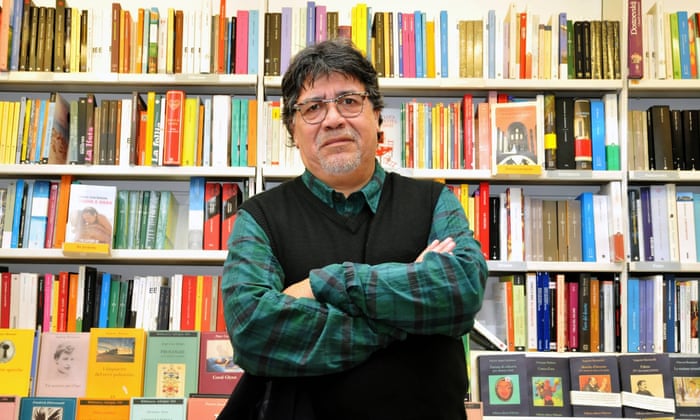
Luis Sepúlveda, pictured in Italy in 2019.
Photograph: Roberto Cano

Chilean author, campaigner and escapee Luis Sepúlveda dies aged 70 of Covid-19

Agence-France Presse
Thu 16 Apr 2020 17.56 BST

The celebrated Chilean author Luis Sepúlveda, who was exiled by the dictator Augusto Pinochet in the 1980s, has died from Covid-19.
Best known for his 1992 novel The Old Man Who Read Love Stories and 1996’s The Story of a Seagull and The Cat Who Taught Her To Fly, Sepúlveda died in hospital on Thursday. He first began showing symptoms from coronavirus on 25 February, after returning to his home in Spain from a festival in Portugal. On 1 March, it was confirmed that Sepúlveda was the first case of Covid-19 in the Asturias region, where he had lived for 20 years.

Tuesday, April 7, 2020

Isabel allende / I believe in the power of stories

Isabel Allende
I BELIEVE
by Isabel Allende

I write to preserve memory against the erosion of oblivion and to bring people together. I believe in the power of stories.


Friday, October 13, 2017

Alejandro Zambra / "Thank You"

All artwork by Tara Mizner.
"Thank You" 
A Short Story by Alejandro Zambra

Translated by Megan Mcdowell

Alejandro Zambra is one of our favorite living writers. His first book, "Bonsai", won the Chilean Critics' Award for Best Novel of the Year in 2006. We first read his work when Farrar, Straus and Giroux published "Ways of Going Home" in 2013.


Alejandro Zambra is one of our favorite living writers. His first book, Bonsai, won the Chilean Critics' Award for Best Novel of the Year in 2006. We first read his work when Farrar, Straus and Giroux published Ways of Going Home in 2013. What distinguishes Alejandro from his contemporaries is the sweetness and intimacy of his writing, and his confidence in letting himself be as he is. As you read his work, there's never the impression that he is second-guessing himself, thinking, "So-and-so would do it this way," or "Such-and-such editor would say that." He exhibits this remarkable confidence on the page, one that allows him to be himself and to speak, a special kind of generosity. It feels like knowing and speaking to a sweetheart—it never feels like he's an author who pretends, or tries to teach, or falls into egotistical traps. Flaws in writing often come from flaws in character. Alejandro doesn't seem to have any of those. He's just a lovely, special, strange person who seems to look at his actual world and describe it in his actual, natural voice, and he leaves it at that. He has the authority that J. M. Coetzee, V. S. Naipaul, and Bret Easton Ellis have all identified as the writer's bedrock.

Wednesday, January 11, 2017

Multiple Choice by Alejandro Zambra review / Intriguing, but hardly nourishing

Alejandro Zambra
Multiple Choice by Alejandro Zambra review – intriguing, but hardly nourishing

Chilean writer Alejandro Zambra’s amusing linguistic acrobatics tease the brain but fail to dig deeper

Anthony Cummins
Sunday 23 October 2016 10.00 BST


T
he structure of this intriguing little book draws on the national university entrance exam that Alejandro Zambra sat in his native Chile in 1993. Comprising 90 multiple-choice questions, it starts as comic wordplay but morphs gradually into a volley of melancholy nano-stories played out on terrain familiar from Zambra’s previous work: lazy schooldays, fizzled-out love affairs and the half-buried iniquities of life in a former dictatorship.

An early question asks us to mark one of five words with “no relation” to the word “blacklist”: “backlist”, “checklist”, “playlist”, “shitlist” and “novelist”. If that made you laugh, you’ll get on well with Multiple Choice, at least at first; the book’s energy leans heavily on the kind of category-switching curveball Zambra throws when he (or his presumably highly acrobatic translator, Megan McDowell) writes “novelist”.
Sometimes the change-ups do more than raise a smile: when we fill in the blanks in the sentence, “What is impossible for… is possible for…”, choosing from “men... God”, “men... women”, “the right... the left”, “Rebecca... Becky”, “the poor... the rich”, you wonder what Becky can do that she can’t as Rebecca. But mainly you feel the options play for laughs: one question asks if a particular story’s narrator doesn’t mention his wife’s name because “a) He wants to protect her” or “d) He’s a misogynist”.
Later we are invited to reorder the sentences in a series of deadpan five-step narratives that feature someone describing his conception during a curfew under Pinochet and (among others) a woman with breast cancer and dementia who can’t recognise her family but “never forgot she was missing a breast”.
While there’s a degree of brain-flexing fun to be had in thinking through the various permutations on offer, the sense grows that Zambra’s elaborate furniture is just that: a frictionless frame for stories that might have existed equally well on their own.
Proof, perhaps, comes in the book’s climactic comprehension exercises related to three memoir-ish stories, each a few pages long. The chewiest of them follows someone who tells his 18-year-old son that he left his mother because he felt too young to have a child. He admits that in his early 20s he readily used the phrase “I have a son” to mean “I’m a serious man, I have lived, I’m responsible, I have a history, so go to bed with me. And the next morning... Sorry, I have to go, you have to go, I have a son”.
In the appended questions, the comedy of Zambra’s absurdly divergent and digressive multiple-choice answers shades into glibness: when we’re asked which character we relate to most, the options include “none”, “the son, obviously” and “the mother, because I also got pregnant at that age, but I had an abortion. I regretted it so many times... but after reading this story I think it may not have been such a bad decision.”
Zambra is talented – no doubt about it – but it’s hard to escape the feeling that, despite its inventive form, Multiple Choice amounts to little more than a cute jeu d’esprit, amusing but hardly nourishing.
Multiple Choice is published by Granta (£12).


Friday, June 17, 2016

Roberto Bolaño / A brief survey of the short story

Roberto Bolaño

A brief survey of the short story part 46: 

Roberto Bolaño

Invested with a rare belief in literature's importance, his enigmatic stories encompass deep feeling and extreme violence

Chris Power
Thursday 24 January 2013 11.38 GMT

When he died of liver failure in Spain in 2003, aged 50, Chilean author Roberto Bolaño had published 13 books in just 10 years, and his third short-story collection was with his publisher. He also left behind several works in various stages of completion, including the enormous, engulfing novel 2666. His fame was burgeoning around the world at the time of his death, and posthumous publications continue to appear: remains of "a supernova of creativity," in Giles Harvey's description, "whose light is still arriving at our shores."
It is impossible to write about any one strand of Bolaño's work in isolation, because nearly all of it inhabits one sprawling intertextual territory. Speaking in 1998 he said, "I consider, in a very humble way, all my prose, and even some of my poetry, to be a whole. Not only stylistically, but also as a narrative." Enjoying contrariness, Bolaño rowed back from this statement elsewhere, but the recurrence of characters, themes and incidents in his work is undeniable. His alter ego Arturo Belano, for example, features in or narrates many of the short stories, as well as being a lead character in the novel The Savage Detectives, and the narrator of the novels Distant Star and – according to a note in Bolaño's papers – 2666.
Bolaño's stories take the form of fragments of memoir ("Sensini", "The Grub"), unsolvable detective stories ("Phone Calls"), or anxious transmissions from a region between dream and reality ("The Dentist"). Sometimes, as in "Gómez Palacio", they feel like all three at once. An account of a writer going to a remote town in northern Mexico to interview for a teaching post, the story establishes its strange air of lassitude and dread at once: "I went to Gómez Palacio during one of the worst periods of my life. I was twenty-three years old and I knew that my days in Mexico were numbered." The narrator discusses poetry with the director of the art school, has bad dreams (Bolaño's work is clotted with dreams), and stands in the room of his isolated motel "looking at the desert stretching off into the dark". Parked at dusk in the desert in the director's car, a situation with a vague sexual potential that perhaps neither party wants to realise, a man pulls in a few metres ahead of them. "It's my husband, the director said with her eyes fixed on the stationary car, as if she were talking to herself." The cars sit in silence. When the writer drives away the man in the other car "turned his back to us and I couldn't see his face." The director then tells the writer she was joking, that it wasn't her husband after all.


This admission at first works to defuse the tension, but as the scene lingers the anonymity of the faceless driver becomes more menacing. His identity and motives tantalise. Bolaño once said that if he hadn't been a writer he would have been a homicide detective, "the sort of person who comes back alone to the scene of a crime by night, unafraid of ghosts", and his stories make us detectives at the scene, too, although the culprit and often even the crime remain shrouded. This roadside scene is consummate Bolaño: an event suspended between mundanity and threat that endures in the memory.

In "Mauricio 'The Eye' Silva", Bolaño writes, "violence, real violence, is unavoidable, at least for those of us who were born in Latin America during the 50s and were about 20 years old at the time of Salvador Allende's death. That's just the way it goes." Violence, implied or actual, is an unbroken bass tone running through his work. "The Part About the Crimes", the longest section of 2666, is the most bluntly violent piece of writing I've ever read. Given this, his irony, the intertextual games that connect one distant corner of his fiction to another, and the recurring themes that form the churning centres of his work (exile, idealism, power relations, art), it's surprising to note how moving his writing can be. In "Last Evenings on Earth", B (presumably Belano) goes on a disastrous holiday to Acapulco with his father. They haven't been getting on, but when B looks down from his hotel window one night,
"he makes out his father's silhouette climbing the stairs. First his head, then his broad shoulders, then the rest of his body, and finally the shoes, a pair of white moccasins that B, as a rule, finds profoundly disgusting, but the feeling they provoke in him now is something like tenderness."
In the unfinished story "Colonia Lindavista", the narrator remembers the period when his family moved from Chile to Mexico City: "When I think back to that time, I see my parents and my sister, and then I see myself, and the little group we compose looks overwhelmingly desolate." These moments of tenderness and lament, so simply declared, arrive with an uncommon force, a function of Bolaño's ability to invest his stories with palpable significance, even though what is at stake may remain mysterious.
This is true even, or perhaps especially, when in summary they sound ridiculous. For example, in "Enrique Martín Arturo", Belano and the eponymous poet fall out over poetry. At some point Martín renounces it and goes to work reporting UFO sightings for a paranormal magazine. He re-establishes contact by sending Belano cryptic postcards, pays him a paranoid visit in the middle of the night to entrust him with a box of papers, and hangs himself. The reader is primed for conspiracy. But when, at the story's end, Belano opens the box and reads the papers, "There were no maps or coded messages on any of them, just poems, mainly in the style of Miguel Hernández, but there were also some imitations of León Felipe, Blas de Otero, and Gabriel Celaya. That night I couldn't get to sleep. Now it was my turn to escape." Yet in Bolaño's hands, what might have been a sardonic punchline is instead desperately mournful, a thing of beauty.
Bolaño can pull this off because of the conviction, universal in his work, that literature is as much about ethics as aesthetics: "It goes beyond the page," he told an Argentinian journalist, "… and establishes itself in the area of risk". In a short, playful essay about writing short stories he states, "the short-story writer should be brave. It's a sad fact to acknowledge, but that's the way it is." Beyond that, Bolaño exemplified the truth of every writer being a reader first: "Reading is always more important than writing", he said. His influences and idols included Poe, Perec, Nicanor Parra, Roque Dalton and Enrique Lihn, Kafka, Carver, Chekhov and Borges ("I could live under a table reading Borges"). "Basically," he once said, "I'm interested in western literature and I'm fairly familiar with all of it." Or, as Javier Cercas has him say in the novel Soldiers of Salamis, in which he appears as a character, "I read everything, even bits of paper I find blowing down the street."