A distinguished climatologist and geophysicist, Michael Mann is director of the Earth System Science Center at Pennsylvania State University. He is the author of more than 200 peer-reviewed and edited publications, as well as four books, including 2012’s The Hockey Stick and the Climate Wars and his forthcoming The New Climate War: The Fight to Take Back Our Planet, due out in January 2021(Public Affairs Books).
Emma Donoghue on Writing ‘The Pull of the Stars,’ Set During the 1918 Pandemic
by Noah Berlatsky
21 July 2020
“The whole novel was always tending towards death,” Irish-Canadian writer Emma Donoghue says matter-of-factly. Her new book, The Pull of the Stars, is set in a maternity ward in Dublin during the 1918 flu pandemic. The milieu Donoghue depicts has unsettling parallels with our own crisis. The book is claustrophobic, bleak and more than a little apocalyptic; the narrator, nurse Julia Power, looks around a city clogged with phlegm and bodies and death and shuttered businesses. “Dublin was a great mouth holed with missing teeth,” she thinks. But the novel also offers some hope, for Julia and for us, that a broken world can perhaps be put together better, at least in small ways.
Hilary Mantel, Ali Smith and Tsitsi Dangarembga completed landmark series, Martin Amis turned to autofiction and Elena Ferrante returned to Naples – plus a host of brilliant debuts
Justine Jordan
Sat 28 Nov 2020 09.00 GMT
As the first lockdown descended in March, sales of Defoe’s A Journal of the Plague Year and Camus’s La Pestesoared, but there were uncanny echoes of Covid-19 to be found in this year’s novels too.
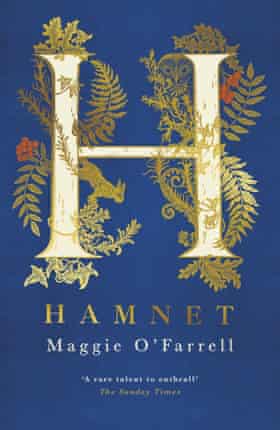
Maggie O’Farrell’s tender, heartbreaking Hamnet (Tinder), which went on to win the Women’s prize, illuminates life and love in the shadow of death four centuries ago. Focused on Anne Hathaway rather than her playwright husband , it channels the family’s grief for son Hamnet, lost to the plague, with a timeless power. From public information slogans to individual fears, Emma Donoghue’s The Pull of the Stars (Picador), set in a Dublin maternity hospital during the 1918 flu pandemic, shows how little our responses have changed. Don DeLillo completed The Silence (Picador) just before the coronavirus hit; but this slim, austere vision of what it’s like to be in a room as screens go dark and disaster unfolds outside chimes with current fears.
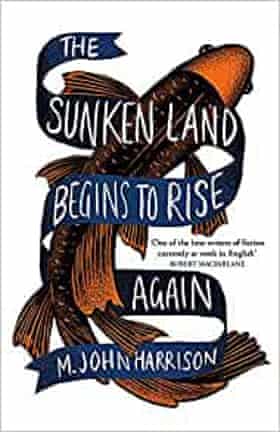
Unfolding disaster was the theme of novels that spoke explicitly to the present moment, too: Jenny Offill’s Weather (Granta) assembles shards of anecdote and aphorism into a glittering mosaic that faces up to Trump’s America and climate collapse with wit, heart and moments of sheer terror. Naomi Booth’s Exit Management (Dead Ink) expertly dramatises the crisis in housing, jobs and community. Sarah Moss’s menacing Summerwater (Picador) is set over one rainy day in a Scottish holiday park: catastrophe lurks in the near future as we dip into the minds of various daydreaming, dissatisfied holidaymakers, in a sharp investigation into the meaning of community and otherness. Also deeply attuned to the anxieties of both Brexit and our long, slow post-industrial collapse is M John Harrison’s masterly The Sunken Land Begins to Rise Again (Gollancz). An unsettling and multilayered narrative foregrounding two lost souls in a haunted, unheimlich England who don’t know how lost they are, it took the Goldsmiths prize for innovative fiction.
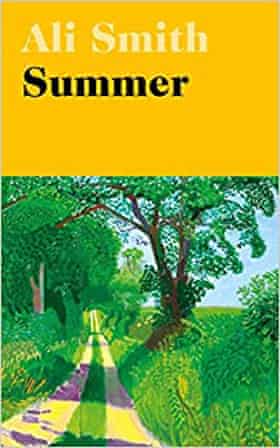
Summer (Hamish Hamilton) completed Ali Smith’s rapid-response Seasonal quartet: four novels written over four years that have encompassed Brexit, climate change, corporate takeover and the refugee crisis along with the bracing consolations of art and nature. Reuniting characters from previous volumes and juxtaposing second world war internment with today’s migrant detention centres, Summer brought a much needed note of hope and resilience to the finale of a landmark series that explores how we live in and out of time.
This year saw the final volume, too, of Hilary Mantel’s Thomas Cromwell trilogy, which has conjured a vanished age to such extraordinarily vivid life and cast profound insights about power, ambition and fate on to the present one. The Mirror & the Light (4th Estate) had to end on the executioner’s scaffold, but the reader is suspended in the unfolding present moment until the axe falls.
Another trilogy was completed in Tsitsi Dangarembga’s This Mournable Body (Faber); written three decades on from her classic Nervous Conditions, it is a brutal, intimate reckoning with the psychological trauma of colonialism. Also shortlisted for the Booker, Maaza Mengiste’s The Shadow King (Canongate) is a beautifully crafted account of the female soldiers resisting Mussolini’s invasion of Ethiopia in 1935 and their own oppression in Ethiopian society. Lyrical, furious and meticulously researched, it is a necessary act of historical reclamation.
Marilynne Robinson turned her Gilead trilogy into a quartet with Jack (Virago), a romance across the race divide in segregated mid-century America which explores the redeeming, transcendent power of love and faith. Brit Bennett also anatomised racism in The Vanishing Half (Dialogue), a stunning family saga about passing for white and the hollowness of the American dream that won her comparisons to Toni Morrison.
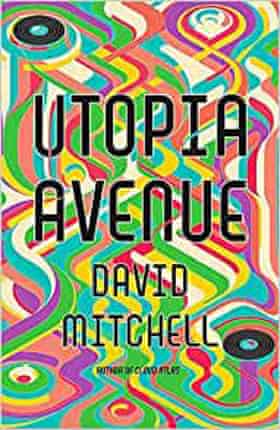
There were historical escapes from David Mitchell, in 1960s muso epic Utopia Avenue(Sceptre), and Jonathan Coe, with a bittersweet visit to one of Billy Wilder’s last film sets in Mr Wilder and Me (Viking). Curtis Sittenfeld’s Rodham (Doubleday) spun wistful alternative history, imagining what the world might have looked like if Hillary hadn’t married Bill, while Martin Amis drew on his own history forInside Story(Cape), a baggy but fascinating autofiction combining cameos from Saul Bellow and Christopher Hitchens with tips on prose writing.
Andrew O’Hagan’s poignant Mayflies(Faber) explores the way all our lives recede too quickly into history, with a joyous nostalgiafest of young Scots chasing music and girls on a wild weekend in the 80s segueing into sober mid-life realisations and difficult decisions decades later. A brilliant portrayal of male friendship, it’s also the perfect gift for middle-aged alternative music fans.
The year began with an impressively assured debut from US author Kiley Reid; Such a Fun Age (Bloomsbury) is a razor-sharp take on white fragility and millennial uncertainty, beginning when a black nanny is accused of kidnapping her white charge. Also witty and fresh, Naoise Dolan’s deliciously dry Exciting Times(W&N) sees cynical Irish twentysomething Ava unsettled by genuine emotion while teaching in Hong Kong.
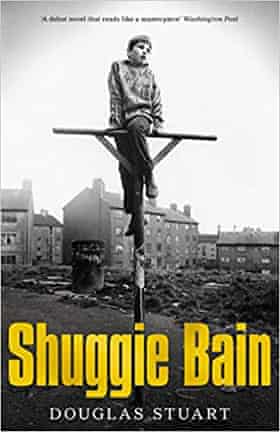
Two semi-autobiographical Scottish debuts from Picador showcased essential new voices: Douglas Stuart took the Booker prize for his moving, devastating Shuggie Bain, the tale of a boy’s desperate love for his alcoholic mother in the deprived, post-industrial 80s; while Graeme Armstrong’s The Young Team, set among teenage gangs in Lanarkshire, updated Trainspotting for a new generation.
Other notable first novels included Rainbow Milk by Paul Mendez (Dialogue), a fearless coming-of-age story about racial and sexual identity and masculinity focused on a young, black gay man who flees his Jehovah’s Witness community to become a sex worker. Burnt Sugar by Avni Doshi (Hamish Hamilton) coolly explores a toxic mother-daughter relationship in middle-class India, while Brandon Taylor’s Real Life (Daunt) weighs contradictory urges towards solitude and intimacy. The Liar’s Dictionary by Eley Williams (William Heinemann), which continues the lexicographical playfulness of her short stories, is a singularly charming jeu d’esprit about two people a century apart doing the difficult, essential work of defining words and defining themselves.
In translated fiction, Elena Ferrante returned to her emotional heartland, the psyche of the teenage girl, in (Europa, translated byAnn Goldstein). As Giovanna tackles parental hypocrisy, self-disgust and the disconnect between upper- and lower-class Naples, the novel builds into what feels like a portrait of the artist as a young woman. Originally conceived as a true crime story, Hurricane Season by Fernanda Melchor (Fitzcarraldo, translated by Sophie Hughes) is a savage, unstoppable chronicle of misogyny and murder in a small Mexican village. Another rawly compelling novel won the International Booker: young Dutch writer Marieke Lucas Rijneveld’s The Discomfort of Evening (Faber, translated by Michele Hutchison) focuses on a girl in a deeply religious family that is falling apart in the wake of her brother’s death.
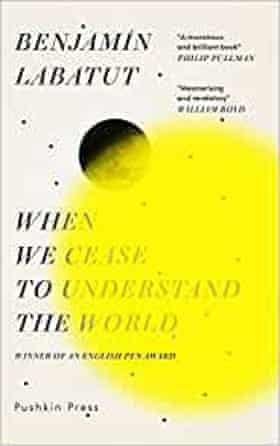
Daniel Kehlmann’s darkly funny Tyll (Riverrun, translated by Ross Benjamin), a picaresque journey through early 17th-century Europe, follows the progress of a folkloric jester figure from village to court against the bloody backdrop of the thirty years’ war. In Samanta Schweblin’s fiendishly readable Little Eyes(Oneworld, translated by Megan McDowell), the new must-have tech gadget allows users to leapfrog into the lives of strangers – a sharp idea that became even more pertinent with the isolation and atomisation of lockdown. When We Cease to Understand the World by Benjamín Labatut (Pushkin, translated by Adrian Nathan West), a “nonfiction novel” focused on the exceptional minds looking into the dark heart of maths and science in the 20th century, traces revelatory connections between discovery and destruction.
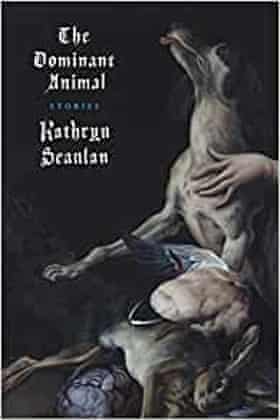
Some of the most exciting short stories of the year were to be found in Kathryn Scanlan’s The Dominant Animal (Daunt), with its fiercely sculpted sentences and unnervingly off-kilter scenarios. Cathy Sweeney’s Modern Times (W&N) has a comically surreal energy and verve, while in Reality and Other Stories (Faber) John Lanchester structures a collection of ghost stories around the most dangerous, intrusive, unknowable force in our lives – technology.
Two striking books unfolded in the fertile space between story collection and novel. In poet Frances Leviston’s The Voice in My Ear (Cape), 10 different protagonists, all called Claire, contend with the demands of the world and their difficult mothers; the stories glance off each other to build into a cubist portrait of contemporary womanhood. Maria Reva’s Good Citizens Need Not Fear (Virago), meanwhile, uses interlinked tales centred around a crumbling apartment block in Ukraine to convey the absurdity of post-Soviet life.
Finally, two novels that were a long time coming. From the 18th century to the 21st, Evie Wyld’s The Bass Rock (Cape) explores violence against women in three subtly linked time periods: a blazingly angry, darkly witty tour de force, Wyld’s third novel is bleak but bracing, and as ever, beautifully written.
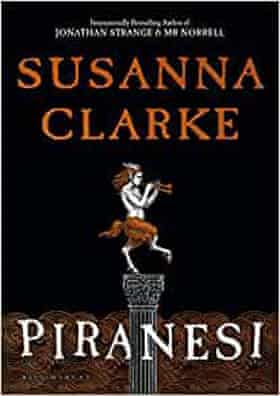
Sixteen years after her bestselling debut Jonathan Strange and Mr Norrell, Susanna Clarke returned with Piranesi (Bloomsbury), the story of a man trapped in a many-halled House with an Ocean surging within it, his only companion a mysterious Other. Written out of long illness, but published into a world in which every reader was struggling with confinement and thrown on their inner resources, Clarke’s fantastical parable of solitude, imagination, ambition and contentment is a spectacular piece of fiction, and the perfect reading accompaniment to a year like no other.
Emma Donoghue's 'Pull Of The Stars' — A Disquieting Pandemic Novel
Readers are awaiting novels of the pandemic, and Emma Donoghue just may have stumbled into writing one of the first.
As Donoghue explains in the author's note to her new novel, The Pull of the Stars, she began writing the story in 2018, inspired by the centenary of the Spanish Flu pandemic. Donoghue delivered the final draft to her publishers this past March, just as a stunned world was taking in the enormity of the coronavirus crisis.
‘A first draft is indecisive and messy – the polishing coming later on’ … Emma Donaghue. Illustration: Alan Vest
MY WRITING DAY
Emma Donoghue: ‘I have only from 8.30am to 3.30pm to work. It’s a very healthy discipline’
The author on her ‘regime’, research and adapting her work for the screen Emma Donoghue Saturday 7 January 2017
W
hen I was a child I had some strange ideas about what being a writer entailed. My dad is a literary critic, who has written many more books than I have. He somehow fitted them all into his teaching life and so, apparently from nowhere, I would see boxes of books with his name on the spine turning up at the house every now and then. At the same time, I developed the theory that to be a famous writer meant you first had to die young, and then wait for your work be discovered years after your death. This was based on some weird conjunction of Emily Dickinson and Anne Frank, but it all meant that I never really saw writing as an ordinary job, and it didn’t help much when I started my career and began to treat writing as, more or less, an ordinary job.
My routine in the early years involved reading for an hour or two over breakfast before wondering if I felt like writing that day. That was before I had kids. They are now 12 and nine, and these days I put them on the school bus and run to my computer knowing I have only from 8.30am to 3.30pm to work. It’s a very healthy discipline, especially as within that time you also have to administer a career in terms of answering emails, making travel arrangements and the rest of it, so sometimes it can take a while to get to the actual writing.
When I do start to write I try not to worry too much about whether it is actually any good. The great thing is to get it on the page. In a first draft the prose is always very indecisive and messy, and I might put in four different adjectives with slashes between them because I’m not sure which one to use. If I’m writing on an aeroplane or a bus, I always tilt my screen away from the person beside me because I’d hate the idea that they would look at this pile of rubbish and ask if I really am an author. But a lot of writers become a bit inhibited by asking whether something is a beautiful sentence. I see it much more in craft terms, more like being a landscape gardener or a carpenter. The thing is to make a solid structure first knowing you can do the polishing later on. The one recent novelty to my regime has been a treadmill desk which means I now spend some of my time walking as I write. It hasn’t made the writing any better, or any worse, but it does mean I don’t have to fret about making time for the gym.
Jacob Tremblay in the 2015 film ofRoom, directed by Lenny Abrahamson. Photograph: Allstar/A24
The main variation among my novels is not the writing but the research. Sometimes I stick closely to facts. Other times, as in my latest bookThe Wonder, I make up the story but the background is as historically accurate as possible, so I spend time checking whether a particular bird would have been in the Irish Midlands in 1859. There is a bigger difference between the practice of writing novels and screenplays. With a novel you have all the power and editors send elegant notes with polite suggestions (which nevertheless can be absolutely crucial). In TV and film they have all the power and you get rather crisp comments about a problem with page 37 which they expect you to fix immediately. I had a great experience filming Room with Lenny Abrahamson, and was allowed a say in everything. But I knew I didn’t have the final say, which is fine as long as you know that from the beginning.
By the time the kids do get home at 3.30pm I can find that my loyalty is still to the characters in my book and it’s hard to meet the needs of real human beings. I’m aware there is a selfishness to writing. But, like a football match, there can be some extra time if they pick up a book themselves. I will always have my laptop at tennis classes and will be typing at the back while the other parents are clapping at the front.
When I eventually do finish there is no celebratory drink. Even when I send off the final draft, if I have more time left that day I will start the next book. It’s not quite like Trollope, who supposedly could finish one novel at 4.45pm, and work on the next until his regular knocking-off time of 5pm, but I do very much admire that spirit. So I try to be as industrious and unpretentious about the process as I can and that would be my advice to any aspiring writers. I know if I was wedded to a special pen, or particular violins playing in the background, I’d have very few productive writing days in a year.
• Emma Donoghue’s The Wonder is published by Picador.