Showing posts with label Anne Carson. Show all posts

Tuesday, October 13, 2026

‘Sometimes she publishes notes she’s scribbled on her hand’ / Édouard Louis on 10 reasons to love Anne Carson

Carson doesn’t try to ‘make literature’ … Louis on the Nobel-winning writer. Photograph: Golli/

‘Sometimes she publishes notes she’s scribbled on her hand’: Édouard Louis on 10 reasons to love Anne Carson

The French author discovered Carson on a bus while stranded in a snowstorm and has been enthralled by her fearless imagination ever since


Édouard Louis
Friday 9 October 2026


1. Anne Carson is one of the greatest writers of our time. I discovered her work on a Peter Pan bus from New York to New England. I’d bought Antigonick in a bookstore a few days earlier, almost randomly. From the very first lines, I was enthralled. While we were on the bus, a snowstorm suddenly blanketed the roads, and the other passengers and I found ourselves stuck for 10 hours in rural America, surrounded by an entirely white landscape. I took my computer out of my backpack and started to translate Antigonick into French. Spontaneously. I was so absorbed by the power of Carson’s text that I didn’t notice the hours pass.

Digested week / Don’t worry about the plague, go and read some Anne Carson


‘I went hiking with the Nobel prize winner Anne Carson in Iceland last year … OK, it was a short walk up a rocky incline.’ Photograph: TT News Agency


Digested week: Don’t worry about the plague, go and read some Anne Carson


Emma Broockes
Friday 9 Octobre 2026

Monday

“Anyone worried about pneumonic plague?” This is a friend – a medic – texting me after reading reports at the weekend of the 28-year-old Russian woman who died while working at a “plague research lab” in Siberia. Relying on details from the famously open Russian state guaranteed the presence of a certain dark subtext to the tantalisingly short news item. Namely: lab-grown disease cultivated for reasons unknown and with a 100% mortality rate escapes Russian facility into general population, eight hours’ flying time from London. In other words, we’re all going to die.

Nox by Anne Carson / Family Album


Photo: Hannah Whitaker/New York Magazine

Family Album

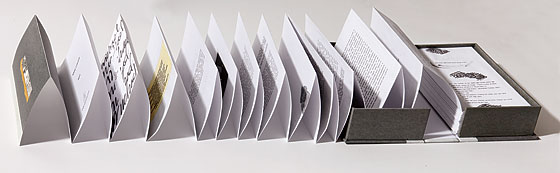
Few things in this world have the power to make me clean my desk. One of them, it turns out, is Anne Carson’s new book-in-a-box, Nox. Before I even opened it, I felt an irresistible urge to spend twenty minutes purging my worktable of notes, napkins, magazines, forks, check stubs, unpaid bills, and fingernail clippings. The urge struck me, I think, for a couple of reasons. For one, Nox is unwieldy. It is, very deliberately, a literary object—the opposite of an e-reader designed to vanish in your palm as you read on a train. It comes in a box the size of my external hard drive, and its pages fold out, accordion-style, to colonize all your available space. More than that, though, the book radiates a kind of holy vibe that seems to demand some gesture of ritual cleansing. It’s a public facsimile of a deeply private object: a scrapbook Carson put together as a memorial to her older brother, Michael, who died unexpectedly in 2000. New Directions has reproduced this unique collage lushly, in full color, with such thorough devotion that some pages show nothing but the backs of staples. Processing it, as a reader, seems to require several acres of clear space—mental, physical, emotional, attentional—every inch of which Carsonfills, immediately, with her own special brand of clutter.

Monday, October 12, 2026

On Rosalía by Anne Carson


On Rosalía

Anne Carson


10 September 2026


Ihave​ a Rosalía hangover. We climbed a giant day to reach her, all twenty thousand Chicago fans. Strutting and grinning and asterisking her eyes she held their shrieking out around her like a magic cloak and changed them all to rabbits or a vase of tulips inside its folds. The white crinolines. The shrieking. So much to understand. At her every inhalation of breath the entire audience screamed as if she were raking their individual spines with her fingernail, each spine. That voice can do anything. And the persona blooms out to contain it. Imagine seducing twenty thousand people like this every night on a tour of God knows how many cities, I can’t.

Gloves on! by Anne Carson


Anne Carson


Gloves on!

Anne Carson


15 August 2024

So,​ your life. There it is before you – possibly a road, a ribbon, a dotted line, a map – let’s say you’re 25, then you make some decisions, do things, have setbacks, have triumphs, become someone, a bus driver, a professor of Indo-European linguistics, a pirate, a cosmetologist, years pass, maybe in a family maybe not, maybe happy maybe not, then one day you wake up and you’re seventy. Looking ahead you see a black doorway. You begin to notice the black doorway is always there, at the edge, whether you look at it or not. Most moments contain it, most moments have a sort of sediment of black doorway at the bottom of the glass. You wonder if other people are seeing it too. You ask them. They say no. You ask why. No one can tell you.

Sunday, October 11, 2026

Fox and Hedgehog / The myths of Anne Carson


Illustration by Lily Qian.

Fox and Hedgehog

The myths of Anne Carson

EMILY WILSON
4 June 2024


Be Canadian. Be zany. Be moody. Be relatable. Write about your mother. Write about desire. Write about trauma. Write about loneliness. Write about grief. Write about nature. Write about the body. Invoke universals. Make it mythic. Tell it slant. Do not use rhyme. Do not use meter. Use short lines. Leave a lot of space on the page. Juxtapose your words with quivery line drawings in ink or paint or collage.

Friday, October 9, 2026

‘Infinite genius’ / Yiyun Li on Anne Carson

‘She does not subjugate or manipulate her words. She lets them be’ … Anne Carson. Photograph: TT News Agency

‘Infinite genius’: Yiyun Li on Anne Carson

When her sons died the Book of Goose author turned to Grief Lessons, Carson’s translation of four plays by Euripides. She reflects on the ‘life sustaining’ work of an extraordinary writer


Yiyun Li

Friday 9 October 2026


It is preposterous to agree to write a short piece on Anne Carson’s work. The task is impossible, akin to that of solving the mathematical problem of dividing zero by zero. If one had the power to solve it, perhaps one would have some confidence in attempting to write about Anne Carson’s work. Attempting, I say, not succeeding. In attempting to do so, I shall emphasise that all words fall short in extreme situations, which not only include unfathomable losses (of children, in my case) but also include articulating anything about Anne Carson’s work.

Where to start with / Anne Carson


Anne Carson
Photograph: Peter Power


Where to start with: Anne Carson

From essays on sexual jealousy to retellings of classical Greek tragedies, here’s a guide to the Nobel prize-winning writer’s catalogue of work


Fiona Sampson

Thursday 8 October 2026


A

nne Carson, the Canadian poet who has been awarded this year’s Nobel prize in literature, is an exhilarating choice by the committee. The sheer range of writing she has been producing since the mid-1980s is exceptional: poetry, essays, translations, collaborative artwork, and works that find intriguingly under-explored meeting points between scholarship, graphic design and personal rites of passage.

Thursday, October 8, 2026

‘Delights await!’ / Margaret Atwood and other writers on Nobel winner An ne Carson

Risk and vision … Anne Carson. Photograph: Peter Smith


‘Delights await!’: Margaret Atwood and other writers on Nobel winner Anne Carson

The Handmaid’s Tale author is joined by Emily Wilson, Ocean Vuong and Booker-shortlisted writer Rebecca Perry in celebrating the newly announced Nobel laureate


Emma Loffhagen and Leyland Cecco
8 October 2026

Margaret Atwood

Anne Carson’s work has long been admired among poets of many countries. For new readers, I would recommend The Beauty of the Husband – direct and visceral, funny and angry and sad – or Men in the Off Hours. Delights await!

Is Anne Carson the First Poet with More Fans than Readers?


Illustration by Courtney Wotherspoon


Is Anne Carson the First Poet with More Fans than Readers?

Her abstruse, down-tuned music is the soundtrack to poetry’s institutionalized life in the twenty-first century

BY MICHAEL LISTA
ILLUSTRATION BY COURTNEY WOTHERSPOON
Updated 14:27, Apr. 1, 2020 | Published 9:30, Sep. 23, 2016


IN 1986, a Canadian classics professor named Anne Carson published Eros the Bittersweet, a collection of erudite essays about love. It was an unusual book for an academic, in that it reflected the half-mad presumption that someone, somewhere might be reading it for fun. “It was Sappho who first called Eros ‘bittersweet,’” Carson writes. “No one who has been in love disputes her.”

Anne Carson wins Nobel prize in literature 2026


The academy cited Anne Carson’s ‘bold and inventive oeuvre’ in its awarding of the prize. Photograph: Pontus Lundahl


Anne Carson wins Nobel prize in literature 2026

Most prestigious literature prize goes to Canadian known for genre-crossing works such as Autobiography of Red


Emma Loffhagen and Leyland Cecco in Toronto
8 October 2026

The Nobel prize in literature has been awarded to the Canadian poet and essayist Anne Carson, the Swedish Academy has announced.

Wednesday, August 7, 2024

An Evening with Joseph Conrad by Anne Carson


Illustration by Icinori


Flash Fiction


An Evening with Joseph Conrad  

by Anne Carson


1 August 2019

Joseph Conrad gave a reading at the London Library. A red-haired woman came up afterward. He had seen her circling earlier, taking a chair at the back, but he had not troubled about it. “I knew you in the Congo,” she said now. “I knew your wife.” My wife? he thought, but, as always after a reading, in the retreating roar of his own soul he could barely hear her or remember how English worked. Had she said “life,” not “wife”? Her voice, that of a crow, thrust at him—some weekend they’d “all spent together” and he’d sent her a letter the next day, a poem. Dread rose at the back of his mind; a parcel broke. He turned away, busied himself. He blamed, abhorred the touch of a past time; it surprised him how much. She followed him to the dinner that Charles (the London Librarian) had arranged at a nearby bistro, hurrying along behind everyone else, and, with the touch of his wife or his life burning like a toxin on his inside skin, Joseph Conrad could not meet her eyes or let pathos come clouding into him. When she seated herself at the foot of the table and was speaking loudly to anyone who listened, he felt the pluck of it on the side of his head but did not turn, he had to continue, now he’d begun, it was a long dinner. It was unjust. In other contexts, he admired perseverance. She was drowning. He did not turn. The light of pure reason, Joseph Conrad liked to say, resembles electricity in being cold. Proud statements like this came to him now and again when he was swimming but afterward seemed a bit off. No, it was a little nightmare, it was a rescue he could not carry out (and he was a rescuer).

Saturday, June 20, 2020

Anne Carson / ‘I do not believe in art as therapy’

keménykötés — Anne Carson 🖤🤘🏻 avagy pontosan így fogok kinézni...
Anne Carson

Meet the author


Anne Carson: ‘I do not believe in art as therapy’


The poet and classics professor talks about her new collection, Float, her love of volcanoes and the power of brevity

Kate Kellaway
Sunday 30 October 2016


A
nne Carson’s The Beauty of the Husband, published in 2001, made her name; she became a poetic guru, revered as an original. Her writing is a hybrid – a wayward mix of ancient and modern. She is an essayist, translator and dramatist. Born in Ontario in 1950, she has worked most of her life as a classics professor. She appears in the newly launched Penguin Modern Poets Series and has just published a new collection, Float.

An Interview with Anne Carson

Quiero ser insoportable»: habla Anne Carson – El Cuaderno
An Interview with Anne Carson


Eleanor Wachtel
Brick 89
Posted on June 10, 2014

I’ve admired Canadian poet, essayist, Greek and Latin scholar, and librettist, Anne Carson for a long time now. I think I first heard about her as a professor of classics at McGill University who was writing amazing stuff, starting with her quirky academic treatise, Eros the Bittersweet, where she mixes classical philosophy with witty, ironic brilliance.
Next she produced two remarkable books of poetry combined with essays. She was hailed as an original by Harold Bloom, Susan Sontag, and Annie Dillard. She won both a Guggenheim and a Lannan Foundation Fellowship, and the MacArthur “genius” award. With her 2001 book, The Beauty of the Husband: A Fictional Essay in 29 Tangos, she became the first woman to receive England’s T. S. Eliot Prize for Poetry. It also took Canada’s Griffin Prize. Along the way, she had a crossover success with another unusual book, Autobiography of Red, subtitled “A Novel in Verse.” It blends a modern homosexual romance with Greek myth, set in small-town Ontario and Peru. See what I mean?

Anne Carson / “My personal poetry is a failure”


Anne Carson 

“My personal poetry is a failure”

The Art of Poetry 

No. 88

Interviewed by Will Aitken

The Paris Review

Fall 2004
No. 171


The Art of Poetry No. 88 Manuscript


Anne Carson and I first met in 1988 at a writers’ workshop in Canada, and have been reading each other’s work ever since. The interview that follows is a mix of our usual conversation and discussion about topics that preoccupy Carson’s work—mysticism, antiquity, obsession, desire.
Carson was born on June 21, 1950, in Toronto, the second and final child of Margaret and Robert Carson. Her mother was a housewife; her father worked for the Toronto Dominion Bank. During her childhood, the family moved about from bank to bank in small Ontario towns like Stoney Creek, Port Hope, Timmins.
In the 1970s Carson studied classics at the University of Toronto and then ancient Greek with the renowned classical scholar Kenneth Dover at the University of St. Andrews in Scotland. In 1981, she returned to the University of Toronto to write a Ph.D. dissertation on Sappho, which later became Eros the Bittersweet— a brief, dense treatise on lack’s centrality to desire. Today, Carson lives in Ann Arbor, where she teaches classics and comparative literature at the University of Michigan.

Wednesday, September 21, 2011

Madeline Miller / Top 10 Classical Books

Homero
by Philippe Laurent Roland

Madeline Miller

TOP 10 CLASSICAL BOOKS

From Aeschylus to Sophocles, the novelist celebrates the ancient stories that have inspired her debut novel

Madeline Miller
The Guardian
Wednesday 21 Septembre 2011


Sophocles
A statue of Sophocles, c.450 BC
Photograph by Hulton
Archive/Getty Images
Madeline Miller was born in Boston and grew up in New York and Philadelphia. For the last 10 years she has taught Latin and Ancient Greek to high school students. The Song of Achilles, published by Bloomsbury this month, is her first novel.
              "The classics are back, and with a vengeance. In the past few years there has been a Vesuvius-sized explosion of translations, adaptations and re-imaginings of the ancient works. For lovers of Latin and Greek literature, it has been hog heaven, a chance to revisit the thrilling adventures, beautiful poetry and unflinching psychological insights the ancient stories offer us.
            "The Greek myths have been close to my heart since childhood, particularly Homer's Iliad, yet I never would have considered telling one myself – I simply loved the originals too much. But something about Achilles and his beloved companion Patroclus's story took hold of my imagination and wouldn't let go. I wrote academic papers about the Iliad; I directed plays; it still wasn't enough. Then one day I found myself in front of my laptop, typing furiously. The words on the screen were Patroclus's, and 10 years later they became The Song of Achilles. In celebration of this Latin and Greek revival, here are ten of my favorite classical works."


1. The Metamorphoses by Ovid

Ranging from the farcical to the deeply moving, the Metamorphoses presents hundreds of myths of transformation, all in Ovid's witty and passionate style. Perhaps this is perverse of me, but I particularly enjoy some of Ovid's most disturbed heroines, like Myrrha, who falls in love with her father. Ovid manages the tricky manoeuvre of awakening our sympathy to the girl's desires without diminishing our sense of horror at her actions.


2. Prometheus Bound by Aeschylus

The kind, wise and thoughtful god Prometheus (his name literally means forethought) might be considered the first advocate of social justice. He defied Zeus's injunctions against aiding humans, daring to steal fire on our behalf, teach us the arts of civilisation and show us how to protect ourselves from the gods' greed. For this he was punished cruelly: chained to a cliff and condemned to have eagles tear out his liver every day for all eternity. Aeschylus's Prometheus is a figure of tremendous strength and dignity, who gladly suffers for the good he has done. Sadly, we only have the first of the trilogy that tells his story.


3. Autobiography of Red by Anne Carson

Loosely inspired by the myth of Geryon and Heracles, this "novel in verse" conjures heart-stoppingly beautiful images on every page. Its deceptively simple language has a fiery, unearthly clarity and bone-deep wit: Carson's sentences ring out like bells. The story is moving, and its hero, Geryon, a little red boy with wings who falls in love with the wrong person, is unforgettable. There is no book I have read quite like it.


4. The Iliad and The Odyssey by Homer

Is it cheating to include them both? The first is Homer's action-packed and psychologically acute paean to a single man's rage. The second is the tumultuous journey of a war veteran struggling to get home to his family. Both are bursting with incident, poetry and amazing characters that grab the attention. When I began writing my own novel, I found myself constantly having to rein in digressions trying to include them all.


When I was in college, a friend asked me to direct this "problem play" set during the Trojan war. I knew little about Shakespeare at the time, but fell quickly in love with this outstanding and challenging play. Its dark comedy and bitterly satiric portraits of Homeric heroes have a startlingly modern sensibility. Arguably its most famous figure is the scurrilous soldier Thersites, who comments with acid precision on the folly he sees around him: "Wars and lechery," he sneers. "Nothing else holds fashion."


6. If Not, Winter: Fragments of Sappho translated by Anne Carson

Sappho's gorgeous, gem-like poems limn their subjects in gold. Whether the focus is a young woman, an apple on the highest branch or the narrator's jealousy, Sappho brings them all to life with sensual, visceral and breathtaking beauty. No wonder that Plato called her "the tenth muse".


7. The Bacchae by Euripides

I have loved this particular tragedy since I first read it as a teenager. Pentheus, prince of Thebes, refuses to worship the new god Dionysus, and the god takes bloody revenge. What makes the play so gripping is how eminently sympathetic Pentheus is: a stubborn, underdog rationalist who stands up to a bullying zealot. Haven't we all felt like drawing the line sometimes? In one memorable ancient production, Pentheus's head-on-a-spike was played by the real life head of Crassus, member of the first triumvirate with Pompey the Great and Julius Caesar.


8. Agamemnon by Aeschylus (The Oresteia Trilogy)

The story of the Greek general's disastrous return home after the Trojan war. I have never been a fan of Agamemnon, so I tend to cheer Clytemnestra on as she readies the murderous bathtub and axe. What does move me is Cassandra – the Trojan princess cursed to tell the truth and never be believed. Now Agamemnon's captive, she is doomed to knowledge of her own imminent death at Clytemnestra's hands. The famous opening scene, where fire beacons signal to Clytemnestra that her husband is returning, surely influenced JRR Tolkien's own use of fire beacons in The Return of the King.


9. The Aeneid by Virgil

Virgil's tale of arms and a man and so much more. A gorgeously crafted piece of poetry, a story of adventure, a moral examination of violence and a plea for mercy, Virgil's masterful Roman founding myth provokes and haunts long after you've finished. The characters are drawn with sympathy and sensitivity, and above all total humanity: Virgil never shies away from their faults as well as their virtues. I particularly love book two, the tale of Troy's fall; its brutal portrait of Achilles' son Pyrrhus inspired my own.


10. Philoctetes by Sophocles

The ageing hero Philoctetes, once a companion of Heracles, is bitten by a venomous snake on his way to join the Trojan war. The wound festers and the other Greeks, fearful of the bad omen, abandon him on an island. For 10 years, Philoctetes survives alone, embittered and in physical agony. I first read this play when my grandmother's health was failing, and I wept at Philoctetes' grief-stricken monologues. His pain at being forgotten by the world and despair at his body's weakness could have been my grandmother's own. But Sophocles chooses to close the play with hope: reconciliation, and a long-awaited end to the hero's suffering.