My Cat Yugoslavia review – the refugee experience as surreal comic fable
This article is more than 8 years old
Pajtim Statovci’s debut novel flits between genres to create a memorably disconcerting tale about life as an outsider in modern Europe
Sukhdev Sandhu
Sun 3 Sep 2017 09.00 BST
Kosovo-born Finnish writer Pajtim Statovci’s debut novel begins with a chap called blackhetero-helsinki prowling the internet in search of “fun and games”, continues with a lonely immigrant student getting into a relationship first with a boa constrictor and then a haughty cat he meets in a bar singing along to Cher’s Believe, and ends with a series of ruminations about the violence of men, of memory, of migration. If this sounds whimsical, don’t worry; My Cat Yugoslavia is a striking work about dislocation and estrangement that moves between science fiction, comic fable and trauma narrative without ever settling snugly into any of them.
Pajtim Statovci: 'I’m drawn to fiction that makes the unimaginable possible'
This article is more than 8 years old
The author of My Cat Yugoslavia explains why it made sense for his double narrative of migrant experience to include a talking, homophobic feline
James Ruth 7 September 2017
Many first novels are really first published novels, reactions to the angsty roman à clefs and 700-page epics that preceded them (now mercifully forgotten in a drawer). But this was not the case for Pajtim Statovci. My Cat Yugoslavia – which has already won gushing praise from the New York Times (“a marvel, a remarkable achievement”) and New Yorker (“strange and exquisite”) – is not only the first novel he tried to write, but the first piece of fiction he ever wrote.
Two boys flee Albania in Statovci’s complex and gruelling follow-up to My Cat Yugoslavia
Anthony Cummins Tuesday 7 May 2019
“Nobody has to remain the person they were born; we can put ourselves together like a jigsaw,” says Bujar, the androgynous Albanian narrator of Crossing, the second novel by Finnish-Kosovan writer Pajtim Statovci, acclaimed for his debut My Cat Yugoslavia.
Marieke Lucas Rijneveld is a celebrity writer in her native Netherlands. Photograph: PR
FICTION IN TRANSLATION
Ten of the best new books in translation
From a Dutch family saga to a murdered witch in Mexico, these novels will transport you from a bleak tourist town at the North Korean border to Tblisi and beyond
Marta Bauselles Saturday 23 November 2019
The Discomfort of the Evening by Marieke Lucas Rijneveld, translated by Michele Hutchison (Faber)
By the time it hits UK shelves in March, thousands of copies of Marieke Lucas Rijneveld’s debut will already have been sold around Europe and beyond. A celebrity writer in her native Netherlands, the 28-year-old also works on a dairy farm, and the novel is set on one, too. Centring on a young girl whose brother dies in an ice-skating accident, it takes the reader on a haunting journey. Rijneveld is also an award-winning poet, which shows in her sensory language and the beautifully wild images that linger in the mind.
Pain by Zeruya Shalev, translated by Sondra Silverston (Other)
The Israeli writer is always incisive on the complexities of family and relationship dynamics, and her latest novel, published in the UK this month, focuses on the longing of old passions versus the dreads and comforts of domesticity. A decade after she is injured in a suicide bombing, two different kinds of pain return to Iris’s life: the physical trauma of that attack, and the love of her youth. Iris is weighed down by work and motherhood, and, as she begins an affair, Shalev plunges the reader into a whirlwind story of impossible choices.
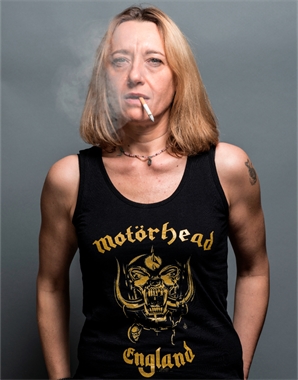
Vernon Subutex 3 by Virginie Despentes, translated by Frank Wynne (MacLehose)
The Vernon Subutex trilogy is “post-punk, post-morality, post-civilisation”. A satire of modern France, its protagonist, an antihero of antiheroes and a homeless guru of sorts, is the former owner of a Parisian record store, “trapped in the last century”, and on a quest to uncover the secrets of a dead pop star, his friend Alex Bleach. Books one and two are already out in the UK, and volume three will hit the shelves in 2020.
VIRGINIE DESPENTES is a writer and filmmaker. Her first novel, Baise-Moi was published in 1992 and adapted for film in 2000. She is the author of over fifteen further novels, including Apocalypse Baby (2010) and Bye Bye Blondie (2004), and the autobiographical work, King Kong Theory (2006). She won the Prix de Flore in 1998 forLes Jolies Choses, the 2010 Prix Renaudot for Apocalypse Baby and Vernon Subutex One won the Prix Anaïs Nin in 2015, and was shortlisted for the Man Booker International in 2018.
The Memory Police by Yōko Ogawa, translated by Stephen Snyder (Harvill Secker)
Originally published in 1994, the translation of this masterpiece by the acclaimed Japanese author into English this year is cause for celebration. Set on an unnamed island in which all kinds of objects and beings disappear – hats, flowers, birds – inhabitants live in terror of the “Memory Police”, whose job is to keep things forgotten. A young novelist and her editor, whom she is hiding under her floorboards, are the protagonists.
LONGLISTED FOR THE 2020 INTERNATIONAL BOOKER PRIZE
'A masterpiece' Guardian
A compelling speculative mystery by one of Japan's greatest writers.
Hat, ribbon, bird, rose. To the people on the island, a disappeared thing no longer has any meaning. It can be burned in the garden, thrown in the river or handed over to the Memory Police. Soon enough, the island forgets it ever existed.
When a young novelist discovers that her editor is in danger of being taken away by the Memory Police, she desperately wants to save him. For some reason, he doesn't forget, and it's becoming increasingly difficult for him to hide his memories. Who knows what will vanish next?
The Memory Police is a beautiful, haunting and provocative fable about the power of memory and the trauma of loss, from one of Japan's greatest writers.
'One of Japan's most acclaimed authors explores truth, state surveillance and individual autonomy. Echoes 1984, Fahrenheit 451, and 100 Years of Solitude, but it has a voice and power all its own' Time Magazine
Winter in Sokcho by Elisa Shua Dusapin, translated by Aneesa Abbas Higgins (Daunt Books)
This is a punchy first novel set in desolate Sokcho, a tourist town on the border between South and North Korea. Originally written in French, the story centres on the relationship between a young French-Korean woman who works as a receptionist in an old guesthouse and a visiting French cartoonist. It was published in France in 2016 to wide acclaim, and is out here in February.
The Eighth Life (for Brilka) by Nino Haratischwili, translated by Charlotte Collins and Ruth Martin (Scribe)
A phenomenon in Georgia, Germany, Poland and Holland, this Georgian saga is published in the UK this week. Spanning six generations of a family between 1900 and the 21st century, its characters travel to Tbilisi, Moscow, London and Berlin in an epic story of doomed romance that combines humour with magic realism.
Untold Night and Day by Bae Suah, translated by Deborah Smith (Jonathan Cape)
Published in the UK in January, Bae Suah’s hypnotic novel follows one summer night and day in the life of Kim Ayami. After losing her job in Seoul, she walks the hot city all night in search of her disappeared friend in an uncannily affecting and dreamlike story of parallel lives and worlds. Translator Deborah Smith won the Man Booker International prize for Han Kang’s The Vegetarian.
A hypnotic, disorienting story of parallel lives unfolding over a day and a night in the sweltering heat of Seoul's summer
For two years, twenty-eight-year-old Kim Ayami has worked at Seoul's only audio theatre for the blind. But now the theatre is shutting down and Ayami’s future is uncertain.
Her last shift completed and the theatre closed for good, Ayami walks the streets of the city with her former boss late into the night. Together they search for a mutual friend who has disappeared. The following day, at the request of that same friend, Ayami acts as a guide for a detective novelist visiting from abroad.
But in the inescapable, all-consuming heat of Seoul at the height of the summer, order gives way to chaos, the edges of reality start to fray, and the past intrudes on the present in increasingly disruptive ways.
Blisteringly original, Untold Night and Day is a high-wire feat of storytelling that explores the possibility of worlds beyond the one we see and feel – and shows why Bae Suah is considered one of the boldest voices in Korean literature today.
‘Maike Wetzel writes with an assurance that belies her story’s unsettling menace. Elly is a tautly strung exploration of what it means when all a family desires is the continuation of their own nightmare … because the alternative is absolute despair.’
MELANIE JOOSTEN, AUTHOR OF BERLIN SYNDROME
‘Elly is mesmerising, moving, and deeply unsettling. I read it in a single, fevered session and it has haunted me since.’
EMILY MAGUIRE, AUTHOR OF AN ISOLATED INCIDENT
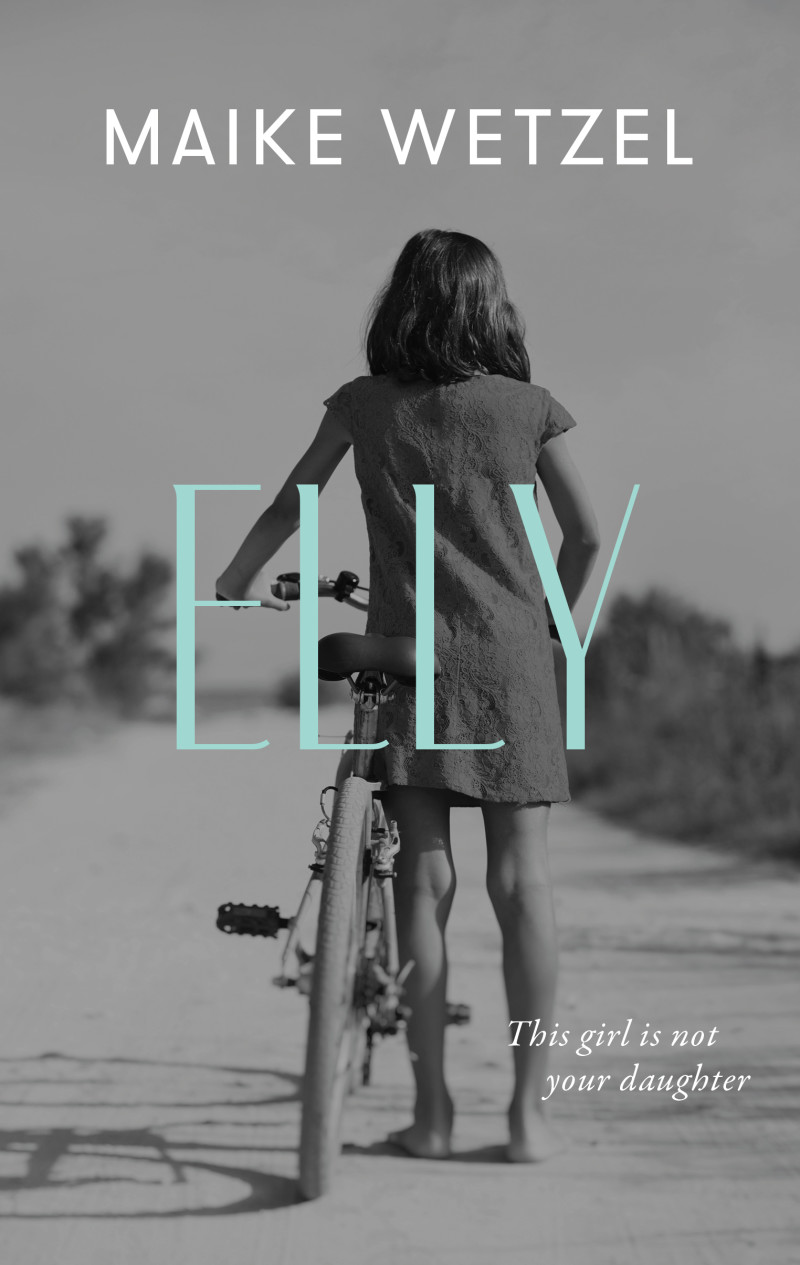
Elly by Maike Wetzel, translated by Lyn Marven (Scribe)
Revolving around the disappearance of an 11-year-old girl, this slender German novel builds into a brutal, uncomfortable story, told from the alternating perspectives of family members. Just as the family has started to put itself back together the girl reappears, but is so different they begin to doubt whether she’s even the same child. It won prizes in Germany and the translation is out in the UK in April.
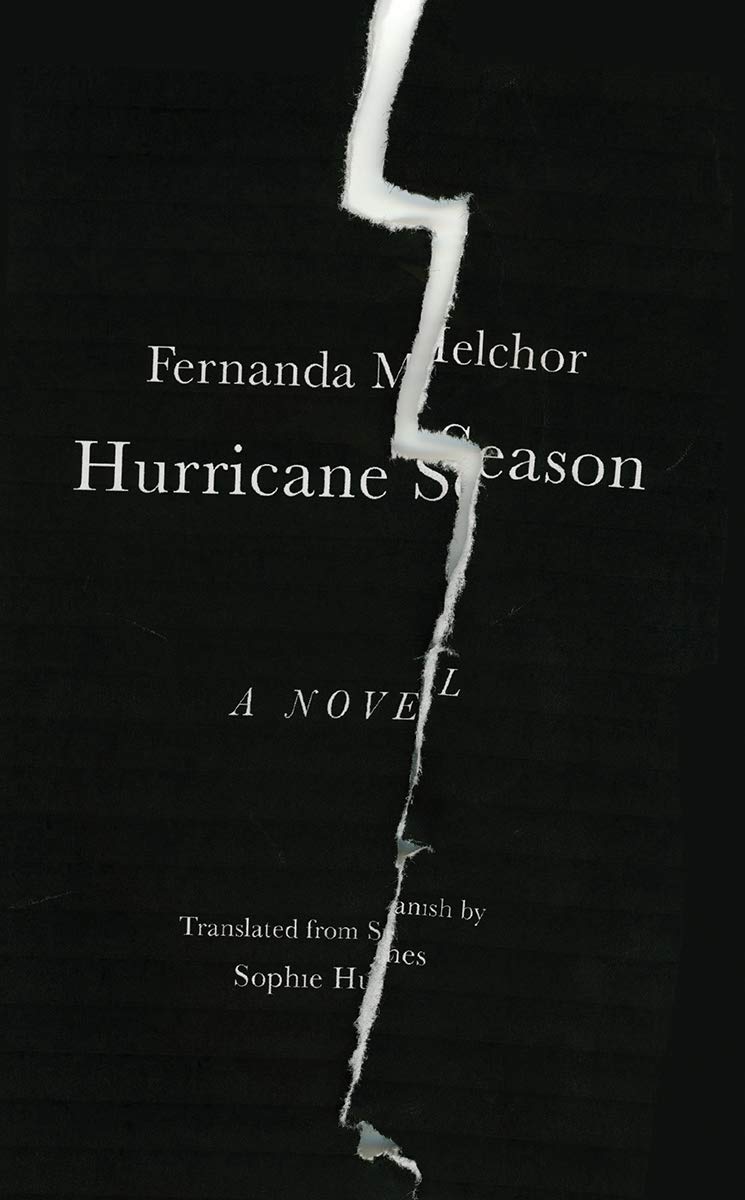
Hurricane Season by Fernanda Melchor, translated by Sophie Hughes (Fitzcarraldo)
Set in a Mexican village, Melchor’s novel, published in the UK in February, focuses on the murder of a woman known as the Witch, whose body is found by a group of boys. This is a dazzling novel and the English-language debut of one of Mexico’s most exciting new voice.
Crossing by Pajtim Statovci, translated by David Hackston (Pushkin)
Pajtim Statovci was born in Kosovo and raised in Finland, and his debut My Cat Yugoslavia was an imaginative novel about the refugee experience. His second book, Crossing, was published in the UK in May. It is a complex story about identity, displacement and heartbreak set in the ruins of communist Albania, following two friends who escape the country to attempt a new life in Italy and, later, New York. Statovci inertwines Albanian myth with the grim reality of post-communism, and delivers a strikingly modern narrative where oppression is not just political but lived in the body.
From Lewis Carroll’s Cheshire Cat to Franz Kafka’s ‘Ungeziefer’, linguistically gifted beasts have made for some of the most luminous characters in fiction
Pajtim Statovci
A
nimal characters in works of fiction have generally been used in a rather anthropomorphic way. This can be seen as a problem, though, and many say that reading animals as symbols of us reduces them, makes them smaller, steals their right to be seen as subjects who have their unique, distinctive way of existing. Others say that it’s not a problem at all because it’s not as if animals – even though they’re each different in shape and thought – will ever get to know what we write about them, how we place, use and interpret them and give them meaning through human filters.
Placing myself in the discussion as a writer of animal characters (as I am in my novel My Cat Yugoslavia) is extremely difficult. Does a writer of fiction that includes animal characters commit an act of theft? Can nature really be appropriated? Who does it belong to, and who gets to say what counts as “animal culture”? Is it scientists, biologists, scholars in humanities, people who have lived with animals, or no one? The question is exceptionally complex. However, it is interesting and most welcome, too, that we continue to discuss the rights of beings that are unarmed, incapable of defending themselves through language that’s not clearly understandable to us.
All that being said, here they come: my top 10 talking, zoomorphic animal characters.
1. Behemoth in The Master and Margarita by Mikhail Bulgakov
This demonic beast, this marvellous shape-shifting creature, this sarcastic, vodka-loving cat, is one of the most iconic talking animals, and justifiably so. Behemoth, a member of an evil entourage led by Satan himself, will leave an everlasting mark on the reader. I promise you this. His whimsical, absurd and ingenious character inspired me tremendously when writing My Cat Yugoslavia.
2. The Cheshire Cat in Alice’s Adventures in Wonderland by Lewis Carroll
This talking feline won’t terrify you with Behemoth’s cutthroat insults and deranged actions, but it will make you laugh just as copiously. Famous for its broad grin, it appears and disappears as it chooses, while tormenting Alice with philosophical statements and giving her advice that seems irrational. But that’s part of its alluring magic.
3. “Ungeziefer” in The Metamorphosis by Franz Kafka
Gregor Samsa wakes up one morning as a bug-like, monstrous vermin. A busy salesman who slavishly follows the rules, he immediately knows he’s in big trouble. While Gregor himself doesn’t seem to be bothered by his new clumsy shape and unsightly appearance, he’s rejected by his family and ends up suffering a terrible fate. There are many possible interpretations of the story. To me, it’s about how our battles and confrontations don’t necessarily make us stronger – sometimes they just make us weaker, sadder and more pathetic.
4. Maf in The Life and Opinions of Maf the Dog, and of His Friend Marilyn Monroe by Andrew O’Hagan
Frank Sinatra gave Mafia Honey, a Maltese terrier, to Monroe as a Christmas present in 1960. O’Hagan’s fourth novel follows the final years of the actor from the point of view of this singular pooch. This well-educated and articulate dog will not only give you a unique perspective on Monroe’s life, it will steal your heart away. He’s that charming and spot-on.
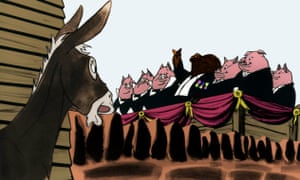
‘Some animals are more equal than others’ … a still from the 1954 animated film of Animal Farm. Photograph: Allstar/Cinetext/Halas/Batchelor
5. Napoleon and Snowball in Animal Farm by George Orwell
Napoleon and Snowball, two pigs greedy for power, start off as allies. As the story continues and violence proliferates, they become dedicated rivals. What the hatred and violence between them generates is simply more hate and violence. This novel feels more current than ever.
6. Bagheera in The Jungle Books by Rudyard Kipling
This black panther is one of my favourite talking animals in children’s books because he’s just the coolest. In Kipling’s Mowgli stories, as well as in various adaptations of them, Bagheera is a real class act. He’s smart, reliable and thinks ahead, and on top of that he has perfect timing. Mowgli would be in terrible trouble without the awesome Bagheera. Shere Khan has nothing on him.
7. Red Peter in A Report to an Academy by Franz Kafka
Here is an ape who has mastered the art of being a human being by leaving his “ape self” behind. After being captured on the Gold Coast he’s given two options: he can either live in a zoo or become a turn at a music hall. Red Peter chooses the latter, and adjusts to the highly oppressive and judgmental people around him. I guess sometimes it’s easier to adapt to being othered in various ways than to fight for the right to be seen and heard as an individual.
8. Pig Tales by Marie Darrieussecq
A young woman in her 20s lands a job at perfume counter. Soon after that, she understands that she’s expected to have sex with male customers. Then she starts gradually transforming into a sow. Darrieussecq’s debut novel – Truismes in the original French – was a massive success on publication in 1996. It offers one of the most distinctive and unique transformation stories of our time and explores questions of sexuality, identity and gender with much-needed insight and superb creativity.
9. The Cowardly Lion in The Wonderful Wizard of Oz by L Frank Baum
I have great sympathy for the Cowardly Lion. He is expected to be brave, powerful and courageous. Instead, he is terribly scared of the world around him. What makes him adorable is that he’s so freaking sensitive and sentimental, and extremely self-conscious about it. To me, he is a symbol of self-hatred. I’m sure everyone who has been told that they can’t do something, that they should act in a certain fashion, that they are not good or smart or capable enough can relate. We become blind to our strengths when our weaknesses are brought up more frequently, when we begin to think that we don’t deserve more and feel shame for what we should be proud of.
10. Sharik or Comrade Sharikov in The Heart of a Dog by Mikhail Bulgakov
Overshadowed by The Master and Margarita, Bulgakov’s novella is an equally remarkable and momentous work of fiction. It tells the story of a wealthy and successful doctor who surgically implants human testicles and a pituitary gland into a stray dog, a mongrel he names Sharik. Sharik narrates the story until the surgery transforms him into something like a human being. Then the man/canine becomes Comrade Sharikov, a cat-killing nuisance who tortures and harasses virtually everyone in sight.
My Cat Yugoslavia by Pajtim Statovci, translated by David Hackston, is published by Pushkin Press, priced £14.99.