Showing posts with label Will Self. Show all posts

Thursday, December 30, 2021

All Advice Is Bad


Margaret Atwood


All Advice Is Bad

The arbitrary brain feed of writerly legends who could easily be the faceless guy at the bar crying into his shoulder bag.
Blake Butler
June 19, 2012

Last year or so the Guardian rounded up a bunch of writers over the age of 60 or something and asked them to give advice to writers who use the internet, AKA college students. Some of them offered up some pretty dumb ideas, and even the ones that seemed reasonable to me were mostly just as arbitrary as the ones that clearly were the brain feed of someone who’s been too long in a game where even the legends could be the faceless guy beside you at the bar crying into his shoulder bag.

1. Elmore Leonard: “Never open a book with weather. If it's only to create atmosphere, and not a character's reaction to the weather, you don't want to go on too long. The reader is apt to leaf ahead looking for people.”

If you’re a pussy, this rule is true. Giving up some banal crap I can look out my window to find out isn’t that necessary, but there are plenty of ways to talk about what’s in the air without sounding like you’re setting up an Elmore Leonard novel. One of the most famous opening lines ever, Pynchon’s “A screaming comes across the sky,” isn’t regarding weather per se, but it’s just provocatively situated enough to make you think it could be. And our crime drama writer Leonard is OK with the weather as long as you’ve got a human telling about it? Isn’t that every sentence in every book? I’m sorry to break it to you, Elmore, but humans are the most transient pieces of weather on the earth.

2. Margaret Atwood: “You most likely need a thesaurus, a rudimentary grammar book, and a grip on reality.”

A grip on reality is the last thing I recommend if you are hoping to devote your life to sitting at a machine all day while other people work for actual money and then go home and spend time with their families while not still in the back of their mind doting on the fantasies they ejaculated that week at the desk. More likely you should have a willingness to completely dash any hope of being a normal person with a normal face, though it does indeed help not to be a total headcase motherfucker in the meantime, so perhaps find/replace “reality” with “death.” I don’t think you’ll find that replacement in your thesaurus, which is why they are mostly a waste of time.


3. Roddy Doyle: “Do be kind to yourself. Fill pages as quickly as possible; double space, or write on every second line. Regard every new page as a small triumph.”

I like writing in a frenzy as much as anyone, but to pat yourself on the back every time you’ve blathered the roughly 450 words it takes to fill one double-spaced page, which is essentially the length of a slightly-too-long email, is not only unnecessary, it’s pathetic. Look, no one cares what you do at your desk or how long it took you to get there, or how many words you snuck in today before going to the gym to burn off the beer you drank to feel better about having sat in one place all day again, or how long the manuscript you’re currently working on that should probably have half of itself deleted if you really want to be kind not to yourself or to the reader but the thing you’re making, which is the point in the first place, right? If you’re the kind of person that needs a new small triumph a few times an hour, take up playing billiards against toddlers. If you want to write, put down the mirror.

4. Richard Ford: “Don't read your reviews.”

If you’d read your reviews, Richard, you might have found enough self-guilt to do something new.

5. Jonathan Franzen:“You have to love before you can be relentless.”

Giancarlo DiTrapano and I already extensively covered our feelings on J-Franz, but I’m still cringing about this little nugget. Is that, like, make sure you squash your itch to watch old episodes of Friends before you sit down at the computer, otherwise you’ll just never quite be able to focus?

6. Esther Freud: “Editing is everything. Cut until you can cut no more. What is left often springs into life.”

I mean, yeah, you need to edit, but this sounds like you just put the printout in a magic hat and shake it around and out it comes all wise and ready for the National Book Awards. “Cut until you can cut no more” taken to its logical conclusion pretty much ends up with a blank page, which is maybe some advice that could be taken more regularly, for sure, though this thing about springing into life reminds me for some reason of the Smurfs. Why do so many grown ass-people sound like wise-beyond-their-years nine-year-olds?

7. Neil Gaiman: “Remember: when people tell you something's wrong or doesn't work for them, they are almost always right.”

No. Bad Neil. You are wrong.

8. David Hare: “Write only when you have something to say.”

Following this rule, every Facebook status update could be expanded into a novel. Your baby is six weeks along now? Well by all means, tell the world! Why stop at 50 words? I AM SO READY TO HEAR EVERYTHING THAT’S ON YOUR MIND. How about instead only write when you have absolutely nothing to say and aren’t even in your body so now it’s not you with all your shitty human want and wishing, and is instead something bigger than a person ostensibly writing out a Christmas list of narrative action on paper?

9. Hilary Mantel: “Are you serious about this? Then get an accountant.”

Barf on my dick, Hilary.

10. Michael Moorcock: “Introduce your main characters and themes in the first third of your novel…. Develop your themes and characters in your second third, the development. Resolve your themes, mysteries, and so on in the final third, the resolution.”

Hi, Reader, I’d like you to meet my character, Michael Moorcock, and my theme, Anti-Transcendent Definition of Impossible-to-Define Terminology in the Name of Pretending There Is Perfect Science to My Mythology When in Fact the Only Thing That’s True About Anything Is What It Actually By Its Own Admission Is, Which Doesn’t Mean Anything Because Storytelling Is Just a Bunch of Stories and Making Art Is Making Art and The Reason People Are Sick of Reading Mostly Is That So Many People Think They Have to Follow Anybody’s Shitty Rules Instead of Thinking of Their Own Rules With Their Blood Instead of Their Brains and Just Fucking Creating Something Else.

11. Annie Proulx: “Write slowly and by hand only about subjects that interest you.”

AKA never learn anything, never invent anything, never change speeds, never feel deleted, never scare yourself, never scare anyone. Sure. Sounds good. See you in the gardens.

12. Will Self: “Stop reading fiction–it's all lies anyway, and it doesn't have anything to tell you that you don't know already (assuming, that is, you've read a great deal of fiction in the past; if you haven't, you have no business whatsoever being a writer of fiction).”

I suggest you start with the work of Will Self.

13. Colm Tóibín: “Finish everything you start.”

Now, if you’ll excuse me, when I was six I wrote the first verse of a rap called “The Supersonic Dudes from 3003” and never got around to finishing and now I realize why I never sleep….

VICE


Friday, December 6, 2019

On the Move: A Life by Oliver Sacks / Review


BOOK OF THE DAY

On the Move: A Life by Oliver Sacks – review


A revealing autobiography of a shy, withdrawn young man whose neurological work stretched to the very horizons of human potential

Will Self
Fri 8 May 20015


Oliver Sacks, the eminent neurologist and writer, whose many books have done perhaps more than any other body of work to explain the mysteries of the brain to a general readership, is a strong supporter of the “narrativity” theory of the human subject. Suitably enough – given this is an autobiography – Sacks restates the notion here: “Each of us … constructs and lives a ‘narrative’ and is defined by this narrative.” Elsewhere he asserts: “I suspect that a feeling for stories, for narrative, is a universal human disposition, going with our powers of language, consciousness of self, and autobiographical memory.” Setting to one side the truth or otherwise of this contention (personally I think it’s only the social being that is narrated – to ourselves we are always “such stuff as dreams are made of”), for a man who views his life in dramatic terms, On the Move presents the reader with some quite startling narrative leaps. Perhaps the most extreme of these are two seemingly throwaway remarks Sacks makes concerning his sexual life: aged 21, and desperate to lose his virginity, he found himself in the tolerant atmosphere of Amsterdam – yet, trammelled by his Orthodox Jewish upbringing and the social repression of the era, he was unable to act, and instead sat in a bar all evening drinking “Dutch gin for Dutch courage”. He remembered nothing between staggering out of the bar and awaking the next morning in a strange bed, being served coffee by a man who explained: “He had seen me lying dead drunk in the gutter … had taken me home … and buggered me.” A demon even at that age when it came to details, Sacks asked “Was it nice?” to which his ravager replied “Yes … Very nice”, before rounding off the bizarre episode by commiserating: “He was sorry I was too out of it to enjoy it as well.”


The second remark is even stranger: swimming in Hampstead ponds on his 40th birthday, Sacks was approached by a handsome young student from Harvard. A delightful week-long interlude followed: “ … the days full, the nights intimate, a happy, festive, loving week”. It was a great benison – all the greater, because: “It was just as well that I had no foreknowledge of the future, for after that sweet birthday fling I was to have no sex for the next 35 years.”
Accustomed to the contemporary obsession with “identity” (and sex for that matter), we might expect the autobiography of a gay man – especially one from a Jewish immigrant background who ends up emigrating to the US from Britain – to be preoccupied by differences of sexuality and heritage. But Sacks is a man of his generation, and while no prude, nor a jealous guard of his own privacy, nonetheless the personal and existential aspects of this autobiography are definitely secondary to the main business of his life, which has been the practice of neurology and the chronicling of the insights this practice has afforded. In part the light touch on these matters can be explained by a desire not to repeat himself: Sacks’s memoir of his boyhood,Uncle Tungsten, brilliantly realised a portrait of his eccentric family of medics, scientists and technologists, while also recording the traumas of his wartime evacuation and the burgeoning of his own vocation.
Then again, throughout Sacks’s literary oeuvre there has been a determination to put himself in the frame: whether writing, inAwakenings (1973) about the post-encephalitic patients he bestirred from half-century-long swoons, or, in An Anthropologist on Mars (1995) and many other works, about the bizarre psychic, cognitive and perceptual worlds of people with autism, Tourette syndrome, congenital blindness, and a host of other “neuro-atypical” conditions, he has always been at pains to emphasise the interpersonal dimension. For Sacks there can be no conception of the mind in isolation: personhood is a property ever emerging from social and perceptual interaction. Not that this perspective came to him fully realised at the outset; rather the impression On the Move conveys is of a shy and withdrawn young man, who, through a combination of unusual life experience and intensive medical practice, comes to realise in himself an almost preternatural sensitivity to the perspectives of others, no matter how alien these may be.
Oliver Sacks

You don’t need to be a psychologist to see Sacks’s unusual depth of involvement with his patients as some sort of substitute for those 35 romance-free years. The poet Thom Gunn, a friend of the author’s, remarked that he’d worried Sacks was deficient in empathy until he became a clinician. Sacks himself is even more forthright: “I had fallen in love – and out of love – and, in a sense, was in love with my patients.” The criticisms levelled at Sacks – that his books are exploitative, presenting disabled and damaged people as a sort of freak show – are exposed as a nonsense by the books themselves, but if you were in any doubt, the quite unselfconscious accounts given here of Sacks’s extraordinary openness to his patients, should lay them to rest. He writes of intervening during a strike by support workers at Beth Israel, the New York hospital where he worked for many years: “We spent the next four hours turning patients, ranging their joints, and taking care of their toilet needs”. Elsewhere – just as an aside – he mentions that his apartment at the hospital “was always open” to patients. And while he is not known especially as a critic of the psychiatric gulag, many of his experiences in these hospitals move him to anger: “In some of these places, generically referred to as ‘the manors’, I saw the complete subjugation of the human to medical arrogance and technology.”
Sacks met Gunn when he was living in San Francisco and converting his English qualifications to American ones. It was a period in his life defined as much by motorcycling as by medicine – hence the book’s title – and Sacks’s embrace of physicality and risk will be a surprise to any reader who expects a neurologist to be a cold technician. While living in London, Sacks had been a member of the Ton Up Boys bikers’ club that once frequented the Ace cafe on the city’s North Circular bypass. He embarked on an enormous circuit of his new-found home by bike, taking photographs and writing an extensive journal as he went. Then, living in Los Angeles in the late 60s, Sacks became a habitue of Muscle Beach, and even gained a Californian weight-lifting record. At the same time, he was experimenting with a wide range of mood-altering drugs, experiences he wrote about in greater depth in his bookHallucinations (2012). He later moved to New York, where he lived on City Island off the Bronx, and regularly swum around it – swimming remains one of his passions to this day.

It is surely Sacks’s apprehension of his own physicality in these myriad ways that has synergised with his intense clinical experience to produce some of his most fruitful and intellectually exciting work. I began this review hoping to synopsise Sacks’s entire life, but it’s a hopeless task. His truly has been a life lived to the full – and beyond. Friendships with such divergent luminaries as Francis Crick and WH Auden, and with his childhood companions Jonathan Miller and Eric Korn, bring a roseate glow to reminiscence without ever rendering it sickly. The detailed examinations of his own writing life – including the eight traumatic years it took him to writeA Leg to Stand On (1984) – are set beside pen portraits of the many patients who have shared their lives with him. The fruits of success are counterpointed with some quite astonishing professional setbacks, including manuscripts lost and books plagiarised. But while this autobiography foregrounds Sacks’s human relationships, it is the adventure of ideas he has undertaken that has bestowed on his life its remarkable originality.


British biophysicist Francis Crick in 1993.
Pinterest
 British biophysicist Francis Crick in 1993. Photograph: Daniel Mordzinski/AFP/Getty Images

When Sacks began practising as a neurologist, the theoretical understanding of the relationship of the brain to the conscious mind was still based on gross anatomy: if a portion of the brain was damaged, we might be able to discover by observation of the patient what its function was. The advances in brain-imaging have informed new conceptions of the brain, as a highly plastic environment in which there is constant reorganisation. In the early 1990sSacks became acquainted with Gerald Edelman and his theory of “neural Darwinism”, by which individual consciousness is explained as the function of a process of natural selection between cohorts of competing nerve cells. Sacks describes Edelman’s theory as “the first truly global theory of mind and consciousness, the first biological theory of individuality and autonomy”. Sacks’s enthusiasm for Edelman’s ideas is more than understandable: the sort of conundrums and paradoxes he has investigated in his own patients for decades have all inclined him towards this, the great riddle of human being. Sacks reports that Edelman once said to him, “You’re no theoretician”, to which Sacks replied “I know … but I am a field-worker, and you need the sort of fieldwork I do for the sort of theory making you do.” To which Edelman readily assented.“Field worker” is something of an understatement when it comes to Sacks, unless your idea of a field is incredibly wide – stretching, in fact, to the very horizons of human potential. While not especially forthcoming about his relationship with his father (a doctor who lived and practised into his 90s), Sacks does quote a letter the then chief rabbi, Jonathan Sacks (no relation), sent him after Sacks senior’s death: “He was a true tzaddik – I thought of him as one of the 36 ‘hidden righteous’ whose goodness sustains the world.” In February, Oliver Sacks announced in an interview that the ocular melanoma that had cost him the sight in his right eye seven years ago has returned, and he is now terminally ill. Considering now the vast range of his achievements – which have been moral, and dare I say it, spiritual (despite Sacks describing himself as an “old Jewish atheist”) – I have no hesitation in extending the chief rabbi’s encomium down the generations: Oliver Sacks, like his father, is a true tzaddik, although there’s been nothing particularly covert about his righteousness – any more than his homosexuality. Perhaps it is because he has kept on the move that he has always been able to hide in plain sight.


Saturday, July 7, 2018

2018, as picked by writers / Part four


Taiye Selasi


2018, as picked by writers – part four

Surrealist artists, dogged detectives, modern lovers and spies behaving badly ... leading authors pick their best books to enjoy these holidays

Saturday 7 July 2018

Taiye Selasi

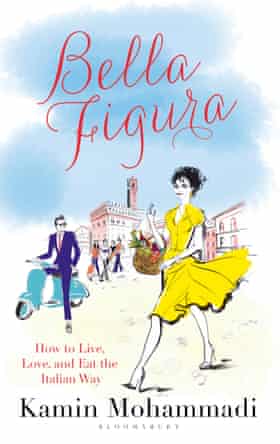
Bella Figura by Kamin Mohammadi cover

Uprooting her life, London-based Kamin Mohammadi relocated to bucolic Florence. Her glorious memoir Bella Figura is witty, intelligent and heartfelt in equal measure and will delight anyone dreaming of a summer holiday – or a brand new life – in Italy.

Recently optioned to become a film, Katja Meier’s timely memoir Across the Big Blue Sea: Good Intentions and Hard Lessons in an Italian Refugee Home avoids easy sentiment in favour of honesty and humour. The African women we meet at this Tuscan refugee home are fierce, scared, brave, vulnerable — triumphant yes, but human too. A beautifully complex account.

And finally, I cannot heap enough praise upon Freshwater, a daring, sexy debut. Raw and lyrical, Akwaeke Emezi’s semi-autobiographical narrative takes on sexuality, spirituality, family and more — all with a clarity that belies her 30 years.

Will Self

I basked in the interwar twilight of Cressida Connolly’s After the Party (Viking). The novel a beautifully written evocation of the era, and the woolly self-absorption of its party-going protagonist. However, it’s also a pitiless exercise in ideological revelation, as it becomes clear that the party in question doesn’t feature dancing until dawn and a sumptuous breakfast buffet, but men and women wearing black shirts, who greet each other with fascist salutes. In a year that’s seen bigotry of all kinds on the rise, and the storm clouds of nationalist intolerance gathering on the near horizons of Europe, Connolly’s novel achieves the rare feat of at once summoning that foreign country, the past, then returning us, uncomfortably, to a contemporary Britain with a burgeoning fatherland complex.


Elif Shafak
Photograph: Adrian Sherratt


Elif Shafak

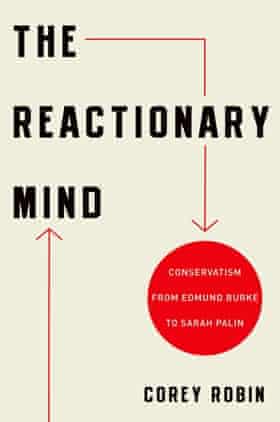
The Reactionary Mind by Corey Robin

I have just finished reading The Reactionary Mind (Oxford) by Corey Robin. So many writers and thinkers today, East and West, are questioning the rise of conservatism, populism and tribalism. What makes Robin’s book extraordinary is the long-term pesrpective he introduces in this book. Robin shows that Trump is not a break from the conservative tradition, in fact, he is the fulfilment of a tradition that goes all the way back to Edmund Burke and his reaction to the French Revolution. It is a deeply thought-provoking book with utmost clarity and astonishing depth.

What struck me about Neel Mukherjee’s novel A State of Freedom (Vintage) was the mesmerising complexity and the sharpness mixed with compassion and empathy. All the stories are beautifully written, and while they remain semi-independent, they are also subtly interconnected. Long after I finished it I realized the characters were still with me, vivid, compelling, haunting.

Janesville: An American Story (Simon & Schuster) by Amy Goldstein is incredibly well-researched, empathetic and moving. Political experts and pundits talk about “the American working class” all the time, making massive generalisations without paying much attention to individual stories, but this book is extraordinary in the way it sheds light on an industrial town in America’s heartland by masterfully combining analysis and storytelling.

Kamila Shamsie

I’ve already read Tishani Doshi’s poetry collection Girls Are Coming Out of the Woods (Bloodaxe) but I know I’ll return to it many times. One of the poems talks about poets ‘holding the throat of life/ till all the sunsets and lies are choked out/ till only the bones of truth remain’ - that’s precisely what Doshi does in this intelligent, elegant, unflinching collection. It’s very much a collection for this moment in history, but one that will endure long past it.

The publishing house And Other Stories has committed to making 2018 a Year of Publishing Women – I’m planning to work my way through their entire list for the year over the summer. First up: Fleur Jaeggy’s Sweet Days of Discipline, translated by Tim Parks. It is set in a boarding school in postwar Switzerland, the opening pages are spare and beautiful, with an intriguing darkness.

Ali Smith

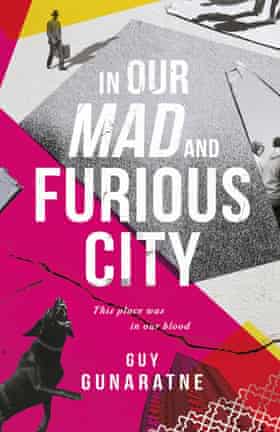
Guy Gunaratne’s In Our Mad and Furious City

This summer the book I’m telling anyone who asks me about is Guy Gunaratne’s In Our Mad and Furious City (Tinder), a novel that’s a piece of communal vitality, choral in its urgency, one that squares up to the history of division, makes contemporary disjuncture come alive on the page, doesn’t flinch, and demands change right now. The book I’ll take with me on holiday is Michael Ondaatje’s Warlight. I love his writing, I wait for his books.

Colm Tóibín

Now that America has come to seem so unsettled and so strange, two books help us to become more alarmed. One is Michèle Mendelssohn’s Making Oscar Wilde (Oxford). It charts the early rise of Wilde, with special attention to how, during the 1880s, his lecture tours in America, a country beguiled by novelty and in need of excitement, made his name. As long as it was new, it seemed, America wanted it. Rachel Kushner’s The Mars Room is set in the American prison system, but manages to be a novel with its own worldview and its own textures, as much as a chronicle of a system that holds more prisoners per head of population than any other country in the world. On a more uplifting note, there is a wonderful doorstopper called Gillian Ayres (Art/Books), with a text by Martin Gayford and David Cleaton-Roberts and examples of Ayres’s work that will lift your heart.

Matthew Walker

Do you want to understand yourself? To understand why you say and do what you do? To know why you, and the rest of our human race, are capable of paradoxical extremes, from compassion to cruelty (even within minutes of each other)? With humour, sublime insight and supportive data, Robert Sapolsky serves up all the answers in Behave, his gem of an explanatory masterpiece.

Many of us feel that an occasional lie is fine, perhaps when trying to protect someone’s feelings, or when pressured to maintain political correctness. Lying by Sam Harris is a timely, well-reasoned treatise exposing how wrongheaded such beliefs are. It proves out the lack of utility in lying, in any scenario. Yet, that is not the reason I prescribe this book. Rather, it is the palpable sense of liberation and relief that you will feel when you practice what Harris preaches. Such is the truth about lying.

Sarah Waters


My most beguiling read lately has been Rupert Thomson’s Never Anyone But You (Corsair), a beautifully written fictionalised account of the decades-long lesbian love affair between surrealist artists and anti-Nazi activists Claude Cahun and Marcel Moore. I’m currently very much enjoying Diana Evans’s novel Ordinary People (Chatto), which takes a forensic look at the pleasures and perils of marriage and parenting and modern London living. And, as a Londoner myself, and one who likes to make as many journeys as possible by foot, the book I plan to turn to next is Lauren Elkin’s Flâneuse (Vintage), which promises to be an inspiring a piece of feminist psychogeography based on the experiences of several notable female city-strollers including Jean Rhys, Virginia Woolf and Martha Gellhorn.