|
| Top from left: David Diop, Mohamed Mbougar Sarr, Abdulrazak Gurnah. Bottom from left: Nadifa Mohamed, Damon Galgut, Karen Jennings. Composite: Getty, Andy Hall, Suki Dhanda |
From the Booker to the Nobel: why 2021 is a great year for African writing
This year’s key prizes have gone to writers from Africa and the diaspora. Damon Galgut, Mohamed Mbougar Sarr, Abdulrazak Gurnah and others explain what winning means to them
Alex Clark
Sat 20 Nov 2021 09.00 GMT
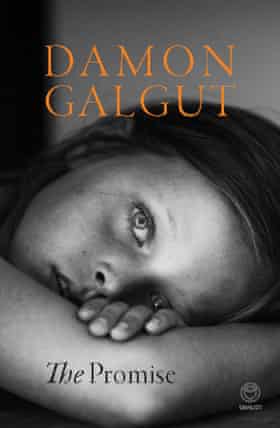
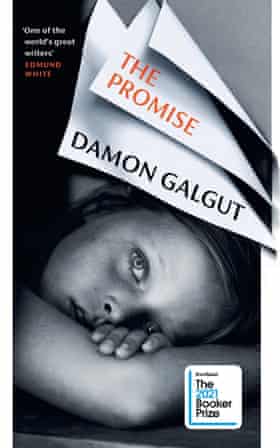
This has been a great year for African writing,” announced Damon Galgut, accepting the Booker prize earlier this month for his multilayered novel, The Promise, which tells the story of an Afrikaner family amid the political and social upheaval that followed the end of apartheid. “I’d like to accept this on behalf of all the stories told and untold, the writers heard and unheard from the remarkable continent that I come from.”
It was not an overstatement. Galgut’s Booker win comes at the end of a year when many of the literary world’s major awards have been scooped by writers with origins and heritages in the countries of Africa. In June, David Diop’s second novel At Night All Blood Is Black, translated from French by Anna Moschovakis, won the International Booker prize, its visceral story inspired by the accounts of Senegalese riflemen’s experiences in the first world war. In the last few weeks, Senegal has again come to the fore, as Mohamed Mbougar Sarr’s La plus secrète mémoire des hommes (The Most Secret Memory of Men) won France’s Prix Goncourt, making its author the first writer from sub-Saharan Africa to do so.
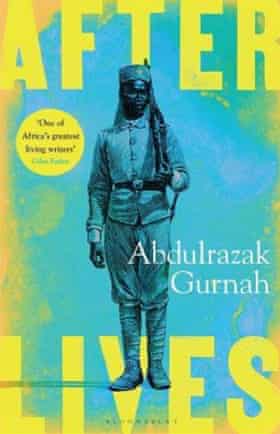
Last month, the Nobel prize for literature was awarded to Abdulrazak Gurnah, the Zanzibar-born novelist who came to Britain in 1968 following his country’s revolution, and who has explored themes of displacement and dislocation over the course of 10 novels. Gurnah’s work, which includes the novels Paradise, By the Sea and, most recently, Afterlives, has gained critical respect for the subtlety and potency with which it examines what he calls the “tragic havoc” that has affected so many in the post-colonial era. Now that work is likely to reach new readers.

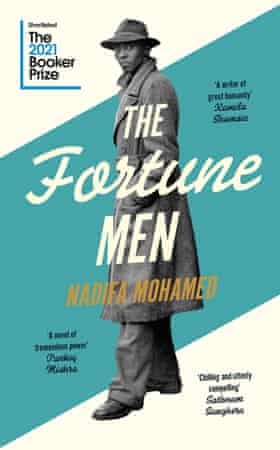
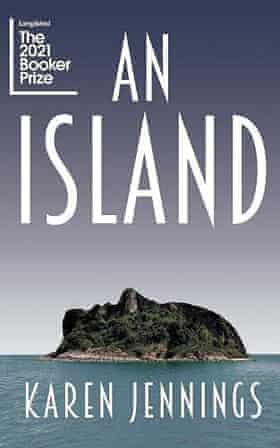
Along with Galgut, fellow South African novelist Karen Jennings was also on the Booker longlist this year for her novel An Island, about a lighthouse keeper’s encounter with a refugee. As with Gurnah, the prize will radically widen her readership – An Island had a print run of just 500 copies until the Booker nod, when thousands more were ordered. Meanwhile, Somali-British author Nadifa Mohamed was shortlisted for The Fortune Men, about a Somali sailor wrongly accused of murder in Wales, based on a real-life miscarriage of justice in Cardiff’s Tiger Bay.
Reading the runes of these triumphs is a task that requires caution, however, and begins with important caveats. These are European prizes, with all that that implies: their histories are intertwined with the valorisation of the novel as a European creation, adopted and curated over centuries as, it might be argued, a bourgeois art form; if its self-appointed custodians are now concerned to recognise its wider potential, and to widen its parameters, who shapes that process and decides who is allowed to speak? Which readerships are they addressing? And, in speaking of both “African countries” and the “African diaspora”, which identities are privileged and which are marginalised?
Literary prizes are the visible tip of an iceberg formed of writers’ careers – often long, diligent and unsung – the endeavours of publishers and booksellers, and the creative ecologies of countries, languages and regions. As Ellah Wakatama, editor at large at the publisher Canongate and chair of the AKO Caine prize for African writing, notes of this year’s victories: “It’s not a moment that suddenly happened. It’s a moment that’s happened because of lots of work to open up the spaces.” And that work won’t be finished, she says, “until you get to the point that writers are being published in enough volume that they can contend for the Booker prize as part of our culture, not as something strange and unique.”
The final point of an intricate process, prizes are indicators of something – the constitution of the panels that bestow them, changing tastes, responsiveness to different kinds of work – but that something is complex and not always immediately obvious. Speaking to the writers in question, two elements recurred: that any discussion of a “phenomenon” must encompass the variousness of literary cultures with African heritage, and that this should be seen as the beginning of a conversation rather than its culmination. In Galgut’s words: “What I would hope is that conversations such as this will focus people’s thinking on it in a particular way, so that it does crystallise into being noticed, and being taken into account.”
I ask Gurnah whether he has any sense of a wider world beginning to listen to stories to which it has been resistant in the past. “That could be so,” he replies. “I hope so, of course. But I think that it’s maybe as a result of a great many things that have happened recently. There is perhaps a greater sense of what’s going on elsewhere; not just what is reported in the newspapers. I think there is a kind of counter narrative that’s also going on; not quite as much reliance on the established story, as it were, or the approved story.” He points to responses to events in Iraq, Syria and Libya – countries that have experienced heavy involvement from the US and the UK: “All of those have demonstrated the ugliness of the policies and the cruelties that are inflicted on weak governments. I think also the Black Lives Matter movement, and the business that’s been going on in Britain over the last few months, culture wars, statues and so on … all of these things probably do generate a kind of a greater awareness, but I doubt very much that they are what leads to literary prizes. I would like to think that the reason these prizes have been awarded is very much to do with the work that these writers have produced.”
Gurnah is acute – and also drily amusing – on the culture wars he alludes to, describing them as a “pointless conversation going on between people who are, it seems to me, mindlessly resisting things that are going to sweep them away anyway” (he is at pains to point out the sweeping away is purely intellectual) and maintains that he doesn’t give them too much headspace. “I don’t have a problem with them battling and contesting, it’s their business, but the argument, it seems to me, has been lost for at least a century and a half. In the sense that there is no moral position that such arguments can defend any more. And yet to continue somehow, they have to find another little platform to stand on and shout the same old rubbish. So, let them talk, I’m not bothered about it.”
Nonetheless, it’s clear that novelists are affected by the political and social climate in which they create their work, and in particular by how literary culture is regarded. For Galgut, the recognition of the Booker jury has yet to be echoed in South Africa; he hasn’t, for example, heard from the department of arts and culture, not an omission he takes personally, but one that is indicative of the regard in which writers are held in the country. If it does come, he suspects it will be a matter of optics; a bright spark to seize on in a gloomy political landscape. “The more cynical side of me says that most politicians in South Africa just don’t give a damn,” he says.
Like many writers, Galgut is keen to underline – as he did in his Booker acceptance speech – the need to support and strengthen literary culture through concrete practices, including addressing the prohibitive cost of books by removing VAT on them, a campaign that has been waged in South Africa for some years. Though it might seem a technical point, it’s one that is key to fostering reading and writing, and to ensuring that literature is not seen as a pastime of the elite – which, as The Promise explores, often equals the white population. “You have to create a culture in which reading and writing is valued,” Galgut says, “before people are going to invest the many, many hours required to be able to start doing this well. And that’s just not a priority.”
Talking to Timothy Ogene, a poet, academic and author who grew up in Nigeria and now lives in the US, yields fresh perspectives. His forthcoming satirical novel Seesaw is the story of an obscure and failing Nigerian novelist seized upon by a rich white American and brought to Boston to “represent” his country. Like Galgut, Ogene is acutely aware of the wealth and privilege inherent in western literary ecology, from publishing and distribution to the funding of prizes. But he also believes that recent prize successes highlight the variousness of voices from both within Africa and the diaspora, drawing attention to, for example, the cultures of Asian and Arab Africans and of the Indian Ocean. The question we should be asking, he says, is what constitutes African writing: “We’ve had a very narrow definition, and that comes from the 1950s and 60s when the Chinua Achebes and the Soyinkas began to emerge,” he argues. “You know, the anti-colonial national; those trends have become what we now see as African literature. But it’s beginning to change, I think. A lot of contemporary writers that begin to explore various strands of ideas, how to be African, look at different epistemologies.”
Fundamental to creativity is agency; and agency includes the ability and power to resist external expectations and constraints. For Ogene, who says that he tries to go to “places that are not typically frequented by African writers”, and thereby to open himself up to “new ways of approaching race or identity or being African in the world”, the challenge is to escape binaries. “It’s time to begin to move beyond that and find connections that are not just ideological and political.”
Mohamed Mbougar Sarr’s The Most Secret Memory of Men, which focuses on a “forgotten” writer nicknamed “the black Rimbaud”, who is discovered years later by a young Senegalese novelist, is a narrative that is powered by “the ambiguous reception of black African writers in the western literary field,” he tells me. It’s striking that his novel is based on a real writer, Yambo Ouologuem, a Malian novelist who, having been feted, was accused of plagiarism and subsequently dropped out of view, and whose work raises fascinating questions of authorship and authority.
For Sarr, his latest novel brings into focus the apparent “anomaly” of becoming the first writer from sub-Saharan Africa to win the Prix Goncourt since its inception in 1903. It’s an exclusion that raises “structural questions and issues of literary sociology linked to colonial domination and its consequences (racism, editorial contempt, ignorance, a lack of interest among the literary milieu and the French public in the output of novels coming from the [global] francophone space of French-speaking writers, particularly African).” While this anomaly may appear to have been “corrected” with this recent award, he says, “I think it would be a mistake to interpret it as a rare and precious stately grace. If it’s seen as an exception to the norm, that would still mean that nothing has changed, that this prize is a simple exemption of the rules and we’ll soon be back to the old order.”
Plurality and empathy are characteristics of this year’s prize-winning novels. The crucial impetus for the future is to keep spaces not only open, but expanding. As Sarr says: “The Prix Goncourt is a tremendous encouragement for me in the construction of my work, but also for African writers, especially young people. The future is theirs … Above all, I don’t want to be an exception. I must not be. I am not.”
THE GUARDIAN