Showing posts with label Robert Mapplethorpe. Show all posts

Tuesday, November 18, 2025

Robert Mapplethorpe and Patti Smith: ‘If you don’t come, I’ll be with a guy’


Robert Mapplethorpe y Patti Smith


Robert Mapplethorpe and Patti Smith: ‘If you don’t come, I’ll be with a guy’

‘Will you pretend you’re my boyfriend?’ she asked the artist, hoping to escape another man. That night, they stopped pretending. They shared a dazzling love story, marked by excess and art

Sunday, August 18, 2024

Robert Mapplethorpe and Patti Smith: ‘If you don’t come, I’ll be with a guy’


Robert Mapplethorpe y Patti Smith
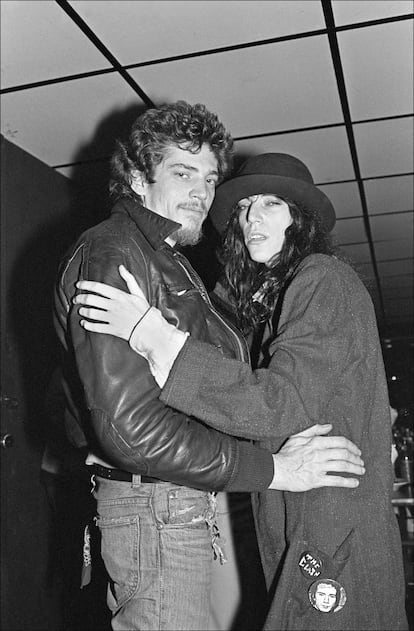
Robert Mapplethorpe and Patti Smith, at a Kansas City club in 1978.ALLAN TANNENBAUM (POLARIS/CONTACTOPHOTO)

Robert Mapplethorpe and Patti Smith: ‘If you don’t come, I’ll be with a guy’

‘Will you pretend you’re my boyfriend?’ she asked the artist, hoping to escape another man. That night, they stopped pretending. They shared a dazzling love story, marked by excess and art


Manuel Jabois

Sanxenxo, 14 August 2024

On July 3, 1967, 20-year-old Patricia Lee Smith arrived in New York wearing dungarees, a black turtleneck, an old gray trench coat, and a small red-and-yellow checked suitcase containing several notebooks, drawing pencils, and a copy of Rimbaud’s Illuminations, which was changing her already upturned life: pregnant at 19, she had put her baby up for adoption. Months later, in New York, she went to the address she had been given and there, in a room, she found a guy sleeping on an iron bed. “He was pale and slim with masses of dark curls, lying bare-chested with strands of beads around his neck […] He rose in one motion, put on his huaraches and a white T-shirt, and beckoned me to follow him […] I had never seen anyone like him,” she wrote 43 years later. The young man helped her to her room, and they said goodbye.

Saturday, July 1, 2023

Christopher Bollen / Patti Smith and Robert Mapplethorpe


Patti Smith and Robert Mapplehorpe


Patti Smith and Robert Mapplethorpe


By Christopher Bollen
January 12, 2010

In 1967, Patti Smith moved to New York City from South Jersey, and the rest is epic history. There are the photographs, the iconic made-for-record-cover black-and-whites shot by Smith’s lover, soul mate, and co-conspirator in survival, Robert Mapplethorpe. Then there are the photographs taken of them together, both with wild hair and cloaked in homemade amulets, hanging out in the glamorous poverty of the Chelsea Hotel. It is nearly impossible to navigate the social and artistic history of late ’60s and ’70s New York without coming across Smith. She was, as she still is, a poet, an artist, a rock star, and a bit of a shaman. But it is her friendship with Mapplethorpe where her legend begins—and like most beginnings, this one has been romanticized to the point of fantasy. How is it that two such beautifully feral-looking young people with no money or connections, who later would go on to achieve such extreme success—Smith with her music and Mapplethorpe with his photography—found each other? It is a myth of New York City as it once was, a place where misfits magically gravitated toward one another at the chance crossroads of a creative revolution. That’s one way to look at it. But Smith’s new memoir, Just Kids (Ecco)—which traces her relationship with Mapplethorpe from their first meetings (there were two of them before one fateful night in Tompkins Square Park) to their days in and out of hotels, love affairs, creative collaborations, nightclubs, and gritty neighborhoods—paints a radically different picture. In this account, the two struggle to pay for food and shelter, looking out for each other and sacrificing everything they have for the purpose of making art. Just Kids portrays their mythic status as the product of willful determination as much as destiny. Smith’s immensely personal storytelling also rectifies certain mistaken notions about the pair, revealing specifically that they were not wild-child drug addicts but dreamers, more human and loving than their cold, isolated stares and sharp, skinny bodies in early photos lead one to believe. Smith left New York for Detroit in 1979 to live with the man she would eventually marry, the late former MC5 guitarist Fred “Sonic” Smith, just as Mapplethorpe’s career as one of the most shocking and potent art photographers was reaching its apogee (his black-and-whites of gay hustlers, S&M acts, flowers, and children were headed to museum collections and a court trial for obscenity charges). By then Smith had already produced Horses and had risen to international fame. Her book follows Mapplethorpe all the way to his death in 1989 from complications due to AIDS, but it’s mostly about two kids who held on to each other.

'He was a sexual outlaw' / My love affair with Robert Mapplethorpe

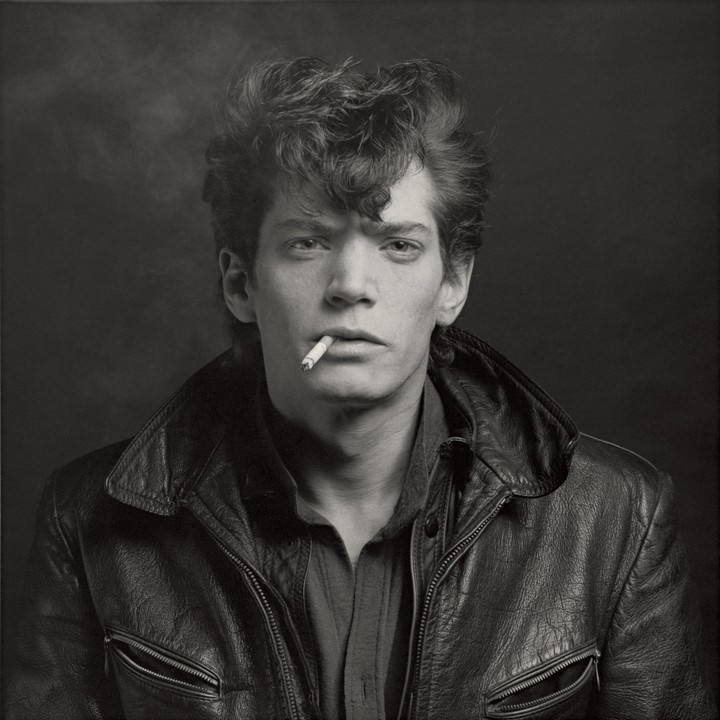
‘I want to see the devil in us all’ … a 1980 self-portrait.


'He was a sexual outlaw': my love affair with Robert Mapplethorpe


The dungeons and diamonds, the penthouses and pillow talk … Jack Fritscher relives his love affair with Robert Mapplethorpe – the hustler with a Hasselblad whose sexually explosive photographs thrilled and horrified America

Jack Fritscher
Wed 9 March 2016


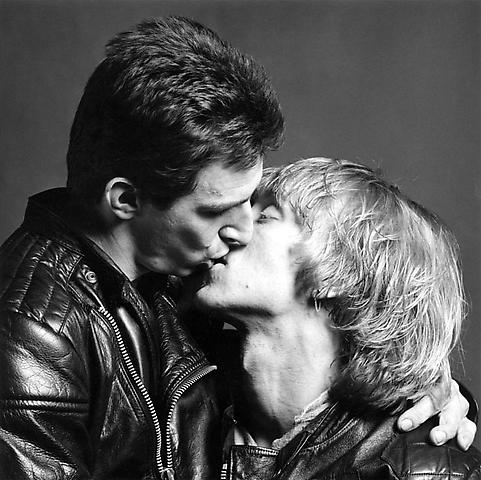
One hundred days after Robert Mapplethorpe’s celebrity-studded funeral, the gun-loving conservative politician Jesse Helms stood on the floor of the US senate and waved a photograph in the faces of his fellow representatives. The black and white shot, showing two men dressed from head to toe in leather, was called Larry and Bobby Kissing. “Look at the pictures!” screamed Helms, who was outraged that government money had helped fund The Perfect Moment, a Mapplethorpe retrospective in Washington DC. “Look at the pictures!”

Sunday, September 29, 2019

Robert Mapplethorpe's X-Rated Photographs Changed Culture Forever


Robert Mapplethorpe's X-Rated Photographs Changed Culture Forever

We spoke to the filmmakers behind 'Mapplethorpe: Look at the Pictures,' a new HBO documentary about the photographer who died 25 years ago, to find out more about his life.

By Hannah Ewens
Mar 29 2016, 9:20am

Patti Smith's boyfriend, the gay New York artist who died of AIDS, the man who took a picture of fisting and called it art: However you know of cult photographer Robert Mapplethorpe, it's strange that we know so little about the man himself. Famed for shooting male nudes, the scandal of the homoeroticism in his pictures has overshadowed both the artist and work itself.

His photos are striking, even today still reasonably shocking, and unflinching. Patti Smith describes it best in her memoir of their life together, Just Kids, when she says, "Robert took areas of dark human consent and made them into art. He worked without apology, investing the homosexual with grandeur, masculinity, and enviable nobility. Without affectation, he created a presence that was wholly male without sacrificing feminine grace."

Twenty-five years after his death, we are more intrigued than ever before. Fenton Bailey and Randy Barbato, the duo behind RuPaul's Drag Race, have made a documentary for HBO which aims to dig some way through the controversy in order to truly chart his life, loves, and creative work. I spoke to them about Mapplethorpe: Look at the Pictures and what they discovered about the man along the way.
VICE: We're introduced to Mapplethorpe as a little boy, which is a stark contrast to the sexualized art-and-leather man he's been immortalized as. You offer up the tiniest but most brilliant details about him.
Fenton Bailey: When you make a documentary, the devil is in the details, and details help conjure up a person for an audience. Rather than having an art critic pontificate about his work, you get more insight about Robert's character and personality when you know he held the local nonstop pogo stick record. Why? It speaks to his stick-with-it-ness, his determination. Or the fact that Mapplethorpe said as a child he knew he wanted to be an artist, "whatever that was." Even before he knew what an artist was, he wanted to be one.

He's anything but a lovable character in this film. He's single-minded and at times borders on cruel—I'm thinking of his treatment of his brother, Edward. When he poses a threat by branching out to be a photographer himself, Robert tells him he should change his last name, so they aren't associated. Did you go into the project liking him, and did that change?
Randy Barbato: For us, during the first year making it, we were ambivalent about our feelings toward Robert Mapplethorpe. Things that he did, particularly to his brother, made it hard to identify and connect with him from a traditional moral point of view. But the further we got into making the film, the more we admired his brutal honesty. It's not something you see that often. It's rare you see someone not edit out the qualities that most would judge as being selfish, ambitious, heartless, or insensitive. Why do we as a society think that ambition is wrong? That quality is simply how some people get things done. We're all complex individuals, and I think Robert Mapplethorpe in his naked ambition reminds us of the complexity of humanity.
Fenton Bailey: The film definitely forces you to get past what you think of as traditionally likable and not-likable, though. I can understand if people watching come away not liking him.

You show his ambition as relentless, with an awareness of publicity and criticism that's rare to see. He repeatedly asked, "Will people write about this work?"Fenton Bailey: It wasn't enough for him to sit in his loft making beautiful art; he had to position that art. People think that's not what pure artists do, but I was in the National Gallery last weekend looking at these old master artists and realized this is true with all artists throughout history. You don't end up painting the Vatican ceiling without kissing the pope's ass. Throughout art history, artists have needed patrons, and they've had to hustle to get work recognition. Twenty-five years later, people still think of Mapplethorpe. There were some artists working with male sexuality at that time—where are they now? It's a valid part of being an artist.
Randy Barbato: Artists now are so openly ambitious. Back then you couldn't admit to it.
Patti Smith is shown and spoken about, although she doesn't appear. It felt like you discussed what was relevant from that time in terms of his lifespan and career: their determination to be artists, her sacrifices to put his career before hers, and most importantly, her pride.Fenton Bailey: Absolutely, it was about those two points. It's important to realize that Mapplethorpe had many intimate collaborators and almost all of them are in the film. He was just like that; he was very intimate to that level with a number of people.
Randy Barbato: Patti had a beautiful relationship with him, but that was one part of his life. She actually wasn't around in New York or his life during a significant part of his artistic career. So she's in the film to the extent that she was in his life.
One thing you show well is his sensitivity, which comes through despite his "faults." Fenton Bailey: He was a highly sensitive person. Very good to his friends, very caring, loving, and with a great sense of humor. Listen to how soft spoken he is. He's such a gentle, polite person. It's not what you'd expect.

The way he worked seemed to have been: picking up a man for sex, sleeping with him, and taking photos of him almost immediately. Randy Barbato: The thing about Mapplethorpe is he didn't draw the line. He was the work of art. Nothing was off bounds because his life was art. Remember, he said himself, the whole point of art is to open ourselves up, open our hearts, our minds. He took that job very seriously and in many ways sacrificed his entire being to the cause.

Someone in the documentary accuses him of exploiting these people.
Fenton Bailey: In the trial after he'd died, the pictures were put on trial for obscenity, but they were safe because yes, they are obscene, but they have artistic merit. Why does it have to be one or the other? In terms of the models he picked up, had sex with, and shot, it's sexual desire and desire to turn the body into art. There isn't a distinction between making love with someone and taking his photograph.

During the end of the film as he knows he's dying of AIDS, his desire to produce and self-curate is in overdrive. Shooting extensively, throwing a "going away party." I saw parallels with David Bowie and Blackstar.Fenton Bailey: Yes! Exactly. Except, of course, Mapplethorpe was doing it many years before, and the equivalent of Blackstar is that show, The Perfect Moment, where he put together those pictures for the first time. He literally was building a time bomb. I don't think he was necessarily interested in politics or censorship or freedom of speech, but he knew what they could do for him. And they would make him a world-famous artist. The scandal did just that.
Often the fame narrative is either that someone gets famous for his or her work well after death or spends his or her life as a star. But with Mapplethorpe, he spent his final moments tasting that fame he'd always craved. 
Fenton Bailey: And spent that time thinking, What can I do considering I am dying that can make me more famous than I've been so that my work will last?
The article Vanity Fair wrote about him, almost talking about him posthumously, was awful. It isn't clear in the documentary, but did you find out if he'd read it himself?Fenton Bailey: Oh yes, he did see it. It wasn't in the film because there was so much we had to leave out. The headline of the piece was "Mapplethorpe's Long Goodbye," and his reaction was, What? Am I dying too slowly for Vanity Fair? Do they want me to speed things up a bit? He was very upset over it.

'Panorama,' Robert Mapplethorpe
How do you think he would have adapted to today's art world and wider culture?
Fenton Bailey: I think he would've loved where we are right now because the male body and nudity is an accepted part of art. I promise you it was scandalous when he first did it. I think he'd love digital photography and the culture in which everyone's taking selfies, often nude selfies, whether it's Tinder or Grindr. He'd love the way careers changed. In the past, you were a painter, or a designer, or a director, but now if you're an artist, you can do all those things. You don't have to pick a discipline and stick to it. Creating work can be simultaneously multi-disciplined. He'd have survived well.

To what extent did he change our attitude to male nudes and sex in art?Fenton Bailey: He's a pioneer. Without his male nudes, Calvin Klein never would've done that campaign with Marky Mark. It's impossible to imagine where we are today without him. Shooting those sexually explicit selfies and saying these are art and forcing them to look at them was a huge step toward normalizing it, so people could get over the shock. He was a disrupter.
Randy Barbato: Contemporary photography wasn't even considered art when Mapplethorpe was alive. Gays weren't running around calling themselves gay. Images of male nudity and sex like his were not seen. It was two different worlds ago.
Since Patti Smith's Just Kids, we've seen a lot of exhibitions and films about Mapplethorpe. Why this interest now? Why so relevant?Randy Barbato: Before he died, he set up a foundation to promote his work, and following his directions very closely, they gave a huge body of work to LACMA and Getty. The fact there are these two huge retrospectives at these specific museums is because of him and his intention. The reason he's around today is because that's the way he planned it. Why now? This is an important time to reexamine Mapplethorpe. People are closing borders, closing their minds, closing their hearts. His art challenges us to open them up again at this important time.


Robert Mapplethorpe by Robert J. Lewis

Robert Mapplethorpe


The heterosexual dictatorship versus
ROBERT MAPPLETHORPE


BY ROBERT J. LEWIS
_____________________


Sophistication is the ability to approach culture
with the minimum amount of anxiety.
Northrop Frye


The give and take is consensual. From a penis pulled out of homosexual Jim’s leather pants, a straight line of urine is being directed into the mouth of homosexual Tom. If a public toilet’s "thought-dreams could be seen," it would envy the considered delivery, the not-a-drop-wasted marksmanship.

The photograph, entitled “Jim and Tom, Sausalito, 1977,” was taken by the photographer Robert Mapplethorpe, who died of AIDS (1989) at the age of 42. It is one of the great photographs of the twentieth century. But it is not, classification notwithstanding, homoerotic art: neither the urinator nor his toilette is even approximately aroused. And if we grant the position is sexual, urinating and having to negotiate a mouthful of urine are not normally the stuff of foreplay or activities that predict arousal.

The storyline is straightforward. Hooded Jim, standing, is relieving his bladder while cowled Tom, kneeling, mouth agape, is orally receiving the benediction.

Since the photo wasn’t likely to elicit a sympathetic view of homosexuality or induce heterosexuals to switch sides, why did Mapplethorpe enter “Jim and Tom” into the public domain?

Does the photo argue that homosexuals are well-adjusted, comfortable in their sexual skins? Did the photographer hope to ingratiate himself into the good graces of the gay rights and gay pride movements? Seeing that it is not normal to thirst for or imbibe urine, is Mapplethorpe proposing that homosexuality is abnormal, anomalous, even perverse? He must have known that the already scarlet lettered homosexual community would vigorously object to the implications of the photo and would be click-quick to disassociate itself from sexual practices that deviate from the more conventional modalities (oral, anal) of gay sex, even though the photo is not sexual. But even Mapplethorpe’s harshest critics must admire his position on political correctness whose tyrannies he literally pisses on.

Is there a case to be made that “Jim and Tom” not only illuminates but represents the definitive outing of the condition of self-hatred? What causes a man to want to urinate into the mouth of his fellow man? In what regard does the urinator behold the man who agrees to orally receive his micturition? And what are we to conclude about the vessel and his (jaundiced) self-esteem indices?

“Jim and Tom” is a photo depicting what it’s like to be gay. It is a cry to the world, an advertisement announcing that gay pride is a lie, a façade without any practical agency against the intensity and ubiquity of hatred directed against homosexuals.

What makes a man so turn on himself, turn himself into a toilet or regard his fellow man as a mere toilet? How many negative experiences did it take to transmogrify Jim and Tom into the

unredeemed, into unregenerate self-haters? To what unfathomable degree of hatred were these men subjected to that finally twisted them to hate themselves, to find solace in humiliation and degradation, to not only accept the verdict of the hater but to appease him by signing their capitulation in urine.

There doesn’t exist a human being who wouldn’t rather be liked than not. When someone discovers he is hated for reasons other than his principles and beliefs, he will reflexively (unconsciously) attempt to modify his behaviour in order to be relieved of the cause of the hatred. But what is he to do when he is hated or rejected for something over which he has no control, or cannot change or alter: the colour of his skin, his ethnicity, his sexual orientation? He will do what comes most easily and naturally; he will appeal to his imaginative faculties and wish to be something other than what he is. Little does he suspect in this innocent act of wishful thinking his relationship with the world will never again be the same.

Self-hatred, especially among ethnic and minority group members, is an affliction, a sickness of being that no one dares to speak of because of the shame it elicits. But the shame is not a function of identity; it is an admission (of defeat) that the self-hater is hostage to public opinion, that he lacks the wherewithal to outthink or neutralize the inauthentic hatred directed against him. That so many self-haters remain self-hating over a lifetime forces the conclusion that, with few exceptions, ethnic and racial hatred is so overpowering it cannot be overcome.

Unlike members of ethnic and racial minority groups, homosexuals become self-hating later in life, during adolescence. The former are typically exposed to prejudice in early childhood and, perforce, learn to live with and adjust to the condition, especially if, as adults, they restrict the locus of their activities to their ethnic ghettos. The homosexual will only begin to become self-hating when he learns or suspects he is gay. Prior to that, he will have been culturally exposed to the widely held, condescending view of homosexuality that goes unchallenged in everyday discourse. Thus, it all too frequently happens that the prepubescent homosexual comes to adopt the homophobic ethos before he becomes aware of his homosexuality, which almost guarantees he will become a self-hating adult.

Robert Mapplethorpe’s photo of Jim and Tom lays bare, in all its brutality, the sheer power of homophobia and its tragically crippling consequences. In the brokeback facial expressions of Jim and Tom, we catch a phantom glimpse of the self-satisfied Liberal who -- even though he would have you think otherwise -- in his private thoughts is at best uneasy with homosexuality, which predicts that in a perfect world where homosexuality and heterosexuality enjoy equal positive regard, he will still prefer that his son be straight than gay.

What does “Jim and Tom” tell of our nation’s art critics who, en masse messed up, failed to uncover the work’s epochal significance, who instead lobbied to have the photo censured? From what smug biases did they pick and choose in the rendering of their ‘final judgment?’

The photo of “Jim and Tom” is not merely a depiction of self-hatred; it is a millennia-deep indictment of homophobia and its debilitating first effects. In its stark and bone-chilling content, it reduces to a singularity the immobilizing hatred and immorality that inhere in homophobia. Heterosexuality is revealed as a brutal dictatorship. In the unequal war of the worlds, it is the heterosexual who presumes the right to define for all time the status of the homosexual. As a commentary on the luck of the draw, the photo portrays homosexuality as a black hole from which there is no escape, and homophobia an issue from the same sordid swamp that spawned the likes of the Gestapo, the Klu Klux Klan, Stalin and Pol Pot. “In the darkness with a great bundle of grief the people march . . . where to, what next?"

Robert Mapplethorpe's infamous photo meets the criteria of art because in the telling of its story it moves us without being didactic. As an artwork that transcends time and defies category, “Jim and Tom” deserves to be exhibited in every major and minor museum in the world, and included in every university curriculum.

In light of the dark fact that homophobia continues to prosper and multiply, it is not enough that we merely think correctly, meaning pat ourselves liberally on the back only to stay pat. Nothing less than doing what is right will relieve us of our complicity in Jim and Tom’s humiliation. Jim and Tom have mothers and fathers and brothers and sisters; they belong to every race, religion, colour and culture. Since there is no escaping our moment in time which is their time, we can decide to return to them their stolen dignity or let human nature -- gene and claw -- do our bidding.

Like birds on the wire, like drunks in a midnight choir, Jim and Tom have tried in their way to be free. 


Wednesday, May 4, 2016

Robert Mapplethorpe / Prince of Darkness


Photo by Mapplethorpe


Robert Mapplethorpe, Prince of Darkness

A new HBO documentary on the late photographer is smart enough to realize that his power derived from his creepiness.


There’s a darkly funny and truly unsettling moment about halfway throughMapplethorpe: Look at the Pictures, the terrific new HBO documentary, which premiered on April 4, about Robert Mapplethorpe, the openly gay Queens-born photographer who shocked the world with his graphic gay S&M pictures before he died of AIDS in 1989.

His former lover and confessor Jack Fritscher leans into the camera and says, “I have to say that, because nobody will say it.” He pauses nervously, then continues, “Not to put [Mapplethorpe] down, but…Satan, to him, was not this evil monster. Satan was like a convivial playmate”—a truck or some construction interrupts him—“having a jolly good time seducing the maidens.” Fritscher is alluding to Mapplethorpe’s deep foray into a nocturnal world of multiple sex partners and extreme acts. “To me, it was a bridge too far.”
But the ominous noise from somewhere continues. Then Fritscher calls, agitated, to someone else in the house, “Can we close the doors? I’m getting awfully cold.” The audience around me—at the Los Angeles County Museum of Art, where a massive Mapplethorpe retrospective just opened—laughed uneasily at the idea of Mapplethorpe, in his black leather, dropping in from the dark afterworld on a surviving lover just as he divulges his judgment of Mapplethope as a gleeful devil.
The moment underscores the power of this lavishly sourced documentary by Fenton Bailey and Randy Barbato, the duo that has brought us, among several other documentaries, the runaway cult TV hit RuPaul’s Drag Race. As with that show, this doc enjoys knife-sharp editing, with an eye for stray facial expressions or vocal tics that serve as perfect ironic buttons for intense moments. But what is really important about Look at the Pictures—in addition to its being the first tautly told tale of Mapplethorpe’s life and work for those not familiar—is the frankness with which it re-coronates the artist as a prince of darkness, a title he would surely endorse.

Thursday, April 30, 2015

The Spirit of Patti Smith & Robert Mapplethorpe


Patti smith homage photo robert mapplethorpe


November 09, 2010

The Spirit of Patti Smith & Robert Mapplethorpe 

in VMAN as Channeled by Model-Photog Christian Brylle


The Philadelphia-born poet/rockstar and the shooter were A-list scenesters in the NYC of the late 60s, hanging with the artsy Chelsea Hotel crowd - including William Burroughs, Allen Ginsberg, Jimi Hendrix, Janis Joplin & Johnny Winter.  Although he found his artistic calling first, Smith became famous before her lover-turned-friend Robert (he subsequently discovered he was gay...good thing she didn't take it personally). Mapplethorpe died of AIDS in 1989, and her memoir about their lifelong friendship, "Just Kids," is up for a National Book Award; Smith already received the prestigious title of Commandeur des Arts et des Lettres from the French Ministry of Culture in 2005.

The multitalented Christian Brylle proves he's more than just a pretty modeling face with this spread he shot (and also stars in) for VMAN (issue #20; The Winter Issue - on newsstands November 11th). Posing as Mapplethorpe with Freja Beha Erichsen as Smith, "PATTI + ROBERT" showcases some of winter's coolest rock 'n roll looks while paying homage to the bond of youth and coolness shared by the famous friends. Be sure to check it out at VMAN.com.
- Lesley Scott

FASHIONTRIBES


Thursday, March 7, 2013

Robert Maplethorpe / Los Angeles County Museum of Art

Photo copyright by Robert Mapplethorpe Foundation.
Paloma Picasso
by Robert Mapplethorpe


Robert Mapplethorpe: 

XYZ at Los Angeles County Museum of Art

  
Photo copyright by Robert Mapplethorpe Foundation.
  Photo copyright by Robert Mapplethorpe Foundation.
Photo copyright by Robert Mapplethorpe Foundation.

The X, Y, and Z Portfolios (published in 1978, 1978, and 1981, respectively) by American photographer Robert Mapplethorpe (1946–1989) summarize Mapplethorpe’s ambitions as a fine-art photographer and contemporary artist, reflecting the tripartite division of his mature work: homosexual sadomasochistic imagery (X); floral still lifes (Y); and nude portraits of African-American men (Z). Mapplethorpe’s work has consistently provoked strong reactions, notably during the so-called Culture Wars of the 1980s. The exhibition is an  opportunity to assess Mapplethorpe’s confrontational photographs—with their paradoxical mix of classicizing, austere form and raw, uninhibited content—through three series that defined not only his artistic career, but also a moment in American cultural politics. The exhibition, together with the Getty Museum’s concurrent In Focus: Robert Mapplethorpe, celebrates the landmark joint acquisition, in 2011, of the Robert Mapplethorpe Archive by LACMA, the Getty Museum, and the Getty Research Institute.

This exhibition runs October 21, 2012–March 24, 2013
5905 Wilshire Blvd.
Los Angeles CA 90036
Phone:  323 857-6000
publicinfo@lacma.org

By Jim McKinniss
Self-Portrait
Robert Mapplethorpe


A key figure in late 20th-century photography, Robert Mapplethorpe created work with a distinctive tension between opposites: sacred and profane, mainstream and underground, light and dark. From his early Polaroid portraits, to his fashion photography and later controversial work, Mapplethorpe’s photographs are well-ordered and emotionally restrained, with dangerously chaotic and sensuous elements below.
Born in Queens, New York in 1946, Mapplethorpe studied graphic arts at Pratt Institute in Brooklyn before dropping out in 1969. He met the musician, poet, and artist Patti Smith in 1967 and they lived together as intimate and artistic partners until 1974. In 1972, Mapplethorpe met two influential curators. John McKendry gave him his first Polaroid camera, with which he made self-portraits and portraits of his friends and acquaintances in the art world. Samuel Wagstaff, Jr. later became the artist’s lover and mentor. By the mid-1970s, Mapplethorpe had acquired a medium format camera and began photographing the world of New York’s S and M clubs.
Mapplethorpe refined his style in the early 1980s to create elegant figure studies, delicate floral still lifes, nudes, as well as glamorous celebrity portraits. His preference for simple compositions and a sophisticated use of lighting to articulate subtleties of form distinguished his mature work
His career was successfully championed by pioneering photographs dealer Harry Lunn, who along with Robert Miller and Robert Self, published portfolios of some of the artist’s most challenging work. In the late 1980s and early 1990s, Mapplethorpe’s X Portfolio was at the center of an American culture war over whether public monies should be used to underwrite art some deemed obscene or blasphemous.
In 1989, at age forty-two, Mapplethorpe died from complications of AIDS. A year earlier, he had established the foundation that protects his work, promotes his legacy, and supports the causes he believed in, such as art programs and HIV/AIDS prevention and care.
 This show runs October 23, 2012–March 24, 2013
 By Jim McKinniss


Friday, January 11, 2013

Robert Mapplethorpe / Portraits

Robert Mapplethorpe, ‘Patti Smith’ 1979
Patti Smith, 1979

This famous photograph of Patti Smith is a study in contrasts, not only between the black hair and white doves, between the gossamer-lightness of the dress and the sharpness of Smith’s features; but between the peaceful, almost arcadian atmosphere conjured up by the tree, doves and dress and the intensity of Smith’s gaze and expression.

PORTRAITS
by Robert Mapplethorpe


Robert Mapplethorpe, ‘Louise Bourgeois’ 1982, printed 1991
Louise Bourgeois, 1982


Louise Bourgeois is a French-born, American artist, who began making surrealist-inspired paintings and prints, but turned to sculpture in the late 1940s. Her sculptures, often but not always abstract, have strong allusions to the human body and especially to human sexuality. In this photograph she is carrying one of her own works, a phallic-shaped sculpture that her right hand is holding in a suggestive manner. Her smile is very knowing.

Andy Warhol, 1983

Robert Mapplethorpe, ‘Andy Warhol’ 1986, printed 1990
Andy Warhol, 1986
Andy Warhol (1928-1987) was one of the most influential artists of the late twentieth century. Indeed, Mapplethorpe had idolised him while he was studying at Pratt Institute in Brooklyn in the late 1960s. However, by 1973 when they showed together at the Gotham Book Mart in New York, they were distrustful of each other. Photographed at the same time as the other 1983 portrait in ARTIST ROOMS, Mapplethorpe has selected just Warhol’s head and shoulders. Leaning against the white wall to the left, his body in profile, Warhol turns his head to face the camera, exhibiting his customary blank expression.

Robert Mapplethorpe, ‘Truman Capote’ 1981
Truman Capote, 1981

The American writer, Truman Capote (1924-1984), is best known for works such as ‘Breakfast at Tiffany’s’ (1958) and ‘In Cold Blood’ (1966). He was very publicity-conscious, ever since 1948, when he posed for a suggestive and provocative photograph to adorn the dust jacket of his book ‘Other Voices, Other Rooms’. In later years he was fairly reclusive. This photograph shows him relaxed, presumably at home, but by placing him alongside a strange, white sculpture of a palm tree Mapplethorpe manages to suggest something of Capote’s notorious eccentricity.

Robert Mapplethorpe, ‘William Burroughs’ 1980
William Burroughs, 1980

William Burroughs (1914-1997) was a novelist, a guru and one of America’s underground heroes. His greatest novel, ‘The Naked Lunch’ (first published in France in 1959) was banned on the grounds of obscenity until, in a groundbreaking trial in 1966, it was declared not obscene. By 1980, when this photograph was taken, Burroughs was a countercultural giant. Mapplethorpe portrays him as a secular saint in prayer. Almost half the composition is taken up by Burroughs’s dark jacket, which thereby throws into sharp relief his head and clasped hands.

Roy Lichtenstein, 1985


The American painter, sculptor and printmaker, Roy Lichtenstein (1923-1997), was one of the chief exponents of Pop Art. In his early years he specialised in using comic-book and advertising imagery as the basis for his paintings. In the 1980s he began to scale up expressionistically painted sketches which he would then proceed to paint with precisionist detail. It is probably one of these paintings that Lichtenstein is standing in front of in this photograph.

Francesco Clemente, 1982

Francesco Clemente is an Italian painter born in Naples in 1952. At the time this photograph was taken, he lived part of the time in New York, Rome and Madras. Clemente came to the fore internationally in the late 1970s and 1980s, when expressive, figurative painting became popular again. The pose and facial expression that he adopts are those of a saint or holy man. Mapplethorpe, who grew up a Catholic, uses the iconography of Catholic imagery to bring out something of the saintly seeker-after-truth in Clemente, who regularly spent time in India where he was inspired by the richness of the culture and religious practices.


Robert Mapplethorpe, ‘Keith Haring’ 1984
Keith Haring, 1984

Along with Jean-Michel Basquiat, Keith Haring (1958-90) was the leading artist of the graffiti art movement which flourished in New York in the 1980s. Haring’s geeky, schoolboy ingénu look belied his savvy knowledge of the media. Mapplethorpe has captured this mixture of faux innocent and knowing art practitioner in this portrait.

Robert Mapplethorpe, ‘Robert Rauschenberg’ 1983
Robert Rauschenberg, 1983


Robert Rauschenberg (1925-2008) was a major American painter, sculptor and printmaker, whose radical combination of action painting with found objects in the 1950s helped prepare the way for Pop Art. Mapplethorpe portrays him as a worker in dark overalls. His outspread arms, open hands and compassionate facial expression make him look like a saint. Mapplethorpe did something similar in a photograph of the Italian artist, Francesco Clemente.


Robert Mapplethorpe, ‘Willem de Kooning’ 1986
Willem de Kooning, 1986

The Dutch-born American painter, Willem de Kooning (1904-1997), was, along with Jackson Pollock, the chief representative of the gestural form of Abstract Expressionism. Mapplethorpe portrays him as a benign ‘old-timer’ in his working overalls. As with his portraits of Brice Marden, Roy Lichtenstein and Francesco Clemente, it appears Mapplethorpe has photographed him infront of one of his own paintings.

Robert Mapplethorpe, ‘Brice Marden’ 1976
Brice Marden, 1976

Robert Mapplethorpe, ‘Brice Marden’ 1986
Brice Marden, 1986


The American artist Brice Marden emerged in the 1960s as a painter of flat monochrome works. In the 1980s, however, influenced by Far Eastern calligraphy and poetry, he had turned to a freer, gestural type of painting, of the sort that can be seen behind him in this photograph. The frontality and symmetry of Marden’s pose provide a strong structural centre in the image, set against the expressive, free flow of the painting behind him which continues on to his shirt. This contrasts with the earlier portrait of Marden by Mapplethorpe in 1976, which imitated Marden’s carefully balanced minimal paintings of the time in a more sparse composition.

Lawrence Weiner, 1982

Lawrence Weiner (born in New York in 1942) is one of the founders of conceptual art, a movement that placed the emphasis on the conceptual and linguistic basis and formulation of a work of art, rather than on its execution. Mapplethorpe portrays him as a rugged intellectual with more than a streak of flamboyance - a silk scarf draped around his neck and tattooed star on his wrist - and love of his own rhetoric (note the open mouth, as if he had been caught in mid-flow). The diagonal lines of his arms create a parallelogram in the centre of the composition that acts as a base for the bearded head above.


Robert Mapplethorpe, ‘John McKendry’ 1975, printed 1992
John McKendy, 1975

Born in Canada, John McKendry was a curator of prints and photographs at the Metropolitan Museum of Art in New York. It was through McKendry that Mapplethorpe was exposed to photography in a new light and began to consider it as an art form of its own standing. However, McKendry was an alcoholic and this photograph of him was taken in hospital the day before he died, his face slathered in royal jelly moisturiser. Mapplethorpe’s brilliant cropping concentrates our attention on his discriminating eye, for which he was famous, and on the single electrical cord hanging from the socket. Mapplethorpe knew that he didn’t have long to live.

Robert Mapplethorpe, ‘Henry Geldzahler’ 1979
Henry Geldzahler, 1979

Mapplethorpe met Henry Geldzahler (1935-1994) at John McKendry’s apartment in New York. Like McKendry he was a fellow curator (for twentieth-century art) at the Metropolitan Museum of Art. Geldzahler had close relationships with many artists and was portrayed by, among others, David Hockney, Alice Neel and Larry Rivers, and he figured as the sole character in a 90-minute film by Andy Warhol, in which he did nothing more than smoke a cigar. Mapplethorpe’s close-up photograph shows him with his trademark cigar and bow tie. It highlights Mapplethorpe’s interest in formal contrasts with Geldzahler’s prickly beard and patterned blazer set against his gleaming spectacles and flat background.

Robert Mapplethorpe, ‘Phillip Johnson’ 1978
Philip Johnson, 1978

Philip Johnson (1906-2005) was the doyen of American architects and architectural critics. In the 1930s he championed the cause of modernism, although towards the end of his career he was one of the first architects to embrace postmodernism. He is photographed here seated in a dark leather chair, wearing his round, trademark spectacles that contributed so much to his puckish demeanour. Like a figure in an Egyptian low relief – hieratic and unemotional – Johnson has taken up a triangular pose, from the tip of his pointing finger to the back of his head and down to his elbow.

Robert Mapplethorpe, ‘Smutty’ 1980
Smutty, 1980

The nickname, tattoos, studded wristband and knowing look suggest that there is a darker side to this androgynous-looking young man. The placement of the arms and the contrapposto of the body and head are features common in Mannerist art, an area of art history that Mapplethorpe had a particular interest in.

Robert Mapplethorpe, ‘Smutty’ 1982
Smutty, 1982

Mapplethorpe had previously photographed this androgynous-looking young man, nicknamed ‘Smutty’, in 1980. This later image shows him in a more confident pose - standing with his body in profile, casually leaning his left arm against the wall and his right resting on his hip. The curvature of his arms focuses attention on a key ring of rabbit’s feet (a traditional good luck charm), hanging from his belt. However, his leather trousers and waistcoat, tattoos, and studded wristbands allude to a darker side, and raise the question as to what the good luck is for. His head is turned to look directly at the camera (and consequently the viewer) in a commanding and almost inviting way.


Robert Mapplethorpe, ‘Nick’ 1977
Nick, 1977

Nick looks every inch the hard, leather-clad macho guy of the New York gay S&M scene – studs on his jacket, belt and wristband, tattoos on his arm and forehead (a flaming skull) and a well-trimmed beard. Yet his hands are clasped together as if in prayer.


Robert Mapplethorpe, ‘Bob Love’ 1979
Bob Love, 1979

Around 1979 Mapplethorpe began to photograph black men. As his biographer, Patricia Morrisroe, wrote, he found that “he could extract a greater richness from the colour of their skin”, in particular the tonal range between the highlights and the shadows was more dramatic. In this close-up of Bob Love, Mapplethorpe exploits the contrast between the highlights on his shoulder and face and the inky darkness of his neck and the back and top of his head.

Arnold Schwarzenegger, 1976

The bodybuilder and budding actor, Arnold Schwarzenegger poses in a space rendered theatrical by a curtain that cuts the image at the top into two halves. The curve of the curtain to the left is echoed in Schwarzenegger’s pose – his extended right leg and curved right arm. It shows Mapplethorpe’s interest in the classical tradition with Schwarzenegger’s exceptionally muscular physique reminiscent of Michelangelo’s figures in the Sistine Chapel.

Robert Mapplethorpe, ‘Tattoo Artist's Son’ 1984
Tattoo Artist’s Son, 1984

This portrait shows an unknown punk, introduced to us as just the ‘Tattoo Artist’s Son’. He looks straight out of the frame with one intense eye, the other covered by his long fringe, a contrast to his shaven head. He appears full of attitude, his mouth slightly open as if caught mid-sentence. Despite the sitter’s casual body language the composition is structured. The sitter is centralised against the background which is split in half vertically - one side light, the other dark, his fringe creating a panel of dark swept into the light.


Robert Mapplethorpe, ‘Meredith Monk’ 1985
Meredith Monk, 1985

Meredith Monk is a composer, performer, film-maker and interdisciplinary artist. As she said of herself: ‘I work in between the cracks, where the voice starts dancing, where the body starts singing, where theater becomes cinema’. Mapplethorpe has chosen to show her head in profile, silhouetted against a circular form, as if it were a halo. As in so many of his works, Mapplethorpe has turned to the Catholic iconography of the saints to elevate his sitter.

Robert Mapplethorpe, ‘Diane Benson’ 1980
Diane Benson, 1980

Mapplethorpe has posed his sitter carefully so that her head and projecting hairstyle are in profile, but the back of her coat with its spectacular three-dimensional birds is fully visible. Her exaggerated 1950s-style quiff only just bisects the white diagonal, which emerges from the centre point and slices across the top-left corner of the frame. This emphasises the hairstyle and balances the overall composition.

Robert Mapplethorpe, ‘Marianne Faithfull’ 1976, printed 2003
Marianne Faithful, 1976
In the 1970s Marianne Faithful was well-known in both Britain and America as a singer and as a member of the celebrity jet set. Mapplethorpe photographs her frontally in relation to a strong framework of horizontals and verticals (the balustrade and wall). Faithful’s arms form the hypotenuse of a right-angle triangle, bisected diagonally by her legs, torso and head. Despite the highly structured composition, Faithful seems spontaneous and fun-loving.

Robert Mapplethorpe, ‘Molissa Fenley’ 1983
Molissa Fenley, 1983

In the 1970s Marianne Faithful was well-known in both Britain and America as a singer and as a member of the celebrity jet set. Mapplethorpe photographs her frontally in relation to a strong framework of horizontals and verticals (the balustrade and wall). Faithful’s arms form the hypotenuse of a right-angle triangle, bisected diagonally by her legs, torso and head. Despite the highly structured composition, Faithful seems spontaneous and fun-loving.

Robert Mapplethorpe, ‘Iggy Pop’ 1981
Iggy Pop, 1981

Iggy Pop, “The Godfather of Punk”, was a highly influential American rock singer and occasional actor. He was known for his raw physical energy on stage and also for his drugs problem. In this photograph Mapplethorpe captures this crazed energy (drug induced?), as Iggy Pop stares at the camera with eyes wide open and mouth seemingly about to speak or sing.

Robert Mapplethorpe, ‘Philip Glass and Robert Wilson’ 1976
Philip Glass and Robert Wilson, 1976

Mapplethorpe took this iconic photograph of Philip Glass and Robert Wilson in the same year as the production of Glass’s landmark opera, ‘Einstein on the Beach,’ which Wilson directed. The similar poses that the two men have adopted, as well as the geometry of the composition, emphasise their close collaboration – as well as their differences. The walls behind them are not the same. The white wall behind Wilson stands a few inches in front of the coloured wall behind Glass. Whereas Glass is unkempt, quite scruffily dressed and holding his hands in a contorted fashion, Wilson is well-groomed and generally more self-composed.


Robert Mapplethorpe, ‘Francesca Thyssen’ 1981
Francesca Thyssen, 1981

Francesca Thyssen is the daughter of the art collector, the late Baron Thyssen-Bornemisza, and the Scottish model, Fiona Campbell-Walter. In 1993 she married Archduke Karl von Habsburg, but they later separated. Francesca von Habsburg (as she is now called) lives in Vienna and, like her father, collects art on a grand scale. Mapplethorpe portrays her in a costume that makes her look like a woman in an early Netherlandish painting or a figure out of the Arabian Nights.


Robert Mapplethorpe, ‘Grace Jones’ 1984
Grace Jones, 1984

Grace Jones is a Jamaican-born singer, model and actress, known for her androgynous looks and her outrageous behaviour. She was very much part of the New York art and social scene in the 1980s. For this photograph her body has been painted by the New York graffiti artist, Keith Haring (1958-1990) with his characteristic pictograms and decorations. She is also wearing an exotic headdress and a conical wire bra, so that she looks like a voodoo doll or an aboriginal dancer.

Robert Mapplethorpe, ‘Doris Saatchi’ 1983
Doris Saatchi, 1983

The American, Doris Saatchi (née Lockhart), was Charles Saatchi’s first wife. This photograph was taken when the couple had attained almost legendary status as collectors of international contemporary art. The four-volume set of catalogues of their collection, ‘Art of Our Time’, was published in 1984 and showed that they had acquired many works now considered masterpieces. Mapplethorpe has captured her as a disembodied head looking directly into the camera with no hesitation. She has the gaze of someone who knows what she wants and knows how to appraise it.

Robert Mapplethorpe, ‘Honey’ 1976
Honey, 1976

Mapplethorpe took a number of photographs of the children of friends and acquaintances. In them he emphasised their innocence and lack of self-consciousness. Here that is reinforced by placing Honey on a flower-studded lawn, her smooth skin contrasted against the texture of the grass.

Robert Mapplethorpe, Paloma Picasso, 1980
Katherine Cebrian, 1980


Katherine Cebrian was one of the ‘grandes dames’ of San Francisco society, who famously said: “I don’t even butter my bread. I consider that cooking.” When Mapplethorpe was in town for the opening of a show at a private gallery, its owner arranged for Mapplethorpe to photograph her. He turned up at her house wearing a black leather outfit and a studded belt, spelling out the word ‘SHIT’. De Celle recollected: “I held my breath, but then Mapplethorpe worked his quiet charms on the elderly woman…talking softly to her while he set up his tripod in the sitting room. Mapplethorpe placed her in a window seat, with her face in profile.”

Robert Mapplethorpe, ‘Eva Amurri’ 1988
Eva Amurri, 1988

This photograph is of Eva, the daughter of American actress Susan Sarandon. Although somberly dressed in black, clutching her toy rabbit, a delicate lace collar frames her face and she has a soft smile on her face, her eyes glistening. Although it was taken at a time when Robert Mapplethorpe was desperately ill from AIDS and had only a few months to live, it is an image of innocence and of bright hope for the future.


Robert Mapplethorpe, ‘Lindsay Key’ 1985
Lindsay Key, 1985


Mapplethorpe took a number of photographs of the children of friends and acquaintances. In them he emphasised their innocence and lack of self-consciousness. Unlike his portraits of grown-ups with their studied postures, he preferred casual and natural poses. Here he captures the totally natural contrapposto of the young girl, as she leans with the top part of her body against the wind that is blowing her hair across her face. Her legs lean in the opposite direction.
Robert Mapplethorpe, Aira, 1979

Robert Mapplethorpe's Lisa Lyon, 1982Robert Mapplethorpe, Lisa Lyon, 1982
Robert Mapplethorpe, William Burroughs, 1979
Robert Mapplethorpe,Robert Mapplethorpe, Annabelle’s mother, 1978

robert-mapplethorpe-selfportrait-1988Robert Mapplethorpe, Selfportrait, 1988
In this late photograph, Mapplethorpe is no longer playing a role, as he did in so many of his earlier self-portraits. It was taken a few months before he died from an AIDS-related illness in 1989. In it he faces straight ahead, as if he were looking death in the face. The skull-headed cane that he holds in his right hand reinforces this reading. Mapplethorpe is wearing black, so that his head floats free, disembodied, as if he were already half-way to death. Mapplethorpe even photographs his head very slightly out of focus (compared with his hand) to suggest his gradual fading away.
http://www.tate.org.uk/art/artworks/mapplethorpe-andy-warhol-ar00220