On a visit to his birthplace, Kolkata, a Brooklyn-based dealer in rare books finds his life becoming entangled with an ancient legend about the goddess of snakes, Manasa Devi. While visiting a temple, deep within the mangrove forests of Bengal, he has a disturbing encounter with the most feared, and revered, of Indian snakes, a King Cobra. This is followed by a series of uncanny episodes that seem to dissolve the borders of the human and non-human.
Since 1983, it has been customary for nearly every State of the Union address to include the line “The state of the union is strong.” That rote confidence, though perhaps misplaced in politics, seems warranted in the world of books: there are always good books being written. But is it possible that, in 2019, there was a slightly greater number of them? I had a terrible time whittling down my top ten this year. There was a longer than usual tally of titles, reputed to be excellent, that I wanted to read (but have not, yet), with the result that the ballot below may be more reflective of idiosyncratic consumption than objective judgment. The lineup is heavy on fiction, memoir, fiction that behaves like memoir, and memoir that impersonates fiction. The books of 2019 may be slippery to categorize, but the state of them is strong—a luscious year, like 1997 for Brunellos—and I’m thrilled that my job calls upon me to share some of my favorites, rather than my assessment of the nation’s affairs. To the list!
This début novel follows a taxidermist, Jessa-Lynn, who lives in central Florida and is mourning the death of her father. Jessa-Lynn’s lover, who is also her brother’s wife, has run off. Her mother is taking apart her father’s specimens—he, too, was a taxidermist—and turning them into erotic art installations. Black humor meets lush prose; Arnett’s Florida—a world of sensuousness and danger—expresses the freedom that her characters seek, as taxidermy itself becomes a figure for queerness, sex, art, and loss.
This dystopic fable imagines a society riven in two, with the upper class empowered to murder members of the lower class, for any reason. Characters are given varying degrees of self-awareness; spare, simple language evokes innocence maintained at too high a price.
Sarah and David, teen-agers at a prestigious performing-arts high school, conduct their love affair under the watch of a manipulative and charismatic drama teacher. The students are all sweat, hormones, and painful self-consciousness. The novel, tense and lovely as a dancer’s clenched muscle, explodes into a mid-act twist, which brilliantly foregrounds questions of authorship and appropriation.
This stream-of-consciousness novel, most of which unspools over a single sentence, is an inquiry into how we live—and think—now: drowning in information, aghast at the news, yet captive to the mundane details of work and family. Ellmann’s unnamed protagonist, a middle-aged housewife in Ohio, is at once conventional and specific, not to mention funny. Her litany of fears and yearnings acquires an almost sacral quality.
Evaristo’s eighth novel, which shared this year’s Booker Prize with “The Testaments,” by Margaret Atwood, creates a symphony of black womanhood. Each chapter centers on a different character—a feminist playwright, her goth-alien daughter, the “separatist lesbian housebuilder” dating her friend—and their connections emerge gradually. At different times, Evaristo’s tone is either ringing or confiding, amused or stricken. Her language spills over the page in free verse that suggests Ntozake Shange but lays down its own rhythms.
Jones’s tale of coming of age in the South as a black, gay poet has a startling immediacy. He writes of college lovers, the threat of hate crimes, and his self-possessed mother, who supported him but struggled to talk about his sexuality. The book, which is slim and focussed, quakes with a nervous energy that often erupts into euphoria.
This memoir, which tells the story of Machado’s abusive relationship with another woman, is an act of personal and formal bravery: a narrative refracted through multiple genres—“Dream House as Creature Feature,” “Dream House as Word Problem”—that explores vulnerability but vibrates with power. Machado heightens a sense of dislocation by seeming to practice literary criticism on herself. (Right before her prologue, she writes, “I never read prologues. . . . If what the author has to say is so important, why relegate it to the paratext? What are they trying to hide?”)
In this whirling, poetic mashup of a novel, Stridsberg takes liberties adapting scenes from the biography of Valerie Solanas, the feminist who shot Andy Warhol. (Behold Valerie, languishing on her deathbed, sparring with the book’s narrator, who was not there.) The emotional through line is Stridsberg’s longing to know her mysterious, self-contradictory subject.
The book is comprised of restless, gorgeous essays, each of which uses an aphorism—“time heals all wounds,” “you can’t enter the same river twice”—to reflect on Tumarkin’s preoccupations: trauma, the ongoingness of the past, and the unworkability of language. Tumarkin takes up subjects like youth suicide and the plight of homeless people in North Melbourne, but her approach is never maudlin. The book exudes pity, as it’s classically defined— “a sorrowing compassion.”
Vuong, a poet and Vietnamese immigrant, studies his upbringing through the lens of his mother, to whom the novel is addressed. This woman, Rose, is both loving and abusive. She cannot read English, and yet her imagined readership is the occasion for the story’s telling. Rose becomes, for her son, a horizon where intimacy and loneliness converge; the grace of the book is to measure distance while acknowledging that few distances are fixed.
Adam Higginbotham’s thriller-like account of the disaster and Kate Brown’s study of its aftermath make chilling reading
Luke Harding Monday 4 March 2019
O
n 25 April 1986, a routine maintenance test was due to take place at Chernobyl’s reactor No 4. The idea was simple: to simulate what would happen during an electrical blackout. In the control room, the senior engineer in charge, Leonid Toptunov, began powering down.
For a few seconds everything was normal. Then there was a roar. The plant, designed to showcase the Soviet Union’s scientific prowess, began to tremble. A shift foreman watched in amazement as the reactor’s fuel caps bounced up and down. Next there was an explosion. The blast destroyed the nuclear core and blew off the plant’s concrete roof.
Adam Higginbotham
More than 30 years on, Adam Higginbotham tells the story of the disaster and its gruesome aftermath with thriller-like flair. Midnight in Chernobylis wonderful and chilling. It is a tale of hubris and doomed ambition, featuring Communist party bosses and hapless engineers, victims and villains, confusion and cover-up.
The tragedy was grimly epic. Those caught up in it are, in Higginbotham’s vivid recreation, never less than human. Mechanical engineer Alexander Yuvchenko was on duty and one of the first to comprehend the scale of the catastrophe. His friend Valery Khodemchuk was missing. Yuvchenko saw rubble, a roofless cavern and thick severed cables swaying with electric sparks.
Far worse was the “shimmering pillar of ethereal blue-white light, reaching straight up into the night sky, disappearing into infinity”. This was the radioactive ionisation of air. The atomic contents from Chernobyl’s reactor spilled into the atmosphere. A malevolent cloud blew across southern Belarus, travelled north-west and ended up in Sweden, causing mystification and panic.
Chernobyl
The USSR’s response was wholly inadequate. Chernobyl’s director, Viktor Bryukhanov, sat at his desk in a “bewildered stupor”, Higginbotham suggests, unable to accept the radiation readings reported by his team. Ukraine’s regional chiefs refused to evacuate. And in Moscow the politburo downplayed the crisis, alarmed at losing face before the international community.
It took two days before an order was given to move inhabitants out of Pripyat, the model atomic city built next to the plant. Its citizens were bussed out. A woman came home from a weekend away to find a ghost town: abandoned washing flapping on balconies, empty playgrounds, the barking of dogs. Pets were abandoned; their fur was contaminated with poisonous dust.
An abandoned town in Belarus in the zone that was evacuated
after the Chernobyl disaster. Photograph: Victor Drachev/EPA
Amid bureaucratic incompetence were scenes of stunning bravery. Helicopter pilots dumped bags of sand into the reactor to quell its burning red core. After each trip, crews would strip off their clothes and decontaminate as best they could. When they returned to their aircraft the next day they found the surrounding grass had gone yellow.
Meanwhile, in hospital in Moscow, Toptunov and his comrades perished. They died one by one. Their deaths were agonising. Their white blood cells plunged to zero, hair fell out. Lungs racked by gamma radiation stopped working. Loved ones watched, helpless.
Prypiat
In Manual for Survival,Kate Brown doggedly investigates what happened next. Her starting point is the official death tally from the explosion: Toptunov and 53 others. At the time, international organisations, including the UN, broadly accepted Moscow’s figure. Most of those listed as casualties were workers and firefighters exposed as the plant burned.
Brown is an indomitable researcher. She drives around the affected areas, navigates potholed roads and tracks down survivors. She visits archives. She hangs out with nuclear scientists who venture into the red forest, an intensively radioactive area adjacent to Chernobyl. There they test leaves. Three decades on, pine needles still fail to decompose.
Chernobyl was built amid a vast, watery landscape made up of numerous streams and rivers. This giant swamp, the Pripyat marshes, deterred various 20th-century invaders. It was less successful at keeping out radiation. Contamination seeped into the ecosystem, affecting villagers who picked berries, drank milk from cows and grew their own food.
Brown concludes that the 1986 disaster was not a single event. Rather, she argues, it was a “point on a continuum” that included other nuclear mishaps. The USSR and the US carried out nuclear tests throughout the cold war. Both lied about the toxic consequences. They sought to reassure the public that civilian nuclear energy and the bomb were perfectly safe.
Prypiat
Higginbotham and Brown both chronicle the attempts by brave individuals to expose the truth. One of them was Natalia Lozytska, a Kyiv physicist. By measuring radioactive fallout, she discovered the accident was far worse than the state had acknowledged. She found high levels of caesium-137 and other isotopes. Villagers complained of sore throats, nosebleeds and fainting children.
In 1988, Lozytska disguised herself as a cleaning woman with a mop and sneaked into an international conference on Chernobyl’s medical effects. Soviet officials said there weren’t any. She was about to hand her report to a western doctor when the KGB grabbed her. Overall, Mikhail Gorbachev’s government used secrecy, censorship and fake news to stop information getting out. Data from health studies disappeared.
That the KGB would steal and destroy medical records is hardly surprising. More egregious, in Brown’s view, is the failure by international bodies such as the World Health Organisation to interrogate the consequences. Western experts were condescending towards Soviet doctors. And, with an eye on their own nuclear industry, lowered the numbers of children with thyroid cancer.
Radiation testing in Ukraine after the disaster. Photograph: Gamma-Keystone via Getty Images
There is still no definitive account for how many lives were blighted. Brown estimates 35,000 to 150,000 Chernobyl fatalities. She attributes the rise in thyroid cancers in the US – the numbers tripled between 1974 and 2013 – to half a century of nuclear testing. All of us have been exposed to low-level doses.
Higginbotham and Brown’s books are exemplary studies, written with skill and passion. They avoid the fallacy of a redemptive ending. Some recent studies have claimed that Chernobyl is now a thriving eco-wilderness. Untroubled by man, wolves, elk, bears and rare birds of prey have allegedly come back, with nature rebounding from apocalypse.
Chernobyl
Seductive but not true, says Brown. According to Tim Mousseau and Anders Møller, two biologists who have been working since 2000 in the red forest, the zone remains heavily contaminated. The data is uneven. Birch trees that shed their radioactive leaves are in better shape than pines. There are no spiders. And very few bees or fruit flies.
The bodies of mice, leaf litter and the tumours found in migrating barn swallows all tell their own gloomy story. There are, it seems, few grounds for 21st-century optimism. As Møller says: “Every rock we turn over we find damage.”
A brilliant, haunting and unforgettable memoir from a stunning new talent about the inexorable pull of home and family, set in a shotgun house in New Orleans East.
Winner of the 2019 National Book Award in Nonfiction Named one of the 10 Best Books of the Year by the New York Times
In 1961, Sarah M. Broom’s mother Ivory Mae bought a shotgun house in the then-promising neighborhood of New Orleans East and built her world inside of it. It was the height of the Space Race and the neighborhood was home to a major NASA plant—the postwar optimism seemed assured. Widowed, Ivory Mae remarried Sarah’s father Simon Broom; their combined family would eventually number twelve children. But after Simon died, six months after Sarah’s birth, the Yellow House would become Ivory Mae’s thirteenth and most unruly child.
A book of great ambition, Sarah M. Broom’s The Yellow House tells a hundred years of her family and their relationship to home in a neglected area of one of America’s most mythologized cities. This is the story of a mother’s struggle against a house’s entropy, and that of a prodigal daughter who left home only to reckon with the pull that home exerts, even after the Yellow House was wiped off the map after Hurricane Katrina. The Yellow House expands the map of New Orleans to include the stories of its lesser known natives, guided deftly by one of its native daughters, to demonstrate how enduring drives of clan, pride, and familial love resist and defy erasure. Located in the gap between the “Big Easy” of tourist guides and the New Orleans in which Broom was raised, The Yellow House is a brilliant memoir of place, class, race, the seeping rot of inequality, and the internalized shame that often follows. It is a transformative, deeply moving story from an unparalleled new voice of startling clarity, authority, and power.
Praise for The Yellow House
Winner of the 2019 National Book Award in Nonfiction A New York Times Bestseller Named a Notable Book of the Year by the New York Times Book Review Named one of the 10 Best Books of 2019 by the New York Times Book Review, the Seattle Times, the Chicago Public Library, the Chicago Tribune, and Slate Named a Best Book of 2019 by the Washington Post, NPR’s Book Concierge, NPR’s Fresh Air, the Guardian, BookPage, the New York Public Library, and Shelf Awareness Named a Best Memoir of the Decade by LitHub
“Sarah Broom’s sweeping memoir is epic in scope—a love letter to the family of twelve of which she is the ‘babiest,’ an intimate and uncompromising vision of the New Orleans that shaped her, an homage to deep roots and to blackness—all of this shot through with reverence, longing and abiding love.”—Ayana Mathis, author of The Twelve Tribes of Hattie
“A great, multigenerational family story . . . Broom is an engaging guide; she has some of David Simon’s effortless reporting style, and her meditations on eroding places recall Jeannette Walls. The house didn’t survive Katrina, but its destruction strengthened Broom’s appreciation of home. Broom’s memoir serves as a touching tribute to family and a unique exploration of the American experience.”—Publishers Weekly
“A heartfelt but unflinching recovery project . . . Broom’s lyrical style celebrates her family bonds, but a righteous fury runs throughout the narrative at New Orleans’ injustices, from the foundation on up. A tribute to the multitude of stories one small home can contain, even one bursting with loss.”—Kirkus Reviews
“Every few years, a book comes along that teaches readers of memoir how to read and writers of memoir how to write. Calling Sarah M. Broom’s The Yellow House a memoir feels wrong. Somehow, Broom created a book that feels bigger, finer, more daring than the form itself. The Yellow House literally taught me how to read and write. I will never write or read about family, longing, blackness, femininity, joy and state-sanctioned terror the same way after sitting with this book. Broom narratively glides through choppy air almost in slow-motion, and when I least expect it, she digs into the ground of New Orleans conjuring the most humanely massive intervention I’ve read in 21st century memoir writing.”—Kiese Laymon, author of Heavy
“Gorgeously written, intimate and wise, Sarah M. Broom’s The Yellow House is an astonishing memoir of family, love, and survival. It’s also a history of New Orleans unlike any we’ve seen before, one that should be required reading.”—Jami Attenberg, author of All Grown Up
“Sarah Broom’s book is an extraordinary example of how language can make things. Her words, sentences, thoughts as she creates East New Orleans—where she was born—move faster than you will ever keep up—but you damn sure don’t want to let go.”—John Edgar Wideman, author of Brothers and Keepers
“The Yellow House is a masterpiece of history, politics, sociology and memory. Actually, it’s just a masterpiece, period. Sarah Broom’s carefully researched portrait of a family and a place possesses the emotional vastness of a multi-generational novel, and shies away from nothing. Her pages are artfully controlled, meditative logic proofs of heartbreak, humor, devastation, celebration and rage. Broom shows what literary nonfiction—and what books—can yet do and be. I already consider her to be one of America’s most important and influential writers.”—Heidi Julavits, author of The Folded Clock
“From a singular writer, a crucial memoir of life on the margins—one that, through ruthless observation and deepest intelligence, might help reintegrate what happens in those margins into the central narratives of American life. Alternating gracefully between immediacy and critical distance, she leaves us with deep insight not just into her own family, her own community, but into governance, justice, and inequality in the round. Timeless in its telling, The Yellow House could become a modern classic.”—Whiting Nonfiction Grant Jury
“[An] extraordinary, engrossing debut… kinetic and omnivorous… [Broom] pushes past the baseline expectations of memoir as a genre to create an entertaining and inventive amalgamation of literary forms. Part oral history, part urban history, part celebration of a bygone way of life, The Yellow House is a full indictment of the greed, discrimination, indifference and poor city planning that led her family’s home to be wiped off the map. It is an instantly essential text, examining the past, present and possible future of the city of New Orleans, and of America writ large.”—New York Times Book Review
“[A] forceful, rolling and many-chambered new memoir… [Broom’s] memoir isn’t just a Katrina story — it has a lot more on its mind. But the storm and the way it scattered her large family across America give this book both its grease and its gravitas… This book is dense with characters and stories. It’s a big, simmering pot that comes to a boil at the right times… This is a major book that I suspect will come to be considered among the essential memoirs of this vexing decade. There are a lot of complicated emotions coursing through its veins. It throws the image of an exceptional American city into dark relief.”—New York Times
“The memoir from Louisiana native Broom tells the story of her mother’s beloved shotgun house in east New Orleans and the family she raised there. The house was destroyed by Hurricane Katrina, and Broom writes about the racial and economic inequality that has haunted New Orleans for decades. Author Heidi Julavits called the book “a masterpiece of history, politics, sociology and memory.”—Los Angeles Times, “7 Highly Anticipated Books to Get You Through the Dog Days of August”
“Broom’s book is a memoir — but also so much more. The New Orleans native has written a hybrid of the most exquisite kind, part family history, part archaeological dig, part self-exegesis. It all comes back to the house of the title, a ‘New Orleans East’ shotgun dwelling that has given hope, heartbreak, shelter and transformation to decades of Broom’s family. And Broom has used it to inspire something new.”—Washington Post, “The 10 Books to Read in August”
“I’m most excited about reading The Yellow House by Sarah M. Broom. I tend to love books that capture a sense of place, and I’ve always been fascinated with New Orleans. Like Jamaica, New Orleans is a destination people seek out to have a good time, but few people see the reality behind the touristy facade. Very rarely do I see a story of the people who have been in New Orleans for generations—this memoir promises an intimate, beautiful portrait of a black family and the place they call home.”—Nicole Dennis-Benn, Vanity Fair
“A remarkable journey… Her tale is one of loss, love, and resilience.”—Robin Roberts, “Good Morning America”
“Sarah M. Broom’s gorgeous debut, The Yellow House, reads as elegy and prayer. The titular house is the fulcrum for Broom’s memoir about her large and complex family. Perhaps more important, it stands in for the countless ways America has failed and continues to fail African Americans… Sarah M. Broom is a writer of great intellect and breadth. She embraces momentous subjects. The Yellow House is about the relentless divestment of wealth from the African American family no matter how hard its members work; and our government’s failure to protect its poor from predictable environmental catastrophe and subsequent trauma; and our gross neglect of poor neighborhoods; and sham promises that never materialize or are broken too easily, and the papering over of deep systemic problems by politicians and we the people. The Yellow House is also about the persistence of love and grit… There’s a young woman whose winding journey takes her away from and back to her family, as she circumnavigates the world in order to connect with herself — which means coming to the sober reckoning that some holes can never be filled.”—NPR
“One of the year’s best memoirs, The Yellow House finds an epic, fascinating, empathetic history of New Orleans within the life of one woman, her family, and the home they grew up in… The book is at once intimate and sprawling, spinning at times dozens of stories in what amounts to a vital reframing of a misrepresented community, and an urgent meditation on the American dream.”—David Canfield, Entertainment Weekly
“The title of Sarah M. Broom’s debut memoir refers to the east New Orleans home her mother bought in 1961. There, Broom was raised alongside her 11 siblings in a part of the city that became riddled with crime and poverty. In The Yellow House, Broom traces back a hundred years worth of her family history and the hardships they faced. She pays particular attention to Hurricane Katrina, which completely destroyed the family’s house. In its aftermath, Broom examines what it really means to rebuild roots and how to define a home.” —Time, “Here Are the 11 New Books You Should Read in August”
“Broom’s memoir of poverty, striving, and justice in pre- and post-Katrina-stricken New Orleans concerns rising tides, the literal ones that took her childhood home, and the structural ones, too, that, instead of lifting all, are threatening to drown. Broom has a reporter’s eye but an essayist’s heart, blending urban history of her segregated home city and her family’s attempt to survive in it.”—Vogue
“NOLA Darling. Sarah M. Broom’s obsession with her childhood home in New Orleans is the focal point of her intimate nonfiction debut… This brave work delves into such issues as poor housing, subpar health care, family bonds, personal erasure and survival.”—Essence
“In her tough yet tenderly wrought book The Yellow House, [Broom] explores… the long-term effects of erasure and the price of staking a claim on unpredictable territory… The label ‘memoir’ doesn’t quite contain—or honor—the entirety of what Broom has accomplished. The Yellow House is both personal and sharply political; it’s an attempt to redraw not just the map of New Orleans but also the city’s narrative — to reset it on its foundation… Meticulously observed and expansively researched, Broom’s inquiry is an excavation… She plunges into the family’s deep, uncertain history; stories pieced together about her maternal grandmother Ameilia (‘Lolo’), her Auntie Elaine and her mother, Ivory Mae, are touchstones, pins in the new map… These elder voices, thick with the rhythm and texture of time and place, are a chorus of narrators, the forebears who navigated a stratified, racially segregated map. They weigh in, testify, spin tangents. It’s the book’s music… In New Orleans, there is a parade call-and-response refrain—a funky roll call, if you will—that asks revelers to shout out their provenance—the New Orleans neighborhood from which they hail. Where you from? The Yellow House is Broom’s luminous, literary answer to that appeal… Broom’s work is a shoring-up, a strengthening. It’s the result of tenacious naming and claiming, revisiting all the histories — formal and informal, polished and rough. She worked with great care, and with a resolute honesty leavened with grace. Readers may hear echoes of James Baldwin in the relentlessness of her inquiry, and in the sinewy cadences of her sentences… Pared down to its studs, The Yellow House is a love story. It is a declaration of unconditional devotion and commitment to place. Broom also pays homage to the relationships we protect, the ones we yearn for and circle back to; the ones that hold us and don’t give up on us, that are our living and breathing foundation.”—Los Angeles Times
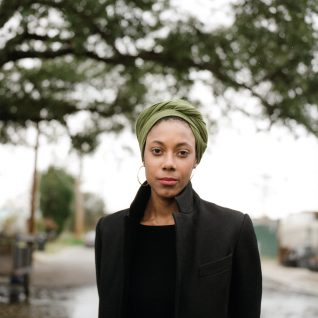
Sarah M. Broom is a writer whose work has appeared in the New Yorker, The New York Times Magazine, The Oxford American, and O, The Oprah Magazine among others. A native New Orleanian, she received her Masters in Journalism from the University of California, Berkeley in 2004. She was awarded a Whiting Foundation Creative Nonfiction Grant in 2016 and was a finalist for the New York Foundation for the Arts Fellowship in Creative Nonfiction in 2011. She has also been awarded fellowships at Djerassi Resident Artists Program and The MacDowell Colony. She lives in New York State.


 Nandini Nair | 03 Jan, 2019