Showing posts with label Roddy Doyle. Show all posts

Monday, April 29, 2024

My writing day / Roddy Doyle / My work is fuelled by music, mitching and mugs of green tea XLISTO 2017

‘Green tea is good for the cholesterol, but bad for the self-respect’ …
Roddy Doyle. 
Illustration: Alan Vest


Roddy Doyle: my work is fuelled by music, mitching and mugs of green tea

The bestselling author writes his novel in the morning, a play or column in the afternoon – and likes to sneak off to the cinema when nobody is looking
Roddy Doyle
Saturday 9 September 2017

I wake early but don’t work. I like having the world to myself for a while. I make coffee – with an AeroPress: lots of stirring and shoving – and read until the rest of the house wakes up.

Saturday, October 15, 2022

My hero / Roddy Doyle by Kerry Hudson


Roddy Doyle

My hero: Roddy Doyle by Kerry Hudson

The Irish writer's tender portrayals of working-class families proved ordinary lives were a suitable subject for winning fiction


Kerry Hudson
Fri 19 Jul 2013 16.59 BST

R

oddy Doyle is one of Ireland's greatest writers. He is also my favourite teacher. His books arrived when I needed them most and, like the best of educations, changed my perceptions and the course of my life.

Thursday, December 30, 2021

All Advice Is Bad


Margaret Atwood


All Advice Is Bad

The arbitrary brain feed of writerly legends who could easily be the faceless guy at the bar crying into his shoulder bag.
Blake Butler
June 19, 2012

Last year or so the Guardian rounded up a bunch of writers over the age of 60 or something and asked them to give advice to writers who use the internet, AKA college students. Some of them offered up some pretty dumb ideas, and even the ones that seemed reasonable to me were mostly just as arbitrary as the ones that clearly were the brain feed of someone who’s been too long in a game where even the legends could be the faceless guy beside you at the bar crying into his shoulder bag.

1. Elmore Leonard: “Never open a book with weather. If it's only to create atmosphere, and not a character's reaction to the weather, you don't want to go on too long. The reader is apt to leaf ahead looking for people.”

If you’re a pussy, this rule is true. Giving up some banal crap I can look out my window to find out isn’t that necessary, but there are plenty of ways to talk about what’s in the air without sounding like you’re setting up an Elmore Leonard novel. One of the most famous opening lines ever, Pynchon’s “A screaming comes across the sky,” isn’t regarding weather per se, but it’s just provocatively situated enough to make you think it could be. And our crime drama writer Leonard is OK with the weather as long as you’ve got a human telling about it? Isn’t that every sentence in every book? I’m sorry to break it to you, Elmore, but humans are the most transient pieces of weather on the earth.

2. Margaret Atwood: “You most likely need a thesaurus, a rudimentary grammar book, and a grip on reality.”

A grip on reality is the last thing I recommend if you are hoping to devote your life to sitting at a machine all day while other people work for actual money and then go home and spend time with their families while not still in the back of their mind doting on the fantasies they ejaculated that week at the desk. More likely you should have a willingness to completely dash any hope of being a normal person with a normal face, though it does indeed help not to be a total headcase motherfucker in the meantime, so perhaps find/replace “reality” with “death.” I don’t think you’ll find that replacement in your thesaurus, which is why they are mostly a waste of time.


3. Roddy Doyle: “Do be kind to yourself. Fill pages as quickly as possible; double space, or write on every second line. Regard every new page as a small triumph.”

I like writing in a frenzy as much as anyone, but to pat yourself on the back every time you’ve blathered the roughly 450 words it takes to fill one double-spaced page, which is essentially the length of a slightly-too-long email, is not only unnecessary, it’s pathetic. Look, no one cares what you do at your desk or how long it took you to get there, or how many words you snuck in today before going to the gym to burn off the beer you drank to feel better about having sat in one place all day again, or how long the manuscript you’re currently working on that should probably have half of itself deleted if you really want to be kind not to yourself or to the reader but the thing you’re making, which is the point in the first place, right? If you’re the kind of person that needs a new small triumph a few times an hour, take up playing billiards against toddlers. If you want to write, put down the mirror.

4. Richard Ford: “Don't read your reviews.”

If you’d read your reviews, Richard, you might have found enough self-guilt to do something new.

5. Jonathan Franzen:“You have to love before you can be relentless.”

Giancarlo DiTrapano and I already extensively covered our feelings on J-Franz, but I’m still cringing about this little nugget. Is that, like, make sure you squash your itch to watch old episodes of Friends before you sit down at the computer, otherwise you’ll just never quite be able to focus?

6. Esther Freud: “Editing is everything. Cut until you can cut no more. What is left often springs into life.”

I mean, yeah, you need to edit, but this sounds like you just put the printout in a magic hat and shake it around and out it comes all wise and ready for the National Book Awards. “Cut until you can cut no more” taken to its logical conclusion pretty much ends up with a blank page, which is maybe some advice that could be taken more regularly, for sure, though this thing about springing into life reminds me for some reason of the Smurfs. Why do so many grown ass-people sound like wise-beyond-their-years nine-year-olds?

7. Neil Gaiman: “Remember: when people tell you something's wrong or doesn't work for them, they are almost always right.”

No. Bad Neil. You are wrong.

8. David Hare: “Write only when you have something to say.”

Following this rule, every Facebook status update could be expanded into a novel. Your baby is six weeks along now? Well by all means, tell the world! Why stop at 50 words? I AM SO READY TO HEAR EVERYTHING THAT’S ON YOUR MIND. How about instead only write when you have absolutely nothing to say and aren’t even in your body so now it’s not you with all your shitty human want and wishing, and is instead something bigger than a person ostensibly writing out a Christmas list of narrative action on paper?

9. Hilary Mantel: “Are you serious about this? Then get an accountant.”

Barf on my dick, Hilary.

10. Michael Moorcock: “Introduce your main characters and themes in the first third of your novel…. Develop your themes and characters in your second third, the development. Resolve your themes, mysteries, and so on in the final third, the resolution.”

Hi, Reader, I’d like you to meet my character, Michael Moorcock, and my theme, Anti-Transcendent Definition of Impossible-to-Define Terminology in the Name of Pretending There Is Perfect Science to My Mythology When in Fact the Only Thing That’s True About Anything Is What It Actually By Its Own Admission Is, Which Doesn’t Mean Anything Because Storytelling Is Just a Bunch of Stories and Making Art Is Making Art and The Reason People Are Sick of Reading Mostly Is That So Many People Think They Have to Follow Anybody’s Shitty Rules Instead of Thinking of Their Own Rules With Their Blood Instead of Their Brains and Just Fucking Creating Something Else.

11. Annie Proulx: “Write slowly and by hand only about subjects that interest you.”

AKA never learn anything, never invent anything, never change speeds, never feel deleted, never scare yourself, never scare anyone. Sure. Sounds good. See you in the gardens.

12. Will Self: “Stop reading fiction–it's all lies anyway, and it doesn't have anything to tell you that you don't know already (assuming, that is, you've read a great deal of fiction in the past; if you haven't, you have no business whatsoever being a writer of fiction).”

I suggest you start with the work of Will Self.

13. Colm Tóibín: “Finish everything you start.”

Now, if you’ll excuse me, when I was six I wrote the first verse of a rap called “The Supersonic Dudes from 3003” and never got around to finishing and now I realize why I never sleep….

VICE


Friday, October 29, 2021

Life Without Children by Roddy Doyle review / Stories about lockdown and loss


BOOK OF THE DAY
Life Without Children by Roddy Doyle review – stories about lockdown and loss

Tender and humorous tales explore our need for connections with others in a world made strange by Covid


Katy Guest
Thu 28 Oct 2021 07.30 BST


A

s a writer who has documented Ireland’s financial and social rollercoaster since the late 1980s, it’s fitting that Roddy Doyle should be among the first to record the effects of the current pandemic, the lockdown and the loss. The 10 stories in Life Without Children, mostly written in the past year, all do that. But Doyle is an author best known for easy dialogues, big, raucous families and pubs – and there have been precious few of those. How will he handle the sudden lack of conversation and company that has characterised recent times? Will there be Zoom calls?

Friday, May 22, 2020

Irish Writers who have won the Man Booker Prize for Fiction


John Banville
Illustration by Triunfo Arciniegas


Irish Writers who have won the Man Booker Prize for Fiction


09/12/2019

The Booker Prize for Fiction is awarded each year for the best original novel written in English. Until recently, the prize was limited to only writers publishing in the United Kingdom. The prize is of great significance for writers, publishers, and readers. This is a much sought-after mark of distinction. 

Amazon.com: The Siege of Krishnapur (Empire Trilogy ...


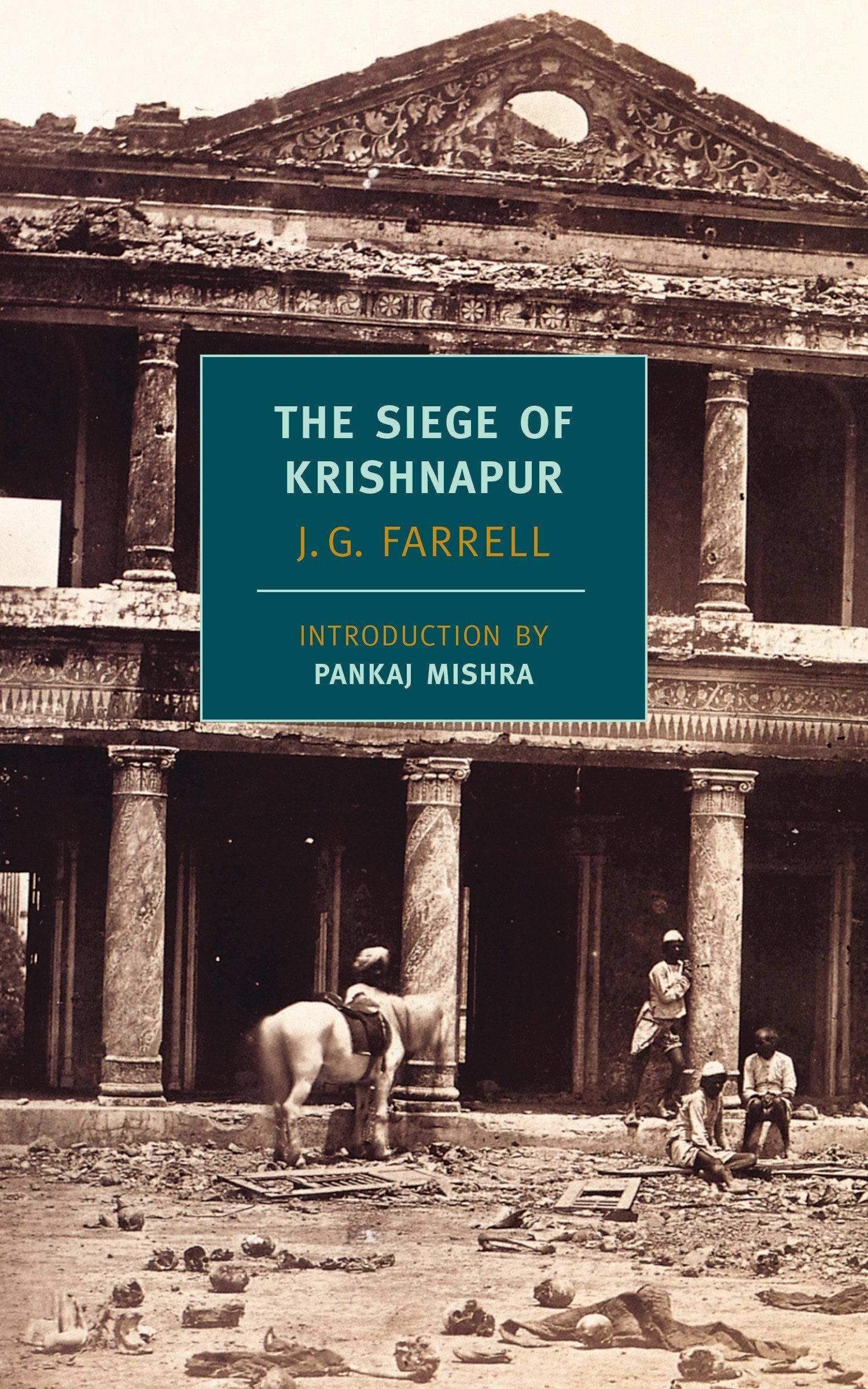
1973– James Gordon Farrell – ‘The Siege of Krishnapur 

"India, 1857 - the year of the Great Mutiny, when Muslim soldiers turned in bloody rebellion on their British overlords. This time of convulsion is the subject of J. G. Farrell's The Siege of Krishnapur, widely considered one of the finest British novels of the last fifty years." "Farrell's story is set in an isolated Victorian outpost on the subcontinent. Rumors of strife filter in from afar, and yet the members of the colonial community remain confident of their military and, above all, moral superiority. But when they find themselves under actual siege, the true character of their dominion - at once brutal, blundering, and wistful - is soon revealed." "The Siege of Krishnapur is a companion to Troubles, about the Easter 1916 rebellion in Ireland, and The Singapore Grip, which takes place just before World War II, as the sun begins to set upon the British Empire. Together these three novels offer a picture of the follies of empire."


The Sea, The Sea by Iris Murdoch | Libros ilustrados, Libros de ...

1978 – Iris Murdoch – ‘The Sea, the Sea’ 


Charles Arrowby, leading light of England's theatrical set, retires from glittering London to an isolated home by the sea. He plans to write a memoir about his great love affair with Clement Makin, his mentor both professionally and personally, and to amuse himself with Lizzie, an actress he has strung along for many years. None of his plans work out, and his memoir evolves into a riveting chronicle of the strange events and unexpected visitors--some real, some spectral--that disrupt his world and shake his oversized ego to its very core.


In exposing the jumble of motivations that drive Arrowby and the other characters, Iris Murdoch lays bare "the truth of untruth"--the human vanity, jealousy, and lack of compassion behind the disguises they present to the world. Played out against a vividly rendered landscape and filled with allusions to myth and magic, Charles's confrontation with the tidal rips of love and forgiveness is one of Murdoch's most moving and powerful novels.


Amazon.com: Paddy Clarke Ha Ha Ha (9780140233902): Doyle, Roddy: Books

1993 – Roddy Doyle – ‘Paddy Clarke Ha Ha Ha 

"Sometimes when nothing happened it was really getting ready to happen." Irish Paddy rampages through Barrytown streets with like-minded hooligans, playing cowboys, etching names in wet concrete, setting fires. The gang are not bad boys, just restless. When his parents argue, Paddy stays up all night to keep them safe. Change always comes, not always for the better.

The Sea (Vintage International): Amazon.es: Banville, John: Libros ...

2005 – John Banville – ‘The Sea’ 
In this luminous new novel about love, loss, and the unpredictable power of memory, John Banville introduces us to Max Morden, a middle-aged Irishman who has gone back to the seaside town where he spent his summer holidays as a child to cope with the recent loss of his wife. It is also a return to the place where he met the Graces, the well-heeled family with whom he experienced the strange suddenness of both love and death for the first time. What Max comes to understand about the past, and about its indelible effects on him, is at the center of this elegiac, gorgeously written novel among the finest we have had from this masterful writer.

Monday, April 18, 2011

A life in writing / Roddy Doyle


Roddy Doyle


Roddy Doyle: A life in writing

'Anything you want – love stories, murders, whatever – can be written in these few streets'

Sarah Crown
Mon 18 Apr 2011 00.05 BST

The first book written by Dublin's latest literary star had nothing to do with his home city at all. A sprawling state-of-the-nation saga, promisingly titled Your Granny Is a Hunger Striker, it languishes these days in his archive in the National Library, doomed to remain unread. "It's never been published and it never will be," Roddy Doyle says now, nearly 30 years after he wrote it. "Because it's utter shite. I sent it to every agent and publisher I could find – and either it wasn't coming back, or it was coming back unopened. There's nothing at all in it of the area I grew up in. It's absent."

He didn't make the same mistake twice. "Paul Mercier [the playwright] was teaching in the same school as me at the time; he was writing these plays set in working-class Dublin, and they were brilliant. He shoved me in the right direction. In the winter of 1986 I started writing the book that became The Commitments, and it's riddled with the place I come from. It made me realise the area's worth writing about. Anything you want – love stories, murders, whatever – can be written in these few streets."


Doyle grew up in Kilbarrack, a straggle of shops and houses on Dublin's fringes. It resurfaces in his novels as Barrytown, the name lifted from a 1974 Steely Dan song: Doyle, like Jimmy Rabbitte, hero of The Commitments, knows his music. These days, Doyle's name is better known than the official one; he recounts tales of taxi drivers who've made a mint out of people demanding to be taken to see it. "I suppose it was a defence, to a degree," he says of the decision to rename it. "If I'd called it Kilbarrack it would've been restricting. There's a pub there, for example, that's not 100 miles from the pub in The Snapper and The Van [the second and third volumes of his Barrytown trilogy], but the point is meant to be that it could be any pub on the outskirts of Dublin. Changing the name gave me freedom."

It also served to derail any search for real-life counterparts of the hyper-ordinary men and women who shuttle through his pages. Doyle's novels, particularly the earlier ones, are fundamentally exercises in people watching. Nothing much happens; in fact, the books are remarkable for their unremarkability: the three Barrytown novels can be summarised, respectively, as "kids form a band then split up", "girl accidentally gets pregnant and has the baby" and "man loses his job and runs a chip van with his mate". Their urgency lies rather in the psychological realism Doyle brings to his characters' responses to their commonplace dramas, the sympathetic warmth with which he paints their unexceptional lives.

This sympathy is particularly evident in Doyle's latest story collection, Bullfighting. Once again, the substance of the stories – middle-aged men, coping, or failing to, with decline – is mundane; once again, the remarkable thing about them is the compassion with which Doyle, 52, treats his protagonists. While he invokes all the usual signifiers – the hair loss, the cancer scares – customarily reached for when writing about men whose lives have passed their highwater mark, he nevertheless permits his heroes to be happy. These are men who love their wives, by and large; who take their physical failings more or less in their stride. The one thing they appear unable to accommodate, however, is unemployment. Several of the stories were written in the wake of the Irish bailout, and over them the shadow of the scrapheap looms. "It's happening anyway," Doyle says of the crash. "Why wouldn't you write about it?"


The peaks and troughs of the past half-century have given Doyle plenty to write about; in fact, if you're looking for a primer of contemporary Irish history, you could do worse than start with his novels. His latest collection paints a picture of life in Ireland after the death of the Celtic tiger, the Barrytown trilogy documents the recession of the 80s and early 90s, and his short-story collection on economic immigrants, The Deportees, gives a flavour of the boom-time in between. His Booker prizewinning novel, Paddy Clarke Ha Ha Ha, meanwhile, marks the moment where it all began: the 1960s, when Dublin was in the grip of its first wave of expansion fever. The book charts a year in the life of its 10-year-old narrator, Patrick, in a spatter of impressionistic episodes, all told in childhood's endless present tense, in which the passage of time is conveyed only by encroaching construction works and the gathering cloud of his parents' collapsing marriage. Doyle himself, born in 1958, is the same age as Paddy. While he's adamant the book isn't autobiographical ("My mother, who's more qualified to answer the question, doesn't see me in it at all"), incidents from his own childhood punctuate the text. And Doyle and his narrator share something unique to mid-20th-century children: a sense of being neither too early nor too late, of the world keeping pace with their own progress.

"When I was born, Kilbarrack was right on the edge of Dublin – city on one side, fields on the other," Doyle says. "But as I was growing up, the city corporation bought up the farmland and started building. From when I was eight or nine right into my teens, it seemed like the whole place was a permanent building site, changing as I changed. In retrospect it sounds a bit neat and tidy, but it really was like that. And it wasn't just me, it was the whole country. Modernity was coming up the road as the cement was drying."

Perhaps the pace of change at home explains why he never felt the need to leave. After graduating from University College Dublin, he fell into teaching and ended up at Greendale Community School, round the corner from the house he grew up in. Going back there allowed him to perceive it with a freshness that would serve him well when it made its way into his work. "It really opened my eyes to the place," he says now, "though I wasn't thinking of it in terms of writing. It was a good few years before I saw it as material."

After the cul-de-sac of Your Granny Is a Hunger Striker, the books began to flow. The Commitments, which Doyle published through a company he set up for the purpose before Heinemann snapped it up, was a cult hit; the 1991 film version a mainstream one. The other Barrytown novels spawned films of their own, and The Van garnered an unexpected Booker shortlisting. But it was Paddy Clarke Ha Ha Ha that forced the gear change. Doyle's freewheeling depiction of a Dublin childhood achieved moderate popular acclaim on publication, but its triumph at the Booker in 1993 turned Doyle into a bona fide phenomenon. The book sat at number one on the Irish bestseller list for a year; at one point, his first three books were also in the top five. Doyle was feted by an eager press as working-class Dublin's jaunty laureate – though anyone who cared to take a close look at his books might have noted that despite the earthy humour, their emotional trajectory, from the romp of The Commitments to Paddy Clarke's disintegrating ending, was firmly downward. "It was a strange thing," Doyle says. "Suddenly there were requests to turn up to Irish Man of the Year, photo opportunities with the horse who won the Melbourne Gold Cup, because we'd both brought glory to our country! Until Family came out."

Throughout the Paddy Clarke brouhaha, Doyle had been quietly plugging away at a four-part BBC/RTE series that painted a very different picture of his city. The title sequence, in which dirty blocks of flats loom out of the mist like sea cliffs, panned over a Dublin that wasn't just poor, but grey, defeated. Each episode focused on a different member of the Spencer family – Charlo, smalltime crook and abusive husband, troubled teenager John Paul, Nicola, whose relationship with her father is slipping into turbulent waters, and Paula, Charlo's battered, broken wife. In the Barrytown trilogy, family sat solidly at the books' heart – knotty, certainly, but cherished, relied upon; in Paddy Clarke, although the story is one of familial breakdown, the institution itself is never questioned. In Family, however, the drama derives directly from the flaws and fissures within the unit, its fatal warping. The interactions between its members are joyless, alcohol-fuelled and destructive; the collective loyalty that sustained the characters in the earlier novels is gone.

"It caused a storm," Doyle says, with something between a grimace and a grin. "The first episode was broadcast in Ireland in May 1994, a few days after the Eurovision Song Contest. What was significant about this particular Eurovision was that it unleashed Riverdance, this Vegas version of our culture. I'm not kidding: it was a major moment for Ireland. The country was sexy for the first time since St Patrick came over and brought his fuckin' Christianity with him. And Family was on four days later. People said, 'Ah, just when we were feeling good about ourselves . . .'"

The repercussions were beyond anything he could have imagined. Doyle went overnight from Ireland's darling to national pariah. "The celebrity status that attached to me when I won the Booker, invitations to open supermarkets and all that shite – it stopped the day Family was broadcast. There were accusations that I was suggesting this was normal working-class life, that I was undermining marriage. I was the subject of sermons, editorials, political programmes on TV. I got death threats. It was a very unsettling time, especially with two small children." (Doyle married his wife Belinda in 1989; the couple have two sons and a daughter.) "I knew what I was writing, and I was proud of it, but I didn't know it would have such consequences."

While the controversy triggered by the series continued to rage, Doyle holed up to spend more time with Family's most complicated, compromised character. "When I was writing the final episode, Paula's episode, I found myself wondering about her. What was she like as a kid? How did she meet Charlo? Why – that almost accusatory question we ask of people who've been in bad relationships – did she marry him? And I thought, there's a book there."

There was – but it turned out to be the most difficult thing he'd ever attempted. The Woman Who Walked Into Doors took the character of Paula Spencer – alcoholic, careening, desperate but still stubbornly clinging to her life – and produced a bleak, brave book that is widely held to be his finest creation. "Writing an alcoholic woman was hard," he says. "Biology and circumstances put me a long way from her. It was a very slow piece of work at first. It took me a long time to get the register. Then in the second year, it began to click. Chapter 25, the longest one, the emotional heart of the book – it took just two days to write; it flowed out of me. By that point, I knew exactly what I wanted to do."


In chapter 25, Paula recalls the first time Charlo hit her, when she was pregnant with their first child. "I fell," Paula says, "He felled me. I'm looking at it now. Twenty years later. I wouldn't do what he wanted, he was in his moods, I was being smart, he hated me being pregnant, I wasn't his little Paula anymore – and he drew his fist back and he hit me. He hit me. Before he knew it? He drew his own fist back, not me. He aimed at me. He let go. He hit me. He wanted to hurt me. And he did. And he did more than that." The stiff, fractured sentences and hammering repetitions convey the brutality of Paula's marriage, and the mental excisions she has had to perform to survive it. "It is the triumph of the novel," Mary Gordon wrote in the New York Times Book Review, "that Mr Doyle – entirely without condescension – shows the inner life of this battered housecleaner to be the same stuff as that of the heroes of the great novels of Europe."

The novel transmuted the undifferentiated clamour that greeted Family into serious, respectful admiration. It also gave Doyle the freedom and confidence to embark on his most technically ambitious project yet. His writing had always been of the here and now; in the case of Family pressingly so. But his next excursion took him all the way back in time to the birth of modern Ireland. His hero, Henry Smart – street-thug turned IRA poster boy – proves a prickly, slippery guide to the Irish century, ducking and weaving his way through the history of the republican movement, from the clean fury of the Easter Rising to the 1970s' churn of backstabbing and internal politics, over the course of three volumes that became known collectively as The Last Roundup trilogy.

"It was a very exciting thing to do," he says of his trawl through his country's backstory. "My grandfathers had both been . . . 'involved', the word is, with the republicans. So it was there in the house, if you like; it was in the air. A tiny fragment of the population believed they'd inherited the chalice from the leaders of the 1916 rising. So strapping a bomb to a taxi driver and making him drive to a checkpoint, or kneecapping a kid, or whatever it was, was in the name of Ireland and therefore right. I knew I'd enjoy delving into that. And that notion of poking fun at republicans has always been there, too. When I was in secondary school and the Christian Brothers were getting teary-eyed talking about the men who died for Ireland, we'd all be whispering, 'Blow it out yer arse, brother'. The books were just doing that in a more disciplined way. It was a nice job."

Now, though, with Bullfighting published, Doyle is returning to familiar territory. "I'm actually writing about Jimmy Rabbitte again, as a man in his mid-40s. I thought it'd be interesting to see how he perceived the world today: he went through the recession, married and had children during the boom, and now everything's gone belly up. Three years ago, when the crash kicked in, I found the immediate nostalgia a bit sickening. The radio jumped straight on the 80s soundtrack, and there was a lot of gleeful nonsense about how we'd become too materialistic, as if it was somehow a good thing we were sinking into this mush. And I thought to myself, Jimmy'd be a good guide. A dreamer, but at the same time very down to earth, for want of a better cliché."

After nine novels and almost three decades, Doyle is back where he started. Although, of course, he's never really been away.

THE GUARDIAN