Showing posts with label Susan Choi. Show all posts

Thursday, April 23, 2026

Susan Choi and Lily King shortlisted for Women’s prize for fiction


Susan Choi and Lily King shortlisted for Women’s prize for fiction

The US writers join four debut authors in demonstrating ‘the complexity and beauty of the female experience’, said chair of judges Julia Gillard

Thursday, April 2, 2026

The Director to Flesh / The 25 best books of 2025

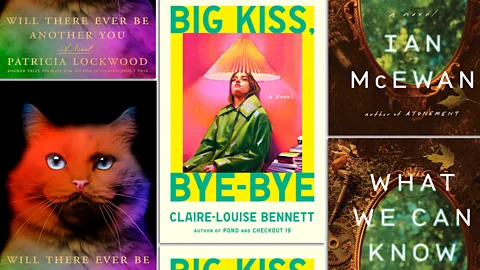
 Random House, Penguin Group The book covers of Will There Ever Be Another You; Big Kiss, Bye-Bye; What We Can Know (Credit: Random House/ Penguin Group)

Random House, Penguin Group

From a "richly atmospheric" novella to a "virtuosic" debut – this is the very best fiction of the year, as chosen by BBC journalists.


The Director to Flesh: The 25 best books of 2025

Rebecca Laurence and Lindsay Baker


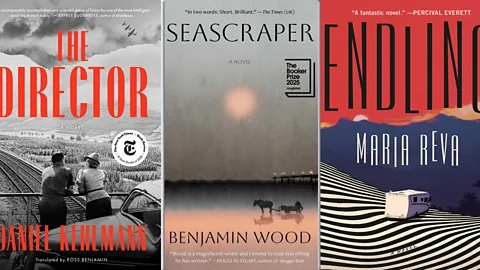
Simon and Schuster, Scribner, Knopf Doubleday Publishing Group (Credit: Simon and Schuster, Scribner, Knopf Doubleday Publishing Group)Simon and Schuster, Scribner, Knopf Doubleday Publishing Group

The Director by Daniel Kehlmann

This part-fictionalised historical novel from the bestselling German-language novelist and playwright Kehlmann explores themes of art, power and complicity through the complex life of one of the great Austrian film-makers of the Weimer era, GW Pabst. Pabst flees the Nazi regime to LA, then fails to find success amid Hollywood's Golden Age (Kehlmann imagines that he is ghosted by Greta Garbo and Louise Brooks, actresses he discovered). Upon Pabst's return to his homeland, he is hired by Goebbels to make films for the Reich's Ministry of Propaganda. "The crux of The Director is whether it's weakness or necessity that makes Pabst compromise", writes the LRB. "A book about dreams and of dreams within dreams…", writes The New York Times, "The Director itself is a marvellous performance – not only supple, horrifying and mordantly droll, but fluidly translated and absolutely convincing." (RL)

Friday, March 6, 2026

Flashlight by Susan Choi review – big, bold and surprising


BOOK OF THE DAY
Review

Flashlight by Susan Choi review – big, bold and surprising

This article is more than 8 months old

Stretching from Indiana to North Korea, the US writer’s sixth novel is a study of absence, alienation and affection in a family rocked by tragedy


Susan Choi and Katie Kitamura among authors longlisted for Women’s prize for fiction


Beejay Silcox
Mon 30 Jun 2025

The millennium is back – not just in fast fashion or TikTok remixes, but in the mood of American fiction. Think peak Chabon and Eugenides; the intellectual gymnastics of Helen DeWitt; the last profane and puckish gasp of Tom Robbins. That brief window – before 9/11, smartphones and the chokehold of autofiction – when the novel felt as playful as it did expansive: bold and baggy as wide-legged jeans. Joyce Carol Oates channelling Marilyn Monroe. Jonathan Franzen snubbing Oprah. You can feel that early-00s energy jostling through a new crop of American novels: Lucas Schaefer’s The Slip, Kaveh Akbar’s Martyr! and Maggie Shipstead’s Great Circle are top-shelf examples. They’re big in all kinds of wonderful, infuriating ways: antic, overstuffed and richly peopled.

Friday, January 30, 2026

Susan Choi / ‘For so long I associated Dickens with unbearable Christmas TV specials’


The 

Books

 0f my 

life


Susan Choi: ‘For so long I associated Dickens with unbearable Christmas TV specials’

The Booker-shortlisted novelist on the seismic effect of Sigrid Nunez, and wanting to write like Virginia Woolf


Susan Choi
Friday 30 January 2026

My earliest reading memory
Asking my mom if she could stop reading my bedtime book to me and just let me read it on my own, since I felt she was going too slowly. The book was either Charlie and the Chocolate Factory or its sequel, Charlie and the Great Glass Elevator, both by Roald Dahl.

My favourite book growing up
I loved Stuart Little, and all his small, clever things – his tiny canoe, his tiny sailboat. He had such a relaxed demeanor and was so dapper! I also loved Mary Norton’s The Borrowers series – tiny people living under the floorboards and improvising household goods out of “borrowed” safety pins and match boxes and so on. Clearly I had a thing for miniatures.

The book that changed me as a teenager
Donald Barthelme’s Sixty Stories, because he was having such a good time and seemed so so smart, but was also mischievous and irreverent. It may sound corny but these stories made me grasp the existence of a world of art and literature. And Barthelme lived in Houston, where I was growing up, yet he was a major world writer.

The writer who changed my mind
In the early 90s, while I was in graduate school, I read Sigrid Nunez’s short story Chang, which later became a portion of her first book, A Feather on the Breath of God. “Chang” had a seismic effect on me. Up to that point, I can’t recall having ever seen a multiracial character in fiction. I was so accustomed to the default whiteness of fictional characters that I didn’t even notice the absence of characters from other backgrounds. And even as I was trying at that time to write short stories about my father’s life in Korea, I would give those characters white-sounding, European-sounding names, as if I was hoping to disguise their specificity. It really pains me now to look back on this tendency in my writing, which proceeded directly from the sorts of writers I was taking as models, like Virginia Woolf and Henry James. When I read Sigrid’s story I was astonished that the narrator was the daughter of a white European woman and a brown Asian man – just like me! I hadn’t realised this sort of character was possible. It’s sort of heartbreaking that my thinking was so constricted, but the disruption to that thinking was thrilling.

The book that made me want to be a writer
I wanted to be a writer from such an early age it’s impossible to choose a single book to hold responsible, but the book that made me want to be a certain kind of writer was To the Lighthouse. I so desperately wanted to write the way Virginia Woolf does in that book that it made my writing insufferable for a very long time.

The book I reread
The Great Gatsby by F Scott Fitzgerald, which I despised at school, but now I’ve come to love the way I love certain comfort foods. It’s not the most nutritious and in some ways it’s repulsive, but the deep familiarity of it always hit the spot.

The author I came back to
Charles Dickens. For so long I associated him with unbearable Christmas television specials, so I didn’t actually sit down and try reading him until shockingly late, and then I was enthralled. I read Bleak House for the first time during the pandemic – it was one of the great reading experiences of my life.

The book I could never read again
Anything by Tom Robbins. Another Roadside Attraction, Even Cowgirls Get the Blues, Jitterbug Perfume: they seemed great in my teens but now even just the titles make me cringe.

The book I discovered later in life
Homer’s Odyssey. Obviously I’d heard of it and must have read it for the first time in college, but it wasn’t until recently that I became completely fascinated by it and started wanting to reread it in different translations.

The book I am currently reading
I recently finished JA Baker’s The Peregrine, which is one of the most extraordinary books I have ever read. It’s quite short, but the writing is so uncategorisable,immersive and transformative that I felt as if I’d been sucked into a different time-medium.

 Flashlight by Susan Choi will be published in paperback by Vintage next month (£10.99)


THE GUARDIAN


Tuesday, January 21, 2020

The Best Books of 2019 / The New Yorker

Ocean Voung


The Best Books of 2019
According to our book critic


By Katy Waldman
December 2, 2019


Since 1983, it has been customary for nearly every State of the Union address to include the line “The state of the union is strong.” That rote confidence, though perhaps misplaced in politics, seems warranted in the world of books: there are always good books being written. But is it possible that, in 2019, there was a slightly greater number of them? I had a terrible time whittling down my top ten this year. There was a longer than usual tally of titles, reputed to be excellent, that I wanted to read (but have not, yet), with the result that the ballot below may be more reflective of idiosyncratic consumption than objective judgment. The lineup is heavy on fiction, memoir, fiction that behaves like memoir, and memoir that impersonates fiction. The books of 2019 may be slippery to categorize, but the state of them is strong—a luscious year, like 1997 for Brunellos—and I’m thrilled that my job calls upon me to share some of my favorites, rather than my assessment of the nation’s affairs. To the list!

Mostly Dead Things,” by Kristen Arnett

This début novel follows a taxidermist, Jessa-Lynn, who lives in central Florida and is mourning the death of her father. Jessa-Lynn’s lover, who is also her brother’s wife, has run off. Her mother is taking apart her father’s specimens—he, too, was a taxidermist—and turning them into erotic art installations. Black humor meets lush prose; Arnett’s Florida—a world of sensuousness and danger—expresses the freedom that her characters seek, as taxidermy itself becomes a figure for queerness, sex, art, and loss.

The Divers’ Game,” by Jesse Ball

This dystopic fable imagines a society riven in two, with the upper class empowered to murder members of the lower class, for any reason. Characters are given varying degrees of self-awareness; spare, simple language evokes innocence maintained at too high a price.

Trust Exercise,” by Susan Choi

Sarah and David, teen-agers at a prestigious performing-arts high school, conduct their love affair under the watch of a manipulative and charismatic drama teacher. The students are all sweat, hormones, and painful self-consciousness. The novel, tense and lovely as a dancer’s clenched muscle, explodes into a mid-act twist, which brilliantly foregrounds questions of authorship and appropriation.

Ducks, Newburyport,” by Lucy Ellmann

This stream-of-consciousness novel, most of which unspools over a single sentence, is an inquiry into how we live—and think—now: drowning in information, aghast at the news, yet captive to the mundane details of work and family. Ellmann’s unnamed protagonist, a middle-aged housewife in Ohio, is at once conventional and specific, not to mention funny. Her litany of fears and yearnings acquires an almost sacral quality.

Girl, Woman, Other,” by Bernardine Evaristo

Evaristo’s eighth novel, which shared this year’s Booker Prize with “The Testaments,” by Margaret Atwood, creates a symphony of black womanhood. Each chapter centers on a different character—a feminist playwright, her goth-alien daughter, the “separatist lesbian housebuilder” dating her friend—and their connections emerge gradually. At different times, Evaristo’s tone is either ringing or confiding, amused or stricken. Her language spills over the page in free verse that suggests Ntozake Shange but lays down its own rhythms.

How We Fight for Our Lives,” by Saeed Jones

Jones’s tale of coming of age in the South as a black, gay poet has a startling immediacy. He writes of college lovers, the threat of hate crimes, and his self-possessed mother, who supported him but struggled to talk about his sexuality. The book, which is slim and focussed, quakes with a nervous energy that often erupts into euphoria.

In the Dream House,” by Carmen Maria Machado

This memoir, which tells the story of Machado’s abusive relationship with another woman, is an act of personal and formal bravery: a narrative refracted through multiple genres—“Dream House as Creature Feature,” “Dream House as Word Problem”—that explores vulnerability but vibrates with power. Machado heightens a sense of dislocation by seeming to practice literary criticism on herself. (Right before her prologue, she writes, “I never read prologues. . . . If what the author has to say is so important, why relegate it to the paratext? What are they trying to hide?”)

Valerie,” by Sara Stridsberg

In this whirling, poetic mashup of a novel, Stridsberg takes liberties adapting scenes from the biography of Valerie Solanas, the feminist who shot Andy Warhol. (Behold Valerie, languishing on her deathbed, sparring with the book’s narrator, who was not there.) The emotional through line is Stridsberg’s longing to know her mysterious, self-contradictory subject.

Axiomatic,” by Maria Tumarkin

The book is comprised of restless, gorgeous essays, each of which uses an aphorism—“time heals all wounds,” “you can’t enter the same river twice”—to reflect on Tumarkin’s preoccupations: trauma, the ongoingness of the past, and the unworkability of language. Tumarkin takes up subjects like youth suicide and the plight of homeless people in North Melbourne, but her approach is never maudlin. The book exudes pity, as it’s classically defined— “a sorrowing compassion.”

On Earth We’re Briefly Gorgeous,” by Ocean Vuong

Vuong, a poet and Vietnamese immigrant, studies his upbringing through the lens of his mother, to whom the novel is addressed. This woman, Rose, is both loving and abusive. She cannot read English, and yet her imagined readership is the occasion for the story’s telling. Rose becomes, for her son, a horizon where intimacy and loneliness converge; the grace of the book is to measure distance while acknowledging that few distances are fixed.