Showing posts with label Juan Marsé. Show all posts

Tuesday, August 11, 2020

Juan Marsé / Essential Works


Juan Marsé


JUAN MARSÉ


Marsé was born in Barcelona in 1933. Self-taught, he left his studies at the age of 13 to work as a labourer in a jewellery workshop. His first stories were published in the magazines “Insula” and “El Ciervo”. After a short stay in Paris, he published “Last Evenings with Theresa” in 1966, which won him the Library Short Novel Prize. The theme of the Catalan Bourgeoisie appears again in “The Dark Story of Cousin Montse”. In 1973, the censorship banned publication of his work “If They Tell You I Fell” about Anarchist activism in the forties. He collaborates with various magazines and newspapers, including “El País”, for which he wrote a weekly column between 1988 and 1989. He was awarded the Cervantes Award in 2008. He died in Barcelona, in 2020.
Awards
National Narrative Literature Award (2001)
Cervantes Award (2008)


ESSENTIAL WORKS

LA OSCURA HISTORIA DE LA PRIMIA MONTSE


This is Juan Marsé's fourth novel, one in which he recounts the love conflict between an educated and religious woman and an atheist convict.
First published in 1970, the book presents us with the literary universe that characterises Marsé's subsequent works.

La oscura historia de la prima Montse has a similar plot to the author's previous work, the successful Ultimas tardes con Teresa, namely, the relationship between two characters who come from diametrically opposed worlds, thus implicitly giving rise to conflict. This time around, the main character is an educated, religious woman and her lover, an atheist convict.

One of the novel aspects of the book is the first-person narrator. Consequently, sometimes the narrator is a witness to the events, while at other times the narrator relates happenings that have taken place at some remove in time, or turns into the author's alter ego intervening at particular junctures in the plot.


LIZARD TAILS

A best-selling novel by Juan Marsé that makes a profound exploration of the limits of style and expression.
The novel is entirely in keeping with Marsé’s previous output, the story being set in the Guinardó district of Barcelona, which is always present in his works. The same is true of the subject matter, which again on this occasion alludes to the thin line between love and hate, good and bad, and truth and lies.
The work seeks to test the limits of the author’s narrative style and expressivity, which explains why the author gives voice to a dog, an unborn child and even to a character on a poster.

Awards

National Narrative Literature Award (2001)
Critics’ Award (2000)


IF THEY TELL YOU I FELL

Juan Marsé tells a heartrending, down-to-earth story of post-war Barcelona.
Si te dicen que caí was first published in Mexico in 1973, owing to the fact that the book was censored in Spain. Its first national edition dates from 1976.

The book tells the sordid story of daily life in the Barcelona neighbourhood of Guinardó in post-Civil War Spain. Marsé confronts the reader with the crudity of this national event by way of several stories seen through the eyes of children. The author pursued two objectives on writing the book: to get his own back on the Franco period and to bid farewell to his childhood.

In spite of the censorship, the novel was a great success and has been subject to several revisions and reprints. The book was awarded the International Novel Award (Mexico) in 1973 and was adapted into a film of the same name by Vicente Aranda in 1989.

Awards

International Novel Award, 1973 (Mexico)


LAST EVENING WITH TERESA
Juan Marsé's best work, it tells the story of young love between a Catalan bourgeois girl and a young low-life from Murcia.
Published in 1966, Marsé's third novel received international acclaim. Deemed to be his best work, Últimas tardes con Teresa, a period novel set in Barcelona, revolves around an impossible love story between the daughter of a well-to-do family, Teresa, and a young working-class, motorbike thief, Manolo, from Murcia. The choice of main characters reveals the author's wish to confront two opposing worlds, that of the Catalan bourgeoisie and the marginalised world of predominantly, Andalusian immigration. The main male character, called ‘Pijoaparte’, shall enter into the annals of 20th century literary history as the archetype of the low-life immigrant.

The novel was an outstanding success. It won the Library Short Novel Prize in 1966 and was made into a film of the same name in 1984, directed by Herralde.

Awards

Library Short Novel Prize, 1966


Juan Marsé, Who Wrote of Spain’s Dark Years, Is Dead at 87

Juan Marsé, 2017
Photo by Tony Albir

Juan Marsé, Who Wrote of Spain’s Dark Years, Is Dead at 87

His novels chronicled the difficult days after the Spanish Civil War. He was, his biographer, said, “the reference writer of the anti-Franco movement.”
Raphael Winder
July 23, 2020

MADRID — Juan Marsé, one of Spain’s most acclaimed writers, whose novels mostly chronicled the dark years that followed the civil war in Barcelona, his home city, died there on Saturday. He was 87.
His death, in a hospital, was confirmed by the Carmen Balcells literary agency. His biographer, Josep Maria Cuenca, said the cause was heart failure.
In 2009 Mr. Marsé was awarded the Cervantes Prize, the Spanish-speaking world’s most important literary honor.

Monday, July 27, 2020

The Snares of Memory by Juan Marsé / Black spots, pink pills

Juan marsé

The Snares of Memory
by Juan Marsé
Black spots, pink pills


Post-Franco Spain is ‘caught between its transition to democracy 

and its Pact of Forgetting’ in The Snares of Memory by Juan Marsé

May 15, 2020


It is 1982 in Barcelona, and the unnamed protagonist, a middle-aged novelist who may or may not be Juan Marsé himself, is commissioned to write a film script about the grisly murder of a prostitute. It is to be based on real events: in 1949, during Franco’s dictatorship, a young woman was strangled with a length of celluloid film in the projection booth of a neighbourhood cinema, by a man who remembers having done it but not the reason why. “What we are after is not a plot as such, so don’t waste your time on that”, the director, an acclaimed leftist auteur of the Franco years, explains. Instead, he says, his plan is to “replace plot with naked reality”. He is after “a truthful, non-judgemental and journalistic account”, in which ultimately “the two protagonists, the whore and her murderer, should appear clearly as victims of the political system”.
The murderer, Fermín Sicart, was released from prison twenty-five years ago and is now “a peaceful pensioner who play[s] pétanque on Paseo de Sant Joan”. Our protagonist arranges to carry out a series of interviews with him as research, and so, throughout the sweltering summer, the two men sit under a parasol on the protagonist’s terrace and discuss what happened in the “spectral, starving Barcelona of the post-war years”. Despite having vivid memories of life as a cinema projectionist – of using a soda siphon to put out the flames whenever the film caught fire, for example – Sicart struggles to remember the murder itself. He recalls Carolina, the prostitute, arriving in his projection booth, where they’d had sex several times before. He recalls her draping the film around her own neck and moving towards him, naked but for a raincoat and a pair of stockings. Then the narrative becomes hazy, and “all of a sudden I found myself somewhere else: sitting in the back row of the stalls with no idea of how I had got there or what had happened”.
The novel opens with a newspaper interview with the protagonist in which only the answers to the questions, and not the questions themselves, are printed: responses to things we can no longer see. It is a fitting image of post-Franco Spain, caught between its transition to democracy and its Pact of Forgetting. The Snares of Memory (Esa puta tan distinguida, 2016) is about looking back at the Franco era from 1982 – when the country was, in the words of the protagonist, “torn between memory and forgetting” – and as such it is full of gaps, absences and mysteries. Rolls of film in the projectionist’s booth are snipped up, thrown out of windows, or even catch fire, and Felisa, the protagonist’s cinema-buff maid, has theories about censors cutting out particularly racy sections of films before they were distributed. It’s not only celluloid that is edited by the state, however: Sicart claims his memory lapse is the result of psychiatric therapy he underwent in prison. A renowned military doctor “diagnosed” him as an anarcho-syndicalist and prescribed the erasure of his memory as treatment, as he did with many Republicans after the Civil War. Sicart was given “daily doses of forgetting in the shape of pink pills”, which have left him suffering from a kind of senile dementia.
The Snares of Memory artfully depicts a Spain for which the past is a foreign country, from which it is possible, like Sicart, to be “expelled”. Over the course of his long career, Marsé (who was born in 1933) has developed a reputation for elegant, finely wrought prose, which is fully in evidence here thanks to Nick Caistor’s energetic and well-judged translation. The novel is thoughtful, charming and occasionally very funny, but it is ultimately somewhat unsatisfying. The central image of a strangled prostitute in suspenders, bleeding around her neck, who supposedly represents “the tricks and snares created for us by memory, that high-class whore” (to quote the interview that opens the book), is a rather trite, dated and gratuitous way of exploring a theme that has, what is more, already been much explored.
Annie McDermott is a literary translator based in London


The Snares of Memory by Juan Marsé / Review

The Snares of Memory by Juan Marsé | Hachette UK

‘THE SNARES OF MEMORY’ BY JUAN MARSÉ (REVIEW)


October 17, 2019

While a fair bit of the Spanish-language literature I’ve read has been dense, weighty and ‘important’, there has been the occasional book with its tongue a little more in its cheek.  Eduardo Mendoza’s Spanish-Civil-War romp An Englishman in Madrid certainly falls into that category, and today’s choice is another slightly lighter affair, even if the subject matter might not suggest that.  There’s also another connection between the two books.  You see, they were translated by the same person, so it seems that he enjoys playful works, too 
*****
In Juan Marsé’s The Snares of Memory (translated by Nick Caistor, courtesy of MacLehose Press), it’s 1982, shortly after the end of the Franco era, and a well-known writer (an alter-ego of Marsé himself) has been asked to work up a story that will later be made into the script of a movie.  The topic is the 1949 murder of a prostitute, Carolina Bruil Latorre, and the producer and director have commissioned the writer with finding out exactly what happened on the fateful day so that they can make a faithful work of art.  But how is he to get these details?  Why, by asking the murderer of course…

Fermín Sicart Nelo was a young man at the time of the crime, and having spent his time in prison, he’s more than happy to come and talk to the writer, particularly given the 6,000 pesetas a week he’s promised for the daily afternoon conversations.  However, despite his willingness to talk, the task of unveiling the truth won’t be quite as easy as you might expect.  After his arrest, Sicart Nelo was taken away to a facility where doctors experimented on him, leading to his having a rather limited recall of events after the murder.  He remembers full well how and when he killed Bruil Latorre – he just has no idea why.
The book’s premise is perhaps a little gruesome, and some readers may not appreciate the woman’s death being used as the basis of the work.  However, at its core, The Snares of Memory is less the story of a murder than a series of conversations between two men that uncover the secrets of memory, both its reliability and fallibility. Over a number of afternoons, the writer slowly jogs the older man’s memory, trying not to rush, waiting for the moment when everything will click into place, realising all the while that after the passing of so much time, the chances of coming up with what really happened are slim indeed.
The details of the murder itself appear fairly straight-forward.  Fermín worked as a projectionist at a small cinema, and Carolina was making one of her frequent visits to the small room he worked in.  Each conversation adds details to this picture: the rain outside, the issues with the film being shown and Carolina’s strange mood.  As she walks towards the projectionist, semi-naked, with some discarded celluloid film looped around her neck, we see her getting ever closer to her death.
The Snares of Memory isn’t really that kind of book, though, and Marsé works several different layers into his story.  Perhaps the key to the story is the era in which the murder takes place, with the fascists now firmly in control.  Carolina’s tangled personal life sees her in a relationship with the Falangist official Ramón Mir Altamirano, and when we learn that Fermín’s colleague, an older projectionist, is involved in socialist activities, the whole affair becomes more puzzling.  The writer suspects that there’s something very strange about the murder, even if it’s unlikely that we’ll ever find out what it is.
Another aspect of the novel is the author’s concern with the art of writing.  Quite apart from his humourous forty-eight answers (to unwritten questions) that start the book (“There is no psychopath or murderer to uncover or arrest.  The murderer, c’est moi!”), there are constant musings on what he’s actually doing in writing the novel:
I wouldn’t be able to say what the limits of fiction are when it comes to recreating a historical truth; possibly the task is not to throw more light on the real event, but to emphasise the play of light and shade, the ambiguities and doubts, anything that contributes to the liveliest expression of the truth.
p.207 (MacLehose Press, 2019)

Marsé has this interest in common with several other Spanish writers (c.f. Javier Cercas’ The Impostor or Antonio Muñoz Molina’s Like a Fading Shadow) who seem to enjoy delving into the past.  The result is a special blend of fact and fiction, with the writers appearing as characters in their own work, and that manifests itself here in interviews and phone conversations, as well as the intrusion of scenes the writer scribbles down for the film.
Where The Snares of Memory is a little different from the works cited above is in its lighter tone.  Much of the book rests on the amusing interchanges between Fermín, the writer and his housekeeper Felisa, who bosses her employer around and frankly scares his timid visitor.  There are also the farcical developments of the film itself to consider.  With funding issues leading to changes of personnel behind the camera, what was meant to be a solemn documentary ends up turning into a soft-porn melodrama, a movie focusing on another prostitute who wasn’t involved in the murder at all.
It all makes for an enjoyable read that doesn’t outstay its welcome, and Caistor’s work is as impressive and readable as ever (I wonder if he’ll take it as praise or mockery when I say he catches the tone of conversations between a group of ageing people nicely…).  Marsé pokes fun at himself in the form of the irascible writer, doing as he wishes provided his housekeeper agrees, and the bewildered murderer, who’s never quite sure that the whole affair isn’t just a joke someone’s playing on him, is a wonderful creation.
Yet what saves it from being too light is the focus on memory, and how it can (and does) deceive us:
As I listened to him recall those fateful days I discovered that, in a somnambulist memory such as his, reconstructed under such suspicious and dire circumstances, the inconsistencies, lapses and tricks could be just as interesting as the truth. (p.95)
The setting of 1982 is key here, a time when the writer’s country was set the task of looking back into the past and attempting to reevaluate recent history.  As Fermín himself gradually realises, much of what we remember is not what actually happened.  In the end, though, despite our best efforts, it’s unclear what, if anything, we’ve actually found out.  The moral of the story seems to be that detailing the truth of past events is a near impossible task…

Obituaries / Juan Marsé


Juan Marsé


Juan Marsé obituary

Widely admired Catalan writer whose tragi-comic novels explored unresolved traumas left behind by the Spanish civil war

Michael Eaude
Thu 23 July 2020

Juan Marsé, who has died aged 87, was widely considered Spain’s finest contemporary novelist. His great subject was the defeated Barcelona of his 1940s childhood and many of his 16 novels chronicle the blighted lives of children growing up in the long shadow of the Spanish civil war.
In Si Te Dicen Que Caí (1973, translated as The Fallen), traumatised adolescents are obsessed by violence in a morally and socially degraded city. The children play at being detectives, following strangers and returning to their hide-out to tell what they have seen and then invent the rest. Banned in Spain by the Franco dictatorship, the book was first published in Mexico.
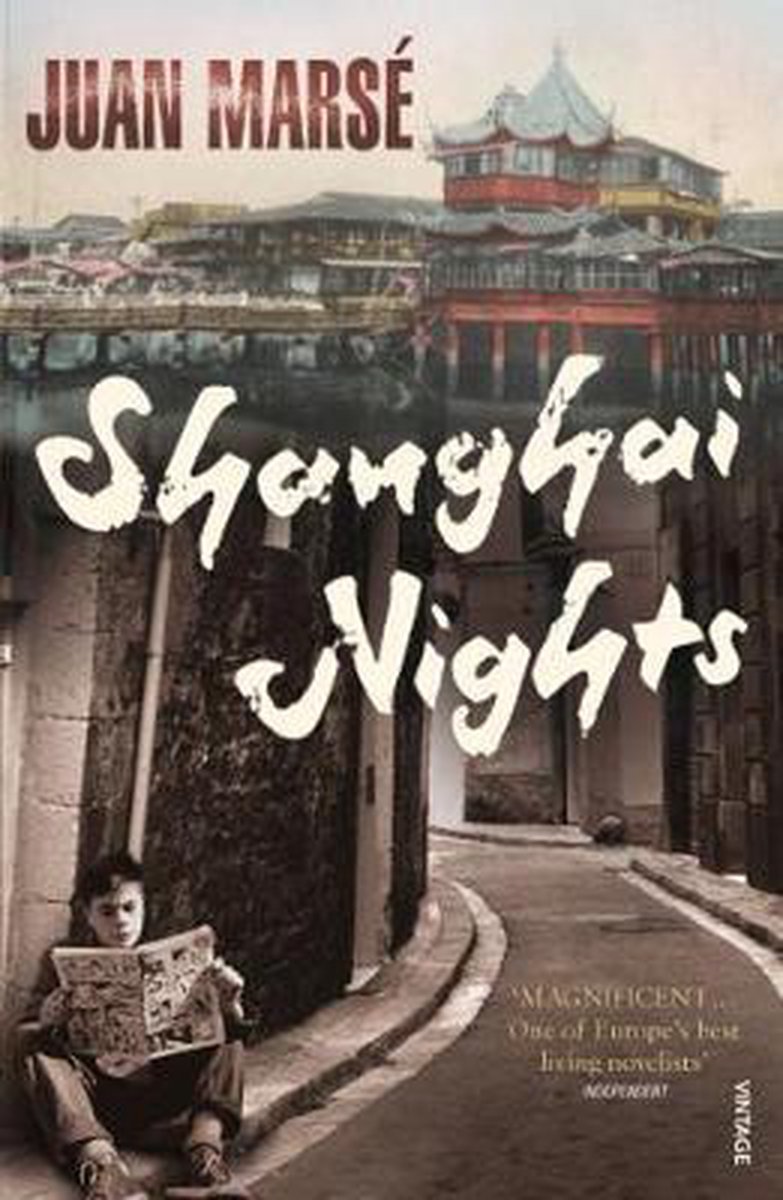
Five of his other novels – Ronda del Guinardó (Guinardó Boulevard, 1984); El Embrujo de Shanghai (Shanghai Nights, 1993); Rabos de Lagartija (Lizard Tails, 2000) and Caligrafía de Los Sueños (The Calligraphy of Dreams, 2011) return repeatedly to this postwar period. In them, children fantasise about an escape from poverty into glamorous worlds glimpsed in the cinema, while mothers are driven into prostitution and ex-anarchist fathers are absent, either in jail or in exile, unable to trust anyone and untrustworthy themselves.
In one of his best novels, Un Día Volveré (One Day I Will Return, 1982), Jan Julivert returns home after 12 years in jail. Broken by defeat, he just wants to find an ordinary job and live in peace, but the children revere the former anarchist, dreaming that he is going to dig up his buried pistol, settle old scores and put the world back on its axis.
Marsé’s best known novel and the one that made his name was Últimas Tardes Con Teresa (Final Afternoons with Teresa, 1965). In it he invented the iconic Manolo the Pijoaparte (something like the “Far-from-posh guy”), a petty thief living precariously in a slum in the Carmel district of Barcelona. The novel, with Marsé’s habitual mix of seriousness, sardonic humour and tragedy, deals with the clash of the Pijoaparte, a migrant from southern Spain, and the upper-class student Teresa, whom he meets after gatecrashing a midsummer night’s party. The rebellious Teresa is drawn to the “exotic” immigrant; while the Pijoaparte wants sex, money and a better life. Two parallel and irreconcilable worlds brush together without meeting.
His direct, realist style has few flashy metaphors or purple patches. His realism, though, is not narrow, for it includes his characters’ dreams and desires. His visual memory enabled him to accumulate layers of detail that create intensity. Memory is “the dead bee that stings” as he wrote, memorably, in Noticias Felices en Aviones de Papel (Happy News in Paper Planes, 2014).
Marsé was born in Barcelona and was adopted by Pep Marsé and Berta Carbó, small farmers from southern Catalonia, after the death postpartum of his biological mother. At the age of 13 Marsé was apprenticed to a jeweller in the Barcelona suburb of Gràcia. In the mid-50s he started to submit stories and articles to literary and film magazines and in 1960 his first published novel, Encerrados Con un Solo Juguete (Shut in With Just One Toy), brought him into contact with the upper-class anti-Franco circles known as the “Gauche divine”.
He had written much of the novel on military service in Ceuta, a Spanish enclave on the north coast of Morocco, after which he spent three years in Paris from 1959. Back in Barcelona, he belonged to the underground Communist party (1962-66). In the late 60s he became one of the editors of the anti-Franco satirical magazine, Por Favor.
Combative against injustice and pretension, the quick-tongued Marsé was known for his lethally frank comments. In fact, he was a laconic man: when he said or wrote something, he meant it. His three main targets were the church (“this gang of shameless thieves”), social-climbing intellectuals, and nationalists of all stripes, whether Catalans or Spanish nationalists, which led to his later ostracism by the Catalan political-literary establishment (though not by readers and writers). His 1990 tragi-comic novel El Amante Bilingüe (The Bilingual Lover) mocks this Catalan ruling class.
A native Catalan speaker, Marsé wrote in Spanish, the language of his schooling, though his prose is spattered with Catalanisms, contributing to the dense, local taste of his books. He won multiple prizes, including the Planeta in 1978 for La Muchacha de Las Bragas de Oro (The Girl with Golden Knickers), about an old fascist who after Franco’s death pretends to have been a “life-long democrat”. In 2008 he was awarded the Cervantes, Spain’s annual prize for a lifetime’s body of work.
Six of his novels have been filmed. Several critics compare him with the American writer William Faulkner, and the juxtaposition is not entirely inflated, as it suggests not just literary quality, but profound investigation of a local area, in Marsé’s case the Barcelona neighbourhoods of Guinardó, Carmel and Gràcia, and the struggle for dignity after defeat in war.
Marsé is survived by Joaquina Hoyas, whom he married in 1966, and their son, Alejandro, and daughter, Berta, also a novelist.
 Juan Marsé Carbó, novelist, born 8 January 1933; died Barcelona, 18 July 2020


Thursday, July 23, 2020

Juan Marsé / Convictions against Coventions

Muere Juan Marsé - Noticias Cultura - El Periódico Extremadura
Juan Marsé

JUAN MARSÉ CONVICTIONS AGAINST CONVENTIONS

In 2016 we celebrated fifty years since the publication of ‘Last evenings with Theresa’, one of the best Spanish novels of the 20th century; now its author will celebrate the occasion with a new literary release

Sergi Dòria
25 October 2017


In 1987, Juan Marsé defined in the third person in his last portrait of Ladies and Gentlemen: “He is not delighted to meet himself, he would have preferred to avoid himself… The guy is short, shabby, quiet, taciturn and a teaser. He does not consider himself an intellectual and cannot stand to be treated as one. He loves bars and local paper stores, the well-lit frames of street kiosks selling cartoons and cheap adventure novels. Flags fill him with deep horror. Eats salads and handwrites.” Thirty years ago, in 1957, I was already pointing towards writing, in a letter to Paulina Crusat, his literary “fairy grandmother”: “Don’t think I considered myself as ‘the chosen one’ —I would believe it when I was 18—, because if I had to define myself a little, I would say I am quite lazy, I have little drive for some things that deserve care and affection, and possess little external affection towards the others (I would love to be a mother-kissing son, but I am not, don’t ask me why), and I’m so sorry about that…”
More anniversaries. In 2016 we celebrated half a century since Last evenings with Theresa was published. The author recalls the journalist Manuel Del Arco, when he told him he had been given the Biblioteca Breve Award and the press was waiting for him in Museu Marés. Marés… Marsé. The author and his characters: Manolo, aka Pijoaparte, trying to change his barrack in Carmel for a middle-class tower in Sarrià or Cadaqués. The Murcia-born, this bronzed epigon and suburbia Stendhalian Julien Sorel; or the blonde Teresa, “a red handkerchief peering through the pocket of her white raincoat and a shaky musical disposition on her legs”. When Seix Barral re-edited Last evenings with Teresa, Arturo Pérez-Reverte pointed out to its eternal nature: “It remains as fresh as when it was written. Not even the idiots who at the time reluctantly welcomed the author’s novel, the resentful or parasites who live on writing how they would write —if they even could— books that others write, not even them dare questioning that Manolo Reyes, aka Pijoaparte, is one of the best described characters of Spanish literature of the second half of the 20th century.”
As revealed by Josep Maria Cuenca in While happiness arrives, Marsé’s biography starts like a novel. Son of Domingo Faneca and Rosa Roca, the boy who had to be called Joan Faneca Roca ended up being Juan Marsé Carbó. According to Berta Carbó, his adoptive mother had lost her own son: the fortuitous meeting in a taxi with the biological father of that orphaned boy ended up in an adoption. The truth is that Domingo Faneca and Pep Marsé, his adoptive father, had already met in the separatist party Catalan State, a dangerous friendship in post civil war Barcelona. The “story of the taxi”, points Cuenca, became an imaginative story of Berta’s: “We can now say that Juan Marsé came to the world, not with “bread in his arm”, as the proverb says, but with a novel under his arm: that “written” by his mother for him.
Not until much later did Marsé become acquainted with his own origins, in detail: “I was never interested in delving into this issue, and I never did that to avoid annoying my adoptive parents… When Cuenca began research on my family background, I let him do that. He discovered many interesting and surprising things about my genealogical tree, like descendents from Ponce de León, conquerors…” My gratitude towards my adoptive parents is clearly revealed in his acknowledgement lines in One Day I will be back: “To Pep Marsé, my father, who taught me how to combine awareness with escalivada.” But with the passage of time, memory is no longer what it used to be, as the author acknowledges: “There is a kind of degradation of one’s convictions superseded by a kind of moral ambiguity in relation to characters and facts that you considered true.” For example, the figure of an absent father, repeated and idealized in his early novels reappears with a less dignified profile in Lizard tails or Handwriting of dreams.
Reared in the Barcelona district of Guinardó, Marsé frames his novels in his memories, this “paradise from which nobody can expel you”. The Marsé Territory is a quarter and a skylight, cinema theatres, cartoon papers and erotism in the shades. A Barcelona that only survives on literature. The current Barcelona is “a designer city, with tourism as the main source of income”. We wonder about Bartleby’s syndrome diagnosed by Enrique Vila-Matas, we glimpse at the portrait of Gil de Biedma, presiding over his work and days. “Jaime concluded that I had nothing else to say as a poet”, explains Marsé. But this is not his case. He finishes a novel and has two more projects in mind: “Why anybody who writes has fifty thousand answers. I cannot do anything else. I disagree with a world that is not well done: fiction offers alternatives to this reality, that I don’t like.” Deeply rooted to his home country and literature, he can do without dangerous nationalistic identities. Whenever the topic arises, he looks back to Stephen Dedalus in Portrait of a Teenage Artist: “You talk to me about nationality, language, religion. Well, these are networks from which I have been trying to escape…”
He escapes indeed, just as when we try to draw from him anything about his new novel. Marsé grins and quotes Hemingway: explaining a story can end up bearing bad luck. He only offers a few glimpses, though: “The driving theme of the story line is an indictment of a person who committed a crime thirty years ago, and after an extremely aggressive therapy manages to remember how he committed the crime, but he does not know why…” Before we venture labeling it, he warns us that this is not a black novel, a gender he detests. “It is about memory traps, about forgetfulness as a therapy… The author of the indictment with the murderer is commissioned to write a script about the murder and holds a series of interviews with him… I’ve said more than enough!”, concludes.
Marsé has uttered the word script, a true battle horse for failed cinema adaptations of his novels. We look around at the many black-and-white photographies surrounding us. Literature, cinema, living other lives… We go back to the self-portrait of Ladies and Gentlemen: “Unmasking oneself, disguising oneself, camouflaging oneself, being someone else. The coyote in Las Ánimas. The hunchback in the Delicias cinema theatre. The vampire in the Roxy cinema. The monster in the Verdi cinema. Nostalgia for not having been any of them.” The cinema version of a novel, he highlights, “does not necessarily have to be tightly bound to the literary work…” We ask for examples: “Nazarín and Tristana. Buñuel adapts Galdós, but the stories are Buñuel’s. In explaining the novel, you have the novel, so read it. The error of adapting my work is that directors want to be too faithful to the original.” Better versions? “Coppola and Conrad in Apocalypse Now, Welles and Shakespeare in Chimes at Midnight, Burgess and Kubrick in Clockwise Orange…”
Marsé gives identity to his writing. Forever incorruptible. The youngster wearing a t-shirt at the jewellery workshop obsessed with Carmen Broto’s murder and the stories it would inspire years later, If they tell you I fell. Marsé, already a writer, with his first novel, Locked up with only one toy, in his hands. The tiny room of Carrer Martí: typewriter, a reading lamp, a photograph of Edith Piaf pinned up on the wall. Marsé octogenarian who dreams like a child in Happy News on Paper Planes. On the shelves, sensuous Betty Boop, Stevenson, Hollywood stars who bewitched Shanghai and his motto: “Tidiness at work is the writer’s only moral condition.”

Juan Marsé and French Women


bol.com | Shanghai Nights, Juan Marse Carbo | 9781784707187 | Boeken

Juan Marsé and French Women 

[A Month of a Thousand Forests]

Today’s entry in the Month of a Thousand Forests series is Juan Marsé, who has a few book available in English translation: Golden Girl, Lizard Tails, and Shanghai Nights.
In this excerpt he talks a bit about this background and his time in Paris, which led to Últimas tardes con Teresa.
Juan Marsé (Spain, 1933-2000)
Like the character of the Pijoaparte, you came from outside the powerful and influential bourgeoisie and literary groups and you made it on your own. Was that hard?
It was sudden and almost improvised in the sense that, though I liked reading a lot, I never studied at a university and barely even in secondary school. When I was thirteen years old my mother told me that I had to drop out of school and start working. This wasn’t a problem and didn’t upset me at all—I wanted to get out of that school. They made us recite the rosary every day; it was a terrifying thing. It was an awful, old-fashioned school, and I was excited to do something that would get me out of there. So, when I decided to submit my first draft to an editor, I knew no one in the literary world, I had no idea what a literary life could be like. And then I met this group of people who were very refined, but who, on the other hand, with respect to social and political ideas of the nation, were openly leftist. I realized right away that these people were “señoritos” from the country’s upper class—Goytisolo, Carlos Barral, Castellet—and for them, I was probably the first working-class person they knew. They advised me right away to get out of the country, and I’d been wanting to travel, so I published my first novel and I went to Paris. I lived with abandon. They thought while I was in Paris I would write, but I wrote absolutely nothing. I bought books—or sometimes stole them because I had no money at first—and went to the cinema to see movies that weren’t shown here, and listened to music and went to the theatre . . . in other words, I devoted myself to living. A love affair now and then . . . in the end—freedom. And I joined the Party and became close friends with Jorge Semprún, who taught us classes on international politics. And it was there I conceived of Últimas tardes con Teresa. I gave a few talks in Spanish to some young French students, they were upper class, very refined, and one of them was named Teresa. Nothing at all to do with the character, but that’s where the name came from. Then I quit my job at the Pasteur Institute with Jacques Monod, a famous researcher who won the Nobel Prize. My first novel was translated and published by Gallimard, the famous publisher who translated Faulkner and Dos Passos, Maurice-Edgar Coindreau. I worked in film; I started translating screenplays from French into Spanish for co-productions in France and Spain. But Últimas tardes was already in my head and I needed to come back. And taking advantage of a film that was being shot here and in Paris, I came with the crew and I stayed.
To finish the story, when I got back to Barcelona everyone asked: “So, how was your experience in Paris?” I told Carlos Barral, “I didn’t bring anything.” That is to say, yes, I brought an idea that I’m going to start working on right away, but it doesn’t take place in Paris, it takes place here. More than anything I remember a conversation with old man Lara, who said to me in his Andalusian accent: “How is it possible that you came back from Paris without a novel? Those French women will do anything. Not one story about a French woman? Those things sell like pastries.” Everyone was a little frustrated with me about that. And I started to work on Últimas tardes con Teresa.
*
From Últimas tardes con Teresa


(Last Evenings with Teresa)


[A Novel]
The flash of some terrible reality leaping, as its way is,


out of the heart of spring. Because youth . . .


—Virginia Woolf

Years later, looking back on that passionate summer, both of them would recall not only the suggestive light that fell on every event, its variety of golden reflections and false promises, its illusions of a free future, but also the fact that, in the middle of their mutual attraction, even in the heat of their summer kisses, there were shadows where the cold of winter was already nesting, the fog that would eclipse the mirage.
—Are you honest with me, Manolo? Sometimes I’m scared . . .
—Scared of what?
—I don’t know. Is this real, what’s happening to us?
The internal erosion of the myth took place without weakening Teresa’s growing love for the boy from the south. His true character was revealed to her precisely (and it took only three nights) when she realized she hadn’t been seduced by an idea, but by a man. First came a feeling of disorientation, a need to reevaluate certain notions about the strange world in which we live, when she made some unexpected connections, the scandalous way illusion wrapped itself around reality.
On a Sunday afternoon of sun and sudden showers, it was the end of August, Teresa insisted they go into a popular dance club in Guinardó. They had taken refuge from the rain in a bar across the street from Salón Ritmo, where a crowd of boys and girls, who arrived running through the rain, were waiting to go in. Manolo mentioned that years ago that place had been his favorite dance club. “Why don’t we go in?” she said, her eyes lighting up. “You won’t like it, that place is full of degenerates,” Manolo said. But she insisted (“Rain and no car, what else can we do?”) and he had no choice but to indulge her whim. Right then the rain was coming down in torrents. Manolo took off his jacket and used it to protect the girl as they crossed the street. Teresa leaned against him and smiled. At the ticket window a fat, pink man was smoking Ideales and Teresa tried to bum one. “Don’t be rude,” joked Manolo. “Oh be quiet, hombre. This will be fun, you’ll see.” Boys: 25 pesatas, Girls: 15. “Discrimination,” said the happy university girl. One drink included in the cover. Performing: Orquesta Satélites Verdes, their singer Cabot Kim (Joaquín Cabot), Maymó Brothers (Afro-Cuban rhythms), Lucieta Kañá (young Catalan cuplé performer) and some other big names from that era. “This is going to be great,” said Teresa. From the beginning she showed an odd excitement. Exclusive, special appearance by Trio Moreneta Boys (the lovely sounds of sardana fused with modern rock). “Spectacular,” said Teresa as they went in, “I can’t wait.” The place was packed and loud, no room to move on the dance floor. Men dressed to the nines, with sardonic eyes and impertinent expressions roved around in tight packs, harassing girls, leaning over them, scrutinizing their necklines and whispering come-ons. Almost all of them were Andalusians. The fiery looks Teresa received were more than suggestive. Manolo’s constant presence at her side saved her from an advance that, if she were alone, would have moved beyond simple admiration. Fortunately, on that day she was dressed plain enough for church (white pleated skirt, blue blouse with a high neck, and a wide black belt), which, in that milieu, might have made her the subject of mockery if it hadn’t been for her long, blonde hair and lustrous, sun-flattered skin, two charms that betrayed her, that is of course if she wanted to pass unnoticed. There were stationary groups of girls in the galleries and in chairs lined up around the dance floor, whispering among themselves every now and then. At the far end, on a small stage were the Satélites Verdes dressed in sequin shirts, their singer (unusually melodic, according to popular opinion) with a thin, black mustache and a nasal, Gregorian voice. Previously, the place had belonged to an old cultural and recreational workers society (Home of the Weavers Guild), which, along with their Choir, their Library, and their Theater—now converted into Salón Ritmo—had disappeared along with the Republic. Outdated and solemn decoration: four walls with plaster crown molding embossed with bouquets of flowers, bunches of grapes, and coats of arms—a face within, an illustrious name below (Prat de la Riba, Pompeu Fabra, Clavé). Glorious Catalans, leaders of orfeó i caramelles, the long lost labor movement, whose severe profiles seemed to express scorn for the Sunday invasion of illiterate Andalusians. In the first floor gallery, through the rancid odor of the wooden box seats, wandered the ghost of a familiar, artisan spirit that reigned in the past and that today occupied one remaining refuge: the stockroom for beverages and artifacts. It had been a library and billiard room, now it housed the mutilated and still quivering remains of Catalan translations of Dostoevsky and Proust alongside Salgari, Dickens, the Patufet, and Maragall, and rusted trophies and old Home of the Weavers standards sleeping alongside the dream of oblivion.
(Translated by Will Vanderhyden)