Showing posts with label Kevin Barry. Show all posts

Wednesday, January 8, 2025

The best fiction of 2024


Review

The best fiction of 2024

This article is more than 1 month old

From Sally Rooney’s Intermezzo to Alan Hollinghurst’s Our Evenings, Percival Everett’s James and a host of inventive debuts – this year’s highlights in fiction

Justine Jordan

Saturday 7 December 2024


In a year of surprises – a posthumous fable from Gabriel García Márquez, a superhero collaboration between China Miéville and Keanu Reeves – the biggest news, as ever, was a new Sally Rooney novel. Intermezzo (Faber) landed in September: the story of two brothers mourning their father and negotiating relationships with each other and the women in their lives, it is a heartfelt examination of love, sex and grief. With one strand exploring the neurodiverse younger brother’s perspective, and a conflicted stream-of-consciousness for the older, it opens up a more fertile direction after 2021’s Beautiful World, Where Are You.

Friday, January 12, 2024

A new Irish literary boom / The post-crash stars of fiction

Illustration: Lara Harwood/Heartagency.com


A new Irish literary boom: the post-crash stars of fiction


Dynamic, radical, often female … Irish fiction is flourishing. Gone is the conservative writing – all nostalgia and sexual repression – of the Celtic Tiger years. The writers of the new wave are original and bold

Justine Jordan
Saturday 17 October 2015

Money kills the imagination,” says the narrator of Claire Kilroy’s 2012 novel The Devil I Know, a fiendishly good satire of the moment the Irish boom went bust. “It makes us want the same thing.” The book is set in 2016 and takes the form of one man’s testimony to a tribunal intended to uncover the sleaze and short-termism that enabled a giant property bubble to inflate in the years leading up to the global financial crash of 2008. In the autumn of 2015, we have not yet caught up with Kilroy’s future setting, but as the real-world aftershocks of the Celtic Tiger’s downfall continue, one Irish sector is booming: with the rise of a new wave of writers, from Paul MurrayKevin Barry and Donal Ryan to first-time authors such as Eimear McBride, Sara BaumeLisa McInerney and Colin Barrett, there is a palpable energy to Irish fiction.

Tuesday, January 9, 2024

Fiction to look out for in 2014

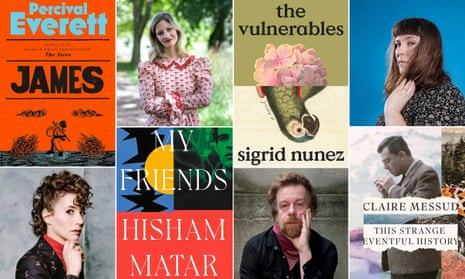
Clockwise from top left: James by Percival Everett; Lauren Elkin; The Vulnerables by Sigrid Nunez; Evie Wyld; This Strange Eventful History by Claire Messud; Kevin Barry; My Friends by Hisham Matar; and Miranda July. Composite: Gary Calton, Sophia Evans, Karen Robinson

Fiction to look out for in 2024

The first great lockdown novel, new tales from David Nicholls, Sarah Perry and Percival Everett, and Rachel Kushner’s contender for the Booker… next year promises to be special


Alex Preston
Monday 1 January 2024


There’s a sensational selection of novels to look forward to in 2024, enough to set even the most discerning reader’s heart aflutter. Does it feel like a more ambitious and warm-hearted fictional year than usual? Perhaps. Certainly there are a number of novels here that will be read for decades to come. As usual, I will leave first novels to the Observer’s debut fiction feature next month.

Thursday, January 2, 2020

Night Boat to Tangier by Kevin Barry, book review / Captures male friendship with rare brilliance


Th10 

best books of 2019


Night Boat to Tangier by Kevin Barry, book review: Captures male friendship with rare brilliance


As two Irish gangsters sit in the port of Algeciras waiting for a 23-year old named Dilly, their vaudevillian patter reminds you of Didi and Gogo in Beckett’s ‘Waiting for Godot’

Holly Williams
Friday 21 June 2019

Kevin Barry
Two ageing, fading Irish gangsters sit in the port of Algeciras, watching and waiting for 23-year-old named Dilly, who they believe to be heading by ferry from Spain to Morocco. Actually, scrap that – there’s nothing faded about Maurice Hearne and Charlie Redman. They are painted in vivid colour by Kevin Barry, a writer who captures male friendship – how it can be cut with rivalry and fear, but run with real love – with rare brilliance.

And Maurice and Charlie are a right pair, a double act, partners in crime. Keepers and destroyers of each other’s hearts and memories. They still dress nattily. One has a limp; the other is missing an eye.
As the night passes in this liminal place – this grotty, dicey, waiting place, “a place in which time passes almost audibly” – the pair discuss their pasts, in blackly comic chat which passes from banal to loaded on an almost line-by-line basis. They reminisce, but they also menace: any poor young crusty with dreadlocks who passes through Algeciras is liable to be interrogated by the men about whether or not they’ve seen Dilly – Maurice’s lost daughter, it transpires.


The pair’s vaudevillian patter, dancing back and forth with an irrepressibly buoyant Irish rhythm, reminds you of Didi and Gogo in Beckett’s Waiting for Godot, while their gleefully ominous threats of violence bristle off the page in a way that recalls Harold Pinter or Martin McDonagh.
But Barry – whose last novel, the gloriously strange Beatlebone, won the Goldsmiths Prize – doesn’t just traffic in nifty dialogue and gratuitous nastiness (although there are startlingly abrupt revelations in Night Boat). This story has heart too: in flashes back throughout Maurice’s life, we see how he got into smuggling hash from Morocco, laundering his profits through property in Ireland, living in Spain and – most importantly – his drink-sodden and heroin-raddled love affair with Dilly’s ma, Cynthia (“breakfast from the bottle and elevenses off the mirror”).Barry’s own twisting, inviting authorial voice seems to lean on our shoulder, to guide us through: “It is a tremendously Hibernian dilemma – a broken family, lost love, all the melancholy rest of it – and a Hibernian easement for it is suggested: f**k it, we’ll go for an old drink.”
Within this generously spaced novel of restless short paragraphs, such sections at times skate and scurry through the years, rather than digging deep. But there is also a gorgeous wooziness, and soft-boiled vulnerability, to some of Maurice’s memories, as well as the acute, sour sharpness of lust and jealousy, paranoia and self-loathing. And the more you find out about Maurice, the more you find out too just how intertwined he is with Charlie Redmond.


Barry’s descriptions are often startlingly good. He slides words and images across one another, to create some new, precise image: Maurice and Charlie’s smiles are “high and piratical; their jauntiness has a cutlass edge”. Perfect.
There’s a fair amount of anthropomorphising the elements to reflect characters emotional states: when Maurice recalls falling in love with Cynthia, he recalls the static on her hair, how “even the air was excitable around her”. When it all goes wrong, there are “hysterical sunsets”, and the sea’s “moans” prove she’s cheating on him. Occasionally such imagery is overwrought or overstretched (“a cold white moon speaks highly of the coming winter” doesn’t quite convince, for instance) but in general, it’s a fair price to pay.  


Support free-thinking journalism and subscribe to Independent Minds

And although Spain springs to life, it is Ireland that most strongly casts a spell: “Its smiling speaking rocks. Its haunted field. Its sea memory.” Indeed, the novel is gently woven through with a kind of magic. Maurice comes to believe he’s struck by “bad luck” for building new houses on an old fairy fort. Dilly embraces white magic to deal with her grief, while one of Maurice’s other old flames tried to cast evil spells on him. All this is met with scepticism – the book doesn’t cloy with stereotyped Irish folklore, thank god – but it does lend a shivery undercurrent. Or at least, a sense of how, in hard times, we inevitably seek explanations beyond our own human fallibility, and solutions beyond our own human limitations.
'Night Boat to Tangier' by Kevin Barry is published by Canongate, £14.99

Wednesday, January 1, 2020

The 10 Best Books of 2019 / The New York Times


Th10 

best books of  2019

The editors of The Times Book Review  (The New York Times) choose the best fiction and nonfiction titles this year.
Published Nov. 22, 2019
Updated Nov. 25, 2019


Disappearing Earth
By Julia Phillips


In the first chapter of this assured debut novel, two young girls vanish, sending shock waves through a town perched on the edge of the remote, brooding Kamchatka Peninsula. What follows is a novel of overlapping short stories about the various women who have been affected by their disappearance. Each richly textured tale pushes the narrative forward another month and exposes the ways in which the women of Kamchatka have been shattered — personally, culturally and emotionally — by the crime.
Fiction | Alfred A. Knopf. $26.95. 

The Topeka School
By Ben Lerner
Lerner’s exhilarating third novel, after “Leaving the Atocha Station” and “10:04,” rocks an emphatically American amplitude, ranging freely from parenthood to childhood, from toxic masculinity to the niceties of cunnilingus, from Freud’s Oedipus complex to Tupac’s “All Eyez on Me.” Adam Gordon returns as the protagonist, but this time as a high school debate star, and mostly in the third person. Equal portions of the book are given over to the voices of his psychologist parents, and to a former classmate whose cognitive deficits are the inverse of Adam’s gifts. The earlier novels’ questions about art and authenticity persist; but Adam’s faithlessness is now stretched into a symptom of a national crisis of belief. Lerner’s own arsenal has always included a composer’s feel for orchestration, a ventriloquist’s vocal range and a fine ethnographic attunement. Never before, though, has the latter been so joyously indulged, or the bubblicious texture of late Clintonism been so lovingly evoked.
Fiction | Farrar, Straus & Giroux. $27.

Exhalation
By Ted Chiang

Exhalation by Ted Chiang review / Stories from an SF master


Many of the nine deeply beautiful stories in this collection explore the material consequences of time travel. Reading them feels like sitting at dinner with a friend who explains scientific theory to you without an ounce of condescension. Each thoughtful, elegantly crafted story poses a philosophical question; Chiang curates all nine into a conversation that comes full circle, after having traversed remarkable terrain.
Fiction | Alfred A. Knopf. $25.95

Lost Children Archive
By Valeria Luiselli

 Lost Children Archive by Valeria Luiselli / Review by Anthony Cummins


The Mexican author’s third novel — her first to be written in English — unfolds against a backdrop of crisis: of children crossing borders, facing death, being detained, being deported unaccompanied by their guardians. The novel centers on a couple and their two children (all unnamed), who are taking a road trip from New York City to the Mexican border; the couple’s marriage is on the brink of collapse as they pursue independent ethnographic research projects and the woman tries to help a Mexican immigrant find her daughters, who’ve gone missing in their attempt to cross the border behind her. The brilliance of Luiselli’s writing stirs rage and pity, but what might one do after reading such a novel? Acutely sensitive to these misgivings, Luiselli has delivered a madly allusive, self-reflexive, experimental book, one that is as much about storytellers and storytelling as it is about lost children.


Fiction | Alfred A. Knopf. $27.95.
Night Boat to Tangier
By Kevin Barry


Credit..


A desolate ferry terminal on the Spanish coast isn’t a place where you’d expect to encounter sharp-edged lyricism or rueful philosophy, but thanks to the two Irish gangster antiheroes of Barry’s novel, there’s plenty of both on display, along with scabrously amusing tale-telling and much summoning of painful memories. Their lives have become so intertwined that the young woman whose arrival they await can qualify as family for either man. Will she show? How much do they care? Their banter is a shield against the dark, a witty new take on “Waiting for Godot.”


Fiction | Doubleday. $25.95.


Say Nothing
By Patrick Radden Keefe


Image
Credit...

Say Nothing by Patrick Radden Keefe


Masked intruders dragged Jean McConville, a 38-year-old widow and mother of 10, from her Belfast home in 1972. In this meticulously reported book — as finely paced as a novel — Keefe uses McConville’s murder as a prism to tell the history of the Troubles in Northern Ireland. Interviewing people on both sides of the conflict, he transforms the tragic damage and waste of the era into a searing, utterly gripping saga.


Nonfiction | Doubleday. $28.95.

The Club

By Leo Damrosch


Image
Credit..

The Club by Leo Damrosch


The English painter Joshua Reynolds just wanted to cheer up his friend Samuel Johnson, who was feeling blue. Who knew that the Friday night gab sessions he proposed they convene at London’s Turk’s Head Tavern would end up attracting virtually all the leading lights of late-18th-century Britain? Damrosch brings the Club’s redoubtable personalities — the brilliant minds, the jousting wits, the tender camaraderie — to vivid life, delivering indelible portraits of Johnson and Reynolds, Edmund Burke, Adam Smith, the actor David Garrick, the historian Edward Gibbon and, of course, Johnson’s loyal biographer James Boswell: “a constellation of talent that has rarely if ever been equaled.”


Nonfiction | Yale University Press. $30.


The Yellow House
By Sarah M. Broom


Image
Credit..

The Yellow House by Sarah M. Broom


In her extraordinary, engrossing debut, Broom pushes past the baseline expectations of memoir to create an entertaining and inventive amalgamation of literary forms. Part oral history, part urban history, part celebration of a bygone way of life, “The Yellow House” is a full indictment of the greed, discrimination, indifference and poor city planning that led her family’s home to be wiped off the map. Tracing the history of a single home in New Orleans East (an area “50 times the size of the French Quarter,” yet nowhere to be found on most tourist maps, comprising scraps of real estate whites have passed over), from the ’60s to Hurricane Katrina, this is an instantly essential text, examining the past, present and possible future of the city of New Orleans, and of America writ large.


Nonfiction | Grove Press. $26.


No Visible Bruises
By Rachel Louise Snyder


Image
Credit...

No Visible Bruises by Rachel Louise Snyder review / Domestic violence in America


Snyder’s thoroughly reported book covers what the World Health Organization has called “a global health problem of epidemic proportions.” In America alone, more than half of all murdered women are killed by a current or former partner; domestic violence cuts across lines of class, religion and race. Snyder debunks pervasive myths (restraining orders are the answer, abusers never change) and writes movingly about the lives (and deaths) of people on both sides of the equation. She doesn’t give easy answers but presents a wealth of information that is its own form of hope.

Nonfiction | Bloomsbury Publishing. $28.


Midnight in Chernobyl
By Adam Higginbotham


Image
Credit..

Midnight in Chernobyl by Adam Higginbotham / Manual for Survival


Higginbotham’s superb account of the April 1986 explosion at the Chernobyl nuclear power plant is one of those rare books about science and technology that read like a tension-filled thriller. Replete with vivid detail and sharply etched personalities, this narrative of astounding incompetence moves from mistake to mistake, miscalculation to miscalculation, as it builds to the inevitable, history-changing disaster.


Nonfiction | Simon & Schuster. $29.95.